

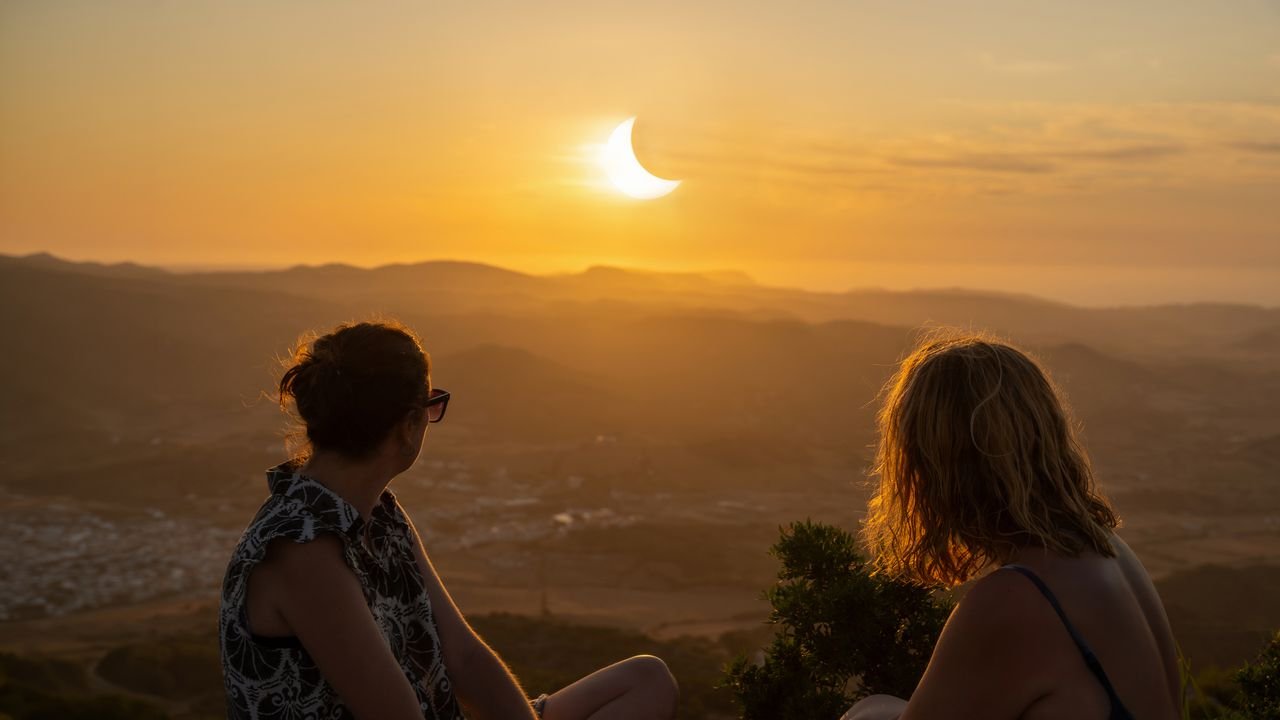
When Koh Joo Beng, an astronomy enthusiast from Singapore, first watched the moon slide between the earth and sun 18 years ago, he didn’t anticipate the impact it would have on his life. “It struck me that eclipses are not just scientific phenomena,” he says, recalling his initial glimpse of the August 2008 eclipse from China. “They are profoundly emotional and spiritual experiences.”
Since then, Koh has traveled to see 14 solar eclipses around the world, and even co-authored a book, Chasing Totality: The Complete Handbook for the 2026 Total Solar Eclipse with his son Jared Koh.

This transition from eclipse-curious to avid umbraphile (the name for a person who travels long distances to observe solar eclipses, literally translating to “shadow lover”) is quite common. As I learned after my own taste of totality in 2024, once you see one, you want to see them all.
This week’s total solar eclipse on August 12, visible from east Greenland, west Iceland, and Spain, is proving to be no exception—despite its inconveniently slim path. Throngs of travelers—myself among them—are chasing the phenomenon to remote islands and rural towns, booking up flights, hotels, and even celestial-themed raves.
Northern Spain alone is expecting an estimated 460,000 overseas tourists, with another 128,000 heading to Iceland. According to data from Amadeus Travel Intelligence, year-on-year flight bookings are up 25% for Spain and Iceland, with areas like Bilbao in northern Spain seeing the largest tourist uptick.
I realize that, on paper, traveling overseas and into congestion for an experience that lasts mere minutes (from my northern Spain perch, just over 90 seconds) sounds absurd. To umbraphiles, though, there’s no question: those fleeting minutes under false dusk, when the moon covers all but our sun’s ethereal outer atmosphere, is worth every penny.
“There’s nothing like it; you can’t truly understand it until you experience it,” says Minnesota-based astrophotographer Marc Rassel, who’s chased eclipses since 2017 and plans to watch this year’s spectacle from Spain. “The light is strange, everything gets darker, there’s a 360-degree sunset, and the temperature drops. The birds chirp. Once you see that first one, you’re like ‘yep, this is it.’”
For those who haven’t experienced the indescribable magic of totality, I talked with numerous fellow umbraphiles to understand this specific sensation of awe—plus, gathered intel on where they’re planning to watch this week’s event, as well as the future eclipse trips they’re looking forward to.