

Close Menu

    Subscribe to Updates

    Get the latest news information from worldwide businesses.

    What's Hot

    Warner Bros. is suing Amazon for poaching employees

    July 25, 2026

    Midjourney acquired the astrology app Co-Star

    July 25, 2026

    Jind-Sonipat Hydrogen Train travelled 1200 kms; 3,000 litres of diesel exhaust replaced with water vapours

    July 25, 2026
    Facebook Instagram YouTube LinkedIn X (Twitter)
    Trending
    • Warner Bros. is suing Amazon for poaching employees
    • Midjourney acquired the astrology app Co-Star
    • Jind-Sonipat Hydrogen Train travelled 1200 kms; 3,000 litres of diesel exhaust replaced with water vapours
    • Viktor Orbán calls for new era of ‘resistance politics’
    • NEET leak protest: Vandalism and arson reported in Bihar; Tejashwi alleges police fired AK-47s at students | India News
    • Hawaii Lt Gov Sylvia Luke indicted on bribery and conspiracy charges
    • How a paper leak led to education minister’s resignation: NEET-UG 2026 in a timeline | Education News
    • An off-the-shelf camera could help us find more black holes smashing together
    Newspublicly
    • About Us
    • Advertise & Partner with us
    • Pitch Your Story
    • Contact Us
    Facebook Instagram LinkedIn X (Twitter)
    Subscribe
    • Home
    • World News
      • Asia
      • India
      • USA
      • UK & Europe
      • Middle East
    • Economy & Business
      • Global Economy
      • Corporate & Industry
      • Finance & Markets
      • Policy & Trade
    • Technology
      • Gadgets & Devices
      • Software & Apps
      • AI & Machine Learning
      • Robotics & Automation
    • Health & Medicine
      • Fitness & Nutrition
      • Research & Innovation
      • Disease & Treatment
      • Doctors, Clinics & Patient Care
    • Travel & Tourism
    • Automobile
      • Electric & Hybrid Vehicles
      • Auto Industry Insights
    • Sports
    • More
      • Education
      • Real Estate
      • Environment & Climate
      • Space & Astronomy
      • War & Conflicts
    Newspublicly
    Home»Health & Medicine»Research & Innovation»Lost for 150,000 years: Rainforest discovery upends human history
    Research & Innovation

    Lost for 150,000 years: Rainforest discovery upends human history

    AdminBy AdminMay 20, 2026No Comments4 Mins Read0 Views
    Share
    Facebook Twitter LinkedIn Copy Link WhatsApp


    Dense tropical rainforests were long considered some of the last places early humans could survive. For decades, researchers believed our ancestors mainly stuck to open grasslands and coastal regions, avoiding the thick forests of Africa until much later in history. Evidence from West Africa is now forcing scientists to rethink that assumption in a dramatic way.

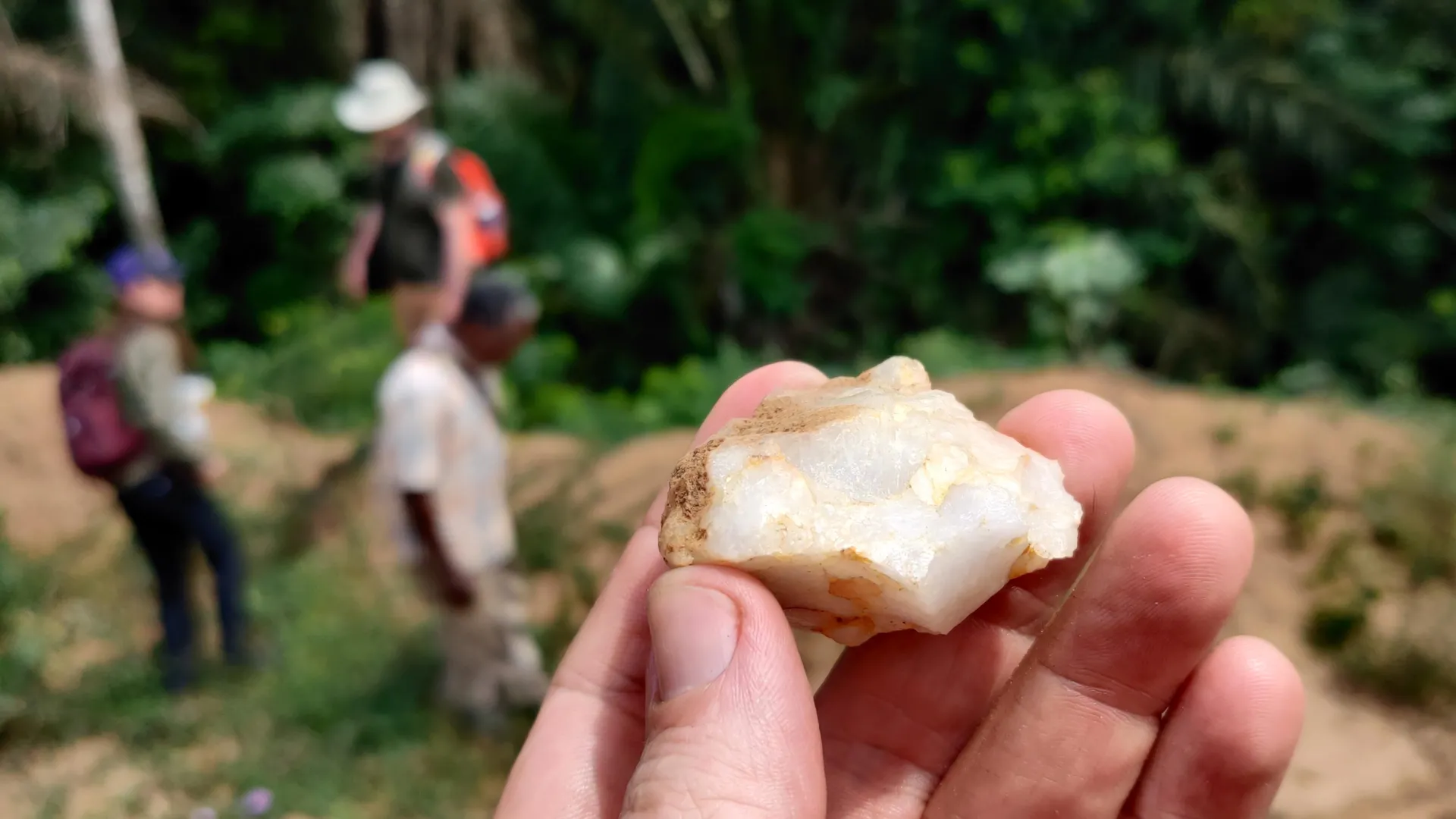
    Researchers investigating an archaeological site in present-day Côte d’Ivoire found evidence that humans were living in wet tropical forests roughly 150,000 years ago. The discovery pushes back the oldest known evidence of rainforest habitation by more than double previous estimates and suggests early Homo sapiens were far more adaptable than once believed.

    The findings, published in Nature, support a growing view that human evolution did not happen in one single environment. Instead, ancient populations appear to have thrived across a surprising range of ecosystems, from deserts and coastlines to dense forests.

    Ancient Stone Tools Hidden Beneath the Forest

    The story began decades ago. In the 1980s, Professor Yodé Guédé of l’Université Félix Houphouët-Boigny helped investigate a site known as Bété I during a joint Ivorian-Soviet research mission. Excavations uncovered layers of stone tools buried deep underground in what is now rainforest territory.

    At the time, researchers could not accurately determine how old the tools were or what the environment looked like when ancient humans lived there. That changed when an international team returned to the site using modern technology unavailable to scientists forty years earlier.

    “With Professor Guédé’s help, we relocated the original trench and were able to re-investigate it using state of the art methods that were not available thirty to forty years ago,” said Dr. James Blinkhorn of the University of Liverpool and the Max Planck Institute of Geoanthropology.

    The timing turned out to be critical. Since the new excavation, mining activity has destroyed the site, making the recovered data especially valuable.

    Evidence of a True Rainforest Environment

    To determine the age of the site, scientists used multiple dating techniques, including Optically Stimulated Luminescence and Electron-Spin Resonance. Both methods pointed to human occupation around 150,000 years ago.

    Researchers then analyzed pollen, phytoliths (tiny silica structures left behind by plants), and chemical traces preserved in sediments. The results showed the area was heavily forested at the time humans lived there.

    The samples contained pollen and plant waxes associated with humid West African rainforests, while very low levels of grass pollen suggested the site was surrounded by dense woodland rather than a thin strip of forest.

    Before this discovery, the oldest secure evidence of humans living in African rainforests dated to only about 18,000 years ago. The previous global record for rainforest habitation came from Southeast Asia and dated to around 70,000 years ago.

    “Before our study, the oldest secure evidence for habitation in African rainforests was around 18 thousand years ago and the oldest evidence of rainforest habitation anywhere came from southeast Asia at about 70 thousand years ago,” explained lead author Dr. Eslem Ben Arous. “This pushes back the oldest known evidence of humans in rainforests by more than double the previously known estimate.”

    Rethinking Human Evolution

    The discovery adds to a growing body of evidence showing that early humans were ecological generalists capable of surviving in many different habitats. Scientists increasingly believe that this flexibility may have helped Homo sapiens spread successfully across the world while other human relatives disappeared.

    Follow-up discussions surrounding the research have also highlighted how difficult rainforest archaeology can be. Fossils rarely survive in hot, humid environments, and dense vegetation makes excavations challenging. Because of this, many scientists suspect there could be far older rainforest sites still waiting to be found across Africa.

    The study also raises bigger questions about how long humans have influenced tropical ecosystems. Researchers are now exploring whether ancient populations may have shaped rainforest environments far earlier than previously assumed through hunting, fire use, and plant management.

    “Convergent evidence shows beyond doubt that ecological diversity sits at the heart of our species,” said Professor Eleanor Scerri, senior author of the study. “This reflects a complex history of population subdivision, in which different populations lived in different regions and habitat types.”

    Scientists believe the Côte d’Ivoire discovery may only be the beginning. Several additional sites in the region remain largely unexplored, raising the possibility that even older evidence of rainforest-dwelling humans could still be uncovered.

    The research was funded by the Max Planck Society and the Leakey Foundation.


    Source link

    Author

    • Admin

      NewsPublicly.com is News & Articles Platform that creating SEO-focused articles on travel, lifestyle, and digital trends.

    Admin
    • Website

    NewsPublicly.com is News & Articles Platform that creating SEO-focused articles on travel, lifestyle, and digital trends.

    Related Posts

    Scientists discover the hidden brain switch that assigns bees their jobs

    July 25, 2026

    Natural compound may fight rheumatoid arthritis at its source

    July 25, 2026

    Goodbye, cavities? New gel could regrow tooth enamel

    July 25, 2026
    Leave A Reply Cancel Reply

    Demo
    Top Posts

    The Blue Moon rises on May 30— Where and when to see the second full moon of the month

    May 30, 202640 Views

    New SOCOM rifle allows barrel swapping and cartridge changes

    June 1, 202633 Views

    “Inside Gemini Robotics 1.5: How Robots Learn to Reason & Act

    November 22, 202527 Views

    525 pounds of cocaine seized after Nebraska K9 alerts troopers on I-80

    May 28, 202624 Views
    Don't Miss

    Warner Bros. is suing Amazon for poaching employees

    July 25, 20262 Mins Read0 Views

    Warner Bros. Discovery has filed suit against Amazon, accusing it of illegally poaching employees, including…

    Midjourney acquired the astrology app Co-Star

    July 25, 2026

    Jind-Sonipat Hydrogen Train travelled 1200 kms; 3,000 litres of diesel exhaust replaced with water vapours

    July 25, 2026

    Viktor Orbán calls for new era of ‘resistance politics’

    July 25, 2026
    Stay In Touch
    • Facebook
    • Twitter
    • Instagram
    • YouTube
    • LinkedIn
    • WhatsApp

    Subscribe to Updates

    Get the latest creative news from SmartMag about art & design.

    Demo
    NEWSPUBLICLY
    Facebook X (Twitter) Instagram LinkedIn

    Home

    • About Us
    • Leadership
    • Advertise & Partner With Us
    • Pitch Your Story
    • Media Kit & Pricing
    • Career
    • FAQs

    Guidelines

    • Editorial & Submission
    • Partnership
    • Advertising & Sponsor
    • Intellectual Property Policy
    • Community & Comment
    • Security & Data Protection
    • Send Your Opinion

    Quick Links

    • Cookie Policy
    • Payment & Billing Terms
    • Refund & Cancellation
    • Copyright Policy
    • Complaint & Support
    • Sitemap
    • Contact Us

    Subscribe Us

    Get the latest news and updates!

    Copyright © 2026 Newspublicly (DIGITALIX COMMUNICATION). All Rights Reserved.
    • Privacy Policy
    • Terms of Use
    • Disclaimer