

Also Read: Trump’s tariffs just went from 12.5% to 10%: Why did India get a breather and what it means?
The new tariff framework, effective July 24, replaces the temporary Section 122 balance-of-payments surcharge. While India’s additional tariff remains unchanged at 10%, the country has been placed in the lower tariff band after prohibiting imports made with forced labour. This gives Indian exporters a 2.5 percentage-point tariff advantage over competing manufacturing and trading hubs such as China, Hong Kong, Thailand, Türkiye, the UAE, Israel and Vietnam, which now face a 12.5% additional tariff.
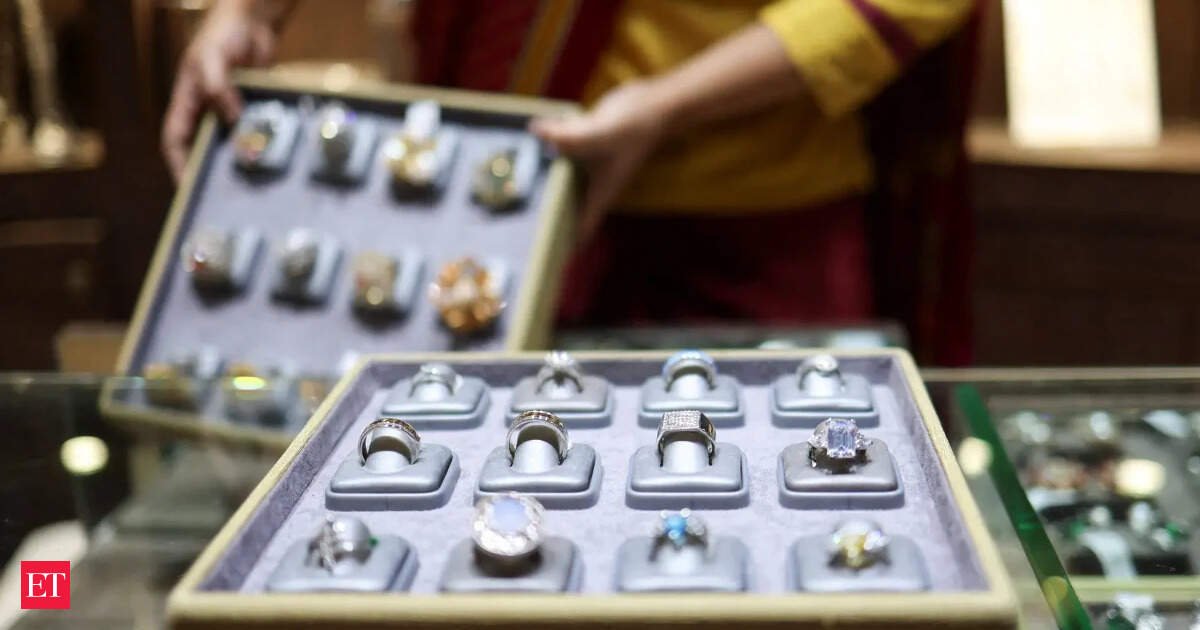
However, industry body Gem & Jewellery Export Promotion Council (GJEPC) said the relief is only relative, as Indian jewellery exports to the US will continue to attract the existing Most Favoured Nation (MFN) duty of 5.5-6% in addition to the new 10% tariff, taking the effective import duty to around 15.5-16%.
Also Read: Trump’s new tariffs prompt lawsuit from small businesses

“We categorically reject any implication that India’s gem and jewellery sector is linked to forced labour. The industry has a long-standing record of responsible sourcing, worker welfare and ethical business practices,” said GJEPC chairman Kirit Bhansali.
He welcomed the government’s recent amendment to the Foreign Trade Policy prohibiting imports produced wholly or partly through forced labour, saying it aligns India’s trade framework with global labour standards.Bhansali, however, said the continuation of the 10% tariff under the new Section 301 regime “is not justified” and will remain a major challenge for India’s gem and jewellery exports.
“The biggest concern is that key competing trading centres for natural diamonds continue to enjoy duty-free access. Bridging this tariff gap through an early India-US Bilateral Trade Agreement and securing tariff relief for natural diamonds and coloured gemstones remain our key priorities,” he said.
The industry pointed out that Belgium, the world’s leading diamond trading hub, continues to enjoy zero additional tariff on natural diamonds entering the US, while comparable Indian-origin diamonds attract a 10% levy. Lab-grown diamonds and synthetic stones exported from India also remain subject to the additional tariff.
GJEPC noted that although several diamond-producing nations, including Botswana, Namibia, the Democratic Republic of the Congo and Zimbabwe, are outside the scope of the latest US action, rough diamonds substantially transformed in India are treated as Indian-origin products and therefore attract the 10% tariff when exported to the US.
The council has urged the government to seek exemption for natural diamonds and coloured gemstones under the US tariff framework and accelerate negotiations for an India-US Bilateral Trade Agreement to improve the competitiveness of India’s gem and jewellery exports in its largest overseas market.