

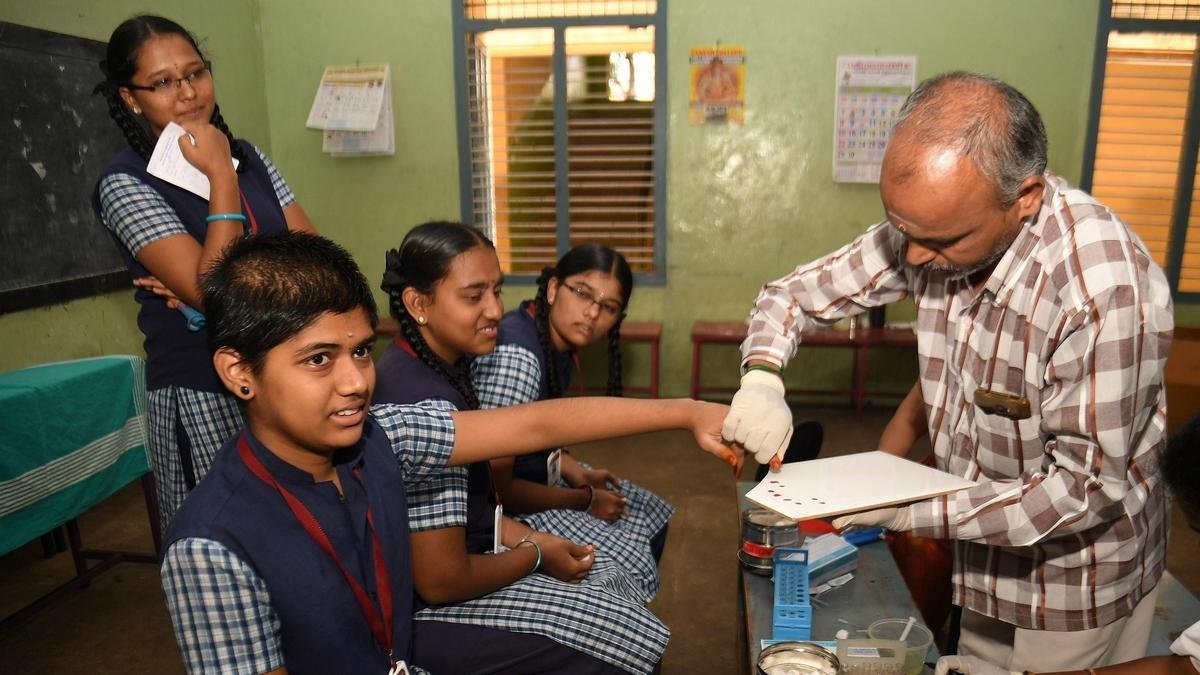

Students being checked for anaemia as part of a medical camp. File
| Photo Credit: The Hindu
The story so far: India’s fight against anaemia has traditionally been associated with iron-folic acid tablets, deworming campaigns, and nutrition counselling. The revised Operational Guidelines for the Anaemia Mukt Bharat (AMB) Abhiyaan, to be launched on June 29, however, represent a broader shift in tackling anaemia.
The revised programme includes a new beneficiary group (low birth weight babies (0-6 months), greater emphasis on dietary interventions (regular consumption of iron-rich and diversified diets) and digital tracking of patients.
This lifecycle approach provides age-specific interventions — from low-birth-weight newborns through childhood, adolescence, the reproductive years, pregnancy, and lactation — to prevent and manage anaemia at every stage of life rather than only during pregnancy.

Why India needs this revised programme?
The objective of the revised plan is to shift the programme from simply distributing iron tablets to timely diagnosis, prompt treatment, and systematic follow-up, ensuring that beneficiaries recover from anaemia rather than dropping out after the initial screening.
Low birth weight newborns have been added as a priority group because they are born with lower iron stores and are at greater risk of developing early anemia. The guidelines also emphasise therapeutic management, timely referral of severe or non-responsive cases and digital tracking of beneficiaries to monitor treatment adherence and recovery, signalling a shift to improving actual health outcomes.

According to the latest Health Ministry estimates, anaemia affects about 67.1% of children aged 6–59 months, 59.1% of adolescent girls (15–19 years), 31.1% of adolescent boys, and 52.2% of women aged 15–49 years, underscoring its continued status as a major public health challenge in India.
The revised guidelines seek to address the gaps by expanding coverage across the life course, strengthening screening and diagnosis, and ensuring timely treatment and follow-up, making anaemia control more comprehensive and outcome-driven.
How does the new programme work?
The emphasis is no longer merely on treating anaemia when it is detected, but on preventing it across every stage of life — even before pregnancy — through a comprehensive lifecycle approach.
“Anaemia is rarely an isolated event. It often begins early in childhood, worsens during adolescence, becomes critical during pregnancy and can continue to affect women after childbirth. Children born to anaemic mothers are themselves more likely to have poor iron stores, creating an intergenerational cycle of malnutrition and poor health,” said a senior Health Ministry official.

He added that breaking this cycle requires interventions at every stage rather than waiting until pregnancy.
The earlier version of AMB largely focused on six beneficiary groups — young children, school-age children, adolescents, women of reproductive age, pregnant women and lactating mothers.
While these groups continue to remain central, the government has now added low birth weight newborns and maintained that nutritional interventions should begin before conception. Women of reproductive age are encouraged to maintain adequate iron stores well before pregnancy so that they enter pregnancy healthier. This is expected to reduce maternal anaemia, improve birth outcomes and lower the risk of low birth weight and childhood anaemia.

The Health Ministry has maintained that the anaemia burden is not only due to iron deficiency but also to deficiencies of folate and vitamin B12, infections, worm infestations, inherited blood disorders and poor dietary diversity.
What is the new tracking system
Haemoglobin testing records for pregnant women will be captured through the JANANI Portal, while data on children will be recorded through the RBSK and U-WIN portals. These platforms will subsequently converge into a unified AMB Abhiyaan Portal to facilitate monitoring, analysis and programme planning.
Published – June 29, 2026 09:51 am IST