

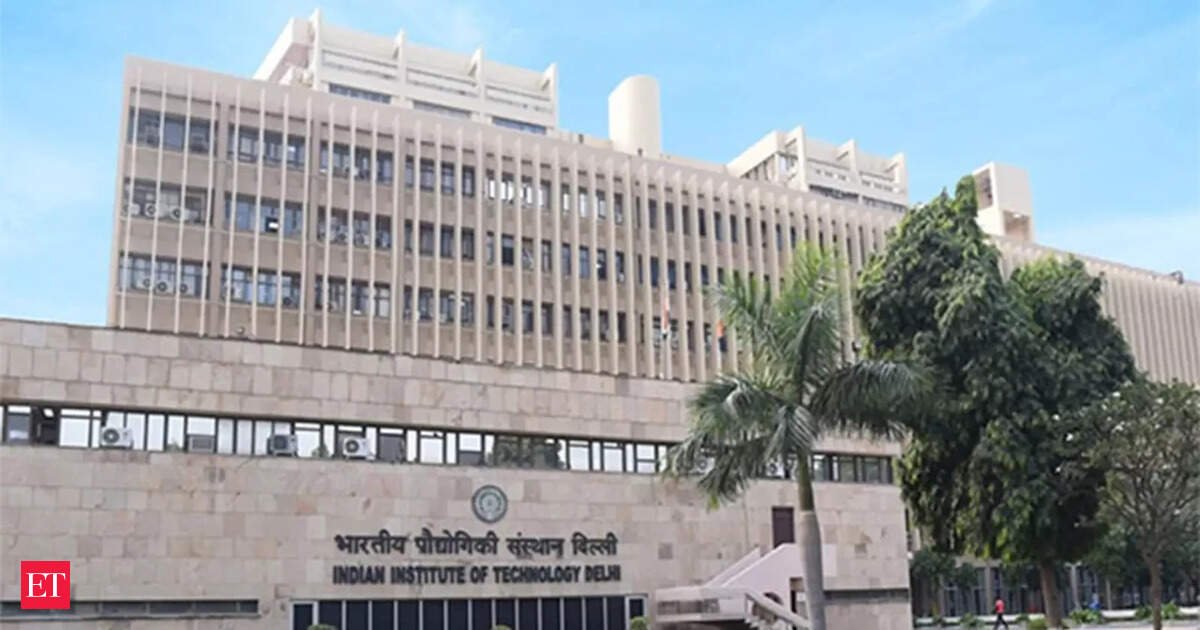
Institutes across the IIT ecosystem are increasingly positioning themselves as global research and innovation hubs, particularly in areas such as artificial intelligence, semiconductors, sustainability, robotics and quantum technologies.
“We are focusing on building strong international collaboration, both with universities across the globe and also with industry across the globe,” said Manindra Agrawal, director of Indian Institute of Technology Kanpur.
Also read | Conflict nearing end? US, Iran say getting ‘a lot closer’ to a deal
He cited partnerships with New York University, Duke University, University of California San Diego and La Trobe University.

IIT Kanpur is also attempting to attract globally recognised faculty through alternative engagement models. Agrawal said the institute had hired Anil Lalwani from Columbia University Vagelos College of Physicians and Surgeons for its upcoming Gangwal School of Medical Sciences and Technology, which he described as a template for future global talent recruitment.

Yet, IITs acknowledge structural disadvantages in competing for international talent.”A professor in India pretty much makes… probably $40,000 per annum,” Agrawal said, adding that compensation in top US universities in technology domains could be nearly “10 times” higher.
IIT Madras is pursuing what Preeti Aghalayam, dean of global engagement, described as a dual strategy of “internationalisation at home and internationalisation abroad”, with students and faculty as key stakeholders.
Besides curated international master’s degrees, mobility programmes and joint degrees, the institute is focusing on expanding its offshore campus in Zanzibar, Africa. Earlier this year, IIT Madras launched a $7.5 million deep-tech hub in Menlo Park, California, aimed at helping Indian startups and researchers access global capital, mentorship and markets.
Also read | Cockroach Janta Party sparks political curiosity, unease in opposition ranks
Aghalayam said there was strong interest within the international academic community to collaborate with IIT Madras across areas including deep-tech innovation, climate, AI, sustainability and education. However, financial barriers continued to limit access to Indian higher education for students from the Global South.
Meanwhile, IIT Gandhinagar has deepened ties with Asian institutions amid India’s semiconductor push. The institute is developing a double master’s degree programme in IC design and manufacturing with National Cheng Kung University in Taiwan, while also running long-standing exchange and dual-degree programmes with Japanese institutions.
At IIT Mandi, the focus is shifting towards collaborative ecosystems rather than standalone overseas campuses.
“The trend appears to be of joint degrees, collaborative research institutes and student exchange schemes, which seem more pragmatic and effective than building an overseas campus on its own,” said Venkatesh H Chembrolu, dean academics at IIT Mandi.
Despite the global push, directors and deans acknowledged that funding gaps remained the biggest challenge. Agrawal said IITs could not directly compare themselves with institutions such as the Massachusetts Institute of Technology because of stark differences in funding and endowment ecosystems. “We would aspire to be an institution like MIT,” he said, particularly in combining strong fundamental research with technology development and teaching excellence.