

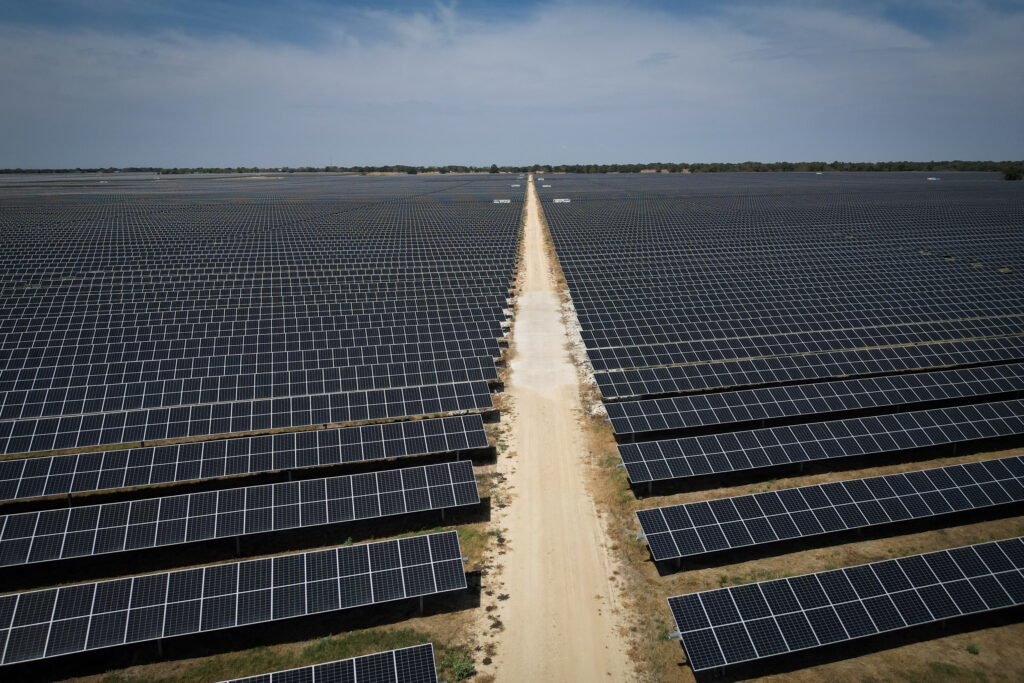
Not long ago, the rise of U.S. renewable energy was largely tied to state policies that required or encouraged utilities to meet benchmarks for obtaining wind and solar power.
The first of these “renewable portfolio standard,” or RPS, laws was likely the one adopted in Iowa in 1983. But they didn’t become a trend until the late 1990s, when Arizona, Nevada and Texas passed their laws, and in the early 2000s, when California was among the many that followed suit.
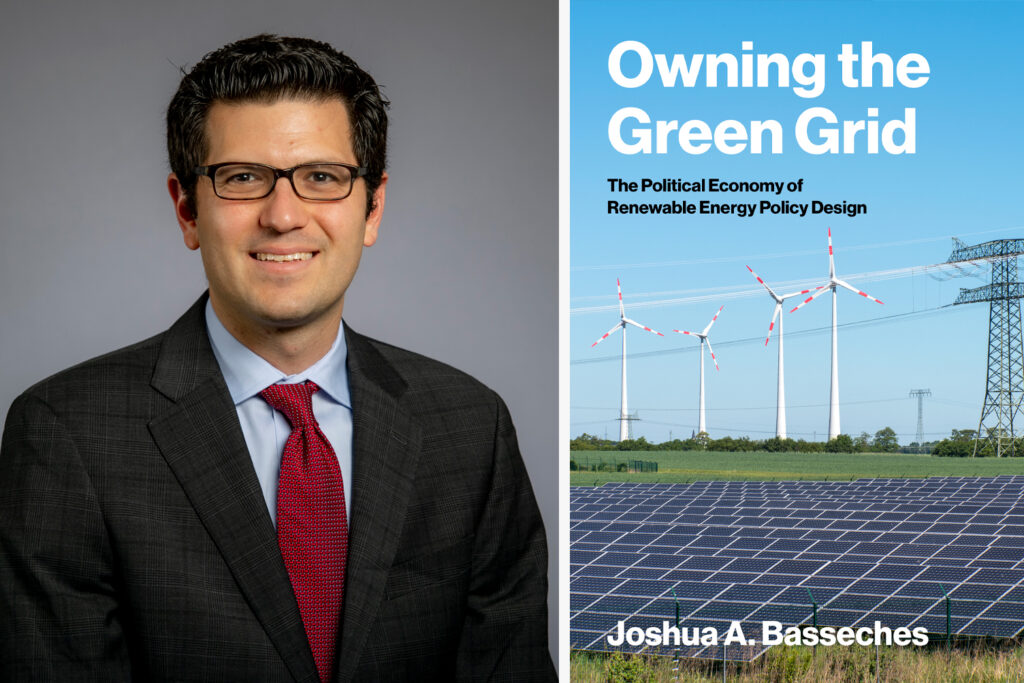
A new book, “Owning the Green Grid” by Joshua Basseches, seeks to understand how these policies helped to shape utility regulation and what they teach us about the political power of utility companies. Basseches teaches environmental studies and public policy at Tulane University in New Orleans and is moving this summer to assume a similar role at Case Western Reserve University in Cleveland.
I spoke with him about the book, which covers policies that I know well from covering legislative debates, especially in Ohio.
One of his key findings is that utility companies used their influence to ensure the laws were favorable for corporate profits. But the specifics of this influence varied by state and utility, often reflecting each state’s regulatory structure and the extent to which fossil fuel companies also had political power.
About 30 states now have some form of an RPS. For example, California’s law requires its power providers to get 60 percent of their electricity from renewable sources by 2030 and 100 percent from renewable or carbon-free sources by 2045.
It’s important to specify that the RPS heyday has passed. The laws were designed to get utilities to use more renewable energy at a time when wind and solar were at the fringes of the market and much more expensive than coal and natural gas. Now, renewables are some of the cheapest options available, and some states have easily exceeded the targets set by law.
But what hasn’t changed is the central role of states in determining the pace and costs of the transition to clean energy, and the central role of utility companies, which use their lobbying clout in state legislatures to help shape policies. These factors are so large that their prominence has barely been dented even as President Donald Trump has made major changes to federal energy policy.
Here is my recent conversation with Baseeches, edited for length and clarity:
DAN GEARINO: What was the initial question you were trying to answer when you started this project?
JOSHUA BASSECHES: I was trying to understand why RPS policies got written in the way that they did, because a lot of times when people talk about RPS, they talk about the target and the timeline. So, a certain percentage of renewable energy by a certain year in the future. Having looked at the actual legislative text, I realized there’s a bunch of other stuff going on in these legislative vehicles, and I wanted to understand who’s influencing that and for what purpose.
GEARINO: When you do a project like this, you go in with some ideas of what you think you might find. What’s an example of something where, once you dug into it, you found that it was different than you were expecting?
BASSECHES: A lot of the existing literature and popular opinion lumps the utility industry in with the fossil fuel industry. Utilities are sometimes even put in the same category as oil and gas. Doing this research showed me just how different they are, and how in some states [utilities] actually were key enablers of renewable energy policy, but in other states, when they owned expensive generation assets, they did behave more like fossil fuel interests. What surprised me was just how distinct they are [compared to oil and gas companies] and then also the extent of their political influence. The degree to which they shaped the RPS policies and the privileged access which they enjoyed in both the legislative process and the public utility commissions was surprising to me.
GEARINO: You started this around the same time that the first Trump administration was coming on the scene and he has had such a drastic effect on energy policy. What’s it like to be embarking on a project like this, and have Donald Trump just show up?
BASSECHES: Donald Trump is really good at grabbing headlines. No doubt there have been major changes at the federal level, but I think one of the points that I want to make is that the states have always been influential when it comes to writing electricity policy and public utility commissions … have been an underappreciated actor. I don’t think Trump has really changed that. He’s gone after states in a way that previous presidents haven’t, but I still think a lot of the action when it comes to the electricity sector is at the state level.
GEARINO: Is there any particular state that we could focus on to help illustrate some of what you found?
BASSECHES: Texas is a very interesting one.
GEARINO: So, what did Texas teach you, or what’s interesting about Texas’ story?
BASSECHES: So, at this point, your readers know that Texas leads the country in wind and solar capacity, with California giving it a run for its money, particularly in solar, but the question is, How did it get to be that way? And there’s a lot of different reasons, but one of the things that makes Texas interesting is it’s a Republican-dominated state. It’s been controlled by Republicans for a while, at least at the state legislature, and it also is a major fossil fuel-producing state, and yet they were one of the early adopters of a renewable portfolio standard.
This story is funded by readers like you.
Our nonprofit newsroom provides award-winning climate coverage free of charge and advertising. We rely on donations from readers like you to keep going. Please donate now to support our work.
Now, at this point, by the way, the RPS is not relevant. At this point, we’ve got tax credits and the easy transmission building and the permitting and all that stuff is really what’s driving [Texas’] growth now, and for the past few years. But in 1999, what attracted a lot of the industry to Texas, and when I say ‘the industry’ I’m talking about renewables, was this RPS policy. What’s surprising is that Texas, with so much fossil-fuel influence, and with a Republican legislature, adopted this pioneering renewable energy policy.
I found they did it in concert with restructuring their utility sector. They sorted electric energy companies into three different categories: generating utilities, transmission and distribution utilities, and what are called retail electric providers, and Texas is unique in that every customer that’s not served by a publicly owned utility can choose their retail electric provider. So, there still are service territories with regard to transmission and distribution, but unlike in other states where you know the service territory determines who you pay your electricity bill to in Texas, they have this whole other level called retail electric providers, and so basically fracturing and breaking up the business interests and that’s kind of what enabled the RPS, is what I argue.
GEARINO: After doing this research, are you more optimistic about the future? Do you think we’ll see steps in the right direction in the next 15 to 20 years?
BASSECHES: That’s a tough question. I feel like being pessimistic is not very utilitarian, so I think I’m partly optimistic, just because the status quo is just unacceptable to me. I think on an economic level, the rest of the world is certainly moving forward with clean energy, and so to the degree that you know capital markets are international, I think that you know that has helped kind of temper the destruction that’s happening from Washington, D.C. At the same time, there have been times in history, I think that you could be much more optimistic than right now, like the early 2000s, when states were putting in investment tax credits and RPSs were in their glory days. I think that was probably a more optimistic moment than right now, but certainly the costs of renewable energy have come way down, so it’s not a straightforward question. I’d say there are reasons for optimism and reasons for pessimism.
Other stories about the energy transition to take note of this week:
Ohio Supreme Court Yanks Permit for Giant Solar Array, for Now: The Ohio Supreme Court ruled this week that utility regulators erred by approving a large solar project without the applicant providing visual renderings of certain parts of the project, as Jake Zuckerman reports for Signal Ohio. The court remanded the case to the Public Utilities Commission of Ohio, and it’s unclear whether this can be easily resolved or will become a major roadblock. The court’s decision rejected other arguments made by opponents of the project, Oak Run Solar, who had appealed the commission’s decision. I wrote about this project in 2024, which would be the largest in Ohio and provoked heated opposition from local governments and residents.
Solar and Batteries Deserve Credit for Improvements in Grid Reliability: Solar power and battery energy storage have grown enough in enough places that they are now key players in maintaining grid reliability, as Jeff St. John reports for Canary Media. The Trump administration has taken action to prevent old coal plants from closing, which officials say is helping the grid, but solar and batteries are much larger factors.
Ferrari’s First EV Gets a Cold Shoulder: Ferrari unveiled its first EV this week and initial online reactions were dismissive of the design and price, as Alexa St. John reports for the Associated Press. The Ferrari Luce will sell for 500,000 Euros in Europe ($582,000 USD) but the company has not set a price for the United States.
Inside Clean Energy is ICN’s weekly bulletin of news and analysis about the energy transition. Send news tips and questions to [email protected].
About This Story
Perhaps you noticed: This story, like all the news we publish, is free to read. That’s because Inside Climate News is a 501c3 nonprofit organization. We do not charge a subscription fee, lock our news behind a paywall, or clutter our website with ads. We make our news on climate and the environment freely available to you and anyone who wants it.
That’s not all. We also share our news for free with scores of other media organizations around the country. Many of them can’t afford to do environmental journalism of their own. We’ve built bureaus from coast to coast to report local stories, collaborate with local newsrooms and co-publish articles so that this vital work is shared as widely as possible.
Two of us launched ICN in 2007. Six years later we earned a Pulitzer Prize for National Reporting, and now we run the oldest and largest dedicated climate newsroom in the nation. We tell the story in all its complexity. We hold polluters accountable. We expose environmental injustice. We debunk misinformation. We scrutinize solutions and inspire action.
Donations from readers like you fund every aspect of what we do. If you don’t already, will you support our ongoing work, our reporting on the biggest crisis facing our planet, and help us reach even more readers in more places?
Please take a moment to make a tax-deductible donation. Every one of them makes a difference.
Thank you,

Reporter, Clean Energy
Dan Gearino covers the business and policy of renewable energy and utilities, often with an emphasis on the midwestern United States. He is the main author of ICN’s Inside Clean Energy newsletter. He came to ICN in 2018 after a nine-year tenure at The Columbus Dispatch, where he covered the business of energy. Before that, he covered politics and business in Iowa and in New Hampshire. He grew up in Warren County, Iowa, just south of Des Moines, and lives in Columbus, Ohio.