

- The Rivian R2 is rolling out to the public, and that means we’re starting to see more real-world tests.
- The Out of Spec YouTube channel subjected the R2 to a 70 mph range test.
- It didn’t go as far as its main rival, the Tesla Model Y Performance.
There’s a lot riding on the Rivian R2. Sure, it’s critical to Rivian’s bottom line and future, as the startup’s first model with potential to bring in real volume. But it’s also one of the first electric cars in a long time that feels like it could put some kind of a dent in the untouchable Tesla Model Y, and maybe even inject a little life into the unsteady EV market.
I know, I know—”Tesla killers” have come and gone and none have lived up to the moniker. But here we have an EV with rugged good looks, solid on-paper specs, impressive IRL performance, and one of the only software experiences that matches what Tesla can do. So I’d say it has a shot to do very well, especially once prices come down.

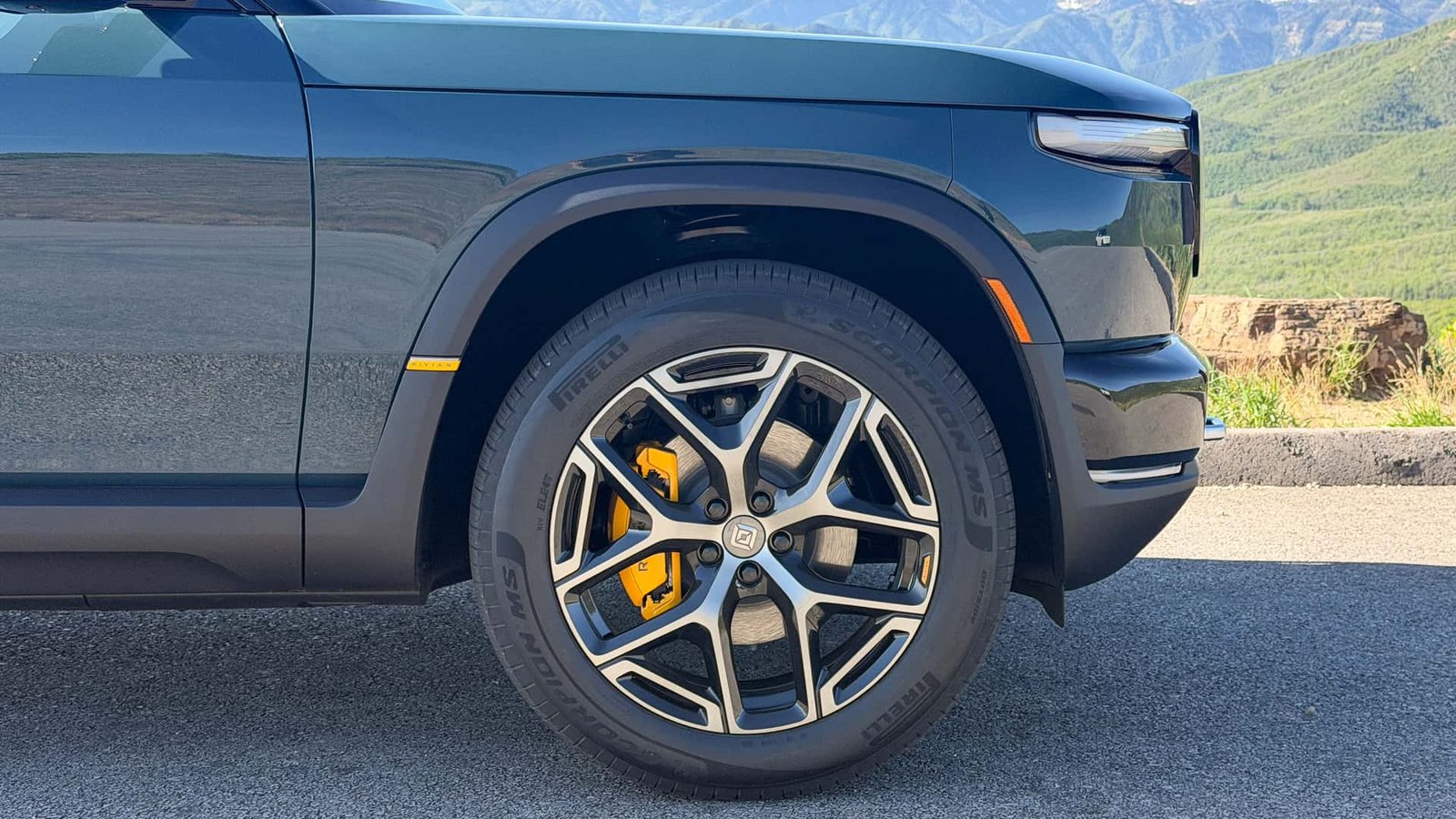
The 2027 Rivian R2 is rated for a max EPA range of 330 miles.
Photo by: Mack Hogan/InsideEVs
For a lot of people, especially first-time EV buyers, the No. 1 question about the R2 will be: How much range can I actually get out of this thing? That’s especially true given the adventurous clientele Rivian is targeting. EPA figures are one thing (a healthy 330 miles for the R2 Performance), but as we all know real-world highway range is a different beast. Now we know a bit more about how the R2 performs in that regard thanks to our friends at the Out of Spec YouTube channel, who have been subjecting the R2 Performance to a barrage of testing.
They took out the R2 Performance with Launch Package (the only version available) out at a sustained 70 mph in North Carolina. The conditions were pretty much ideal for a range test: warm weather, dry roads, and barely any wind. At a 50% state of charge, the R2 had traveled 127.8 miles and logged an average efficiency of 2.8 miles per kilowatt-hour. After close to 3 hours of driving, the R2 hit a 25% state of charge. By that point it had traveled 194.2 miles at 2.89 mi/kWh. (To me, this last milestone feels like the most important number, and I’ll explain in a moment.)

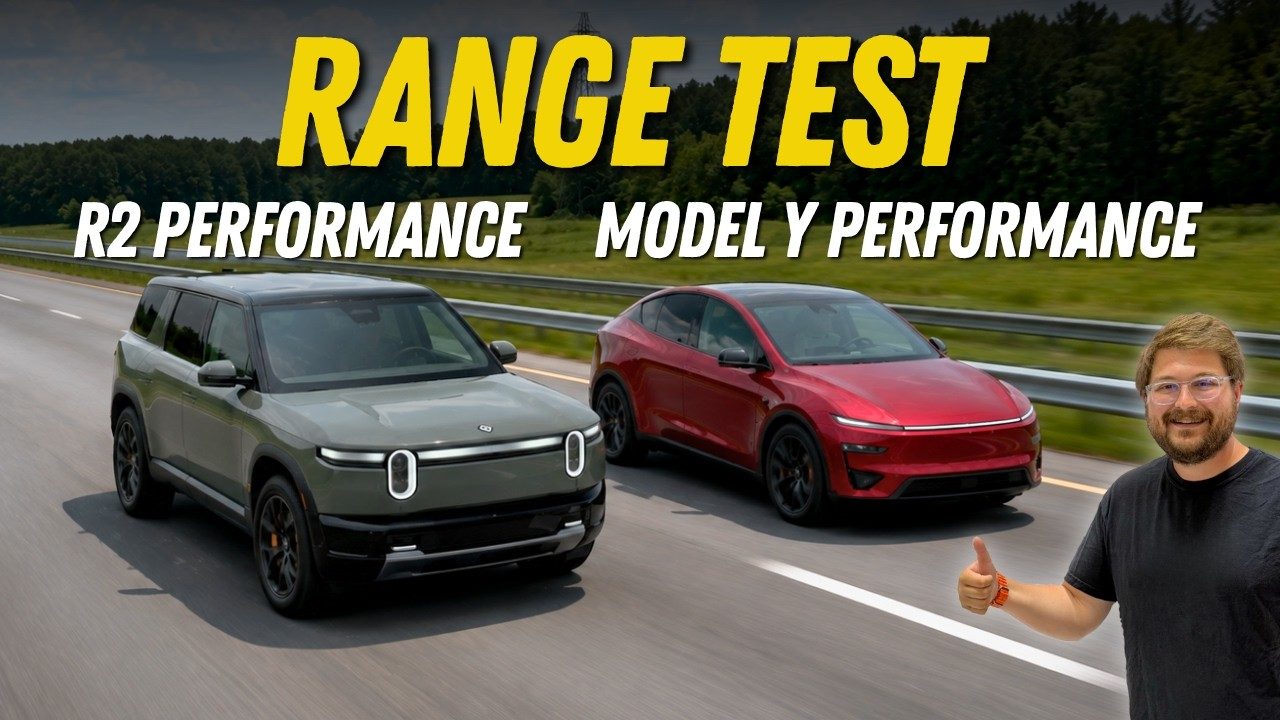
And the final result: The R2 hit 0% after traveling an indicated 255 miles at 2.88 mi/kWh. It used 89.3 kWh, more than the usable capacity Rivian quotes. Out of Spec’s Kyle Conner says the R2’s internal distance calculation is a little optimistic, and that it actually traveled 253 miles at 2.83 mi/kWh. (Interestingly enough, that about matches another 70 mph range test we covered, involving an R2 on knobby all-terrain tires.)
So how good is that? It’s far short of the R2’s EPA rating, which makes sense. EPA ratings involve a mix of highway and city driving, not 70 mph flat-out. Still, the Model Y Performance the channel tested on the same route at the same time managed to beat its EPA rating, going 310.1 miles at 70 mph. The R2 is a boxy vehicle so it makes sense that it isn’t the most efficient at high speeds. Meanwhile, the egg-shaped Model Y is far more aerodynamic.
Does that mean the R2 is a bad road tripper? Hardly. It took 3 hours 25 minutes and 230.5 miles for the R2 to hit a 10% state of charge. I don’t know about you, but three hours in the car is about all I can handle before I want to stop and stretch my legs. It means you can leave with a full charge and drive for hours without needing to stop. Of course, throw in cold temperatures and elevation gains and that will change. It also helps that, per testing we’ve seen, the R2 is a 400-volt charging champ.
I think the bigger takeaway, as Kyle notes in the video, is something we’ve gathered from numerous tests over the years: EPA ratings on a car’s window sticker are merely a suggestion, especially when you start getting to higher speeds. There’s a good case to be made that the EPA should overhaul its testing standards, and maybe even mandate that manufacturers lay out both highway and city numbers separately. In the meantime, just remember: Whether you’re buying an R2 or something else, your mileage may vary.
Contact the author: Tim.Levin@InsideEVs.com