

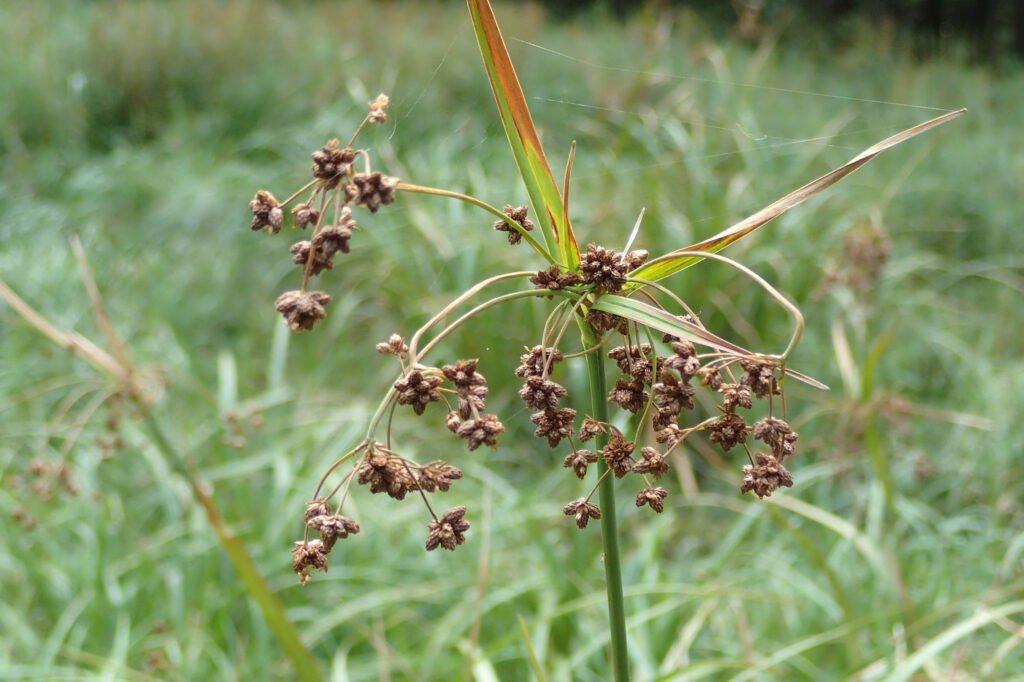
When the northeastern bulrush joined the ranks of federally endangered plants and animals in 1991, the perennial, grass-like sedge teetered on the edge of extinction with just 13 known populations scattered across six states.
More than 30 years later, that number has ballooned elevenfold: 148 plant populations have been found in Maryland, Massachusetts, New Hampshire, New York, Pennsylvania, Vermont, Virginia and West Virginia.
Given this increase, the U.S. Fish and Wildlife Service (FWS) announced this month that the northeastern bulrush has recovered and will be delisted as a federally endangered species on July 10.
Yet researchers who study the plant questioned the delisting decision, noting that the northeastern bulrush faces ongoing threats from climate change, habitat loss and a lack of genetic diversity. Complicating matters further, this tough-to-find wetland plant has a life cycle that’s not yet fully understood.
“To delist it completely is premature,” said Kendra Cipollini, a plant biologist at Wilmington College and one of the leading experts on the northeastern bulrush. “I just don’t think they did enough systematic study.”
Since it was first classified as endangered, state agencies and FWS partners conducted surveys for the plant—which lives around the edges of vernal pools and beaver ponds—in every state within its known range. Identification is a challenge for the untrained eye, though it is usually easiest when the plant is in bloom, producing droopy clumps of chocolate-colored, spiky flowers.
Cipollini noted that the growth in recorded populations likely reflects improved survey efforts, rather than true recovery. “It’s not a very charismatic plant, so not many people noticed it,” she said. “Once it became endangered, everybody started to look for it, and they found more populations.”
According to Cipollini, the species could still be in decline even as new populations are recorded. She said many of the sites she first studied in the 1990s “are all gone or barely hanging on,” and many sites were lost before the species began receiving federal protections.
Cipollini said the endangered species listing for the northeastern bulrush made it “a good umbrella protector” for seasonal wetlands, shielding these fragile ecosystems—and the frogs and salamanders that live there—from development.
The Trump administration has tried to weaken Endangered Species Act protections, which it sees as impeding development. But the FWS first proposed delisting the northeastern bulrush in 2024 under the Biden administration.
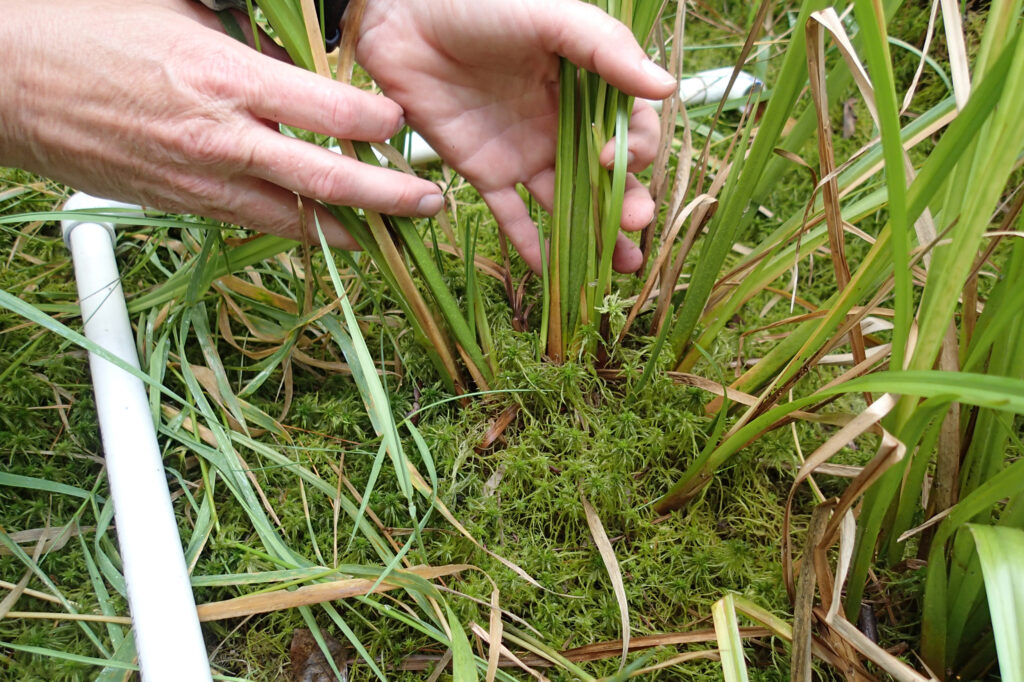
Habitat degradation and destruction from activities like construction and logging are key threats to the species, according to the Western Pennsylvania Conservancy. The most recent FWS assessment in 2019, for which Cipollini served as a peer reviewer, considered development “a discountable or insignificant threat.”
However, wetlands protections have undergone significant changes since that assessment. In 2023, the Supreme Court ruling in Sackett vs. EPA rewrote the definition of wetlands under the Clean Water Act, potentially leaving at least 60 percent of individual wetlands unregulated. The U.S. Army Corps of Engineers announced in March it would be “getting out of the business of regulating wetlands” nationwide, Bloomberg Law reported.
Asked how changes to wetland regulations affected the delisting decision, an FWS spokesperson said that northeastern bulrush populations are unlikely to be destroyed by development and that the plant would “still receive some Federal protections in non-isolated or non-ephemeral wetlands.”
But the plant is not usually found in these environments. And once the northeastern bulrush is delisted federally, it will no longer benefit from prohibitions and conservation measures under the Endangered Species Act, other than continued monitoring for at least five years. The plant will still be classified as endangered at the state level throughout its known range, except in West Virginia, though the accompanying protections vary by state.
In addition to development, climate change threatens the species. Research has shown that shifting temperature and rainfall patterns can disrupt the unique light and water conditions the plant relies on.
This story is funded by readers like you.
Our nonprofit newsroom provides award-winning climate coverage free of charge and advertising. We rely on donations from readers like you to keep going. Please donate now to support our work.
While the FWS said in its announcement that the plant “may be absent aboveground for many years” when conditions are unfavorable, returning later, scientists warn that the plant’s life cycle and ability to stay dormant remain poorly understood. Genetic studies of the northeastern bulrush also show low levels of genetic diversity, limiting its ability to respond to changing conditions.
“We have 148 populations, but we probably have just 148 individuals because each pond is pretty much coming from one individual that just reproduces asexually,” Cipollini said. “Genetic diversity is key to evolution, and we need genetic diversity for species to be able to evolve to things like climate change.”
A 2025 study published in the journal Biodiversity and Conservation concluded that the plant is likely experiencing an “extinction debt,” in which a species is temporarily surviving but will eventually die out because of an inability to reproduce or adapt. The study found that the northeastern bulrush’s specialized environmental needs and limited seed dispersal put its long-term health at risk.
“There’s not a lot of resources to go out and study these plants, so we’re working with a lot of missing data,” said Olivia Sterantino, the paper’s lead author. “A lot more study needs to be done on this plant before we can say, ‘Yes, this plant is definitely stable.’”
In response to concerns about information gaps and the impact of climate change, a FWS spokesperson said that a need for further research is “not necessarily relevant” to endangered status and “it is not necessary for all threats to a species to be removed for a species to be considered as recovered under the Act.”
FWS noted that 40 species have been delisted since the start of President Donald Trump’s first term in 2017. The administration has been critical of the Endangered Species Act, referring to the list as a “Hotel California” that species never leave.
Yet both Cipollini and Sterantino said that many plant species need better protections.
“There’s probably more plants that need to be on that list, not less,” Cipollini said.
About This Story
Perhaps you noticed: This story, like all the news we publish, is free to read. That’s because Inside Climate News is a 501c3 nonprofit organization. We do not charge a subscription fee, lock our news behind a paywall, or clutter our website with ads. We make our news on climate and the environment freely available to you and anyone who wants it.
That’s not all. We also share our news for free with scores of other media organizations around the country. Many of them can’t afford to do environmental journalism of their own. We’ve built bureaus from coast to coast to report local stories, collaborate with local newsrooms and co-publish articles so that this vital work is shared as widely as possible.
Two of us launched ICN in 2007. Six years later we earned a Pulitzer Prize for National Reporting, and now we run the oldest and largest dedicated climate newsroom in the nation. We tell the story in all its complexity. We hold polluters accountable. We expose environmental injustice. We debunk misinformation. We scrutinize solutions and inspire action.
Donations from readers like you fund every aspect of what we do. If you don’t already, will you support our ongoing work, our reporting on the biggest crisis facing our planet, and help us reach even more readers in more places?
Please take a moment to make a tax-deductible donation. Every one of them makes a difference.
Thank you,

Fellow
Madeline Shaw is an Outrider fellow at Inside Climate News and a journalist in NYU’s Science, Health and Environmental Reporting Program. She has reported on issues involving conservation, poaching and biodiversity. Her work has been published in The New York Times and Scienceline.