

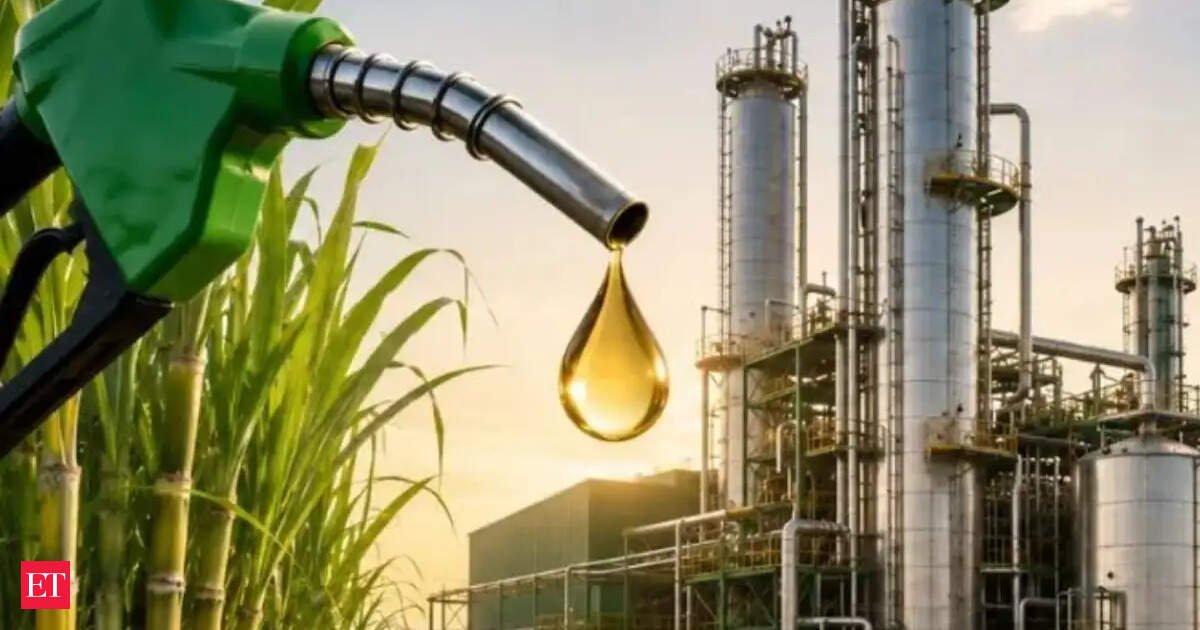
The experts also highlighted that going forward, the government should decrease ethanol-blended fuel prices to compensate consumers for a drop in efficiency and expenditures incurred due to wear and tear of vehicle components.
The group included D Raghunandan, scientist and activist at the Delhi Science Forum, Siraj Hussain, former secretary with the Ministry of Agriculture and the Ministry of Food Processing, and Ramesh Chand, former member of the NITI Aayog.
During his address at an event organised by the Indian Women’s Press Corps here, Raghunandan said ethanol-blended fuel has transformed the Indian agriculture sector from being food oriented to fuel oriented.
For example, due to using maize to produce ethanol, the country is now forced to import the crop to meet the demand, whereas it previously exported maize, according to Raghunandan.

“The ethanol-blended fuel policy is disruptive. Its use has an environmental impact in terms of water utilisation and a shift in agriculture patterns,” he said.
Chand suggested that the government pushed for ethanol-blended fuel to tackle surplus rice and sugar production in recent years.”Rice and sugar have been bought at a minimum support price (MSP), which is higher than the international price and the open market price. The surplus amount is neither being consumed domestically nor purchased in the international market,” he said.
Chand noted that it is necessary for the country to replace a substantial area under rice cultivation with maize. That is because rice consumes a lot more water and emits high amounts of methane, a greenhouse gas.
Speaking on comparisons with Brazil’s use of ethanol-blended fuel, Hussain said unlike India, the South American country is slower in moving towards this kind of fuel.
“Brazil also produces a huge surplus of sugar. It produces 45 million tonnes of sugar and exports 36 million tonnes of it. The country has a small population and a large area for production. There have been studies that say climate change can reduce India’s production by 25 per cent. That is why comparisons with Brazil are not correct,” he added.
Raghunandan recommended that the government should go back to E10 fuel — a petrol blend that contains up to 10 per cent ethanol — and discard the use of E20 fuel.
“In such a situation, the only losers will be some 400 distillers who have the set up to produce ethanol. The government can compensate them. I do not see the gain we are making because currently, consumers and the environment are paying a cost, and farmers are not benefitting,” he said.