

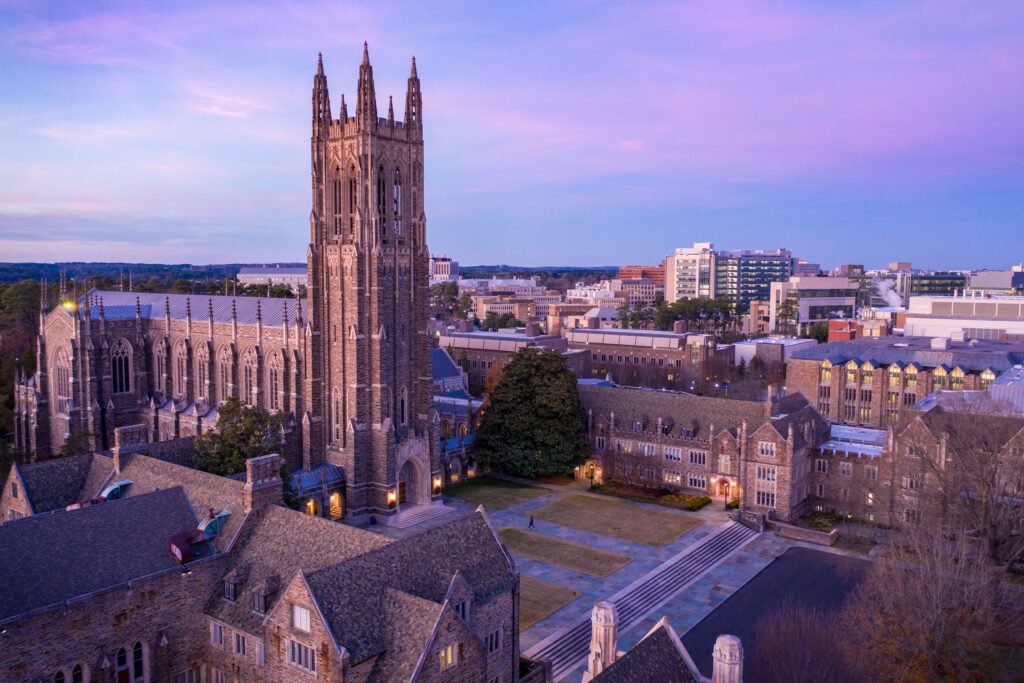
DURHAM, N.C.—Duke University plans to build a small data center at Central Campus, potentially the first of several similar-size projects, which has raised questions among some faculty about whether the energy- and water-intensive endeavors could derail the institution’s climate commitments.
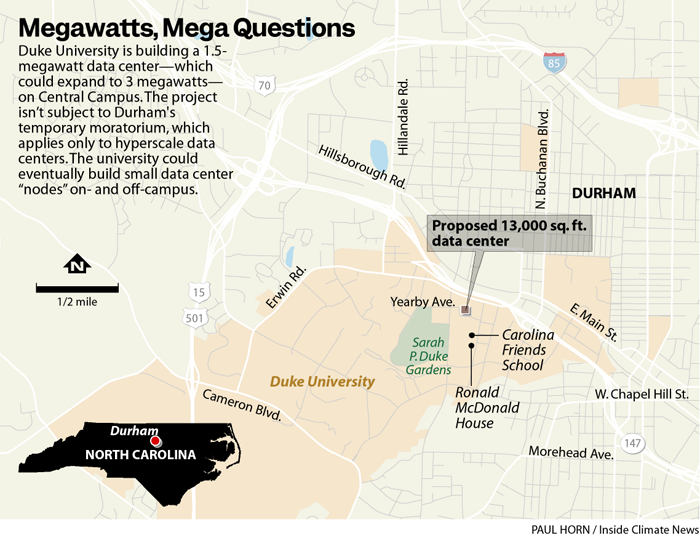
The 1.5-megawatt data center could eventually expand to 3 megawatts, a university spokesperson said. It will be built on 12 acres on Duke-owned property along Yearby Avenue, near the university electric substation and water chiller plant, according to the city-county building permit dated April 8.
Contractors began preparing the site this week; construction is expected to be complete next year.
Many U.S. universities and colleges have built, or are building, their own data centers to manage student information, confidential medical records and academic research. Duke could also use data centers to attract faculty, according to minutes from the April meeting of the Academic Council, the main body for faculty governance.
The Duke facility will provide computing power to support the university’s researchers “as they address society’s most pressing challenges,” a university spokesperson said. “Consistent with Duke’s climate commitment, the facility is designed with a focus on environmental responsibility and sustainability. With this project, Duke aims to set an example for how to build energy-efficient, carbon emission-aware infrastructure that meets the computing needs of the modern research university.”
The $23 million data center would not be a hyperscale facility, like the behemoth projects built by Amazon, Meta and Google. Yet the university could construct other small facilities on and off-campus, including at schools and hospitals.
“We can put nodes all over the place,” Duke University Provost Alec Gallimore told the Academic Council in March. “We can site them where there’s a need for hot water and access to more sustainable energy as a way of bridging the gap between the growth in AI and the sustainability of our planet.”
Several well-known locations lie within a quarter mile of the site: Carolina Friends Early School, which serves children ages 3-6; the Friends Meeting House, where members of the Quaker denomination gather; the Ronald McDonald House, which provides temporary housing and support for seriously ill children and their families; and Duke Gardens, a tourist destination that attracts 600,000 visitors each year.
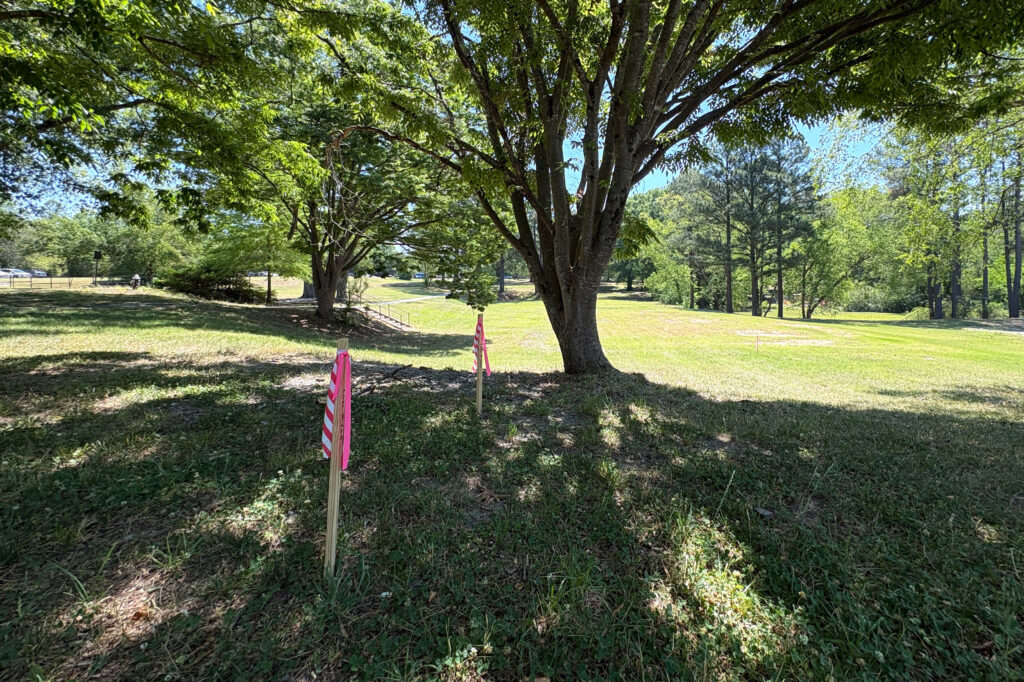
Ronald McDonald House officials declined to comment on the proposal. Karen Cumberbatch, head of school at Carolina Friends, said the university “has not shared any proposed development plans for the empty lots on Central Campus.”
The university spokesperson said because no external chiller units will be installed at the center, “we do not expect noise or other community impacts requiring notification to property owners in the area.”
The Building & Safety Department issued the permit a month before the City Council adopted a 60-day data center moratorium. City Council and the Durham County Board of Commissioners plan to pass a two-year moratorium on new and expanded hyperscale data centers later this summer.
A city of Durham spokesperson told Inside Climate News the temporary moratorium excluded data processing facilities that are secondary to a main use—such as those that support hospitals, offices or educational institutions—so long as they are used only for on-site needs and aren’t providing services to outside users.
The university’s data center would be exempt from the moratorium under state law as well. Local governments can’t impose a development moratorium, including those for data centers, on projects with a valid building permit or that have invested “substantial expenditures” based on previous permit approvals.
Data centers, even smaller ones, can consume outsized amounts of energy to power their computers.
Duke University’s annual energy use at its main campus is almost evenly split between electricity and natural gas, according to the university climate and sustainability office. It uses the equivalent energy and water of 10,000 to 40,000 typical residential homes.
The data center is expected to increase the university’s energy consumption by 2 to 3 percent at peak load, the university spokesperson said. Duke is also exploring how renewable energy could be used to power the facility.
The university spokesperson said the center’s emissions will be accounted for on a public online dashboard, as part of Duke’s carbon emissions reporting.
In February, Duke’s AI steering committee issued several recommendations about the use of artificial intelligence and data centers in all facets of campus life.
The university could use the data center not as a “passive utility,” but rather to pioneer research on energy consumption, carbon intensity and other impacts “that allow institutions to expand AI capabilities while meaningfully reducing environmental harm,” the report reads.
Data centers also need significant amounts of water to cool the computers. The university did not provide usage estimates to Inside Climate News, but Tracy Futhey, vice president and chief information officer, told the Academic Council last month that the data center could put cool water into the computers, then funnel the hot water to the university’s and health system’s water heating plant.
“This makes it more than a data center that just cools in the air and the hot air is escaping into the environment,” Futhey said, according to meeting minutes.
The city of Durham provides water to the university. The Department of Water Management has not received any information from Duke about projected usage, a city spokesperson said.
This story is funded by readers like you.
Our nonprofit newsroom provides award-winning climate coverage free of charge and advertising. We rely on donations from readers like you to keep going. Please donate now to support our work.
Durham is among 67 North Carolina counties in extreme drought. City data shows Durham has just over four months of easily accessible water left, with another two months of less accessible and emergency storage supplies.
Leslie St Dre is the founder of Community Land and Power, a Durham-based housing, land and environmental justice organization. They were among dozens of people who spoke in favor of a data center moratorium before the City Council earlier this month.
St Dre told Inside Climate News that local officials should also cap the total megawatts consumed by data centers within the city and county. “Twenty data centers that are 5 megawatts—that’s still 100 megawatts,” St Dre said. “They’re gutting the progress we’ve made on climate change. These major climate catastrophes are getting worse.”
Carbon Neutral or Carbon Driver?
Duke University achieved carbon neutrality in 2024 and 2025, according to its annual climate commitment report. The university reduced its emissions by 31 percent since 2007, despite a 24 percent increase in campus population and the addition of 3 million square feet of new space.
In addition to reducing emissions, the university hit that benchmark aby purchasing carbon offsets that accounted for the other 65 percent, according to the report.
Those offsets included manure digesters that convert methane to electricity at three dairy farms in Washington state; a landfill gas-to-electricity facility in Montana; and two projects, one in the U.S., and the other in Thailand, that destroy ozone-depleting refrigerant gases that otherwise would have leaked out of storage containers and entered the atmosphere.
Yet Duke will no longer be carbon neutral after this year, according to Academic Council minutes from March. “I’m guessing most people don’t know that,” said Prasad Kasibhatla, professor of environmental chemistry at Duke’s Nicholas School of the Environment. “I’m wondering how we rationalize that, given our language that we’re leaders.”
If Duke builds an extensive data center network, it could be more difficult to achieve its goal of carbon neutrality by 2050. The university has said it will meet that benchmark, inclusive of Duke’s health system, a mammoth network of hospitals and clinics that require immense amounts of energy.
“We’re not taking our foot off the accelerator in terms of decarbonization,” Duke University President Vincent Price said, according to March meeting minutes. “The data center we’re bringing online to support the work in computing has entailed a detailed conversation about energy consumption, trying to drive down our carbon footprint. There’s no retreat from our carbon neutrality goals.”
The university could buy more carbon offsets to achieve net zero, Price said, or it could reduce energy consumption “to a point where it’s sustainable”—or both.
Duke has installed 1 megawatt of solar photovoltaics at several sites on campus.
Futhey, who is co-chair of the AI steering committee, told the Academic Council last month that Duke’s approach to AI “should not simply balance benefits and risks but should actively contribute to improving the human condition.”
“An AI strategy cannot be considered sustainable unless it delivers clear and meaningful societal value,” Futhey said. “We’ve worked very hard … to find ways to deliver on our computational enthusiasm and the need to support the science at Duke, but also in recognition of the climate commitment and to not run afoul of that.”
About This Story
Perhaps you noticed: This story, like all the news we publish, is free to read. That’s because Inside Climate News is a 501c3 nonprofit organization. We do not charge a subscription fee, lock our news behind a paywall, or clutter our website with ads. We make our news on climate and the environment freely available to you and anyone who wants it.
That’s not all. We also share our news for free with scores of other media organizations around the country. Many of them can’t afford to do environmental journalism of their own. We’ve built bureaus from coast to coast to report local stories, collaborate with local newsrooms and co-publish articles so that this vital work is shared as widely as possible.
Two of us launched ICN in 2007. Six years later we earned a Pulitzer Prize for National Reporting, and now we run the oldest and largest dedicated climate newsroom in the nation. We tell the story in all its complexity. We hold polluters accountable. We expose environmental injustice. We debunk misinformation. We scrutinize solutions and inspire action.
Donations from readers like you fund every aspect of what we do. If you don’t already, will you support our ongoing work, our reporting on the biggest crisis facing our planet, and help us reach even more readers in more places?
Please take a moment to make a tax-deductible donation. Every one of them makes a difference.
Thank you,

Reporter, North Carolina
Lisa Sorg is the North Carolina reporter for Inside Climate News. A journalist for 30 years, Sorg covers energy, climate environment and agriculture, as well as the social justice impacts of pollution and corporate malfeasance.
She has won dozens of awards for her news, public service and investigative reporting. In 2022, she received the Stokes Award from the National Press Foundation for her two-part story about the environmental damage from a former missile plant on a Black and Latinx neighborhood in Burlington. Sorg was previously an environmental investigative reporter at NC Newsline, a nonprofit media outlet based in Raleigh. She has also worked at alt-weeklies, dailies and magazines. Originally from rural Indiana, she lives in Durham, N.C.