

Close Menu

    Subscribe to Updates

    Get the latest news information from worldwide businesses.

    What's Hot

    Pfizer’s Experimental Pneumococcal Vaccine Shows Stronger Immune Response Than Prevnar 20

    May 21, 2026

    Xbox hires game industry analyst Matthew Ball to lead strategy

    May 21, 2026

    Clouted wants to take the guesswork out of making short videos go viral

    May 21, 2026
    Facebook Instagram YouTube LinkedIn X (Twitter)
    Trending
    • Pfizer’s Experimental Pneumococcal Vaccine Shows Stronger Immune Response Than Prevnar 20
    • Xbox hires game industry analyst Matthew Ball to lead strategy
    • Clouted wants to take the guesswork out of making short videos go viral
    • CBIC allows remote clearance for sea cargo
    • Gen Z may be shying away from buying cosmetics, as higher gas prices hit spending
    • Are Xi and Putin still ‘best friends’? – The Latest | China
    • Private defence company tests rocket at Chandipur | India News
    • California influencer, father accused of dark web murder-for-hire plot
    Newspublicly
    • About Us
    • Advertise & Partner with us
    • Pitch Your Story
    • Contact Us
    Facebook Instagram LinkedIn X (Twitter)
    Subscribe
    • Home
    • World News
      • Asia
      • India
      • USA
      • UK & Europe
      • Middle East
    • Economy & Business
      • Global Economy
      • Corporate & Industry
      • Finance & Markets
      • Policy & Trade
    • Technology
      • Gadgets & Devices
      • Software & Apps
      • AI & Machine Learning
      • Robotics & Automation
    • Health & Medicine
      • Fitness & Nutrition
      • Research & Innovation
      • Disease & Treatment
      • Doctors, Clinics & Patient Care
    • Travel & Tourism
    • Automobile
      • Electric & Hybrid Vehicles
      • Auto Industry Insights
    • Sports
    • More
      • Education
      • Real Estate
      • Environment & Climate
      • Space & Astronomy
      • War & Conflicts
    Newspublicly
    Home»More»Environment & Climate»Top Climate Scientists Accuse the Livestock Industry of Pushing Fuzzy Math to Downplay its Climate Warming Emissions
    Environment & Climate

    Top Climate Scientists Accuse the Livestock Industry of Pushing Fuzzy Math to Downplay its Climate Warming Emissions

    AdminBy AdminMay 20, 2026No Comments6 Mins Read0 Views
    Share
    Facebook Twitter LinkedIn Copy Link WhatsApp


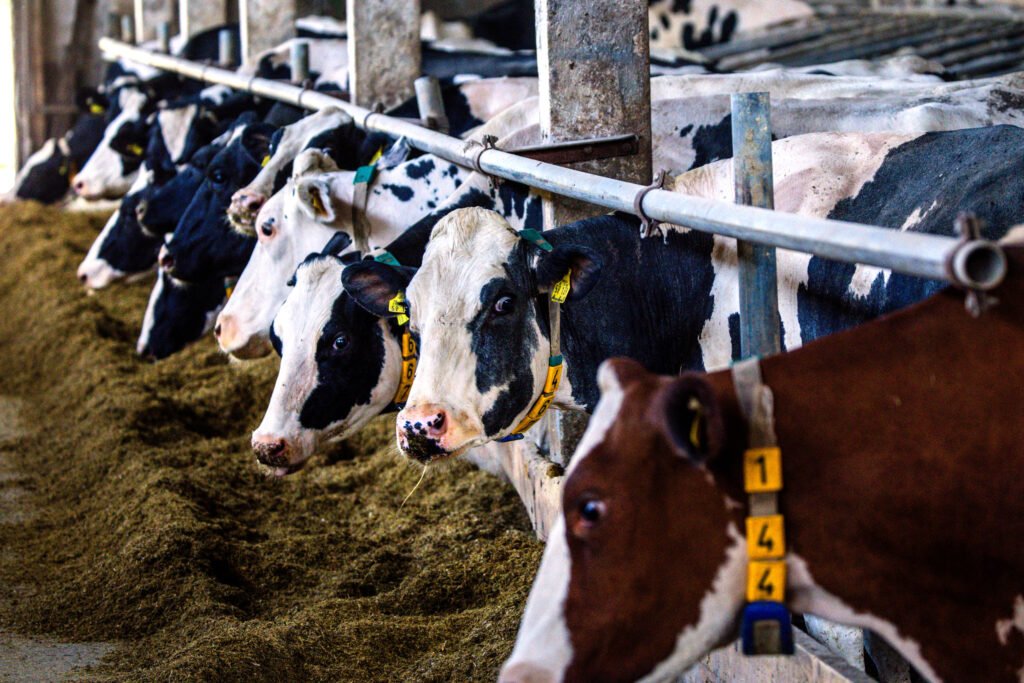
    A group of the world’s leading climate scientists are warning governments and the livestock industry against adopting an “accounting trick” that will imperil the all-out global effort required to control heat-trapping emissions.

    In the statement, 42 scientists call on the government of Ireland, a major dairy producer, to reject a proposal that would allow it to use what’s known as Global Warming Potential Star, or GWP*, to measure methane emissions. The scientists say the methodology, which was initially developed to more accurately measure the warming impact of different greenhouse gases, is being misused by the livestock industry and livestock-heavy countries to weaken requirements for reducing the powerful, short-lived greenhouse gas that comes mainly from livestock.

    Major emitters, including the United States and the European Union, along with other major cattle countries, including Brazil and Argentina, are promoting GWP* to revise climate targets, aiming for “temperature neutrality” or “no additional warming” rather than substantially cutting emissions. These targets, the scientists say, will allow the beef and dairy industries, which are responsible for the bulk of global methane, to continue emitting huge quantities of methane.

    “What worries us as scientists is that other countries are now seriously weighing these targets. The danger is that one country adopts them, then the next, and the next,” said Paul Behrens, an environmental scientist at the University of Oxford and co-author of the letter. “That’s a huge problem, because the direction we need to be heading is deep methane cuts that actually pull near-term warming down. A ‘no additional warming’ target does the opposite: It freezes today’s high emissions in place and throws away the fastest cooling lever we have.”

    If Ireland adopts its goal of “temperature neutrality” by using GWP* in its carbon budget for 2031 to 2035, it will allow the country to emit 9 million more tons of carbon dioxide equivalent, the scientists say, roughly the same as burning 20 million barrels of oil. New Zealand, another dairy giant, was the first country to adopt a “no additional warming” target, in 2025, employing the GWP* methodology, which led to a weakening of its methane reduction target. 

    The Intergovernmental Panel on Climate Change and governments, including those that signed onto the Paris Agreement, use a metric called GWP 100 to measure the cumulative impacts of emissions over a 100-year period, relative to carbon dioxide. GWP* measures the warming impact of changes in the rate of emissions between two points in time and was developed to understand the impact of shorter-lived greenhouse gases, including methane, which only lasts in the atmosphere for 10 or 12 years.

    But the signing scientists, who include high-profile climate researchers Michael Mann and Drew Shindell, say that using a baseline—a point in time—allows countries to write off the impact of existing cattle or dairy herds.

    “This a real serious misuse of GWP* because it’s designed to look at the temperature impacts of future projections,” said Shindell, a climate scientist at Duke University. “But if you want to look at the responsibility of any particular nation or sector, or sector within a nation, like livestock from Ireland, the contribution is their current emissions relative to what they were centuries ago.”

    Concentrations of methane in the atmosphere are roughly two-and-a-half times higher than they were before industrialization. Methane is responsible for about one-third of global warming.

    “We have a lot more cows than we did then, and that methane from those cows is much higher now,” Shindell noted. “That’s contributed quite a lot to climate change—about half a degree to around 2020.”

    The scientists stressed that GWP* gives a free pass to countries with large existing herds, while developing countries with historically smaller livestock herds and less industrial livestock production will be penalized when they increase emissions from a lower baseline.

    “It’s a question of equity,” Shindell said. “You get a reward for being a high emitter. If you currently have very high methane emissions, you get to keep them. And that’s typically wealthy countries like the United States and many others, with a lot of livestock.”

    About This Story

    Perhaps you noticed: This story, like all the news we publish, is free to read. That’s because Inside Climate News is a 501c3 nonprofit organization. We do not charge a subscription fee, lock our news behind a paywall, or clutter our website with ads. We make our news on climate and the environment freely available to you and anyone who wants it.

    That’s not all. We also share our news for free with scores of other media organizations around the country. Many of them can’t afford to do environmental journalism of their own. We’ve built bureaus from coast to coast to report local stories, collaborate with local newsrooms and co-publish articles so that this vital work is shared as widely as possible.

    Two of us launched ICN in 2007. Six years later we earned a Pulitzer Prize for National Reporting, and now we run the oldest and largest dedicated climate newsroom in the nation. We tell the story in all its complexity. We hold polluters accountable. We expose environmental injustice. We debunk misinformation. We scrutinize solutions and inspire action.

    Donations from readers like you fund every aspect of what we do. If you don’t already, will you support our ongoing work, our reporting on the biggest crisis facing our planet, and help us reach even more readers in more places?

    Please take a moment to make a tax-deductible donation. Every one of them makes a difference.

    Thank you,


    Georgina Gustin

    Reporter, Washington, D.C.

    Georgina Gustin covers agriculture for Inside Climate News, and has reported on the intersections of farming, food systems and the environment for much of her journalism career. Her work has won numerous awards, including the John B. Oakes Award for Distinguished Environmental Journalism, and she was twice named the Glenn Cunningham Agricultural Journalist of the Year, once with ICN colleagues. She has worked as a reporter for The Day in New London, Conn., the St. Louis Post-Dispatch and CQ Roll Call, and her stories have appeared in The New York Times, Washington Post and National Geographic’s The Plate, among others. She is a graduate of the Columbia University Graduate School of Journalism and the University of Colorado at Boulder.


    Source link

    Author

    • Admin

      NewsPublicly.com is News & Articles Platform that creating SEO-focused articles on travel, lifestyle, and digital trends.

    Admin
    • Website

    NewsPublicly.com is News & Articles Platform that creating SEO-focused articles on travel, lifestyle, and digital trends.

    Related Posts

    Prescribed Burns and Forest Thinning Averted Millions of Tons of Emissions and Billions in Damages

    May 20, 2026

    Wildfire Crews Race to Keep Fierce California Blaze From Former Nuclear Reactor Site

    May 20, 2026

    Fire in the ‘Galapagos of North America’ Risks Species Found Nowhere Else

    May 20, 2026
    Leave A Reply Cancel Reply

    Demo
    Top Posts

    “Inside Gemini Robotics 1.5: How Robots Learn to Reason & Act

    November 22, 202525 Views

    How US Tariffs Are Reshaping the Global Growth Landscape?

    November 21, 202518 Views

    Pakistani Journalist Laughing at Tejas Fighter Jet Crash at Dubai Airshow Sparks Massive Outrage Worldwide

    November 23, 202517 Views

    Vibe-Coding Boom: How Non-Coders Build Apps With AI Agents

    November 22, 202515 Views
    Don't Miss

    Pfizer’s Experimental Pneumococcal Vaccine Shows Stronger Immune Response Than Prevnar 20

    May 21, 20261 Min Read0 Views

    Pfizer’s Experimental Pneumococcal Vaccine Shows Stronger Immune Response Than Prevnar 20 We use cookies for…

    Xbox hires game industry analyst Matthew Ball to lead strategy

    May 21, 2026

    Clouted wants to take the guesswork out of making short videos go viral

    May 21, 2026

    CBIC allows remote clearance for sea cargo

    May 20, 2026
    Stay In Touch
    • Facebook
    • Twitter
    • Instagram
    • YouTube
    • LinkedIn
    • WhatsApp

    Subscribe to Updates

    Get the latest creative news from SmartMag about art & design.

    Demo
    NEWSPUBLICLY
    Facebook X (Twitter) Instagram LinkedIn

    Home

    • About Us
    • Leadership
    • Advertise & Partner With Us
    • Pitch Your Story
    • Media Kit & Pricing
    • Career
    • FAQs

    Guidelines

    • Editorial & Submission
    • Partnership
    • Advertising & Sponsor
    • Intellectual Property Policy
    • Community & Comment
    • Security & Data Protection
    • Send Your Opinion

    Quick Links

    • Cookie Policy
    • Payment & Billing Terms
    • Refund & Cancellation
    • Copyright Policy
    • Complaint & Support
    • Sitemap
    • Contact Us

    Subscribe Us

    Get the latest news and updates!

    Copyright © 2026 Newspublicly (DIGITALIX COMMUNICATION). All Rights Reserved.
    • Privacy Policy
    • Terms of Use
    • Disclaimer