

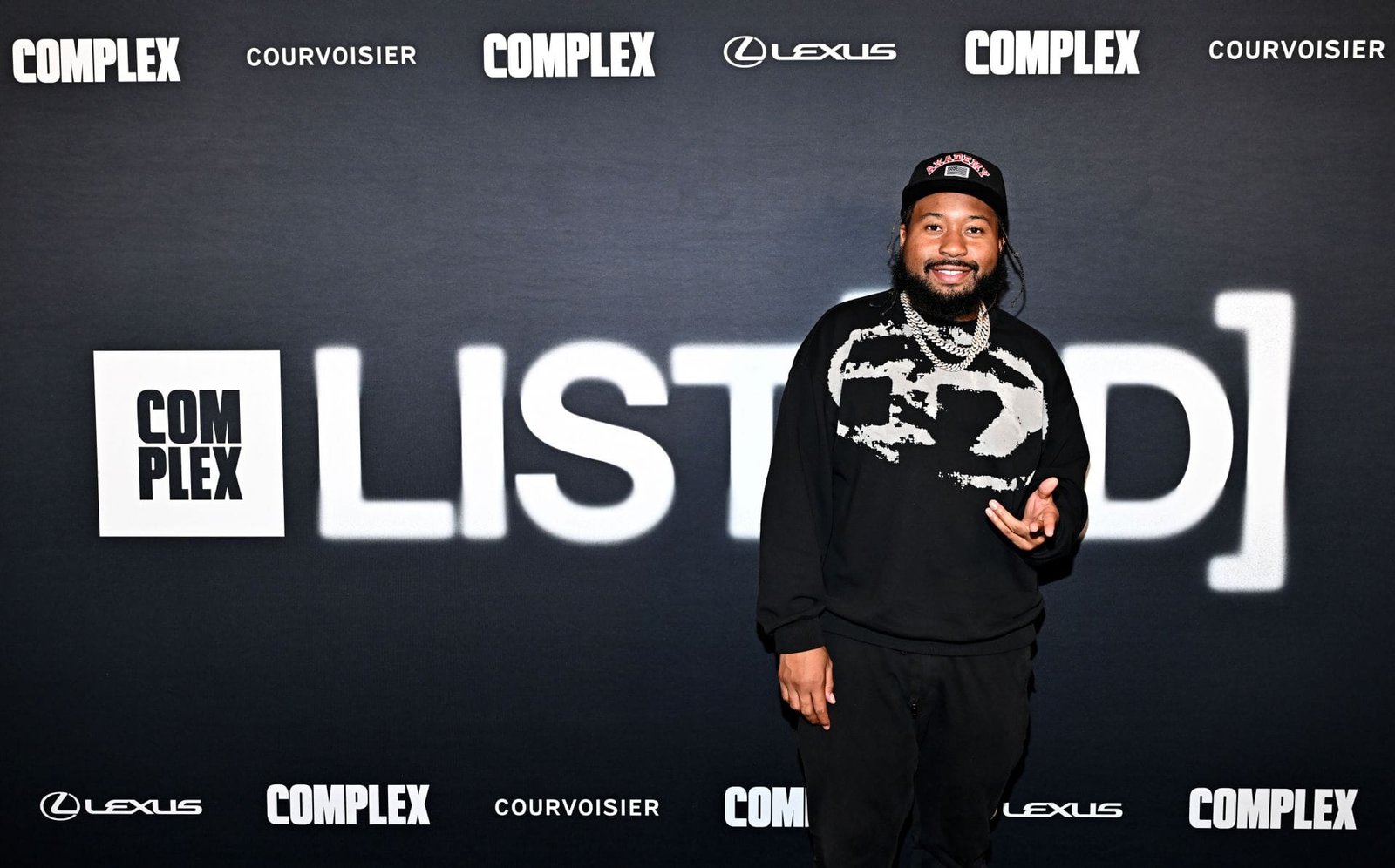

DJ Akademiks shared his thoughts about the recent trial and verdict of Karmelo Anthony, who was sentenced to 35 years in prison after being found guilty of fatally stabbing fellow high school student Austin Metcalf at a high school track meet in Frisco, Texas, in 2025. Both teenagers had been 17 at the time of the incident. During the trial, prosecutors called the killing “senseless” and “plain and simple murder,” while defense attorneys claimed that Anthony had been acting in self-defense.
Following the verdict on June 9, DJ Akademiks took to his Rumble livestream to share his thoughts about the trial. He compared Karmello Anthony to livestreamer Chud the Builder, who was recently arrested for shooting a man outside a courthouse on alleged self-defense.
Akademiks pointed out the differences between ‘Stand Your Ground’ cases and self-defense, saying the former did not mean “crash out.” Akademiks further suggested that both Karmelo Anthony and Chud the Builder‘s cases did not technically come under ‘Stand Your Ground,’ adding:
“People keep thinking that ‘Stand Your Ground’ means ‘Crash Out,’ which it doesn’t. First of all, this situation wasn’t a ‘Stand Your Ground’ situation, and even with the Chud the Building thing, it’s still not a ‘Stand Your Ground’ situation technically. It could be seen as one, but they’re not. In ‘Stand Your Ground’ cases, you have no duty to retreat, but in self-defense cases, you have some duty to not escalate.”
DJ Akademiks added that self-defense did not mean escalation. He continued that a person could not shoot someone or stab someone in self-defense because someone punched them, calling it an “unnecessary escalation that’s not proportional.”
“In ‘Stand Your Ground,’ if someone comes to you with an issue, you don’t have to run away. You can stay there and protect yourself… It’s pretty much the ‘don’t start nothing, won’t be nothing’ law. But that’s not self-defense. Self-defense usually is not escalating, which means, not because someone punched you, you immediately shoot them. That’s unnecessary escalation that’s not proportional, and then it’s not self-defense… You can’t just pull out a knife and stab them,” he continued.
Elsewhere in the livestream, DJ Akademiks also said it was hard to claim self-defense if the person was seen as the individual who provoked the incident, after prosecutors said Karmelo Anthony provoked Metcalf during the trial.
However, Akademiks admitted that the trial had racial undertones. He also suggested that Karmelo Anthony should have taken the stand and testified during the trial, saying that he should have let people know what he was thinking, adding, “You’re a black teen, you got to get up there and say it.”
Prosecutors argued that Karmelo Anthony was the aggressor during his confrontation with Austin Metcalf
Prosecutors told the jury that Karmelo Anthony provoked Austin Metcalf and acted as the aggressor during their confrontation at a high school track meet, which occurred on a rainy day at Frisco, Texas, in April 2025. Anthony reportedly took shelter under a tent meant for Memorial High School students, where Metcalf was enrolled, and refused to leave after Metcalf and other students confronted him.
According to ABC7News, a police report stated that the confrontation between Austin Metcalf and Karmelo Anthony escalated after the latter reached into his bag and said, “Touch me and see what happens.” Metcalf reportedly pushed Karmelo Anthony, following which the teen pulled out a knife and stabbed Metcalf. Neither Metcalf nor Antony knew each other before the incident.
During the trial, defense attorney Mike Howard said Anthony acted in self-defense, adding Metcalf had “no legal right to put his hands on Karmelo.” However, prosecutor Bill Wirskye called the incident “murder plain and simple,” adding:
“You don’t get to meet a shove with a stab, especially if you provoke the shove… Ultimately, this case is about accountability. What kind of community do you want to live in?”
Karmelo Anthony, now aged 19, was sentenced to 35 years in prison after the jury reached the guilty verdict in three hours.
Edited by Juhi Marzia