

4 min readNew DelhiAug 10, 2026 09:45 PM IST
Parliament gridlock continued with Opposition raising the issue of alleged Ram temple donation theft and demanded that Home Minister Amit Shah’s reply on police action on protesters, the Rajya Sabha Monday passed by voice vote and returned the Taxation and Other Laws (Amendment) Bill, 2026 as Union Finance Minister Nirmala Sitharaman made it clear that the legislation does not impose any transaction charge on UPI for consumers.
The Bankers’ Books Evidence Bill, 2026, which aims to admit electronic and digital banking records as evidence in legal proceedings, was also passed by the Rajya Sabha.

The taxation Bill, a Money Bill, was passed by the Lok Sabha last week.
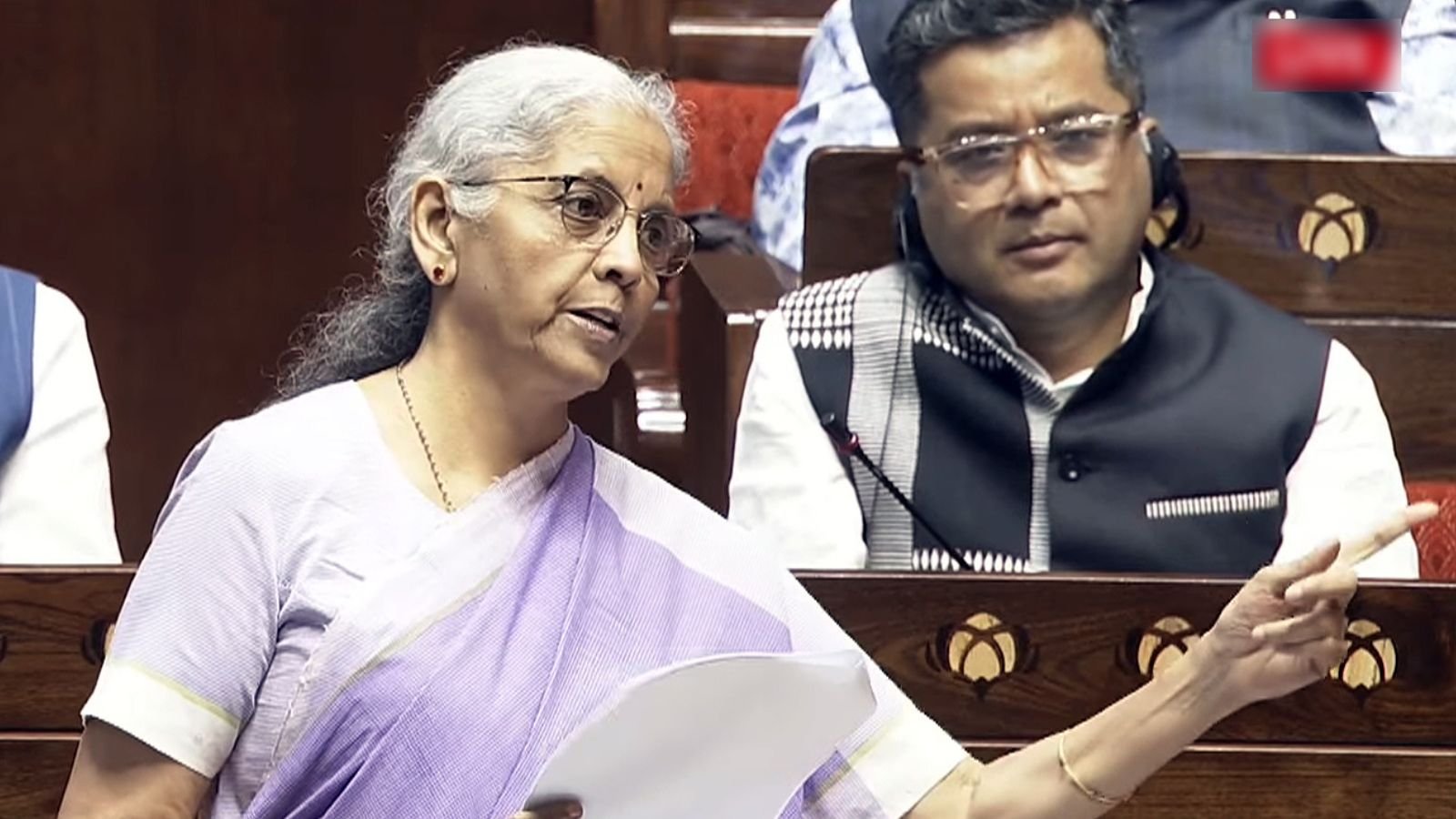
Replying to the discussion on the Taxation and Other Laws (Amendment) Bill, 2026, Sitharaman said, “The enabling provision that we are bringing in today does not impose any tax or transaction charge on UPI users.” She also said consumers and small merchants will not have to pay Merchant Discount Rate (MDR) charges on UPI transactions. The MDR framework is yet to be finalised, she added.
Clarifying the position on smaller businesses, which was raised by several MPs, including AAP’s Sanjay Singh, the Finance Minister said, “We are not going to impose any MDR on them. We don’t intend to.” She underlined that consumers will continue to make UPI payments without paying any transaction charge.
The brief discussion on the Bill, however, led to a heated exchange after CPI(M) MP John Brittas alleged that the government decided to charge fees on UPI payments due to pressure from the US, and the move was going against PM Narendra Modi’s assertion that “India’s digital payment ecosystem had been developed as a free public good”.
But after Brittas walked out of the House without listening to her reply while moving a resolution to disapprove of the Income Tax (Amendment) Ordinance, 2026, promulgated on June 5, 2026, Sitharaman took exception to it and termed communists in India as “total cowards” and accused Brittas of spreading confusion over UPI payment fee.
Story continues below this ad
“John Brittas can please stay here, if he wants to hear one line. Typical communist style, blast everybody with ‘not facts’, twist the facts and do something and also demand my right ‘I have to speak’… and when actually the replies are to be given to them, point-by-point, they don’t have the courage. Cowards!” Sitharaman said.
“Communists in this country are total cowards; the member (John Brittas) has proven that. They can’t face facts, but they will go on filibustering, making noise,” she added.
Earlier, while moving his resolution, Brittas said the Finance Minister has “facilitated promulgation of the ordinance and subsequently brought this Bill thinking that foreign capital would come to this country”. She is relying more on the promises of the foreign countries, he said, adding, “The current Bill goes against the principle of India.”
The Bankers’ Books Evidence Bill, 2026, passed by a voice vote in Rajya Sabha, seeks to repeal and replace the Bankers’ Books Evidence Act, 1891, and update the law governing the use of bankers’ books and records in courts in line with the present-day banking system.
Story continues below this ad
A key change proposed in the Bill is the explicit recognition of electronic or digital records of bankers’ books as admissible, valid and legally enforceable evidence, subject to specified safeguards.
Earlier in the day, when Sitharaman moved the Bill for discussion, the Opposition raised the issues of alleged temple donation theft and the use of pellet guns on protesters during the July 20 march to Parliament, but the Chair maintained that members should speak only on the Bill. The Opposition subsequently walked out. “It is such a sad state that the Opposition chooses to walk out on such debates,” Sitharaman said. The Rajya Sabha was adjourned twice before 2 pm amid Opposition sloganeering.