

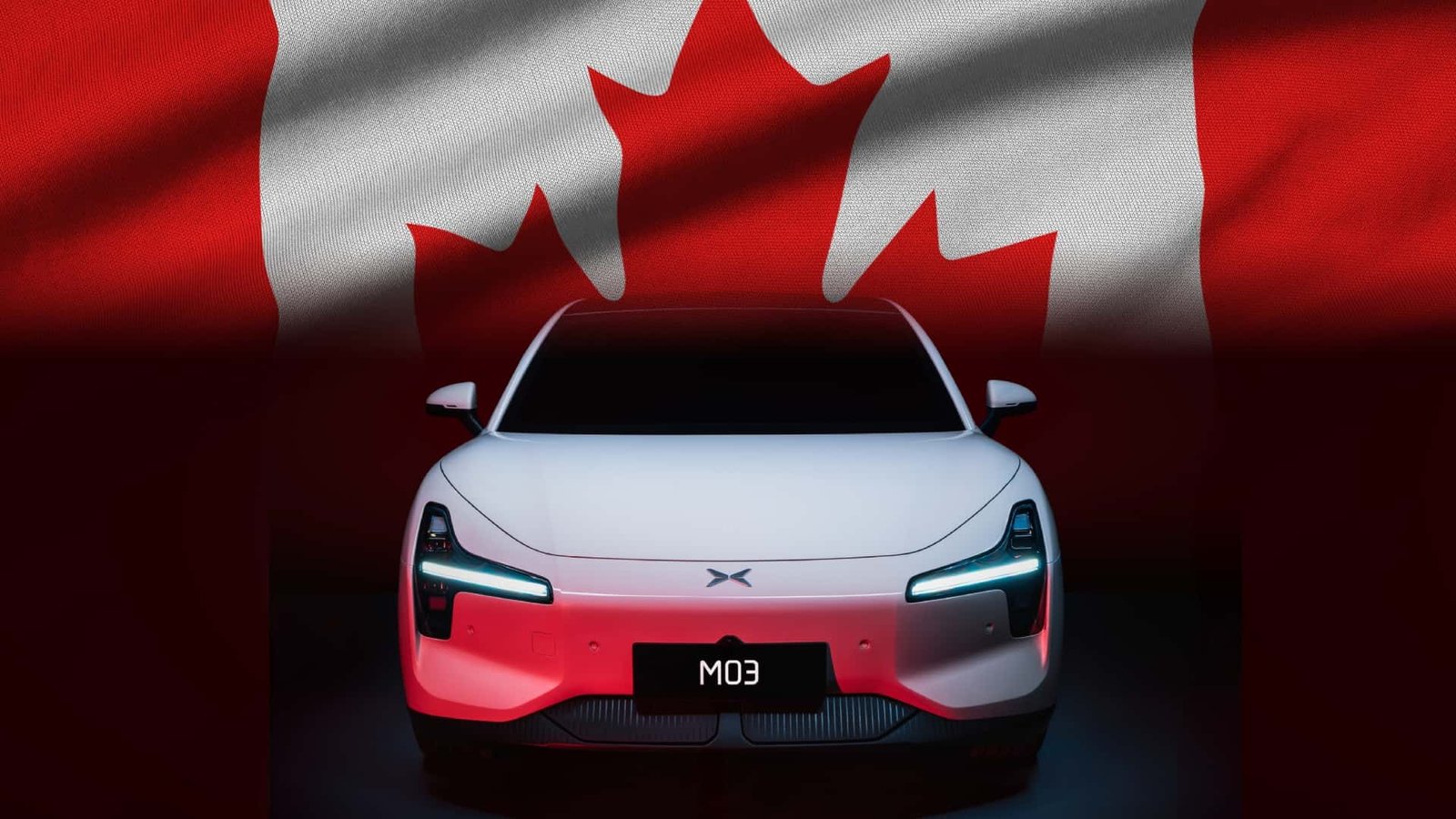
- Over 50% of Canadians would consider buying a Chinese-made car, a new AutoPacific survey shows.
- The survey reveals that price, quality, and value for money are the biggest reasons Canadians would consider buying a Chinese vehicle.
- This year, Chinese brands will start selling cars in Canada, after the U.S.’s northern neighbor slashed import tariffs.
As the first Chinese-branded electric and plug-in hybrid vehicles are making their way into Canada, a new survey from AutoPacific reveals that over half of Canadian car buyers would consider buying a Chinese-made car.
After the Canadian government slashed import tariffs from 100% to just 6.1%, some of China’s biggest players in the car industry went into overdrive, setting up dealerships and shipping the first cars for certification and laying the groundwork for the inevitable start of sales later this year.

Chery has already shipped an initial batch of EVs and PHEVs to Canada, with thousands scheduled for delivery in the following months.
Photo by: Simply Gregster EV / YouTube
These companies’ efforts are well worth it because, as it turns out, Canadians are well aware of what Chinese cars offer, and they’re ready to spend their money buying them.
Per AutoPacific’s survey, 67% of Canadian new vehicle shoppers are very or somewhat familiar with Chinese auto brands, and 55% will consider buying one if available in Canada. A similar survey was conducted last year in the United States, where 65% of respondents said they were very or somewhat familiar with Chinese auto brands, and 51% would consider buying a Chinese-branded car.
Price, quality, and value for money were quoted as the biggest reasons for considering purchasing a car made by a Chinese brand, but it’s worth noting that none of the marques that are setting up shop right now have disclosed the pricing of their cars. We’re used to seeing luxury EVs in China priced very low when converted into local currencies, but as AutoPacific points out, that’s mostly due to the weak Chinese Yuan relative to both the U.S. Dollar and Canadian Dollar.
In reality, it’s highly unlikely that Canadian car buyers will get access to $30,000 ultra-luxury SUVs that will undercut the local competition by tens of thousands of dollars, but it’s clear that consumers clearly see value as a big reason for trying a Chinese car.
“While Chinese EVs are effectively banned in the U.S. due to trade barriers, Canadian consumers are about to be able to access them starting later this year,” said Ed Kim, president and chief analyst at AutoPacific. “As Canada is a North American market with many cultural similarities to the U.S., we saw an opportunity to use Canadian consumers as a proxy for U.S. consumers when Chinese EVs eventually become available to them.”
When it comes to the type of powertrain for their next car purchase, Canadians are 6 percentage points more likely to consider an EV for their next vehicle, compared to American respondents, and 5 percentage points more likely to intend to buy one.
What’s more, Canadian consumers are more drawn to the pragmatic aspects of Chinese EVs than U.S. buyers, with exterior design, advanced technology, and luxury features ranking lower in their preferences. Our neighbors up north are more interested in driving range, value for money, and price.
The main sources of information for Chinese auto brands are Facebook, Instagram, auto shows, and news sites, according to the survey.
AutoPacific surveyed over 1,800 Canadian residents who intend to buy a new car within the next three years.