

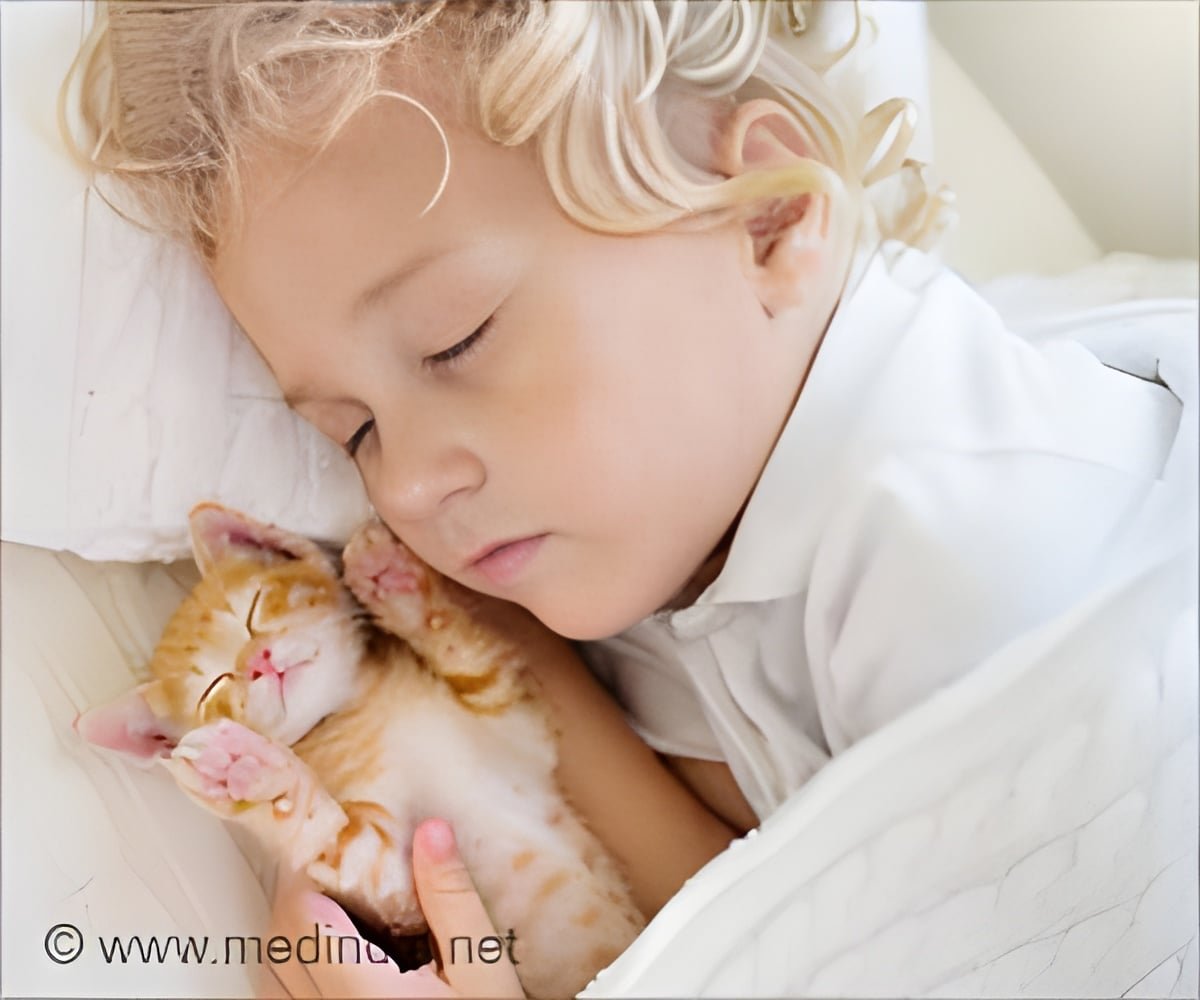
Cats aren’t just pets: A cat-training program improved healthy behaviors in children with developmental disabilities while enhancing the cats’ social skills.
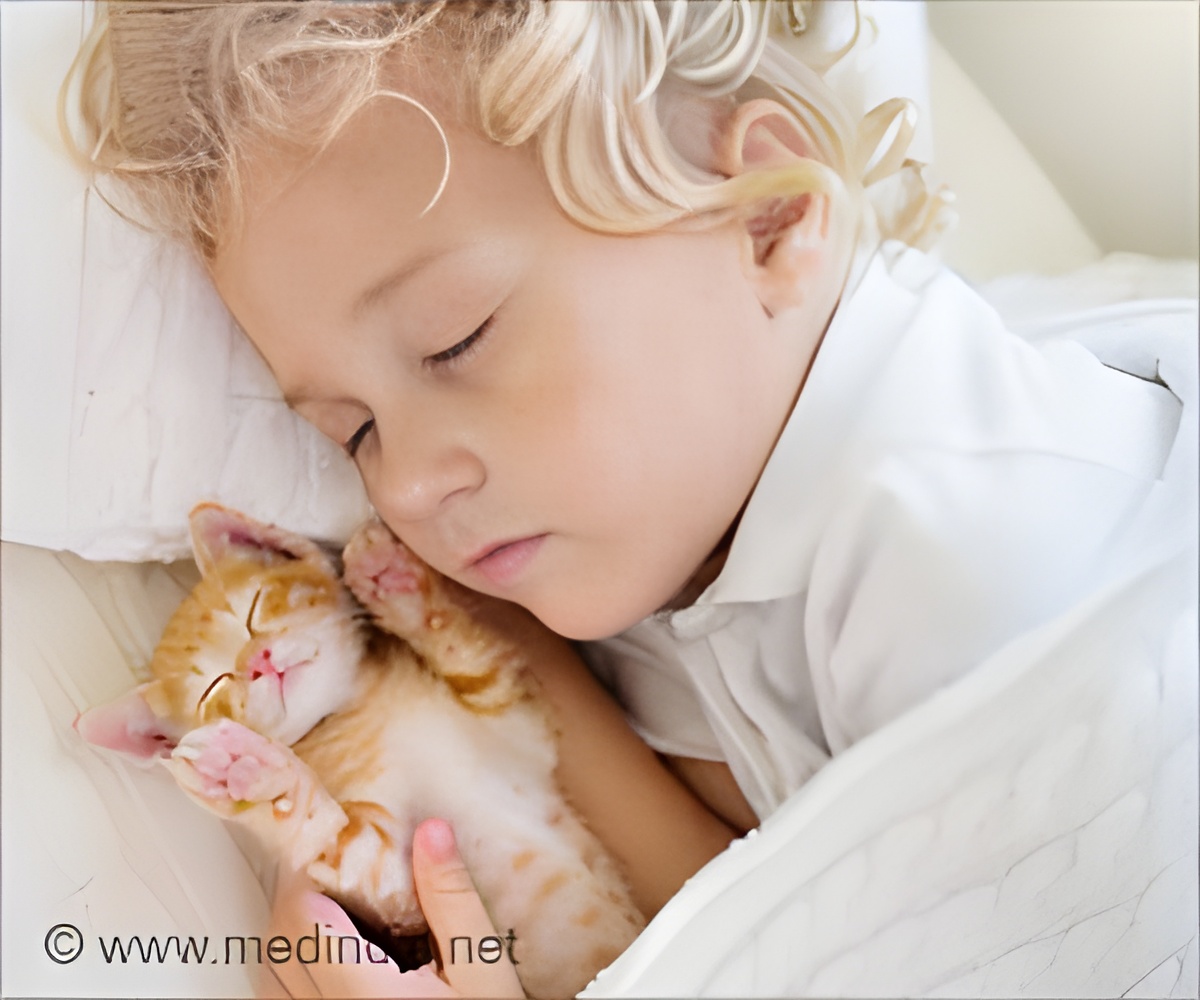
Every purr has the power to inspire growth. Just a few training sessions with a family cat can make a lasting difference for children with developmental disabilities.
A cat-training program for children with developmental disabilities improved children’s behavior, strengthened their bond with their family cats, and enhanced the cats’ social behavior, reports a new study.
The findings of the study are published in the journal Animals (1✔ ✔Trusted Source
Evaluating a Novel Cat-Assisted Training (CAT) Intervention for Youth with Developmental Disabilities and Their Family Cat
Advertisement
Cats as Coaches: A New Way to Support Child Development
“People often underestimate what cats can contribute to human-animal interventions,” said Monique Udell, a professor at Oregon State University who studies human-animal interactions. “This study shows that cats can be active participants rather than passive companions. When children and their cats work together through training, it can strengthen their bond while supporting positive outcomes for both the child and the cat.”
Advertisement
Beyond Cuddles: Trained Cats Improve Children’s Well-Being
The study, co-led by Udell and Megan MacDonald, a professor of kinesiology at Oregon State, builds on growing interest in animal-assisted interventions to promote physical, psychological and social well-being of people. The interventions are increasingly recognized as a promising approach to help children, including those with physical or learning disabilities or social, emotional or behavioral challenges.
Advertisement
Pawsitive Progress: The Surprising Benefits of Training Cats
Dogs and horses have received most of the attention. Udell wanted to explore whether cats could play a similar role. She has studied the human-cat bond for more than a decade and has found that cats, like dogs, are a social species and possess many of the same traits, such as the ability to form attachment bonds with humans and the ability to be trained.
The study also arrives at a time that Udell called a “cultural shift” involving cats. She mentioned people wanting to train their cats and the adventure cats movement, in which people increasingly want to take their cats on walks, camping or even kayaking.
Cat-Assisted Training (CAT) Intervention: Training Cats, Empowering Kids
For the study, the researchers evaluated a cat-assisted training (CAT) intervention with 36 children ages 8-17 and their family cats. Half of the participants were assigned to the training group who took part in six, 45-minute training sessions and completed weekly homework, such as practicing training mechanics and teaching behaviors such as sit and come. The other half served as the control and didn’t take part in the activities.
Children were given three different surveys at three different points during the study: before it started, six weeks after it concluded and one year after it started. The surveys assessed the strength of the child’s attachment to the cat; responsibility for cat-related chores; and humane behavior towards the cat.
The researchers also examined cat attachment to the child and cat sociability in the presence of the child by videotaping the standardized training sessions and assessing the video for certain behaviors. For example, sociability was measured by how much time a cat had at least one paw within a taped semi-circle encompassing a 1-meter radius around the child.
From Responsibility to Relationship: The Power of Cat Training
Findings included:
- Children in the training group demonstrated a significant increase in a cat care responsibility survey while those in the control group reported a decrease.
- Children in the training group who reported teaching their cats new things increased from 44% before the training sessions to 94% post-training, and the proportion who walked their cats increased from 28% to 78%.
- Children consistently attended the training sessions and completed the homework, both signs of the program having a stronger impact, the researchers noted. All participants attended all six training sessions, and there was a mean homework completion rate of 81%.
- The number of cats with what researchers defined as secure attachments to their child increased, with six cats moving from an insecure to a secure classification.
Pawsitive Results: Stronger Kids, Happier Cats
“This helps demonstrate that when we provide the right opportunities and guidance on how children and adolescents can improve their relationships with their cats, we can see positive changes happen,” Udell said. “The cats are becoming more confident. They’re becoming more social. And they’re developing stronger bonds that the children are benefiting from too. They’re seeing these cats now as partners; a source of motivation to take on more responsibility and engage in healthy behaviors. This can be a really special relationship that’s more complex than people have sometimes believed that they can have with a cat.”
Purr More. Worry Less. Let’s make every day purr-fect with a cat!
Reference:
- Evaluating a Novel Cat-Assisted Training (CAT) Intervention for Youth with Developmental Disabilities and Their Family Cat – (https://www.mdpi.com/2076-2615/16/14/2133)
Source-Eurekalert