

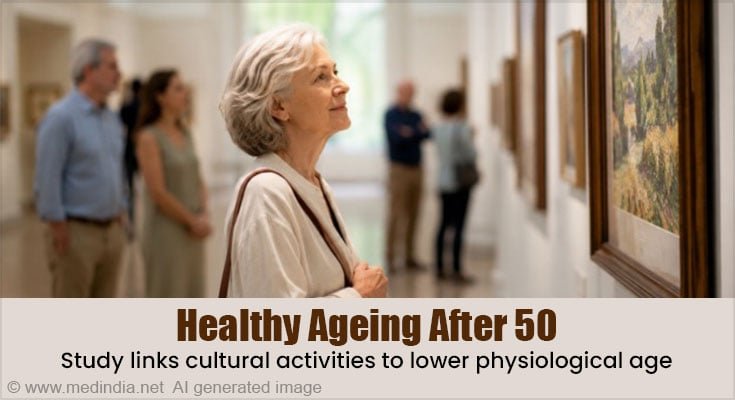
Healthy aging involves staying physically, mentally, and socially active. Cultural activities may become an important part of aging well.

- Museum and cinema visits were associated with a lower physiological age among adults aged 50 years and older
- Healthy aging includes maintaining physical, mental, and social well-being throughout life
- Cultural activities may complement exercise, healthy eating, and regular healthcare in supporting overall wellness
What if an evening at the cinema or a quiet afternoon in a museum could make your body appear nearly three years younger?
A peer-reviewed study involving 1,899 older adults found that people who regularly visited museums, attended theatres, and went to the cinema had a physiological age of 66.9 years, compared with 69.9 years among those who participated less often.
In simple terms, their bodies appeared to function like those of people nearly three years younger. Physiological age measures how well the body is working and is increasingly being recognized as an important marker of healthy ageing (1✔ ✔Trusted Source
Cultural engagement and physiological ageing: A fixed-effects analysis
The findings come at a time when the world’s population is ageing rapidly. According to the World Health Organization, more than 2.1 billion people are expected to be aged 60 years and older by 2050, making healthy ageing after 50 one of the most important public health priorities globally (2✔ ✔Trusted Source
Ageing and health
Published in the Journal of Epidemiology & Community Health, the study suggests that regular museum visits, cinema visits, and other cultural activities may be associated with better health in older adults. However, researchers emphasize that the findings show an association and do not prove that cultural activities directly slow the ageing process.
Advertisement
What Did Researchers Learn About Cultural Activities and Ageing?
Researchers from the Institute of Science Tokyo examined how often participants attended museums, cinemas, theatres, concerts, and opera performances.
People who participated in cultural activities every few months or more tended to have lower physiological ages than those who rarely took part. After accounting for household income, employment, and chronic illnesses, each one-point increase in cultural engagement score was associated with approximately 31 fewer days of physiological aging.
The researchers suggest that cultural activities may support healthier lifestyles by encouraging social interaction, mental stimulation, and regular movement.
Advertisement
How Is Physiological Age Different From Chronological Age?
Chronological age tells us how many years we have lived. Physiological age, however, reflects how well our bodies are functioning.
To estimate physiological age, nurses measured 10 health indicators, including blood pressure, lung function, hemoglobin levels, cholesterol, body mass index, grip strength, and walking speed.
Two people who are both 65 years old may therefore have different physiological ages depending on their overall health, activity levels, and lifestyle habits.
Advertisement
Why Might Museums and Theatres Support Healthy Ageing?
Scientists believe several factors may explain the findings.
Cultural activities often encourage people to leave their homes, walk, interact with others, and engage their minds. Previous public health research has shown that maintaining social connections and mental stimulation is associated with better health outcomes in older adults.
Importantly, these activities should be viewed as additions to – not replacements for – exercise, balanced nutrition, adequate sleep, and routine healthcare.
Study Limitations: What the Research Does Not Prove
This was an observational study, meaning researchers observed patterns over time rather than assigning participants to specific activities.
It remains possible that healthier individuals are simply more likely to attend cultural events. Although the investigators adjusted for several factors, including socioeconomic status and chronic diseases, some influences may not have been captured.
The study authors also reported no conflicts of interest.
Future research will need to determine whether improving access to cultural activities can directly improve health outcomes and support healthy ageing over the long term.
What Does This Mean for You and Your Family?
Healthy aging is shaped by many small choices made over time. Experts recommend staying physically active, maintaining strong social connections, eating a balanced diet, getting adequate sleep, and keeping up with preventive healthcare throughout life.
While this study does not prove that visiting museums or going to the cinema directly slows ageing, it highlights an important message: activities that keep people curious, socially connected, and mentally engaged may contribute to overall well-being.
For older adults, even simple habits such as attending a community event, joining a book club, taking a walk with friends, or exploring a local museum can add meaningful experiences to everyday life.
As life expectancy continues to increase around the world, healthy aging is becoming less about adding years to life and more about adding life to those years.
Could Cultural Activities Become Part of Future Healthy Ageing Advice?
As populations continue to age, researchers and policymakers are looking beyond traditional healthcare approaches to help people remain healthy and independent.
This study adds to growing evidence that social and cultural participation may play a role in healthy ageing. While visiting a museum is not a treatment, it may provide an enjoyable way to stay active, connected, and engaged with the world around us.
Frequently Asked Questions
Q: Can going to museums really help people age better?
A: A recent study found an association between cultural activities and lower physiological age, but it did not prove that museum visits directly slow ageing.
Q: What is physiological age?
A: Physiological age measures how well your body functions using indicators such as blood pressure, lung function, grip strength, and walking speed.
Q: Are cinema and theatre visit good for older adults?
A: They may support healthy ageing by encouraging social interaction, mental stimulation, and physical activity.
Q: How often should older adults participate in cultural activities?
A: In the study, people who participated every few months or more appeared to have better physiological ageing outcomes, although no official guidelines currently exist.
Q: What are the best ways to support healthy ageing?
A: Experts recommend staying physically active, maintaining social connections, eating a balanced diet, getting adequate sleep, attending preventive health checkups, and participating in meaningful activities throughout life.
References:
- Cultural engagement and physiological ageing: A fixed-effects analysis – (https://jech.bmj.com/content/early/2026/07/02/jech-2025-225753)
- Ageing and health – (https://www.who.int/news-room/fact-sheets/detail/ageing-and-health)
Source-Medindia