

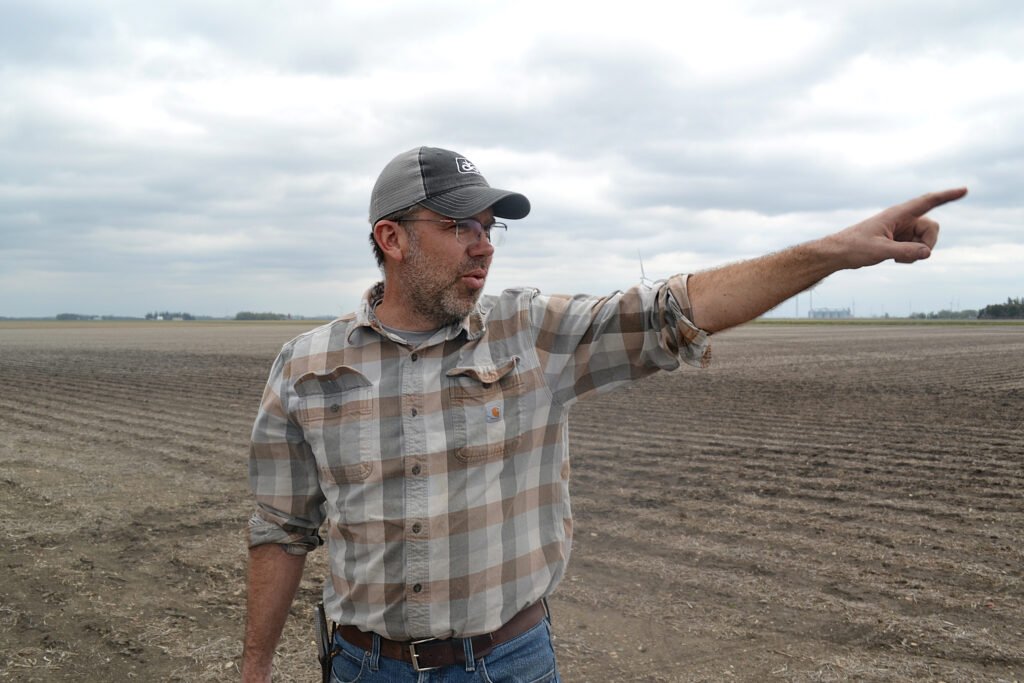
ROCKWELL CITY, Iowa—James Hepp is sick of excuses.
The 36-year-old farmer manages about 1,600 acres of corn, soy and small grains in northern Iowa. He keeps a close eye on his bottom line and says he wants to build a business that his three young children would be foolish not to join. For Hepp, a first-generation farmer, that means doing things differently from his neighbors.
In an effort to preserve soil health, he tills only narrow strips of land, leaving much of his field undisturbed. Hepp also avoids applying nitrogen fertilizer when he’s not growing crops.
At first, Hepp’s approach to farming focused on cutting costs. It let him make fewer passes with the tractor, saving money by using less diesel, herbicides and fertilizer. The benefits for soil and water quality were a bonus.
But after more than a decade of hearing government agencies and ag commodity groups in Iowa urge farmers to fall in line with the state’s voluntary Nutrient Reduction Strategy and adopt conservation practices that could limit the nitrogen and phosphorus runoff fouling waterways, Hepp is fed up with inaction.
“You know, the Nutrient Reduction Strategy has been around for what, 13 years now?” said Hepp, often held up as a role model for his runoff-reducing efforts. “If you’re not doing it now, I don’t know what’s going to make you do it besides regulation.”
Hepp represents one-third of the “Lobe Rangers,” a trio of corn and soy growers in Iowa’s flat and fertile Des Moines Lobe who have taken to social media to highlight the enormous gap between the conservation goals outlined in Iowa’s strategy for nutrient loss and the actual adoption of conservation practices on cropland. Fifth-generation farmers Matthew Bormann and Zack Smith round out the squad.
Bormann, Hepp and Smith are hardly the first Iowans to call for policies that target the environmental footprint of a relatively unregulated industry. Regulation has been a rallying cry in the last year for environmental groups, politicians and citizens who fear the state’s poor water quality could be linked to its rising cancer rates.
But as award-winning farmers and former county Farm Bureau board members who’ve made a living growing thousands of acres of Iowa’s two biggest commodity crops, Bormann, Hepp and Smith represent a different demographic in the reform camp: industry insiders.
In March, the men began posting short videos to Facebook demonstrating regenerative practices at work on their farms and calling for policy interventions to improve water quality. Their posts quickly gained traction on social media feeds across the state.
As Iowa grapples with a worsening clean-water crisis fueled by agricultural pollution, the Lobe Rangers see themselves as proof that regulation won’t herald the downfall of Iowa farmers.
“We’re doing this and it works,” Hepp said. “Like, what do you mean that you can’t afford to do it?”
Iowa Lags on Farm Conservation Progress
Last year, farmers in Iowa grew nearly 3 billion bushels of corn and 600 million bushels of soybeans. That’s enough grain to fill over 7,000 miles of railcars, a train that could stretch from the U.S. East to West coast twice over.
But the large amounts of nitrogen and phosphorus fertilizer that farmers are applying in the state have unwanted consequences, often leaching off fields to fuel algal blooms or unsafe nitrate levels in the state’s waterways before traveling south and harming the Gulf of Mexico.
In 2013, Iowa unveiled its Nutrient Reduction Strategy as a set of guidelines to stem the flow of chemicals from farmland into waterways and public drinking water sources. Since its inception, as in most agricultural states, the strategy has relied strictly on voluntary farm conservation efforts.
State programs and federal grants through the U.S. Department of Agriculture offer financial incentives and technical support for farmers who adopt conservation practices, like planting cover crops or adding buffer strips along waterways on their farms.
Iowa Gov. Kim Reynolds and state Secretary of Agriculture Mike Naig doubled down on those incentives in a legislative package revealed in early May, which includes an additional $52 million to expand on-farm conservation in central Iowa and $100 million for public water treatment infrastructure.
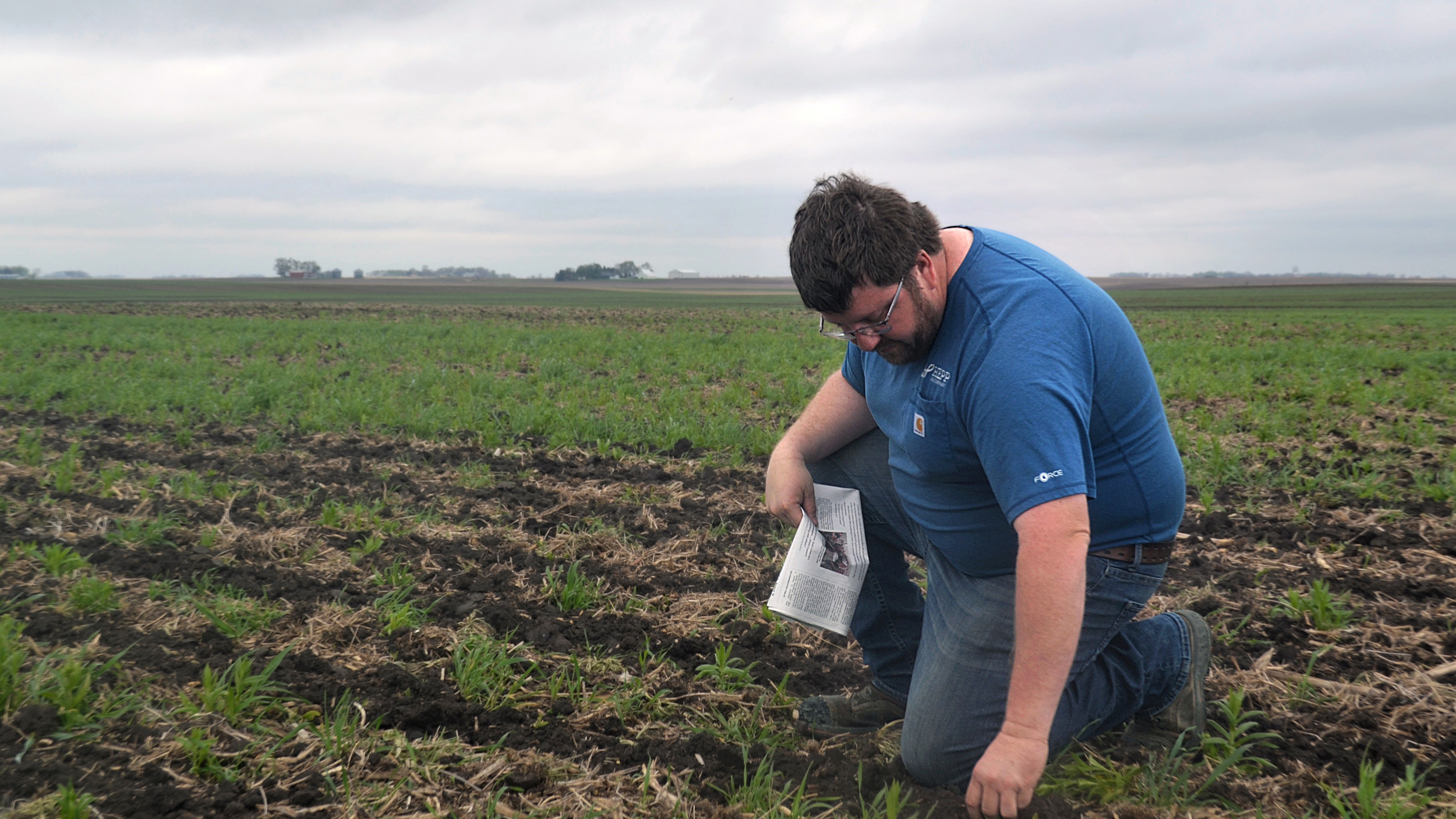
Critics, including the Lobe Rangers, say the favored voluntary approach has done little to improve Iowa’s water quality.
“People want clean water. If that’s the case, we need to have policy that gives us a mathematical chance of that happening,” said Smith, sheltering in his farm shop before a spring storm. “We don’t have anything close to that right now.”
Scenarios outlined in the Iowa Nutrient Reduction Strategy in 2013 estimated that at least 60 percent of the state’s cropland would need to be planted with cover crops in the off-season to meet the state’s goal of 45 percent less nitrogen and phosphorus in major waterways by 2035. Yet last year, only about 17 percent of the state’s corn and soy fields were planted with cover crops.
That discrepancy isn’t talked about enough, said Bormann, a former president of his county Farm Bureau and winner of a “Young Farmer Achievement Award” from the Iowa Farm Bureau in 2013.
“Right now, it’s easy to stick your head in the sand, because there’s no consequences, you know,” Bormann said. But Iowans must “start talking about it,” he added. “It’s just going to make agriculture better.”
“It’s Not Radical. It’s Common Sense”
While the Lobe Rangers’ posts often spark conversations among farmers in the comments, they aren’t trying to win over their peers, Hepp said.
Instead, the men are running their social media campaign to target politicians, political candidates and the voting public.
The three farmers think they are a valuable resource for lawmakers who fear hurting, or being accused of hurting, Iowa agriculture.
“We’re not tree huggers. We’re whiskey-drinking, women-loving farmers and, you know, we’re actually doing it. We’re actually doing it to scale,” Bormann said. “We can tell you what works, what doesn’t, what it’s actually going to take.”
Meanwhile, many of the organizations that have historically drawn attention to Iowa’s clean water crisis are “left-leaning groups” that get discounted because of their political bent or advocacy history, Smith said. “And that’s really unfortunate, because it doesn’t mean their ideas aren’t good,” he said.
So when the Lobe Rangers penned an op-ed in the Des Moines Register in April, calling on state legislators to restore funding to a water quality sensor network that’s relied on philanthropic grants since 2023, Smith thought the men needed to note their political affiliations: two Republicans and one independent.
“This sort of thing doesn’t get said by Republicans,” Smith said. “Even if you think it.”
“We want [politicians] to know that there is a group of farmers that know we have a problem, and that there are solutions,” he said.
In their mission to connect with political candidates, they’ve found common ground with Chris Jones, a career water scientist and Democrat running an underdog campaign for state secretary of agriculture. For years, Jones has been an unflinching advocate of regulatory fixes for nutrient pollution.
His 28-point policy solution for cleaner water includes a ban on fall tillage of cropland, taxation or restrictions on the use of fertilizer and manure, and a requirement that rented farmland be planted with cover crops at the owner’s expense.
“It is very important that we see that mainstream farmers can do it right,” Jones told Inside Climate News. “These guys, they show that you can survive by doing different things.”
Jones regularly reposts the Lobe Rangers’ videos to his campaign Facebook page. “What they’re doing could be perceived as somewhat radical,” he said. “From my perspective, it’s not radical. It’s common sense.”
“Little Poster Boys” Depict Puffed-Up Progress
Though they now have nearly 3,000 Facebook followers, none of the Lobe Rangers are particularly keen influencers. They’ve sought video-editing help from Smith’s college-aged daughters and developed their logo (a sort of Zorro and Lone Ranger hybrid, standing among stalks of corn with his sword drawn) using AI.
But the men aren’t entirely new to being spokesmen for the agricultural industry.
Each has been the subject of glowing profiles about their use of regenerative practices, written and shared by trade groups such as the Iowa Corn Growers Association and the Iowa Farm Bureau.
When industry leaders highlight the conservation efforts of just one or two farmers, it sends the wrong message about the reality of Iowa agriculture, Bormann said.
“It’s a PR thing where it makes it sound like Iowa farmers are doing such practices,” Bormann said. “And the truth is, they’re not.”
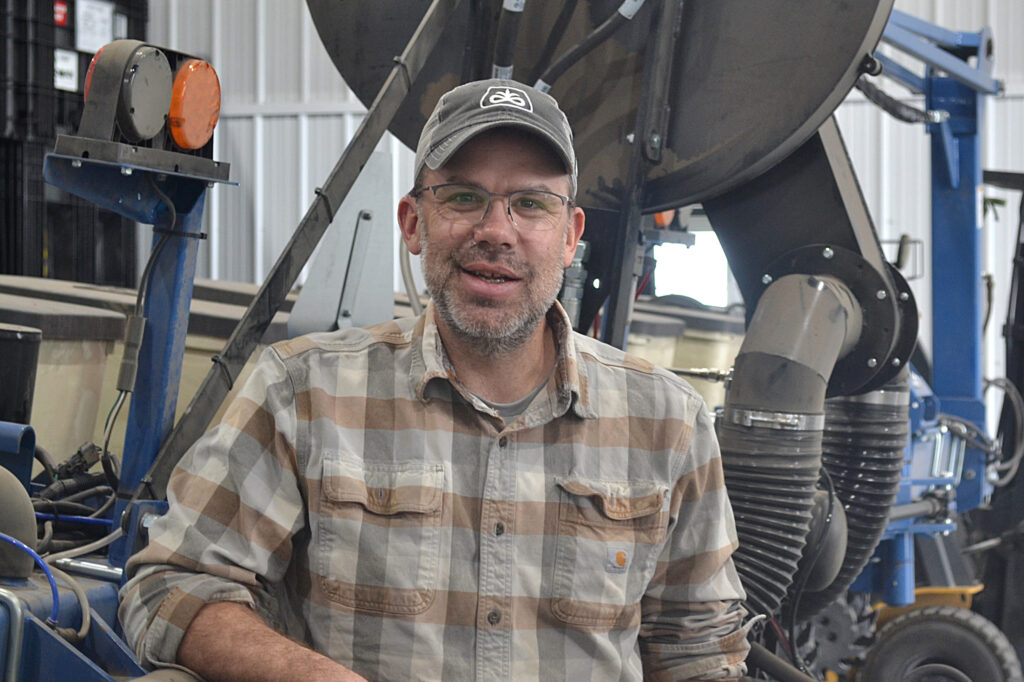
Just last year, Hepp received the Iowa Farm Bureau’s Young Farmer Leadership award. Now, his relationship with the group, which favors the current voluntary nutrient-pollution efforts, has cooled off. “We’ve kind of got our heads on the chopping block,” he said.
In an email to Inside Climate News, the Iowa Farm Bureau affirmed its ongoing support for Hepp.
The group invited him to upcoming farm bureau meetings and a July economic summit, a spokesperson wrote. And last summer, farm bureau staff attended a conservation field day on Hepp’s farm “in support of his efforts.”
“We value the opportunity to share a range of perspectives and practices that help farmers learn from one another,” the organization wrote.
Many farmers in Iowa’s aging agricultural economy are fearful of change, Hepp said. Adopting conservation practices is tantamount to admitting you were wrong.
This story is funded by readers like you.
Our nonprofit newsroom provides award-winning climate coverage free of charge and advertising. We rely on donations from readers like you to keep going. Please donate now to support our work.
And landlords, who controlled nearly 60 percent of Iowa’s farmland in 2022, are often just as wary, restricting tenant farmers from implementing practices shown to improve soil health and water quality.
Since launching the Lobe Rangers Facebook page, Hepp said dozens of farmers have reached out privately to express their support, saying their landlords or parents won’t let them abandon conventional practices.
After each harvest, Hepp plants rows of rye, camelina and triticale cover crops that grow into bright green tufts, locking nutrients in place and preventing erosion. Most Iowa farmers don’t.
But it’s farmers like Bormann, Hepp and Smith—younger men with the privilege of making their own management decisions—who get profiles written about them by industry groups. Their efforts to preserve water quality and soil health represent a small sliver of a much larger picture, one in which change is rarely rewarded.
“They can make it seem like everybody’s doing this,” Hepp said of industry groups. “Because they keep having their little poster boys.”
“The Price of Doing Business”
In an effort to highlight solutions, not just problems, Bormann, Hepp and Smith have suggested that lawmakers levy use fees on farms that apply nitrogen fertilizer in the fall, outside the growing season.
That’s when many Iowa farmers opt to fertilize their fields, taking advantage of drier conditions and slightly more time to do the work, said Richard Roth, assistant professor of integrated crop management and a nitrogen science specialist at Iowa State University Extension and Outreach.
However, if farmers don’t follow best management practices when applying fall nitrogen, like waiting for soil temperatures to drop and using an inhibitor to maintain the stability of the ammonia molecule, there may be a heightened risk of nutrient loss to waterways or the atmosphere, Roth said.
A financial disincentive could outweigh the convenience of fall application, Smith said. Revenue generated from those fees could then fund incentives and technical support for farmers transitioning to in-season nitrogen management, without requiring more taxpayer dollars.
The fall nitrogen disincentive would offer a way to “internalize the external costs that we’re currently ignoring,” Smith said. “When we talk about the price of doing business, we don’t recognize the cost of cancer, or the nitrate removal facility, or of not being able to fish or go swim.”
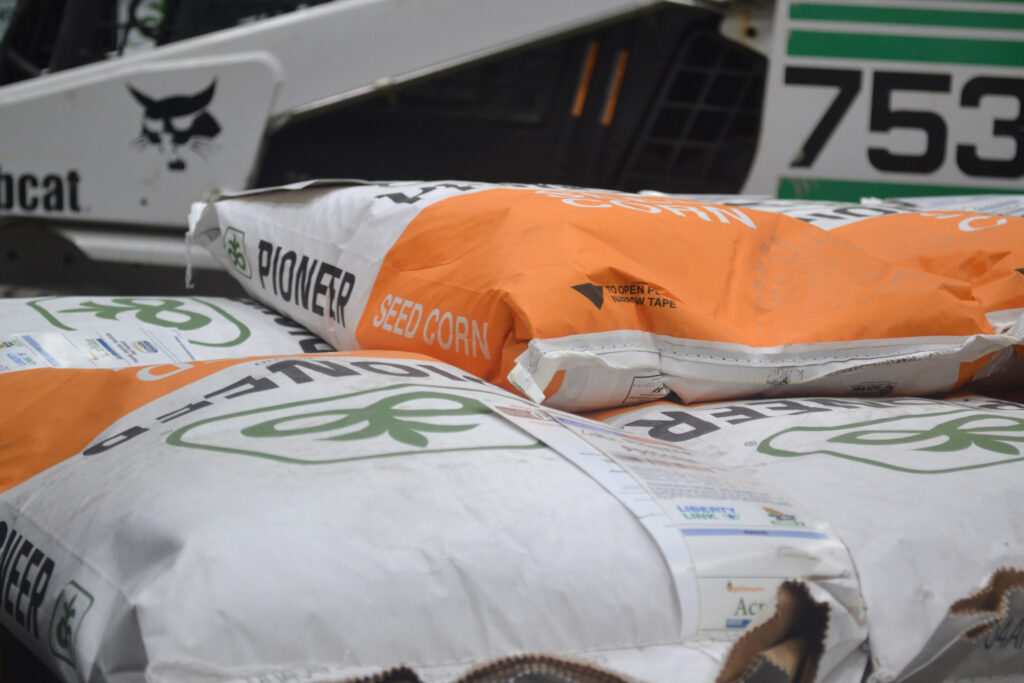
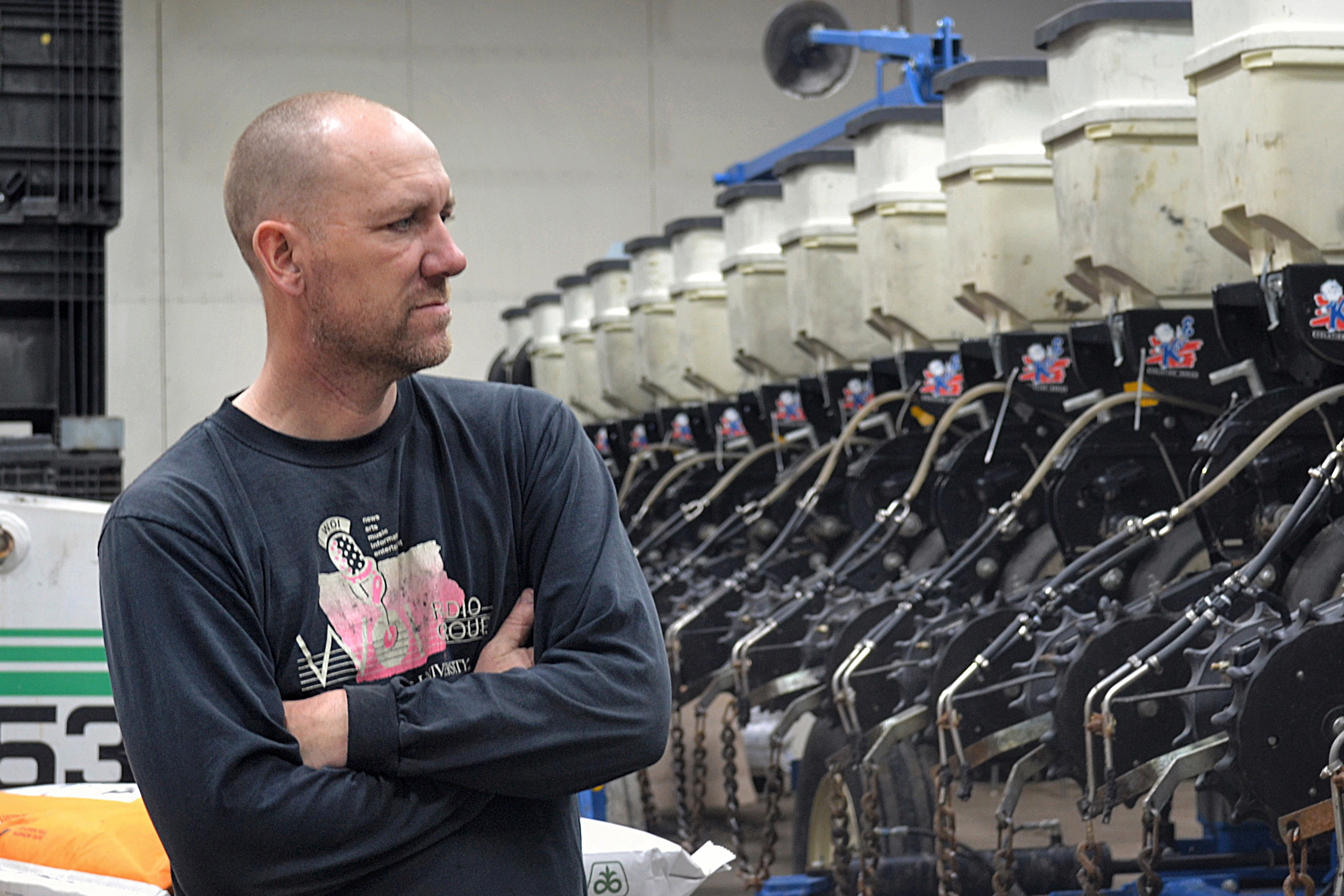
But targeting fall nitrogen as the Lobe Rangers propose may not be the best way to stem nutrient loss into waterways, Roth said.
In 2013, Iowa scientists modeled different scenarios to develop recommendations for the state’s Nutrient Reduction Strategy. At the time, they estimated that the timing of nitrogen application had a minor impact on total nutrient loss.
Shifting all fall-applied nitrogen to the spring wouldn’t have as big an impact on overall nitrate loss as other practices like cover cropping, building wetlands and removing less productive land from crop rotation would, Roth said.
“I don’t think that the answer is going to lie strictly in nitrogen management,” Roth said. “I think it could help. But I think that there’s these other, way more effective practices that could be employed that could help reach the goal.”
There may be no smoking gun practice, but after decades of opt-in conservation opportunities, Hepp doesn’t see farmers changing their ways if policy doesn’t.
Of course, in social media videos, he avoids the word “regulation” in favor of terms like “incentives,” “disincentives” or “broad-acre policy.” Still, Hepp’s a straight shooter by nature.
“I hate saying the ‘R’ word, but, you know, ag is really underregulated,” Hepp said. “I’m a farmer. It’s dumb for me to say that out loud, but it’s the truth.”
About This Story
Perhaps you noticed: This story, like all the news we publish, is free to read. That’s because Inside Climate News is a 501c3 nonprofit organization. We do not charge a subscription fee, lock our news behind a paywall, or clutter our website with ads. We make our news on climate and the environment freely available to you and anyone who wants it.
That’s not all. We also share our news for free with scores of other media organizations around the country. Many of them can’t afford to do environmental journalism of their own. We’ve built bureaus from coast to coast to report local stories, collaborate with local newsrooms and co-publish articles so that this vital work is shared as widely as possible.
Two of us launched ICN in 2007. Six years later we earned a Pulitzer Prize for National Reporting, and now we run the oldest and largest dedicated climate newsroom in the nation. We tell the story in all its complexity. We hold polluters accountable. We expose environmental injustice. We debunk misinformation. We scrutinize solutions and inspire action.
Donations from readers like you fund every aspect of what we do. If you don’t already, will you support our ongoing work, our reporting on the biggest crisis facing our planet, and help us reach even more readers in more places?
Please take a moment to make a tax-deductible donation. Every one of them makes a difference.
Thank you,

Reporter, Iowa
Anika Jane Beamer covers the environment and climate change in Iowa, with a particular focus on water, soil and CAFOs. A lifelong Midwesterner, she writes about changing ecosystems from one of the most transformed landscapes on the continent. She holds a master’s degree in science writing from the Massachusetts Institute of Technology as well as a bachelor’s degree in biology and Spanish from Grinnell College. She is a former Outrider Fellow at Inside Climate News and was named a Taylor-Blakeslee Graduate Fellow by the Council for the Advancement of Science Writing.