

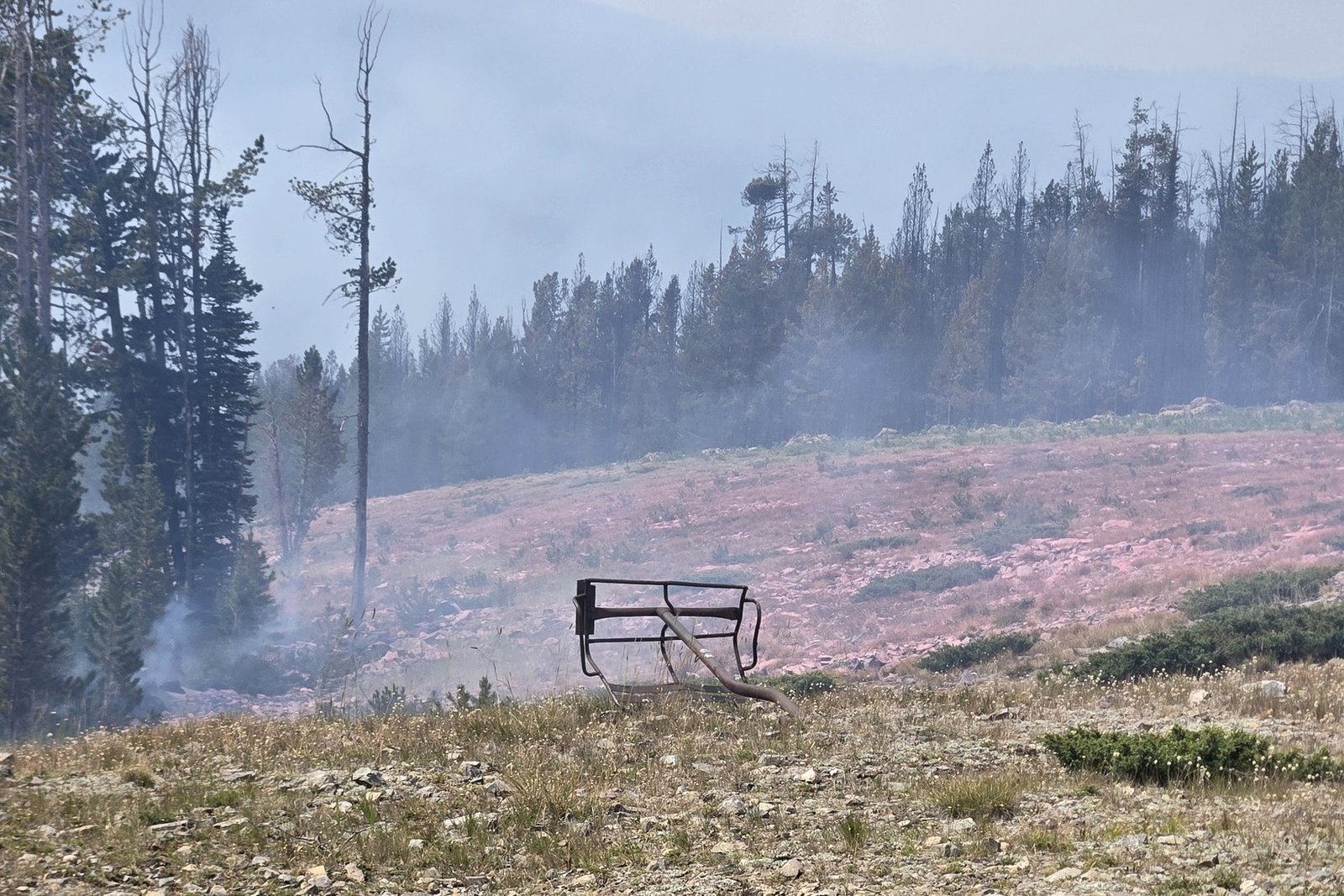
When the Sand Creek Fire crested Montana’s Maverick Mountain 16 days ago, Cory Birkenbuel watched as firefighters and aircraft fought to keep the flames from taking a place that had been part of his life since before he was born.
Birkenbuel likes to tell the story of his mother, Peggy, skiing at Maverick while pregnant with him. With her February due date approaching, her doctor finally told her she needed to stop and have the baby. She stopped early that month. Birkenbuel, born Feb. 16, went on to ski there himself, then around the world before becoming a ski instructor.
Then, flames came across the mountain, part of a particularly rough wildfire season in the American West.
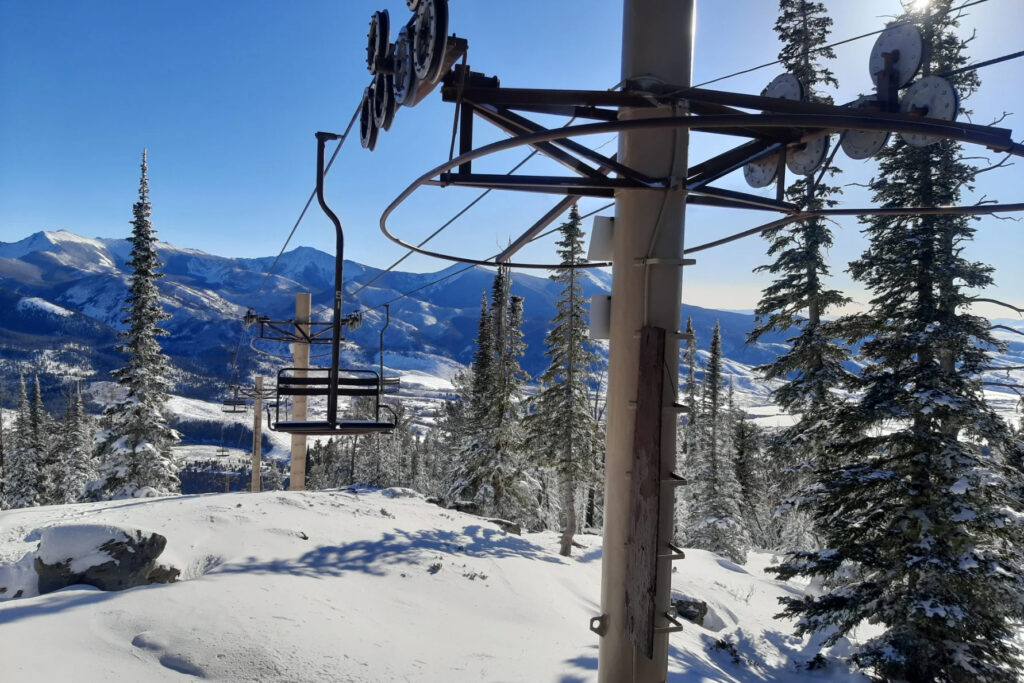
Maverick’s base-area structures survived, along with snowcats and other equipment, according to co-owner and operator Erik Borge. But the ski area’s only chairlift sustained extensive damage. Borge said after the fire that the lift would most likely be inoperable for the coming ski season.
For a small ski area built around a single chairlift, the damage created an uncertain future. But it also revealed how deeply Maverick, in the Grasshopper Valley of southwestern Montana, is woven into the communities around it.
Now residents, businesses, nonprofits, people with a lifelong connection like Birkenbuel and a Montana rock musician are rallying to save it.
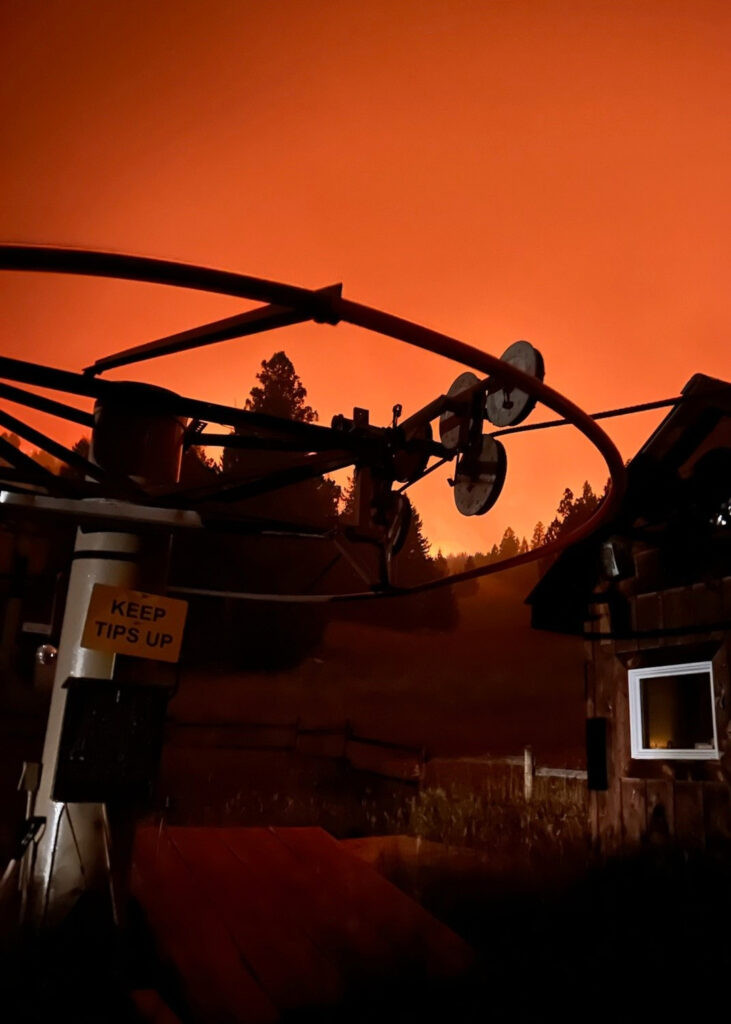
Replacing and installing ski-lift infrastructure can cost millions of dollars, and supporters worried insurance would not cover everything. They launched Friends of Maverick Mountain to raise funds, collected by a nonprofit, the Dillon Jaycees, that’s run a “little skiers” program there for decades. People can donate online or through Stockman Bank locations in Montana. Organizers are also encouraging people to share photographs and memories of Maverick and spread information about the fundraising campaign.
“We need all of our kids skiing again,” Birkenbuel wrote while calling on people to support the campaign.
Tim Montana got involved even though he does not ski.
The Montana-born hard-rock musician and entrepreneur co-owns the Wise River Club, a historic bar and hotel in Wise River, about 25 miles away. When the Sand Creek Fire brought hundreds of firefighters and other personnel into the region, Montana said his business provided them about 260 meals a day. Then Montana heard what had happened at Maverick.
He contacted the owner and began thinking about the cost of putting the mountain back together. His response was to do what he knows best: put on a show.
On Saturday, Montana plans to perform a free concert at the Wise River Club as part of the first in-person fundraiser for Friends of Maverick Mountain. Organizers say the event will also feature silent and live auctions, and they have asked community members to volunteer.
There will be no traditional ticket price. Instead, Montana said, people can give whatever they are able to contribute.
This story is funded by readers like you.
Our nonprofit newsroom provides award-winning climate coverage free of charge and advertising. We rely on donations from readers like you to keep going. Please donate now to support our work.
“I don’t care if they have a dollar, $10 or $20,” he said. “That’s the ticket fee to see the concert.”
Montana’s children have been to Maverick. And he knows what the mountain means for children growing up in Beaverhead County and the surrounding rural communities.
In a sparsely populated part of the state, where recreational opportunities for young people can be limited and communities are separated by long distances, those experiences matter.
“I think this is kind of for the kiddos,” Montana said of the fundraising effort.
People in the state, he added, are “really good about taking care of each other.”
Borge, the resort’s co-owner, told the community in an Instagram post that with their support, “we will get through this, we will rebuild.”
Maverick is bigger than just skiing, he said. And he doesn’t view it as belonging simply to its owners.
“Maverick isn’t mine, man,” he said in an interview. “It’s no specific person’s mountain. It’s the community mountain, and we owe it to the community to keep it going.”
About This Story
Perhaps you noticed: This story, like all the news we publish, is free to read. That’s because Inside Climate News is a 501c3 nonprofit organization. We do not charge a subscription fee, lock our news behind a paywall, or clutter our website with ads. We make our news on climate and the environment freely available to you and anyone who wants it.
That’s not all. We also share our news for free with scores of other media organizations around the country. Many of them can’t afford to do environmental journalism of their own. We’ve built bureaus from coast to coast to report local stories, collaborate with local newsrooms and co-publish articles so that this vital work is shared as widely as possible.
Two of us launched ICN in 2007. Six years later we earned a Pulitzer Prize for National Reporting, and now we run the oldest and largest dedicated climate newsroom in the nation. We tell the story in all its complexity. We hold polluters accountable. We expose environmental injustice. We debunk misinformation. We scrutinize solutions and inspire action.
Donations from readers like you fund every aspect of what we do. If you don’t already, will you support our ongoing work, our reporting on the biggest crisis facing our planet, and help us reach even more readers in more places?
Please take a moment to make a tax-deductible donation. Every one of them makes a difference.
Thank you,

Fellow
Mosabber Hossain is an Inside Climate News Fellow and an award-winning climate and environmental investigative journalist from Bangladesh. His reporting focuses on climate change, biodiversity, environmental justice, adaptation and corruption. His work with Reuters and other international outlets has been republished globally, and some of his reporting contributed to discussions featured on the agenda of the World Economic Forum. Mosabber is a graduate student at the University of Montana studying environmental science and natural resource journalism. Previously, he was a fellow with the Institute for Journalism and Natural Resources and Investigative Reporters and Editors. He is a recipient of the South Asian Investigative Journalism Award from the Thomson Foundation and was featured among eight journalists during the organization’s 60th anniversary for the impact of his investigative reporting. Mosabber is also a wildlife and nature photographer whose work has been published internationally.