

Close Menu

    Subscribe to Updates

    Get the latest news information from worldwide businesses.

    What's Hot

    The biggest video game of all time looks like a movie

    August 27, 2026

    Anthropic and OpenAI are joining the AI stage at TechCrunch Disrupt 2026 

    August 27, 2026

    Banks, companies better positioned to weather next downturn: CS Setty, SBI, Chairman

    August 27, 2026
    Facebook Instagram YouTube LinkedIn X (Twitter)
    Trending
    • The biggest video game of all time looks like a movie
    • Anthropic and OpenAI are joining the AI stage at TechCrunch Disrupt 2026 
    • Banks, companies better positioned to weather next downturn: CS Setty, SBI, Chairman
    • EU countries urged to invest in nature restoration plans and close €65bn annual shortfall
    • Piyush Goyal interview: Ready to act on feedback, expect Japanese investments to pick up pace | India News
    • Predicting each Power 4 conference champion ahead of the 2026 college football season
    • DU colleges offering admission based on Class 12 marks: List of colleges and courses | Education News
    • Empoderando a las comunidades guatemaltecas afectadas por el plástico
    Newspublicly
    • About Us
    • Advertise & Partner with us
    • Pitch Your Story
    • Contact Us
    Facebook Instagram LinkedIn X (Twitter)
    Subscribe
    • Home
    • World News
      • Asia
      • India
      • USA
      • UK & Europe
      • Middle East
    • Economy & Business
      • Global Economy
      • Corporate & Industry
      • Finance & Markets
      • Policy & Trade
    • Technology
      • Gadgets & Devices
      • Software & Apps
      • AI & Machine Learning
      • Robotics & Automation
    • Health & Medicine
      • Fitness & Nutrition
      • Research & Innovation
      • Disease & Treatment
      • Doctors, Clinics & Patient Care
    • Travel & Tourism
    • Automobile
      • Electric & Hybrid Vehicles
      • Auto Industry Insights
    • Sports
    • More
      • Education
      • Real Estate
      • Environment & Climate
      • Space & Astronomy
      • War & Conflicts
    Newspublicly
    Home»More»Space & Astronomy»James Webb Space Telescope observes 72 stars and finds planet formation is a race against time
    Space & Astronomy

    James Webb Space Telescope observes 72 stars and finds planet formation is a race against time

    AdminBy AdminAugust 27, 2026No Comments4 Mins Read0 Views
    Share
    Facebook Twitter LinkedIn Copy Link WhatsApp


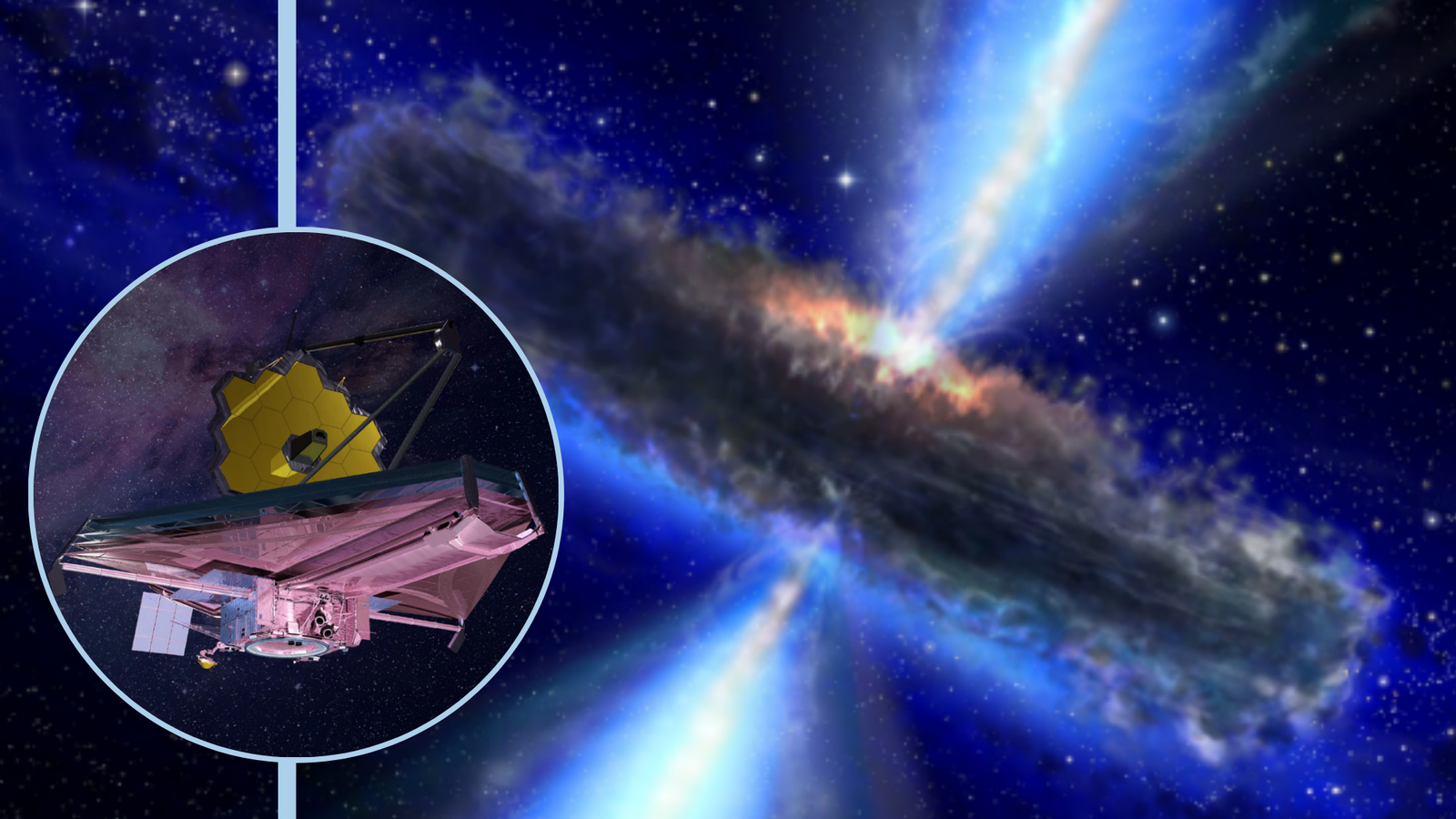
    Using the James Webb Space Telescope (JWST), astronomers have studied 72 young, sun-like stars. As a result, they found that forming planets is a real race against time.

    This is because the material that serves as the building blocks for planets is constantly escaping the swirling platters of gas and dust, or protoplanetary disks, that wrap around infant stars. Some types of planets may find their formation window closing sooner than others.

    The team’s research represents the most in-depth investigation yet into how matter escapes these protoplanetary disks and how this escape gives rise to different stages of planet formation around sun-like stars. All in all, the study helps paint a better picture of how and why our solar system took the shape it did around the infant sun around 4.6 billion years ago.

    “Gas giants like Jupiter must assemble their massive atmospheres while the disk is still substantial enough to supply them, before winds and jets carry that raw material away into space,” team leader Naman Bajaj from the University of Arizona said in a statement.

    An ill wind blows around infant stars

    The team conducted its research using data collected by the JWST’s Mid-Infrared Instrument (MIRI). The scientists tracked matter loss by following the movements of molecular hydrogen, one of the most common molecules in protoplanetary disks. Each of the stars involved in the investigation represented a different stage in the early life of a star system. That meant putting these snapshots together allowed the researchers to create a “movie” detailing the early life of a planetary system.

    One of the most important findings of this approach is the mechanisms for material loss from protoplanetary disks seem to evolve and switch dominance as an infant star ages.

    This is important because gas giants like Jupiter and Saturn have vast atmospheres. They thus require more raw material to form than smaller rocky worlds like Earth do. Understanding matter loss allows scientists to determine at what stages of protoplanetary disk evolution gas giants can form.


    You may like

    “What is exciting about this study is that we can now see, across a large sample of young systems, how the mechanisms that remove gas from planet-forming disks change with time,” team member Uma Gorti from the SETI Institute said in the statement. “Disk dispersal sets a fundamental clock for planet formation: once the gas is gone, the opportunity to build gas-rich planets is essentially over.”

    As planetesimals drift toward their star, they should clear out a path from the gas they move through. Some of that gas helps the planet to grow.

    An illustration of an evolved protoplanetary disk in which material close to the infant star has been dispersed (Image credit: NASA/ JPL-Caltech/ T. Pyle (SSC))

    The researchers found that early in the evolution of protoplanetary disks, powerful, magnetically driven jets and winds dominate mass loss. These jets and winds are powered by magnetic fields that weave through protoplanetary disks.

    Later, as the disk thins and starlight can pass through it more easily, these winds and jets weaken, and magnetic processes are dominated by high-energy radiation from the infant star ionizing gas and blowing it into space. The latter process is called photoevaporation.

    All this reveals there is no one single process responsible for stripping planet-forming material from around infant stars. The research also demonstrates the JWST is more than capable of studying the dispersal of gas and dust around individual infant stars.

    The next step for the team is to discover just how much material these different mechanisms shift. The scientists could also look into the areas of the disks in which the mechanisms studied operate. Down the line, this will help develop a model to reveal just how rapidly planet-formation is shut off — and in which regions of a protoplanetary disk different types of planets are most likely to form.

    Space

    The team’s research was published on Tuesday (August 25) in The Astronomical Journal.


    Source link

    Author

    • Admin

      NewsPublicly.com is News & Articles Platform that creating SEO-focused articles on travel, lifestyle, and digital trends.

    Admin
    • Website

    NewsPublicly.com is News & Articles Platform that creating SEO-focused articles on travel, lifestyle, and digital trends.

    Related Posts

    Astronaut Jonny Kim leaves NASA, will return to active military duty

    August 27, 2026

    NASA’s Swift space telescope will crash back to Earth — but when and where is anyone’s guess

    August 27, 2026

    Starship is coming home! SpaceX loads floating spacecraft onto huge ‘semi-submersible’ ship in the Indian Ocean (photos)

    August 27, 2026
    Leave A Reply Cancel Reply

    Demo
    Top Posts

    The Blue Moon rises on May 30— Where and when to see the second full moon of the month

    May 30, 202640 Views

    New SOCOM rifle allows barrel swapping and cartridge changes

    June 1, 202633 Views

    Indian economy shows recovery despite global uncertainties, private investment gains momentum: Report

    July 29, 202629 Views

    “Inside Gemini Robotics 1.5: How Robots Learn to Reason & Act

    November 22, 202527 Views
    Don't Miss

    The biggest video game of all time looks like a movie

    August 27, 20264 Mins Read0 Views

    I think I know why Rockstar Games debuted its “extended look” of Grand Theft Auto…

    Anthropic and OpenAI are joining the AI stage at TechCrunch Disrupt 2026 

    August 27, 2026

    Banks, companies better positioned to weather next downturn: CS Setty, SBI, Chairman

    August 27, 2026

    EU countries urged to invest in nature restoration plans and close €65bn annual shortfall

    August 27, 2026
    Stay In Touch
    • Facebook
    • Twitter
    • Instagram
    • YouTube
    • LinkedIn
    • WhatsApp

    Subscribe to Updates

    Get the latest creative news from SmartMag about art & design.

    Demo
    NEWSPUBLICLY
    Facebook X (Twitter) Instagram LinkedIn

    Home

    • About Us
    • Leadership
    • Advertise & Partner With Us
    • Pitch Your Story
    • Media Kit & Pricing
    • Career
    • FAQs

    Guidelines

    • Editorial & Submission
    • Partnership
    • Advertising & Sponsor
    • Intellectual Property Policy
    • Community & Comment
    • Security & Data Protection
    • Send Your Opinion

    Quick Links

    • Cookie Policy
    • Payment & Billing Terms
    • Refund & Cancellation
    • Copyright Policy
    • Complaint & Support
    • Sitemap
    • Contact Us

    Subscribe Us

    Get the latest news and updates!

    Copyright © 2026 Newspublicly (DIGITALIX COMMUNICATION). All Rights Reserved.
    • Privacy Policy
    • Terms of Use
    • Disclaimer