

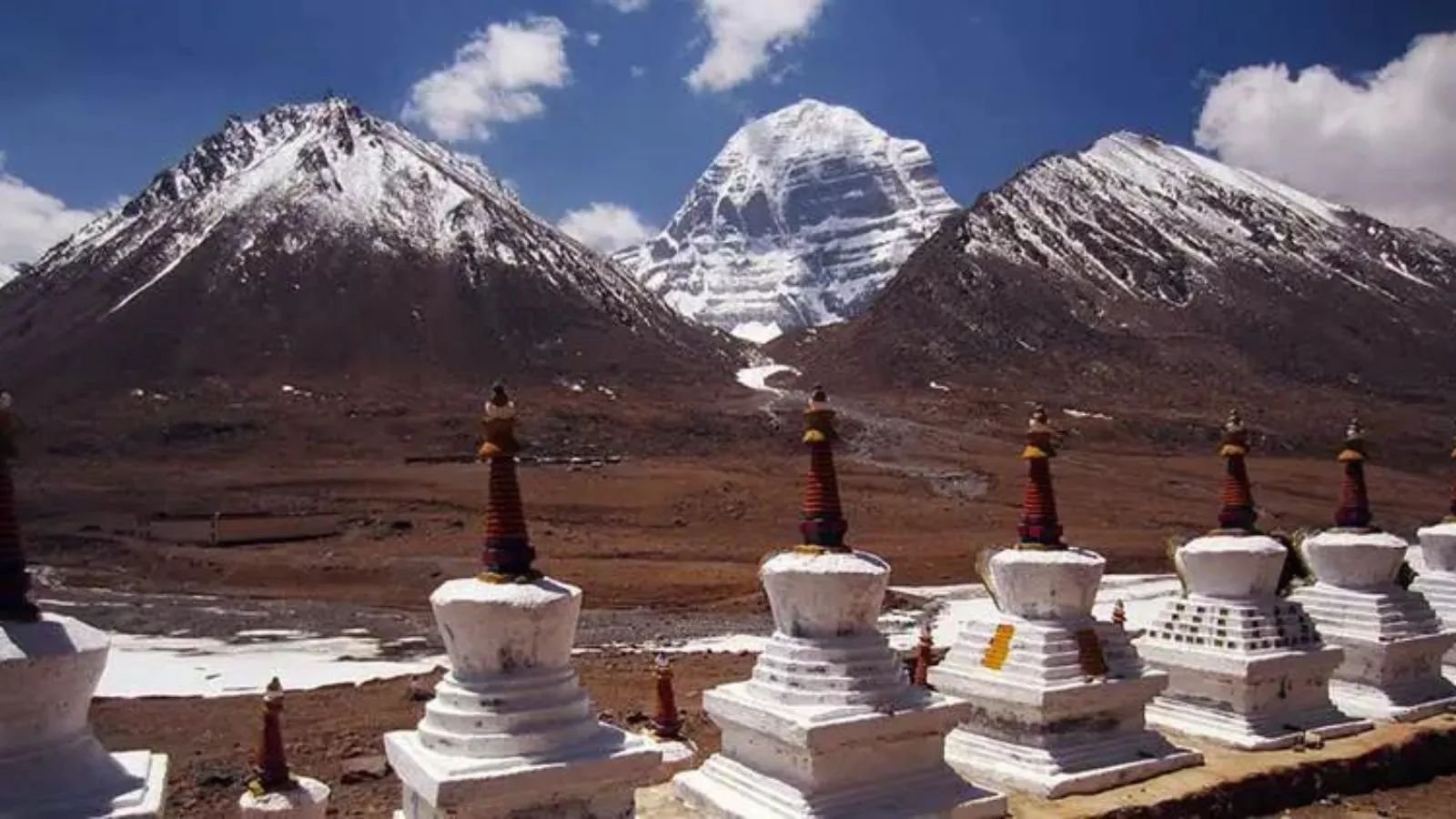
The devastating flash floods in Nepal that hit Rasuwa district Wednesday, bordering Tibet, have spelt disaster for tourist groups — mostly religious pilgrims to Kailash Mansarovar — who were waiting near the Rasuwagadhi border crossing either on their way to Tibet or on their way back.
Hundreds of those who remain unaccounted for more than 24 hours later belong to this group — mostly foreign nationals, including, according to the latest figures, 137 Indians.
Local authorities have registered a record number of pilgrims taking the Rasuwa route to Kailash Mansarovar this year, at over 13,500, favouring the route over the more expensive Humla crossing. Both the Rasuwa and Humla routes are used by tourists travelling through private operators via Nepal.
We look at this particular route that goes through Rasuwa, how many Indians use the route, and why it has become more popular lately:
What are the various Kailash Mansarovar routes
The Ministry of External Affairs (MEA) organises the Kailash Mansarovar Yatra through two official mountain pass routes: Lipulekh Pass Route in Uttarakhand, which takes around 21-22 days; and the Nathu La Pass Route via Sikkim, which takes over 20 days. Costing around Rs 2 lakh per person, the MEA takes around 1,000 pilgrims annually, selected through a computerised lottery system.
However, since the numbers are extremely limited, many pilgrims take the routes offered by private operators through Nepal, which don’t have a cap or lottery selection and can be booked in advance through several verified tour operators in the region. These private tourists travel in groups organised through agents who apply for a group visa to Tibet with the Chinese authorities.
Two of the most popular routes here are the one that passes through Rasuwa and the other one that passes through Hilsa.
Story continues below this ad
The two private routes to Kailash through Nepal
The Nepal route to Kailash Mansarovar starts from Kathmandu and travels through Tibet via overland or helicopter routes managed by private tour operators. The overland route (road via Gyirong in Tibet and Rasuwa in Nepal), which takes about 10-14 days, involves travelling by bus/SUV from Kathmandu to the border port and continues into Tibet toward Darchen — the starting point for the walk.
The other is a helicopter route (via Nepalgunj and Simikot/Hilsa) which takes about 5-11 days, and involves a flight from Kathmandu to Nepalgunj, a small plane to Simikot, a helicopter to Hilsa on the border, and a short drive into Purang and Mount Kailash.
A valid passport and special Chinese permits — including a Chinese Group Visa and a Tibet Travel Permit — are the only requirements for these yatris who throng the routes from May through September every year, and costs upward of Rs 3 lakh from Kathmandu, depending on the facilities availed, as per an agent operating in the area.
The popularity of overland Rasuwa route
Rasuwa and its border checkpoint at Rasuwagadhi serve as the primary overland entry gateway from Nepal into Tibet en route to Kailash. The journey starts in Kathmandu, through Rasuwa District via Syafrubesi and Timure, and reaches Rasuwagadhi border crossing on the Nepal-China border, which became the epicentre of Wednesday’s disaster. After crossing the border from here, the route moves directly into Gyirong Port, also known as Kerung, inside Tibet, before continuing toward Kailash Mansarovar.
Story continues below this ad
However, tourists and pilgrims do not normally wait multiple days in Rasuwa; they typically cross into Tibet at the Rasuwagadhi border checkpoint on the same day they arrive from Kathmandu (a 6-8-hour drive), provided their Chinese Group Visas and Tibet Travel Permits are fully pre-processed and cleared. Instead of waiting at the border, the necessary waiting period happens earlier in Kathmandu, where travellers sometimes spend 3-5 days waiting for their physical paper group visas and travel permits to be issued by authorities before heading to the border for an immediate crossing.
The numbers
A total of 13,523 religious tourists and pilgrims transited through the Rasuwagadhi border checkpoint in Rasuwa district on their way to Kailash Mansarovar during the fiscal year 2025-26, according to official statistics in Nepal. This marked an 18.75% increase compared to the previous year.
Flash floods impacted hundreds of travellers who were transiting through the area. The route is increasingly being preferred by NRIs and foreigners since the MEA-conducted routes are for Indian citizens and require pre-planning and checks.
We look at this particular route that goes through Rasuwa, how many Indians use the route, and why it has become more popular lately:
Story continues below this ad
What are the various Kailash Mansarovar routes
The Ministry of External Affairs (MEA) organises the Kailash Mansarovar Yatra through two official mountain pass routes: Lipulekh Pass Route in Uttarakhand, which takes around 21-22 days; and the Nathu La Pass Route via Sikkim, which takes over 20 days. Costing around Rs 2 lakh per person, the MEA takes around 1,000 pilgrims annually, selected through a computerised lottery system.
However, since the numbers are extremely limited, many pilgrims take the routes offered by private operators through Nepal, which don’t have a cap or lottery selection and can be booked in advance through several verified tour operators in the region. These private tourists travel in groups organised through agents who apply for a group visa to Tibet with the Chinese authorities.
Two of the most popular routes here are the one that passes through Rasuwa and the other one that passes through Hilsa.
The two private routes to Kailash through Nepal
The Nepal route to Kailash Mansarovar starts from Kathmandu and travels through Tibet via overland or helicopter routes managed by private tour operators. The overland route (road via Gyirong or Kodari/Tatopani), which takes about 10-14 days, involves travelling by bus/SUV from Kathmandu to the border port (such as Gyirong) and continues into Tibet toward Darchen — the starting point for the walk.
Story continues below this ad
The other is a helicopter route (via Nepalgunj and Simikot/Hilsa) which takes about 5-11 days, and involves a flight from Kathmandu to Nepalgunj, a small plane to Simikot, a helicopter to Hilsa on the border, and a short drive into Purang and Mount Kailash.
A valid passport and special Chinese permits — including a Chinese Group Visa and a Tibet Travel Permit — are the only requirements for these yatris who throng the routes from May through September every year, and costs upward of Rs 3 lakh from Kathmandu, depending on the facilities availed, as per an agent operating in the area.
The popularity of overland Rasuwa route
Rasuwa and its border checkpoint at Rasuwagadhi serve as the primary overland entry gateway from Nepal into Tibet en route to Kailash. The journey starts in Kathmandu, through Rasuwa District via Syafrubesi and Timure, and reaches Rasuwagadhi border crossing on the Nepal-China border, which became the epicentre of Wednesday’s disaster. After crossing the border from here, the route moves directly into Gyirong Port, also known as Kerung, inside Tibet, before continuing toward Kailash Mansarovar.
However, tourists and pilgrims do not normally wait multiple days in Rasuwa; they typically cross into Tibet at the Rasuwagadhi border checkpoint on the same day they arrive from Kathmandu (a 6-8-hour drive), provided their Chinese Group Visas and Tibet Travel Permits are fully pre-processed and cleared. Instead of waiting at the border, the necessary waiting period happens earlier in Kathmandu, where travellers sometimes spend 3-5 days waiting for their physical paper group visas and travel permits to be issued by authorities before heading to the border for an immediate crossing.
Story continues below this ad
The numbers
A total of 13,523 religious tourists and pilgrims transited through the Rasuwagadhi border checkpoint in Rasuwa district on their way to Kailash Mansarovar during the fiscal year 2025-26, according to official statistics in Nepal. This marked an 18.75% increase compared to the previous year.
Flash floods have affected hundreds of travellers who were travelling through the area. NRIs and foreigners are increasingly preferring the route since the MEA-conducted routes are for Indian citizens and require pre-planning and checks.