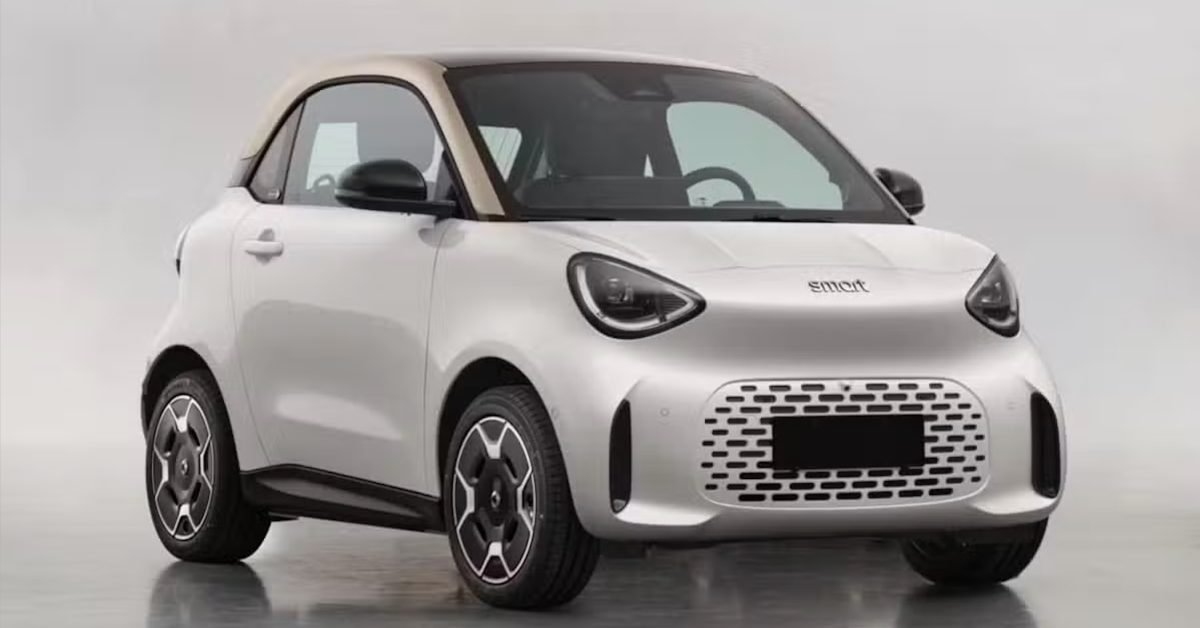
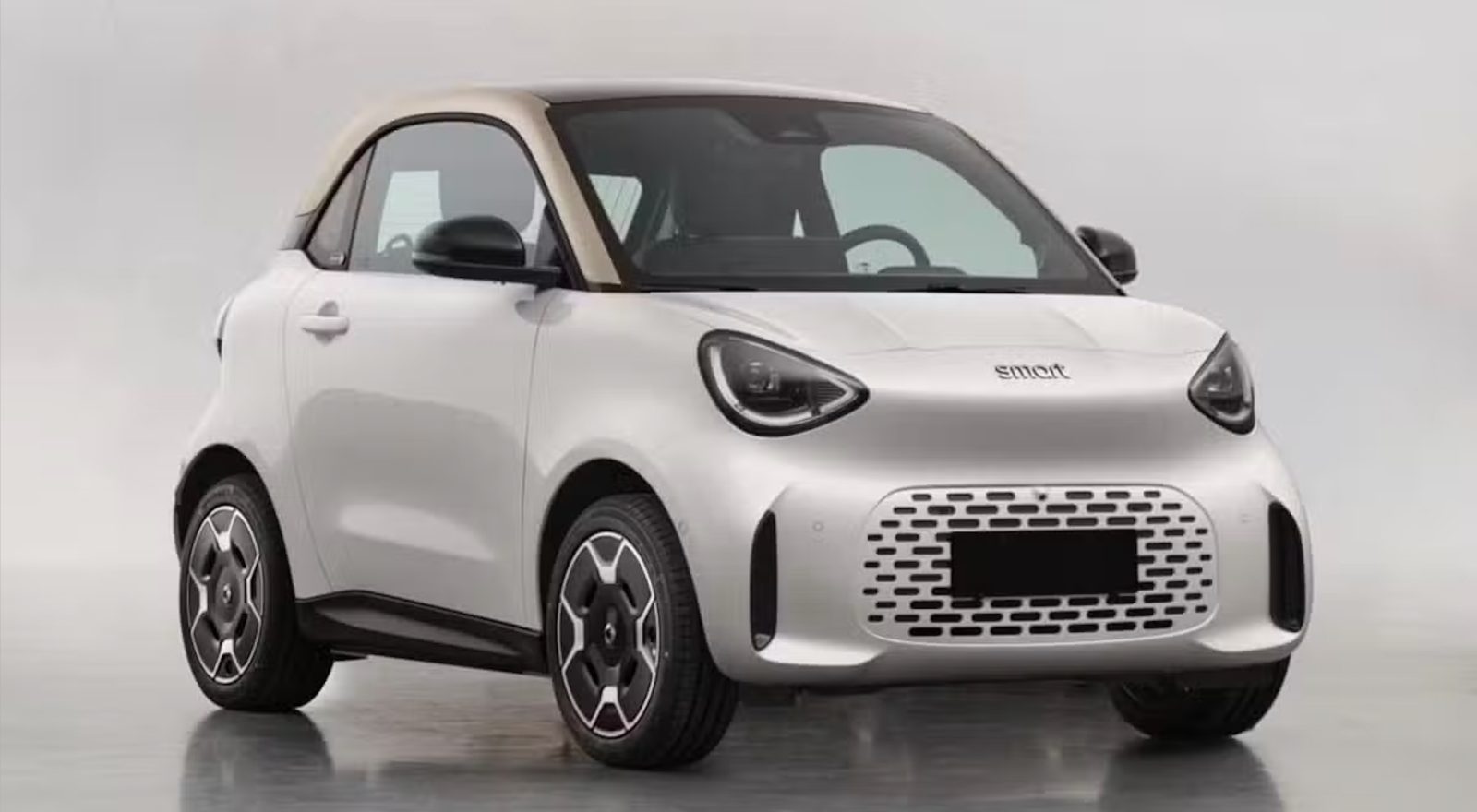
A regulatory filing with the Chinese government has revealed specs of Smart #2, the upcoming successor to the Smart ForTwo. A full reveal is expected in October, with the car later coming to global markets… except the US.
The original Smart car (actually called the “smart fortwo”) is perhaps the most well-known tiny vehicle globally, or at least in the West. It made waves with its tiny size, only 2,500mm (98.4in) long. This means the car was shorter than some cars are wide, which even enabled it to park nose-in on city blocks, opening many more parking options.
Over the years, the car got bigger with later generations, but was still quite tiny. The most recent version of the Smart car was still just 2,695mm (106.1in) long. The latest generation came in an electric version as well, though as was the case with many EVs released in the early 2010s, it was quite limited as compared to the EVs of today, even after refreshes.
But now, Smart is back and ready with some big changes, thanks to a partnership between Mercedes and Geely. They’re coming out with what they’re calling the “Smart #2.” which seems to be billing itself as an even more significant refresh of the Smart car than any of its previous generational updates.
The concept for the Smart #2 was unveiled earlier this year at the Beijing Motor Show, which Electrek attended, but given there were 1,451 vehicles, 181 world premieres and 71 concept cars, we didn’t get around to checking out the Smart concept.
But now, just four months later, we have a regulatory filing and an expected production reveal two months from now. Concepts can often go years (or, uh, going on a decade) between original unveil and their eventual delivery, if they even make it to market at all.
CNEVpost spotted a regulatory filing with the Chinese Ministry of Industry and Information Technology (MIIT) with pictures of the Smart #2 and several details of the planned specs of the car.
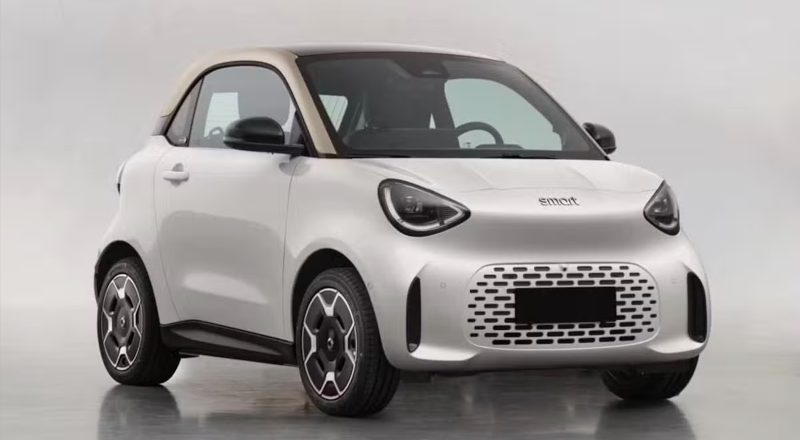
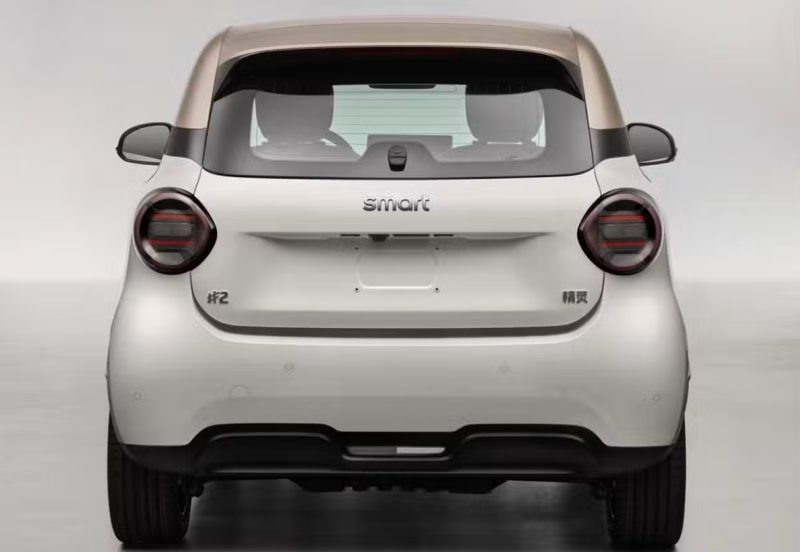
The car’s badge simply says “#2,” showing that the model designation perhaps wasn’t just a placeholder after all.
Two body lengths are listed for the two-seater, 2,751mm (108.3in) and 2,764mm (108.8in). Both are larger than the previous 2,695mm, so the car just continues getting larger over time. But it’s still quite tiny compared to everything else out there, at a curb weight of 1,130kg (2,491lb).
Notably, that’s significantly shorter than the 3,000mm Bestune Pony (which I had a chance to drive in the US), but also significantly heavier. The extra weight likely comes from the #2’s larger battery and more capable 60kW (80hp) motor, which can reach a top speed of 140 km/h (87mph). The filing doesn’t include battery size, but does say it’s an LFP battery with cells made by CATL.
The fiilng even includes several photos of parts of the car, based on the various options available, such as the option for a black or body color roof, and various wheel options.
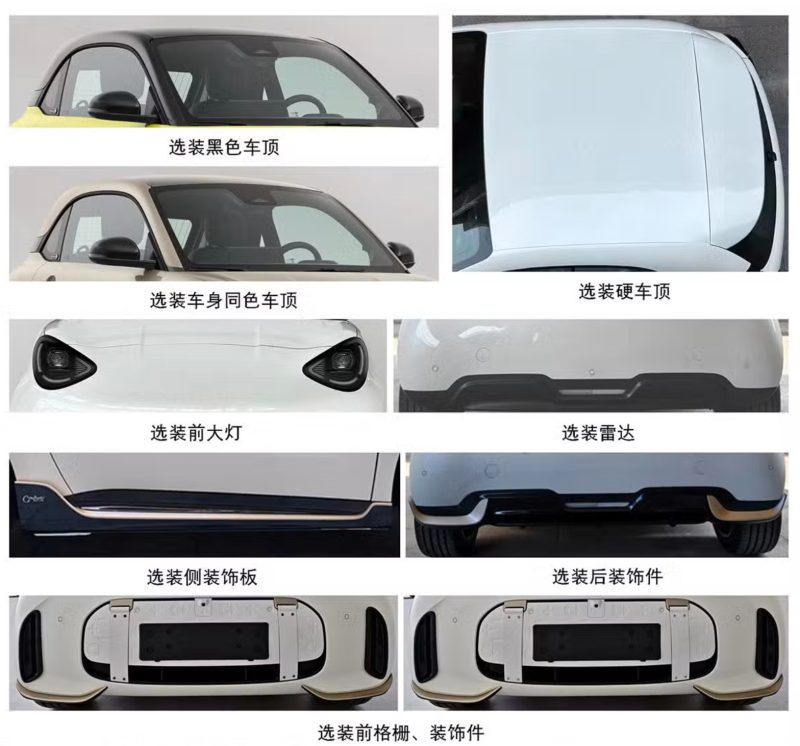
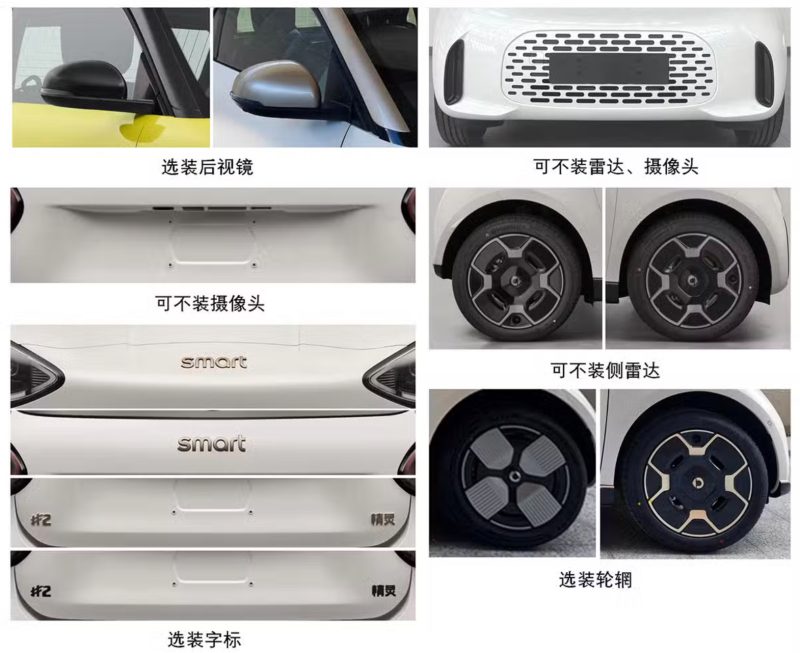
We don’t know when deliveries will start of the Smart, but the fact that it has progressed from concept to unveil so quickly is impressive – and another sign of the Chinese auto industry’s world-leading agility.
Unfortunately, that world-leading agility has spooked the US government and auto industry – but rather than spooking them into action, it has spooked them into demanding that superior Chinese EVs be banned from America so that they don’t have to compete.
Automakers got this effective ban via unwise tariffs and software bans, and can now sit on their hands, continuing to offer you overpriced, polluting, pedestrian-killing vehicles and thinking that nothing bad could ever possibly happen as a result, which we’ve certainly never seen any relevant examples of.
As such, Smart plans to produce the car in China and sell it in China, Europe, and around the rest of the world, where EV sales are booming this year, offering cheaper mobility options to everyone except Americans during a huge rise in energy prices brought on by the US’ actions. We’ll find out more about the car at the Paris Motor Show in October, including likely a shipping date… for everyone but the US.
That said, Geely did say earlier this year that it is eyeing an entry into the US market, so maybe we will eventually see the Smart here…
But if you’re in the US, you can still charge your electric vehicle at home using rooftop solar panels. Find a reliable and competitively priced solar installer near you on EnergySage, for free. They have pre-vetted installers competing for your business, ensuring high-quality solutions and 20-30% savings. It’s free, with no sales calls until you choose an installer. Compare personalized solar quotes online and receive guidance from unbiased Energy Advisers. Get started here. – ad*


FTC: We use income earning auto affiliate links. More.