

Tie up among the bobbing masts of the marina and stroll through the stalls of the farmers’ market beneath the city walls: olives and oil, watermelons, berries and honey from the mountains, cured meats, homemade wines and brandies, and mounds of bright tomatoes and fragrant figs. Dubrovnik is only around 37 miles away as the crow flies, but thankfully there is not a scrap of Game of Thrones merchandise in sight, although the cruise ship looming over the port announces that mass tourism has not passed Kotor by. Nevertheless, it remains a living town, where locals go about their business among the babel of tourists, and laundry criss-crosses the narrow streets.
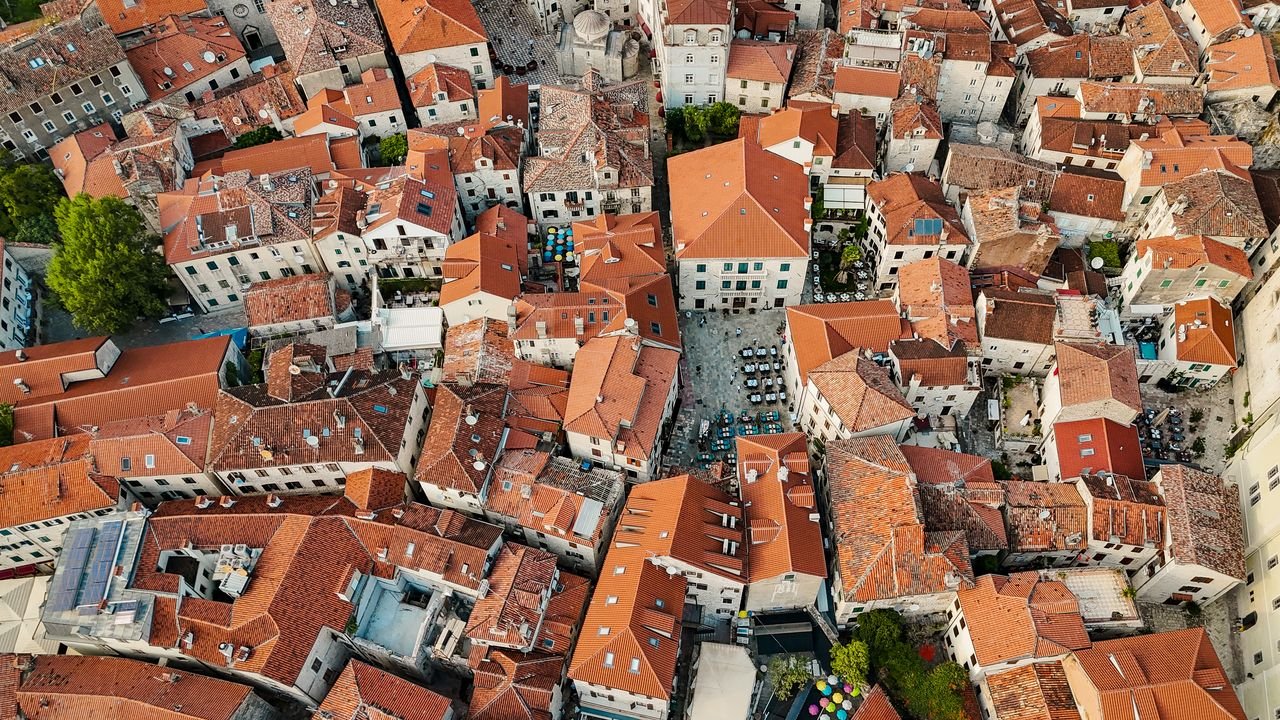
Walk past locals chatting beside their motorbikes and enter the pedestrian Old Town through the Sea Gate beneath its Venetian lion. Ahead is the jauntily leaning early-17th-century clock tower; below it stands an elegant little obelisk known as the Pillar of Shame, used as the town pillory until the end of Venetian rule. The Square of Arms is lined with cafés and is the busiest part of town, but head further in and duck into Cinema Square for coffee beneath a spreading black poplar planted in 1667, which once shaded a long-vanished Franciscan monastery. If it is on the menu, try a slice of Kotor krempita, a local speciality of puff pastry and sweet custard.
Opposite, the Kotor Cat Museum helps fund the care of the town’s cats, reputedly descended from mousers brought ashore by Venetian sailors. For cat-averse travelers, the tiny Romano-Gothic Church of St Michael in the same square houses the Kotor Lapidarium, a collection of stone artifacts from the Illyro-Roman period to the end of the 18th century.
Once re-caffeinated, walk through pretty St Luke’s Square to Trg od Drva, or Wood Square. Here you can mount the ramparts or, if the heat permits, climb to the fortress for exceptional views over the town and bay. The climb to the Castle of St John involves about 1,350 steps and 850-some feet of ascent, passing the Church of Our Lady of Remedy halfway up. Having already done it a hundred times, I may leave you to it and order grilled sea bass at the excellent Bastion fish restaurant on the square.

After lunch, make your way to the Cathedral of St Tryphon, Kotor’s most important monument and one of the finest Romanesque churches on the Adriatic. Consecrated in 1166, the cathedral contains a splendid 15th-century gilded altarpiece and a 14th-century Romanesque-Gothic ciborium above the main altar, supported by red-marble columns and carved with scenes from the life and martyrdom of St Tryphon. The upper terrace offers fine views across the Old Town rooftops and the opportunity to feel like a potentate announcing their marriage to the populace in the square below. Nearby, the Maritime Museum, housed in the 18th-century Grgurina Palace, tells the story of the captains and sailors who carried Kotor’s influence far beyond the bay, but save it for another visit if the afternoon is slipping away.