

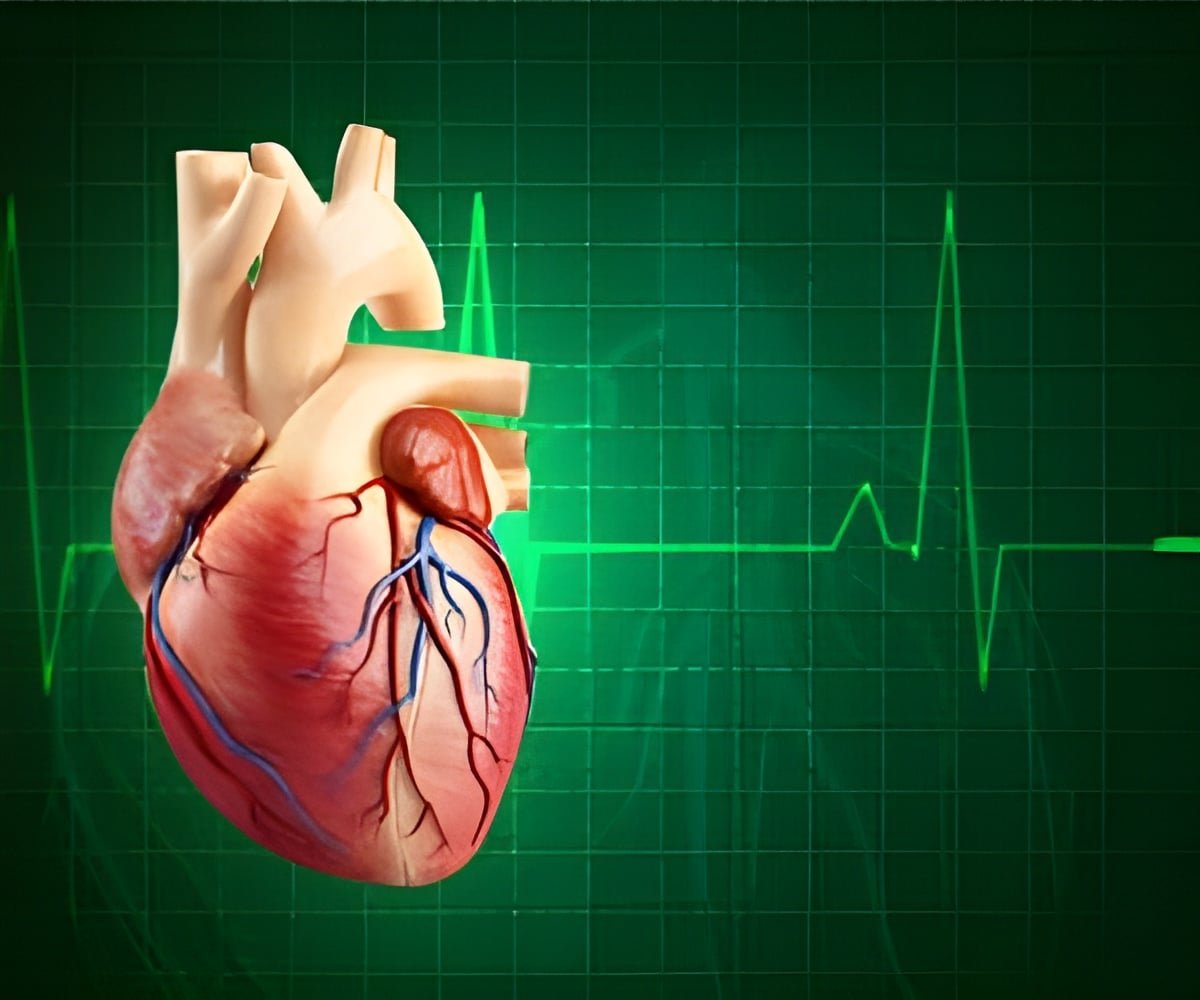
An international research team led by Ateneo de Manila University has developed an artificial neural network to estimate cardiac index using data from non-invasive monitoring devices.
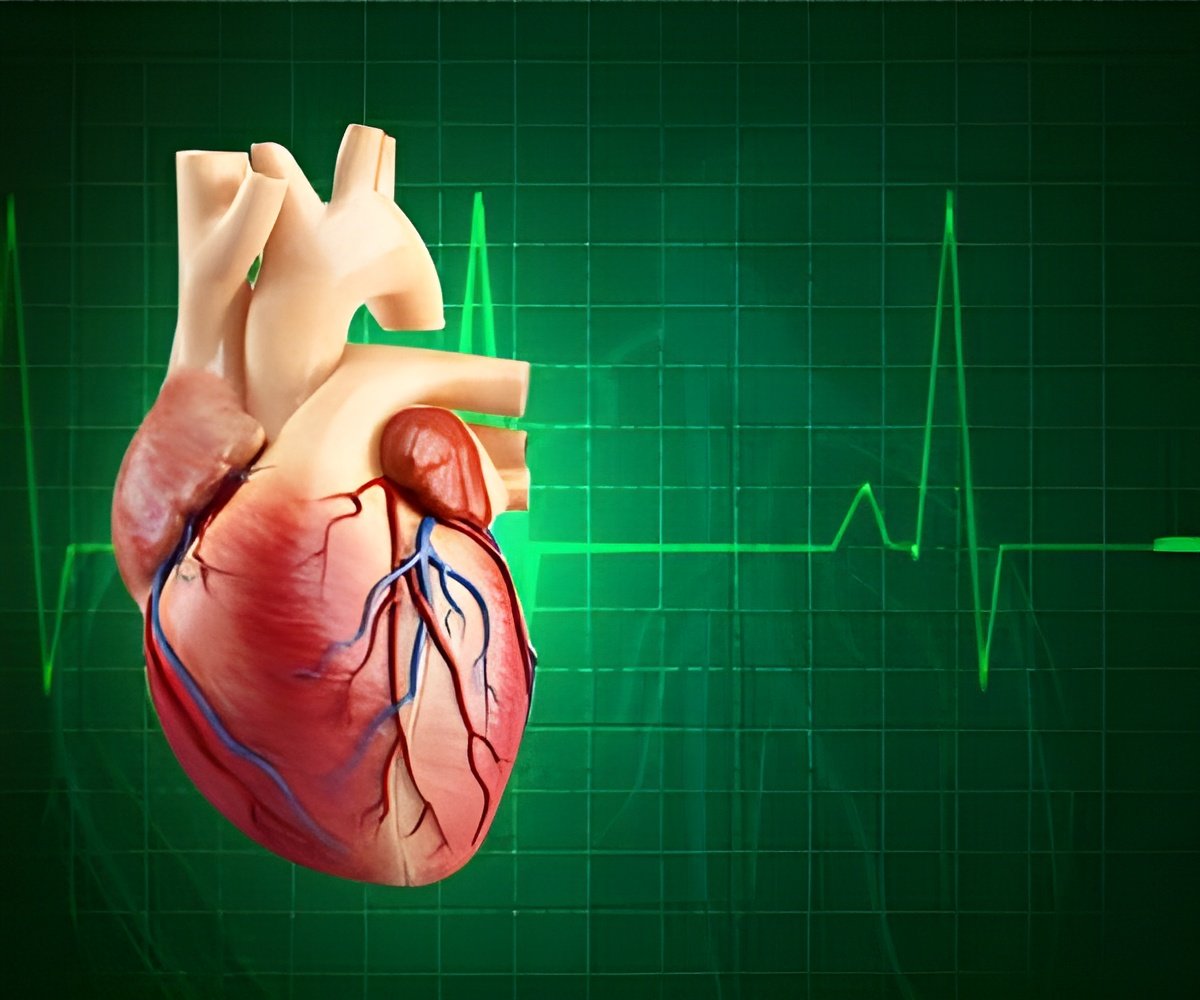
An international team led by Ateneo de Manila University has developed an artificial intelligence model that may support non-invasive assessment of how effectively the heart pumps blood.
The system uses an artificial neural network to analyse physiological measurements and predict cardiac index, a measure of cardiac output adjusted for a person’s body size.
The model achieved 97.78% accuracy when classifying cardiac index values in the study. However, the research involved only 54 young adults with obesity, meaning the results remain preliminary and should not be interpreted as proof that the system is ready for routine clinical use.
Advertisement
Artificial Brain Is a Neural-Network Model
The “artificial brain” described in the Ateneo announcement is a feed-forward artificial neural network.
Such networks learn mathematical relationships between input measurements and known outcomes. They do not think or reason like a human brain, but they can recognise complex patterns that traditional linear statistical models may miss.
The system was developed by researchers from Ateneo de Manila University and institutions in Taiwan and China. Patricia Angela R. Abu from Ateneo’s Department of Information Systems and Computer Science was among the study’s senior collaborators.
Advertisement
Cardiac Index Reflects the Heart’s Pumping Performance
Cardiac output describes the volume of blood pumped by the heart every minute. Cardiac index adjusts this measurement for body surface area, allowing clinicians to compare cardiac performance among people of different sizes.
The metric can help clinicians evaluate blood circulation and guide treatment in patients with cardiovascular or critical illnesses. However, cardiac index does not provide a complete assessment of heart health and cannot independently diagnose conditions such as coronary artery disease, heart failure or abnormal heart rhythms.(1✔ ✔Trusted Source
Robust Non-Invasive Cardiac Index Prediction via Feature Integration and Data-Augmented Neural Networks
For its classification analysis, the study separated participants into two groups using a cardiac index threshold of 3 litres per minute per square metre.
Advertisement
Model Reached 97.78% Classification Accuracy
The strongest model configuration used three physiological inputs:
Using these measurements, the neural network achieved 97.78% accuracy when distinguishing between the two cardiac-index categories. Its five-fold cross-validation analysis produced the same average accuracy.
For continuous cardiac-index prediction, the model achieved an R² value of 0.929, a mean absolute error of 0.1236 and a mean absolute percentage error of 3.12%.
The researchers also tested configurations with fewer inputs. Models using heart rate with either stroke volume or stroke volume index produced 90% classification accuracy, although their continuous prediction performance was considerably weaker.
The findings were published in the peer-reviewed journal Bioengineering on April 18, 2026.
Non-Invasive Devices Collected the Physiological Data
The study used several non-invasive instruments, including:
- An InBody 720 body-composition analyser
- A TERUMO ES-P2000 blood-pressure monitor
- A PhysioFlow PF07 Enduro cardiac haemodynamic analyser
Electrodes placed on the skin collected haemodynamic measurements without inserting a catheter into a blood vessel or the heart.
These measurements were preprocessed before being supplied to the neural network. The researchers also used data augmentation to generate additional training examples and reduce the risk of model instability.(1✔ ✔Trusted Source
Robust Non-Invasive Cardiac Index Prediction via Feature Integration and Data-Augmented Neural Networks
AI Heart Model Needs Wider Validation
The model reported 97.78% accuracy in classifying cardiac index, but its strongest version still relied on specialised haemodynamic measurements such as cardiac output and stroke volume index.
The study also included only 54 adults aged 20–29 with a BMI above 27 kg/m², so the findings may not apply to older adults, other body types or people with cardiovascular disease.(1✔ ✔Trusted Source
Robust Non-Invasive Cardiac Index Prediction via Feature Integration and Data-Augmented Neural Networks
Future Versions Could Help Smaller Clinics
If future versions can estimate cardiac index using fewer, simpler and more affordable measurements, the approach could support heart monitoring in smaller clinics and underserved areas.
However, larger and more diverse studies, real-world hospital testing, device validation and regulatory review are still needed.
For now, it remains a promising proof of concept, not a replacement for standard cardiac tests or specialist evaluation.
References:
- Robust Non-Invasive Cardiac Index Prediction via Feature Integration and Data-Augmented Neural Networks- (https://archium.ateneo.edu/discs-faculty-pubs/444/)
Source-Medindia