

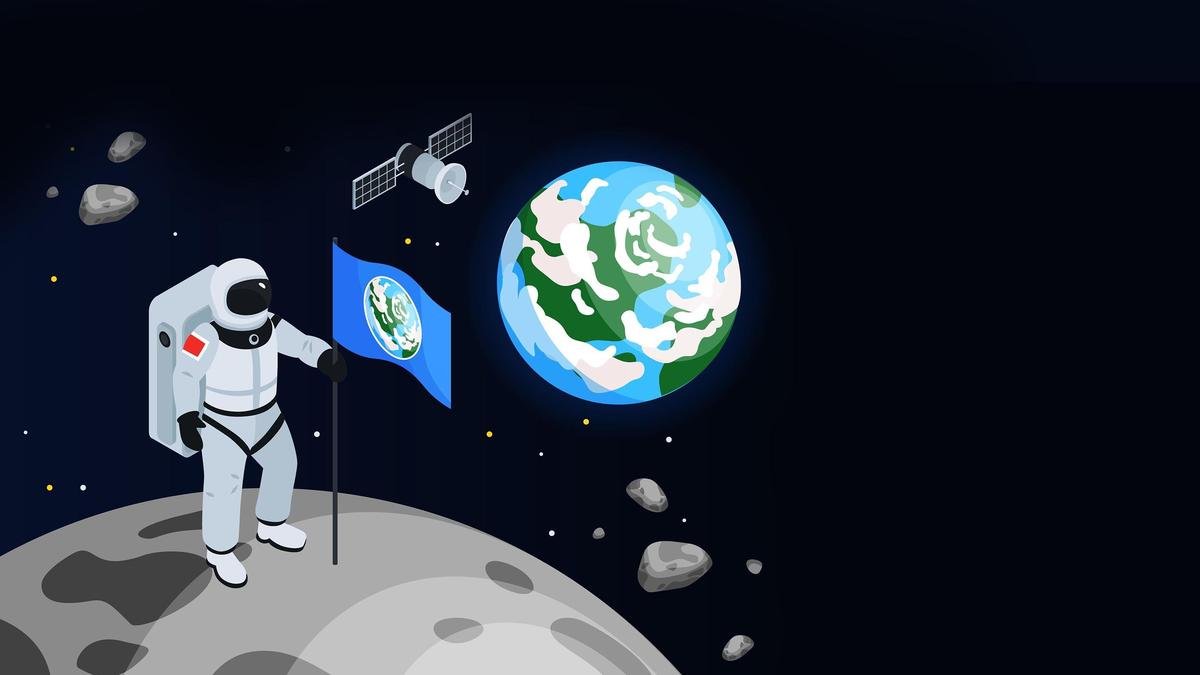
What seemed impossible barely 60 years ago — getting humans to the moon — has not just turned into reality, it has transformed our understanding of the cosmos, with decades of research and missions into space bringing to us new, exciting and unthought-of information about our universe. And so, it is quite possible that over the next few decades, a visit to the moon for many — like a visit to a neighbouring State — might not be in the realm of fantasy. The United States space agency, NASA, in fact, has plans for human presence on the moon from 2032 onwards. But this raises a crucial question: what will healthcare look like on the moon?

The lunar surroundings
The moon is not designed for human life. Extreme environmental hazards include no atmosphere, meaning a base would face direct solar and cosmic radiation and micro meteoroid impacts. Gravity would be 1/6th of that on earth. Radiation, dust and temperature swings — on the moon it can range from 121°C to -246 C would affect human health.
Long-term low gravity, radiation exposure, isolation and confinement raise medical and psychological concerns. Over time these may affect bone, muscle, vision, immune function and mood. Long-term isolation on the moon can affect cognition, sleep and interpersonal relationships. Anxiety, depression, irritability, reduced attention and burnout from confinement and separation from normal social life could be normal.
The lunar environment may disrupt circadian rhythms because of unusual light cycles, limited natural cues and operational stress. This can worsen sleep quality, increase fatigue reducing concentration and judgment. Over time, these effects can hurt both performance and emotional resilience.

What happens to the body
The human skeleton atrophies in microgravity because there are no gravitational forces acting on the musculoskeletal system. Bones lose roughly 1 to 1.5% of mineral density every month in weightlessness. This increases the risk of osteoporosis and painful kidney stones. Muscles also atrophy rapidly without constant weight-bearing resistance. The heart does not have to pump blood upward against gravity. This results in the heart losing muscle mass and shrinking over time. It also results in decreased strength and early fatigue from muscle atrophy.
Another threat is cosmic radiation. Earth’s magnetic field blocks the worst of space hazards, but deep-space travellers face high doses of Galactic Cosmic Rays (GCR) and Solar Particle Events (SPE). High-energy, heavy ions tear through cellular structures, damaging DNA, increasing lifetime cancer risks. Heavy radiation exposure can accelerate cognitive decline, damage neurons, and potentially mimic early-onset Alzheimer’s disease. Radiation exposure on the moon is 78 times that of Earth’s background, and for a Mars mission it is 230 times.

Challenges in providing healthcare
Healthcare on the moon would be dependent on habitat, power, food, transport and maintenance. In addition to first aid and initial management, care on the moon would include management normally done by a physician or surgeon on earth. Increased medical self-care would be the rule.
Lunar medical care would have several challenges including fewer equipment and supplies, decreased replenishment of medical supplies, increased radiation exposure potentially affecting/decreasing the shelf life of nutrients, medications and laboratory reagents and the fact that repatriation to Earth for health reasons may take up to 30 days. This means considerable training and medical skills practice will be mandatory for non-medical personnel.
Additionally, performing surgery in 1/6th gravity would be a major challenge. Body fluids would float freely rather than pooling and contaminated fluids can drift into the cabin air. Heavy diagnostic hardware such as CT/MRI scanners are too heavy to bring from earth, which would make imaging a challenge.

What we currently have
Adequate health facilities for diagnostics and treatment were established on the International Space Station (ISS) from 2000 onwards. Eye problems, deep vein thrombosis, dermatitis, headaches, irregular heart rhythms and urinary retention have all been managed from Earth.
This year, NASA executed the first-ever medical evacuation by bringing the four-member SpaceX Crew-11 mission home early on January 15. NASA cut the mission short by about a month due to an undisclosed medical issue affecting one of the crew members.

What the future holds
NASA is planning to return human explorers/scientists to the moon in the next few years. The primary goal is science exploration and commercialisation of space activities. The secondary goal is to get ready for Mars exploration.
The current approaches to medical care on the moon may not meet the needs of future lunar visitors or residents, if any. New technologies and novel training will be required. Visitors to the moon must be familiar with space medicine and aerospace engineering. This combination of areas is what the world will need to invest in, and learn about.
(Dr. K. Ganapathy is past president of the Neurological Society of India and the Telemedicine Society of India. A former distinguished visiting professor at IIT, Kanpur he is currently a honorary distinguished professor at IIM, Jammu. drkganapathy@gmail.com)
Published – August 03, 2026 01:12 pm IST