

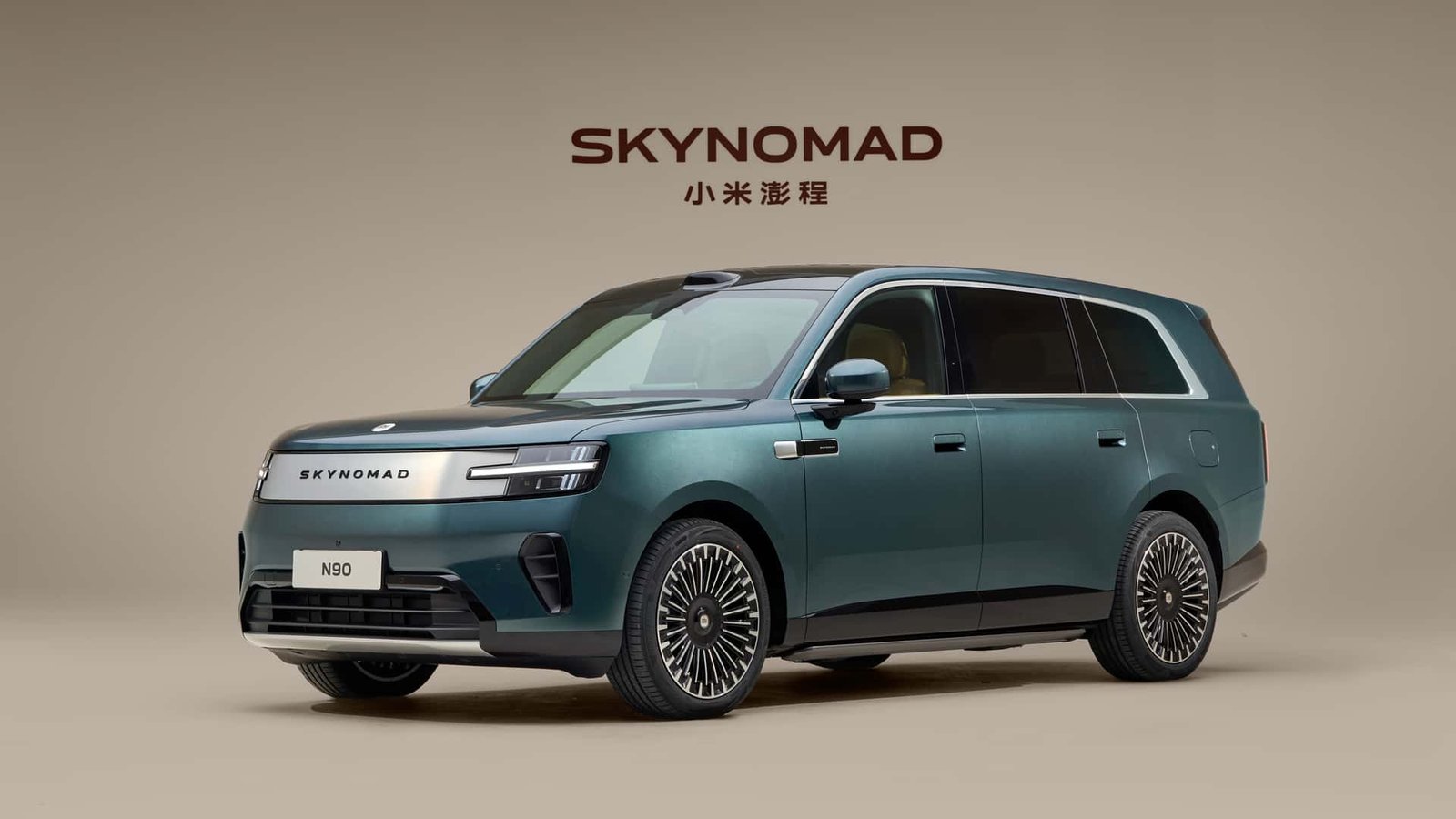
- Xiaomi’s sub-brand SkyNomad has officially launched with the N70 and N90 extended-range EV (EREV) crossovers.
- The brand says the cars won’t need an oil change for up to three years, or 30,000 kilometers traveled on their gas engine.
- The N70 and N90’s gas engine is a 1.5-liter turbocharged four-cylinder unit.
China’s Xiaomi has launched its SkyNomad sub-brand. Positioned as a more family-oriented alternative to the very sporty SU7 and YU7, the N90 and the smaller N70 are big, soft, and meant to carry people in comfort. Also, they’re not 100% electric, adding a 1.5-liter turbocharged gas engine that acts as a range extender. That makes Xiaomi’s latest SUVs extended-range EVs, or EREVs as they’re commonly known.
The concept of an EREV has caught on both in and outside of China, promising the benefits of an EV without the range anxiety. But there’s always been a looming question: At their core, EV mechanicals are relatively simple. With the addition of a gas engine and all of its fluid changes and moving parts, will EREV models be more complicated to maintain compared to their full EV counterparts?
Apparently not, at least according to Xiaomi.
On the cusp of the full launch of the SkyNomad EREV crossovers, the vehicle’s servicing plan has been announced on the brand’s Weibo. The vehicles won’t need an oil change until the end of their first year, or 10,000 km (6,200 miles) traveled. After that, Xiaomi recommends oil changes and servicing every 3 years, or 30,000 km (18,640 miles) traveled on engine power. This is very similar to Li Auto, which has also stretched its oil change interval to 3 years or 30,000 kilometers for its L8 and L9 EREV crossovers.
The shift to longer service intervals could close the gap in affordability in running costs between EVs and EREVs. For comparison, pure gas or hybrid cars typically require oil changes every 3,000-10,000 miles.

Photo by: Xiaomi
Unlike a regular (non-plug) hybrid vehicle, which needs the engine to turn on and move the car at certain speeds, these EREV models can do significant journeys with their engines off. Since the engines are off, in theory there shouldn’t be as much use or wear and tear on them. That’s probably why Xiaomi and Li Auto figure the maintenance intervals can be stretched longer. If you’re regularly plugging in the vehicle and not using the motor, there’s a real possibility that you’ll hit the time limit, rather than the mile limit for this vehicle’s required maintenance.
This isn’t an entirely new phenomenon, either. When I owned my old 2015 Chevrolet Volt, I was religious about plugging in. Even though my 40-mile real-world range paled in comparison to modern EREV models, consistently plugging in and charging meant that I didn’t use the engine very much for close to a year. I was driving on electric power so much that the car went into maintenance mode, where it turned its engine on to burn old fuel in the tank, get oil cycling around its engine, and burn off any residual moisture buildup in the engine or engine oil. In fact, the Chevrolet Volt’s oil life monitor is sophisticated enough to monitor use and mileage, allowing for up to two years of engine-free or engine-reduced motoring before it reminds its owner for an oil change.
Photo by: Xiaomi
It’s not entirely clear how Xiaomi has been able to stretch out its service intervals. At Li Auto, the brand went out of its way to make internal design changes to its range extender engine to reduce the chance of oil oxidation and contamination from moisture. It also uses special oil that was developed by Shell to enable such a long service interval. It appears that Xiaomi is also recommending special oil. CarNewsChina reports that the brand has partnered with Shell for a special low-viscosity oil.
A handful of EREVs are coming to the U.S. market soon, including Scout’s Traveler and Terra. I reached out to the company about its expected servicing intervals. While Scout hasn’t announced anything, a representative told me that the longer maintenance cycles are one big reason why the brand is excited about its EV and EREV products. It expects a longer maintenance cycle, but we won’t know exactly what it’ll look like for that brand until the vehicles get closer to launch.
Contact the author: Kevin.williams@insideevs.com