

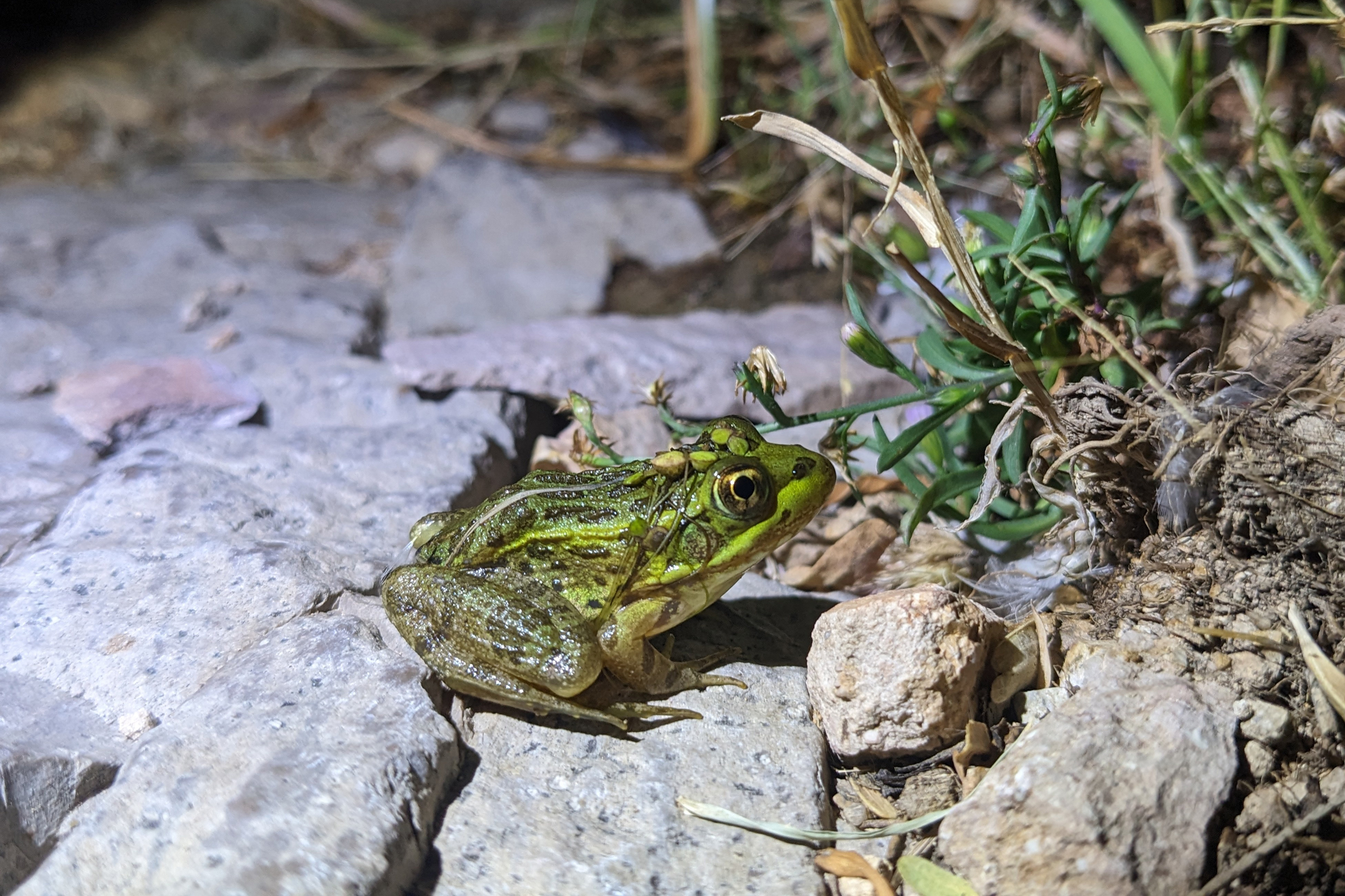
WHITE MOUNTAINS, Ariz.—As the warming climate drops less rain on the White Mountains and the thirsty atmosphere and soils suck up more of what does fall, the Chiricahua leopard frog has been threatened from all sides.
The dark green, stocky frog sporting raised charcoal-colored spots once announced its presence throughout streams and wetlands in Arizona, New Mexico and Mexico with a snore-like croak. But drought has dried out many of its habitats, while ash from wildfires has smothered others. Invasive species like bullfrogs and crayfish have disrupted the frogs’ food supply. And a deadly fungal disease that is wiping out amphibians around the world, chytridiomycosis, has further slashed their numbers.
Today, the frog is found at fewer than 80 sites and is listed as threatened under the Endangered Species Act.
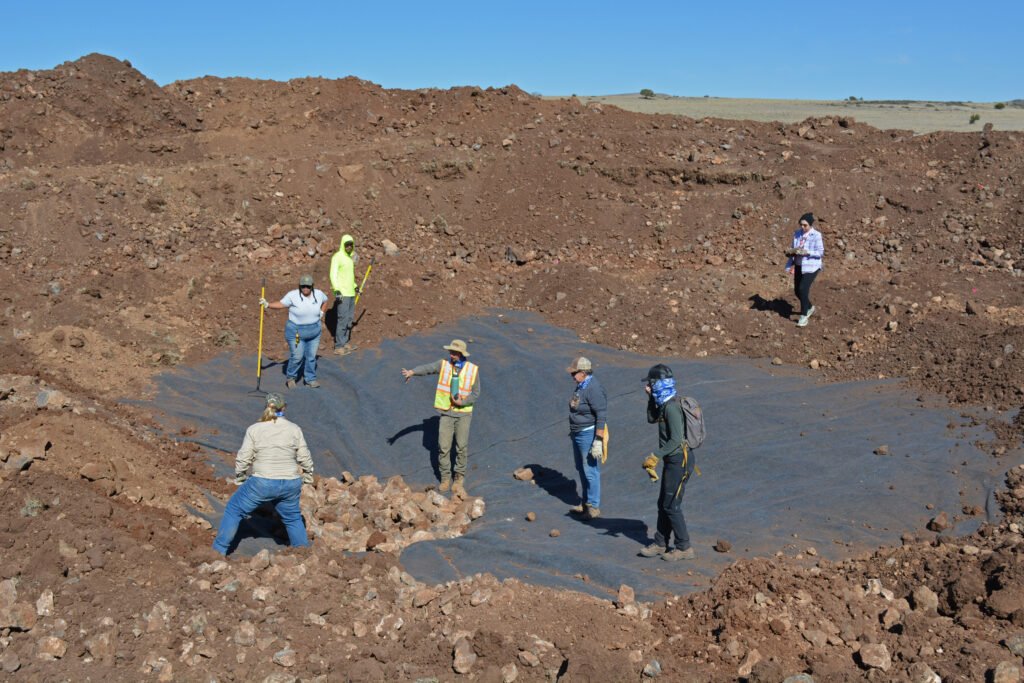
Preserving the one remaining population in the White Mountain Grasslands Wildlife Area requires making water appear in the desert and stay there, said Thomas Biebighauser, a wetlands engineer and founder of Wetland Restoration and Training LLC, as he watched a crew of volunteers prepare to build a pond.
“Wherever you live on Earth, you’re going to get rain sometime,” he said. “What happens to that rain is it flows off the surface of the ground, which eventually enters a stream, then eventually enters a river and goes to the ocean, which is a wonderful cycle. However, Arizona is becoming drier and drier … so we have now developed the techniques for making water in the desert.”
The site is one of six under construction, taking what were dried out cattle tanks to create new ponds to provide a collection of habitats for the frog.
Since being listed under the ESA in 2002, which led to a recovery plan being put in place in 2007, the Chiricahua leopard frog has seen a threefold increase in habitat sites. But the changing climate continues to deal it setbacks. Case in point: The habitat restoration project in the White Mountains was supposed to occur in 2024, but wildfires forced its delay.
The project is not just about saving a charismatic amphibian.
“We like frogs. But any additional surface water permanence on the landscape is going to be beneficial across the board,” said Becca Cozad, the Amphibian and Reptile Conservancy’s (ARC) Southwest program manager, as she surveyed the landscape around her at the base camp for the project. “There’s not much water out here right now.”
Cozad became obsessed with frogs while growing up in Houston. Southern leopard frogs constantly got into her parent’s home pool.
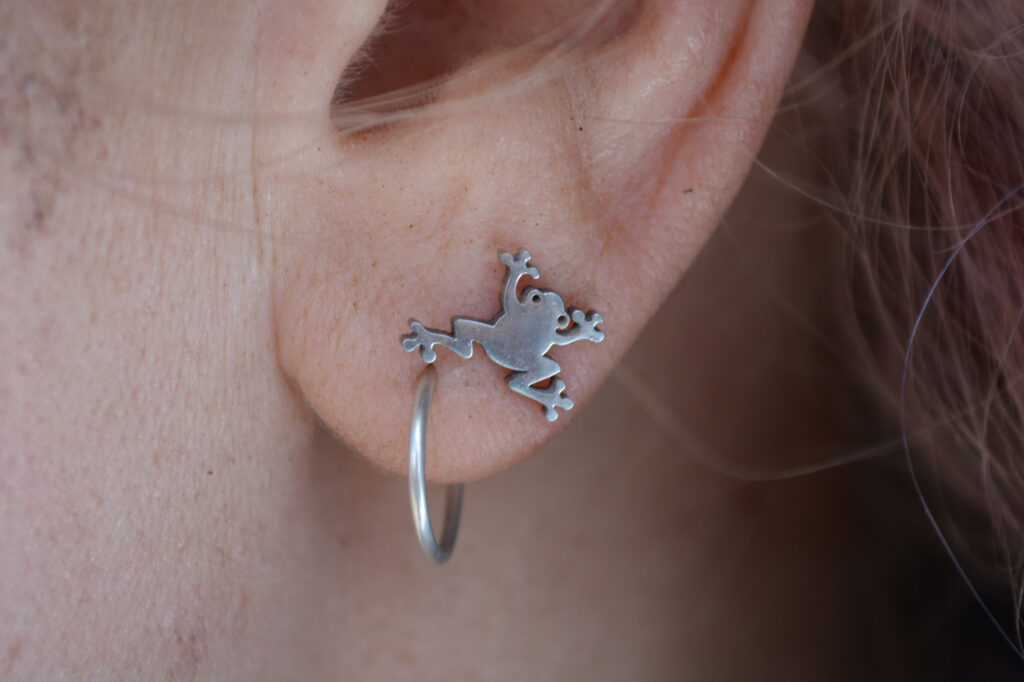
At the White Mountains site, she wore a cowboy hat and frog earrings to roll and throw rocks atop a 70-by-70-foot black liner designed to hold water, which was then topped with two layers of fabric and a foot of soil and rock. A dozen other workers, most of them volunteers, moved large rocks to the center of the liner, shoveled dirt over the hardscaping and raked it smooth.
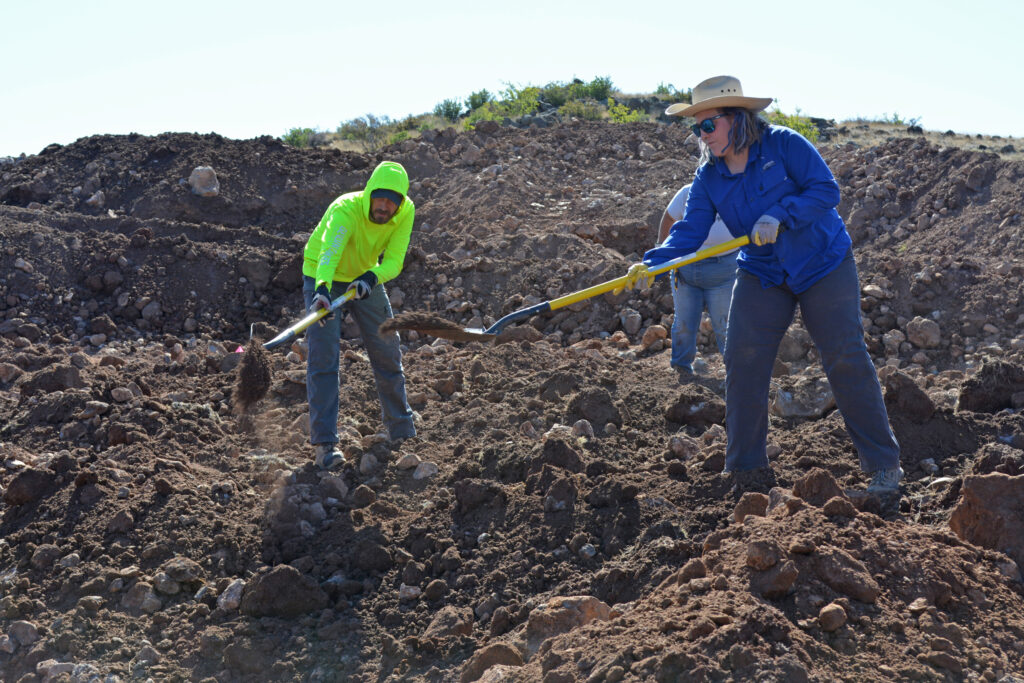
Eventually, rain will fall in this stretch of Arizona desert to fill the ponds with water. Rather than soak into the aquifer below ground, the pond’s liner and rock covering will help keep the water on the surface, ideally creating a year-round aquatic habitat
Over a span of two weeks, staff with ARC, the Arizona Game and Fish Department and volunteers from across the state (and at least one Canadian) worked to build the six new pond sites at the wildlife area.
Spanning just over 3,000 acres, Arizona Game and Fish’s White Mountain Grasslands Wildlife Area is currently home to just one site with Chiricahua leopard frogs. High elevation habitats, like those in eastern Arizona’s White Mountains, have proven especially difficult for the frogs, said Audrey Owens, the amphibians and reptiles program manager at Arizona Game and Fish. Chytridiomycosis does more damage in the cold, and has killed off entire populations at some sites, she said, and habitat degradation from competitors like the crayfish are more severe in higher, colder areas.
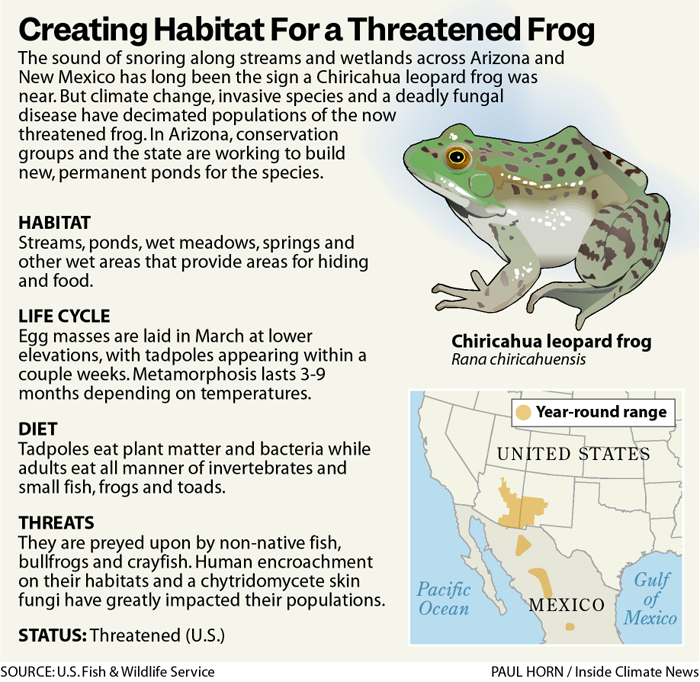
Owens said the goal at the Mountain Grasslands Wildlife Area is to establish a metapopulation. Having just one pond with the species leaves that population vulnerable to blinking out from the fungal disease or the pond going dry. With six more ponds within the area’s drainage, the frogs can relocate if one site fails.
Biebighauser, who spent much of his career as a wildlife biologist in the U.S. Forest Service, has been restoring wetlands, lakes, streams, and rivers since 1979. He’s designed more than 10,000 wetland projects and supervised the construction of more than 3,600 wetlands and streams across the country and around the world, including another one in Arizona. He now instructs others in the art in the field, at workshops and online via his YouTube channel.
Nate Evans volunteered for days working in the field on the habitat restoration project, in part to learn from Biebighauser. A Phoenix resident, Evans grew up in Idaho, where water was easy to take for granted. But the work of Biebighauser and others got him interested in doing aquatic restoration work, helping to restore the water tables of aquifers and creating wetlands.
“Water is the basis of life,” he said. “Any help that I can give it, any way I can work with it to restore it, I want to do.”
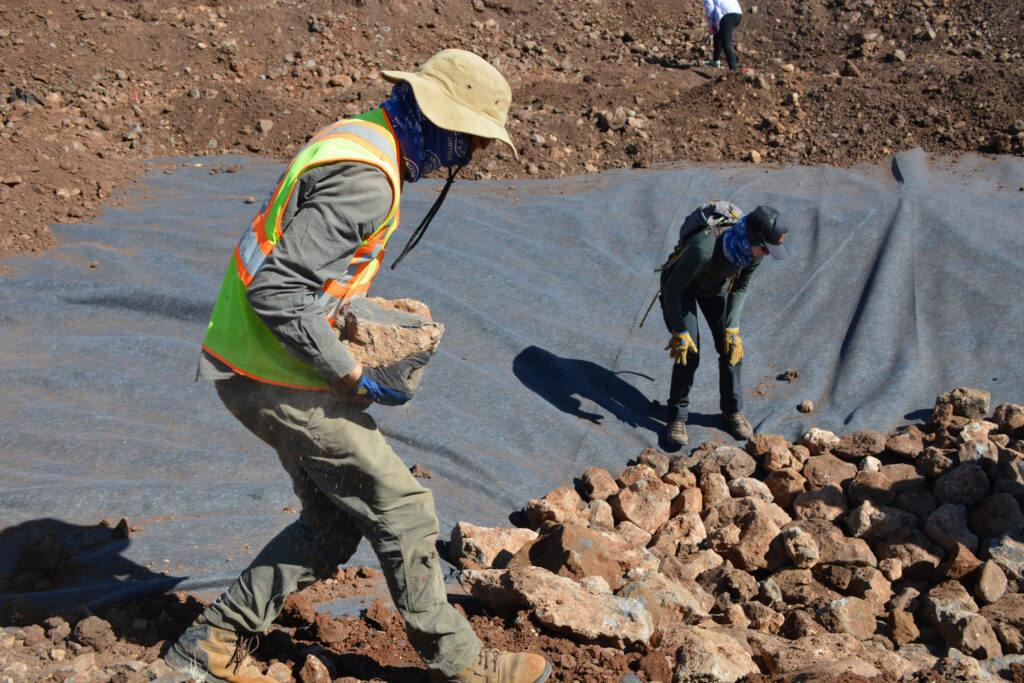
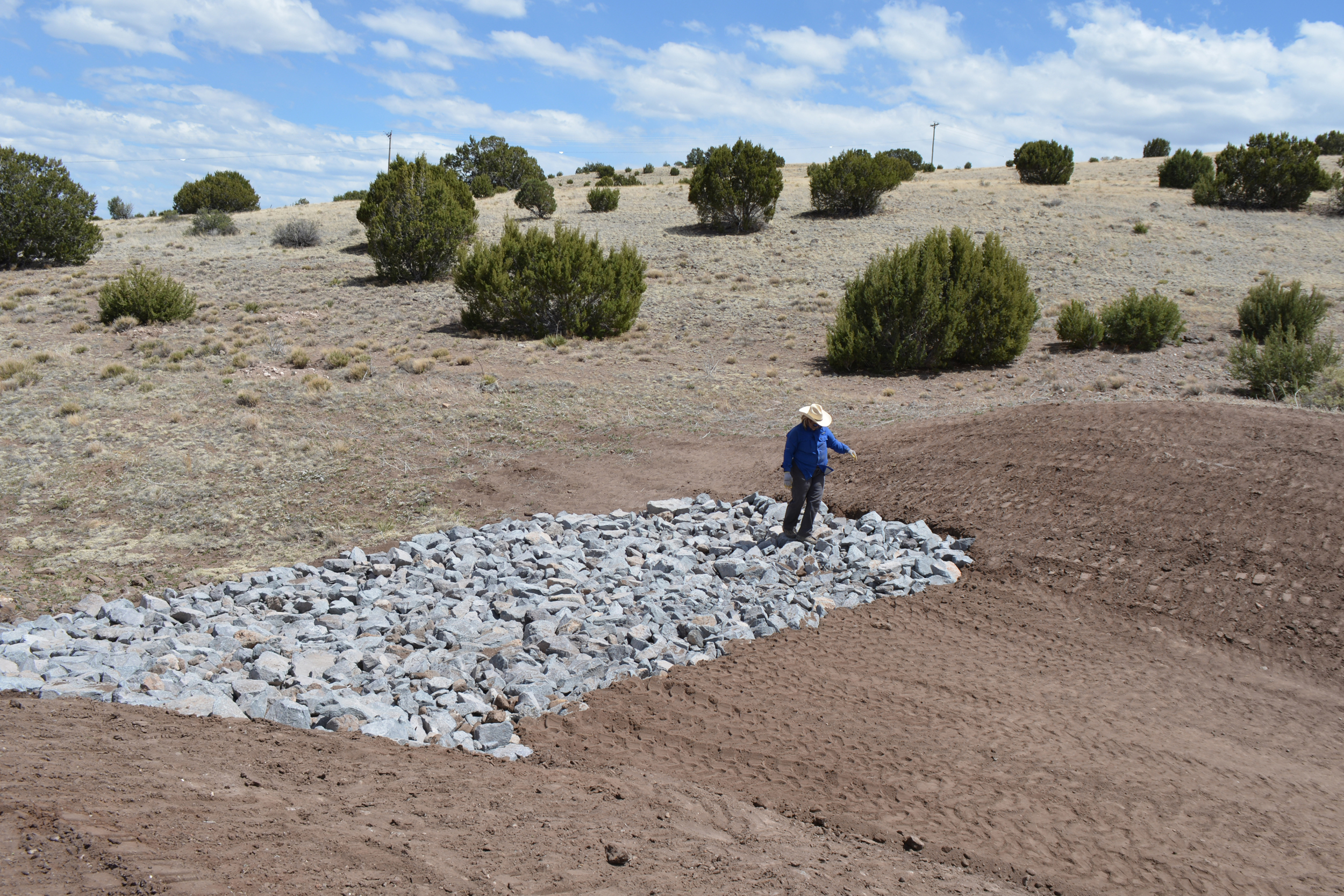
Volunteering at projects like this, Evans said, is the quickest way to get hands-on experience, learn from experts and connect with others interested in the same things, all while doing something to help the environment.
The day Biebighauser first arrived to survey the site, in December 2023, it was cold, with snow on the ground. The first things he noticed were a washed-out dam and signs of erosion covering the ground—surges of water from sudden, intense rains had degraded the streams that fed the pond—evidence that previous efforts to manage water hadn’t endured.
In the middle of the former cattle tank he drilled holes into the ground with an auger and examined the soil for clay, which can compact to hold water, but most of the ground was made up of gravel and sand. No water filled the holes, the way it would in wetter parts of the country.
This story is funded by readers like you.
Our nonprofit newsroom provides award-winning climate coverage free of charge and advertising. We rely on donations from readers like you to keep going. Please donate now to support our work.
“Folks,” he remembers telling the rest of the crew on the survey, “there’s no groundwater.”
Typically, he said, if he drills a hole and it fills with water, he can supersize it to make a wetland. But even if the holes here produced water, the ground didn’t have enough clay to hold it on the surface, so he had to line the pond for it to stay filled.
Biebighauser guarantees the ponds will last 1,000 years—as long as rain falls from the sky.
“The techniques we have developed here, these should last forever,” he said. “We are not building dams. Dams require maintenance. We are excavating.”
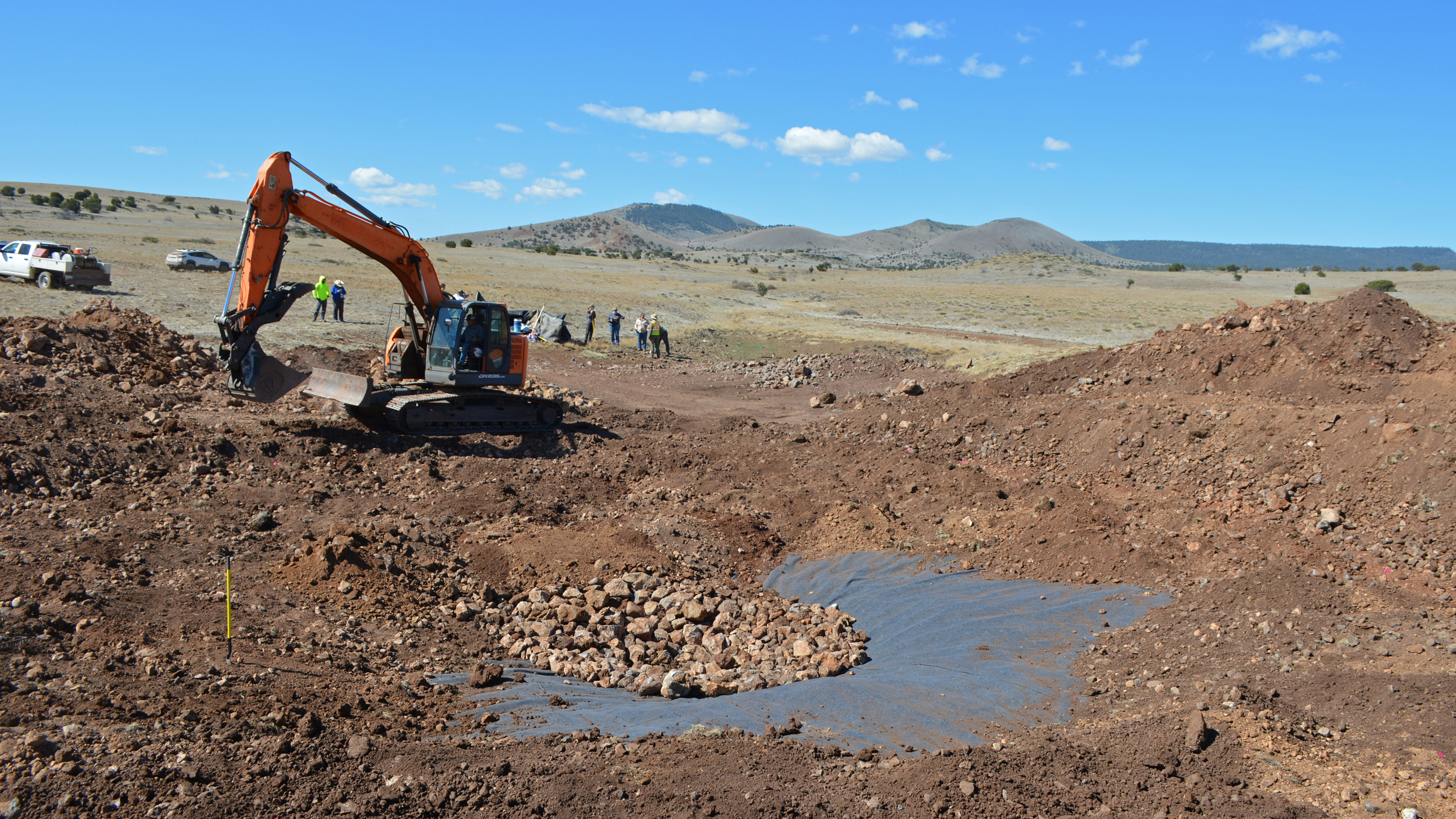
The maintenance-free structures will also help reduce unintended consequences of the work, he said.
“We are taking care of the erosion in the watershed.”
One of the ponds has a well to keep water in it constantly, but the team hopes the summer monsoon season, when Arizona receives most of its rainfall, will fill the others. From there, vegetation will fill the sites. And then, they hope, Chiricahua leopard frogs will move into their new homes.
About This Story
Perhaps you noticed: This story, like all the news we publish, is free to read. That’s because Inside Climate News is a 501c3 nonprofit organization. We do not charge a subscription fee, lock our news behind a paywall, or clutter our website with ads. We make our news on climate and the environment freely available to you and anyone who wants it.
That’s not all. We also share our news for free with scores of other media organizations around the country. Many of them can’t afford to do environmental journalism of their own. We’ve built bureaus from coast to coast to report local stories, collaborate with local newsrooms and co-publish articles so that this vital work is shared as widely as possible.
Two of us launched ICN in 2007. Six years later we earned a Pulitzer Prize for National Reporting, and now we run the oldest and largest dedicated climate newsroom in the nation. We tell the story in all its complexity. We hold polluters accountable. We expose environmental injustice. We debunk misinformation. We scrutinize solutions and inspire action.
Donations from readers like you fund every aspect of what we do. If you don’t already, will you support our ongoing work, our reporting on the biggest crisis facing our planet, and help us reach even more readers in more places?
Please take a moment to make a tax-deductible donation. Every one of them makes a difference.
Thank you,

Reporter, Phoenix
Wyatt Myskow covers drought, biodiversity and the renewable energy transition throughout the Western U.S. Based in Phoenix, he previously reported for The Arizona Republic and The Chronicle of Higher Education. Wyatt has lived in the Southwest since birth and graduated from Arizona State University with his bachelor’s degree in journalism.