

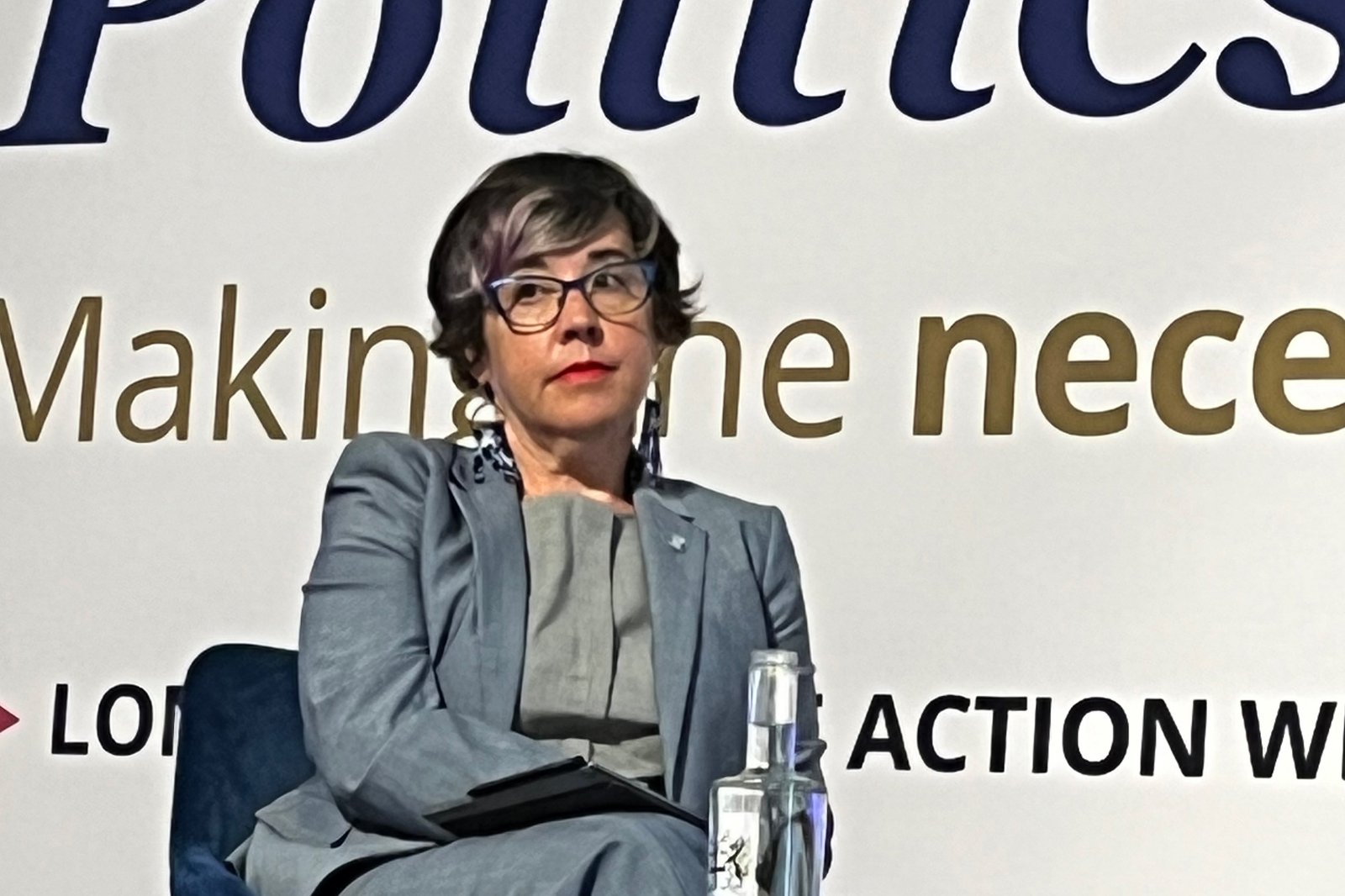
London Climate Action Week opened in the British capital just as an unprecedented heat wave gripped the country and mainland Europe. Among the tens of thousands of attendees at the global event were elected leaders from U.S. cities who are pursuing on-the-ground policies to lower emissions and scale renewable energy.
Mayors of Phoenix, Miami and the university town of Columbia, Missouri, explained how they are working to advance clean energy agendas despite federal cuts and diminished environmental protections from the second administration of President Donald Trump.
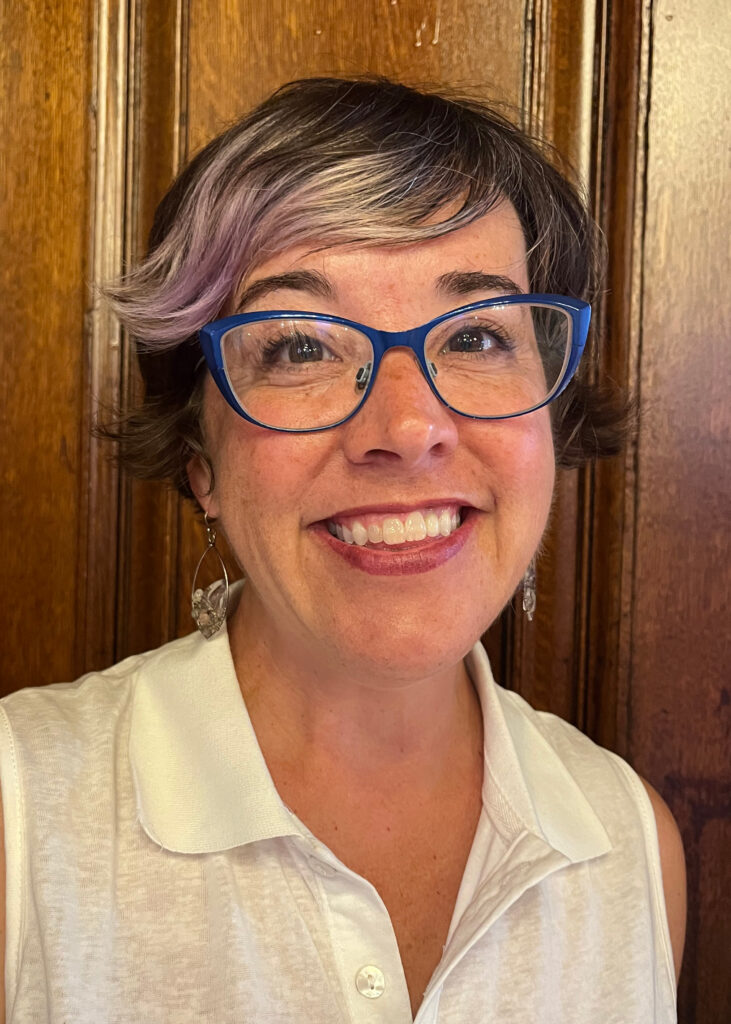
Inside Climate News met with Columbia Mayor Barbara Buffaloe, who was sustainability manager for the city of 130,000 people before twice winning the top elected office. She currently is vice chairman of Climate Mayors, a bipartisan network of nearly 350 U.S. mayors that hosted several panels at the weeklong conference.
Buffaloe, 45, studied environmental design in college and worked in a private firm before pivoting to government. In 2023, she attended the United Nations’ yearly global climate conference in Dubai with a delegation from the U.S. Conference of Mayors. She is chair of the environment standing committee of that mayors’ group, a nonpartisan organization representing U.S. cities with populations of 30,000 or more.
Buffaloe was in central London this week as the temperature hit 36.1 Celsius, about 97 degrees Fahrenheit—a record high for the city in the month of June. The heat prompted the shuttering of thousands of schools. A panel to discuss extreme heat and mitigation efforts, planned in a near century-old library at the London School of Economics, was canceled because the building did not have air conditioning.
This interview has been edited for length and clarity.
CHRISTINE SPOLAR: Why did you come here all the way from Missouri?
BARBARA BUFFALOE: I serve as the vice chair for Climate Mayors. One of the things that’s really important to us is to elevate the voice of mayors working together, and our cities are working together on climate action. One of the ways that we can do that is by raising it to a global level about the fact that U.S. cities are still working on climate action, despite maybe a pause at the federal level. Our communities still find that important.
SPOLAR: How do you do that in this environment, given the changes from Washington? How do you stay positive in this environment?
BUFFALOE: Well, I tell people I’m a rational optimist. Because I see the things getting done. Before I was mayor, I was our sustainability manager for the city of Columbia. And in 2017, when then-President Trump said the U.S. was pulling out of the Paris climate agreement, I was a staff member for a city that said: Well, we’re still in. We’re still doing this.
That helped me have hope that even if a big change was happening, after [President] Obama, the communities were still doing this work because our community members find it important. Over the last decade, we’ve continued to adopt climate policies in U.S. cities, despite who the president was.
It was helpful, obviously, to have federal investments through the Inflation Reduction Act. That helped us a lot. But in Columbia in 2019, under Trump, we passed our climate action adaptation plan. That set our emission-reduction goals in sectors where we were going to improve transportation and comfort in the homes and resiliency for our community. We did that during the Trump administration.
SPOLAR: You also did that in a state that is Republican and conservative.
BUFFALOE: It is conservative, yeah. Because for us in Columbia, and I think you could say that for a lot of Midwestern cities, is that we’re actually just more about common sense. That still goes.
Some of my community members, they probably don’t care about emissions reduction, but they care about, like, being resilient for extreme weather. Having more trees to shade for cooler homes, more efficient homes. They love our energy efficiency programs that we do. And we give rebates for solar panels and electric vehicle charging stations at home. So that makes sense to them. Because it’s helping them be independent, and have some control in a world where you can often feel like you don’t have control.
SPOLAR: Where do you get the money for that without the Inflation Reduction Act? There was so much federal money that was helping communities with adaptation, even helping with the cost of charging stations for EVs.
BUFFALOE: We did benefit from those. We had a large grant that went toward our electric bus fleet, to help make the improvements to what I call the bus barn, where the buses go home to sleep at the end of the day. It was infrastructure. It doesn’t matter why we needed to upgrade the building. It was infrastructure and something we needed to do.
For us, where we get the money from, we just continue to prioritize this. Improving energy efficiency in city facilities saves taxpayer money, right? Regardless, if we got a grant from the Department of Energy, or we do it with our own savings, it helps us. The return on investment is there. So that’s how we prioritize.
And we are being creative. So, either going for grants that will help us or to fund some of our projects in partnership with, like, nonprofits. One of the things we saw happening in the last few years was one of the banks would invest in our public housing to actually add additional energy efficiency and solar panels. That return on investment there, that’s taxpayer money from the federal government coming through our housing authority.
SPOLAR: Are people open to solar panels?
BUFFALOE: In Columbia, we are. Every once in a while, you will see a state legislation, a bill, that suggests to not allow them. In February, there was an effort but it died.
In the state of Missouri, we don’t have a statewide building code. Local jurisdictions can adopt their own. So we do. And we do that in partnership with local builders and local developers. They’re the ones who are editing and saying: This won’t work on our climate, this won’t work in our market.
I really do believe that those who serve our communities think they have the best interests of their communities at heart. But sometimes, because of things like term limits, they’re having to rely on others advising them. And so they might make shortsighted suggestions for legislation, like limiting what our building codes could be in the state of Missouri rather than letting local jurisdictions have control.
Usually when communities show up, we are testifying as to why it’s better for us to have local control, rather than having outside influences telling [legislators] what’s best for us.
That’s been successful for the past few years. Similar to the solar panel bill this year, we turn up to say: “Look, this is what’s beneficial to Columbia, for us to have local control.” But we have to do it every year. Every time the session is in.
This story is funded by readers like you.
Our nonprofit newsroom provides award-winning climate coverage free of charge and advertising. We rely on donations from readers like you to keep going. Please donate now to support our work.
SPOLAR: There are difficult conversations, often laced with politics, about something like climate change. You’re not just talking about the science here. You’re also talking about a framing of America, the view of America, all sorts of descriptions of America. As a leader, in your own community, how do you have those conversations?
BUFFALOE: In Columbia, it helps that we are a highly educated community, that we have the University of Missouri’s flagship campus, Columbia College, Stephens College. We have a lot of educated people there that are aware—and also people from all over the world.
Columbia is one of the fastest-growing cities in Missouri because people choose to live there for the vibrancy. So I don’t necessarily have to convince, to your point. But I do need to help them walk with me through my decisions.
So it’s not like, all of a sudden, we adopt the climate action adaptation plan update, which will be happening later this summer. We bring people along with the conversation, through community engagement, through involving those universities and the colleges, in the background on these things. And then also, we look at the numbers.
The city owns our electric utilities. So as we’re talking about where energy comes from, where electricity comes from, we talk about the cost to do that and what programs we can put in place so that people can save energy in their home now.
Then when we are getting more renewable energy, it doesn’t cost as much, because they’re not needing as much. We kind of walk through what the impact will be to their bill.
SPOLAR: Columbia owns its electric utility?
BUFFALOE: Yeah. We’re a municipal electric utility. And we encourage electrification. If you switch to all electric heat, if you get high-efficiency heat pumps, we give incentives for that. I mentioned we give rebates where people put an electric charging station in, because we know it helps us. The other thing is, it helps us understand the priorities of our community, and renewable energy is one of those. Columbia was the first to pass a renewable energy portfolio standard. We were the first that had a voter initiative petition for that.
SPOLAR: In the state or in the country?
BUFFALOE: In the state, in 2004. Voters had an initiative petition: Should we have a renewable energy portfolio standard, a goal for renewable energy in [electricity production]? And we passed that. The state has one for investor-owned utilities but that was after us.
So that’s our community. Self direction. Direct democracy into what they wanted their energy utility to be like.
SPOLAR: Why did you specifically want to come to the London Climate Action Week?
BUFFALOE: I’m here with the Climate Mayors. Climate Mayors represents 350 mayors in North America, which is about 60 million Americans that we are covering. It’s a bipartisan network and it’s a peer network, so we’re really kind of sharing our best practices with each other. We don’t have necessarily an agenda about moving certain legislation forward. Sometimes we advocate together for certain legislation to move forward, because it benefits all of our communities.
It was important for me to come for two reasons. One, to show that there are U.S. cities—I’m a small part of this coalition—and the mayors of Phoenix and Miami are here with me. They are both involved with C40 [a global network of mayors using a science-based approach to address the climate crisis] and we find it very important to come and talk about how U.S. cities are still working on this. Don’t give up on us!
The mayor of Phoenix was speaking this week—and she was joking, but she said: “London, I could teach you some things about extreme heat.” Because Phoenix has been dealing with this for over a decade. We are here to share our best practices as well as talk to the networks from around the world about how we could use their help to keep the momentum going.
Another reason why I’m here: I’m from a small city. It’s 130,000 population. The mayor of London probably doesn’t know who the mayor of Columbia, Missouri, is. But I represent the majority of cities in the U.S.
The majority of cities in the U.S. are small to midsize. They’re not the Chicagos or the New Yorks or the LAs. It’s the Columbias, it’s the Des Moineses, it’s the Lincoln, Nebraskas.
And so having that voice, to me, was important to bring, and so that’s why I was happy to be invited.
SPOLAR: What have you gotten out of this week?
BUFFALOE: I’m inspired by all the smart people that are working on solutions. Those who are working on both the science and technology as well as the financing.
I understand a city budget. But the investments and financing of the global market, I’m so happy to see people that understand that money will move, right? The resiliency, the sustainable development goals and impact on people with investments.
The other takeaway was that I have heard so much hope and optimism, even though you’re seeing the ripples from what’s happening in the United States now happening in other countries. It appears to be a setback. But I’m still seeing communities, whether it’s a mayor, a governor, a regional councillor from somewhere in Europe, talking about what they’re doing, and how they’re still talking about climate, and what their results are in their communities. That gives me hope to continue to do the work in Columbia.
I’m thankful for events like this. Sometimes, people will ask: Why do you need to fly halfway around the world to talk about these things? Well, I think it elevates the fact that a variety of people come up with these solutions. And we are such a diverse world that it’s important to see all those different aspects of it. It gives me hope.
And I’m a mom. So it gives me hope for my daughter’s and my son’s future.
About This Story
Perhaps you noticed: This story, like all the news we publish, is free to read. That’s because Inside Climate News is a 501c3 nonprofit organization. We do not charge a subscription fee, lock our news behind a paywall, or clutter our website with ads. We make our news on climate and the environment freely available to you and anyone who wants it.
That’s not all. We also share our news for free with scores of other media organizations around the country. Many of them can’t afford to do environmental journalism of their own. We’ve built bureaus from coast to coast to report local stories, collaborate with local newsrooms and co-publish articles so that this vital work is shared as widely as possible.
Two of us launched ICN in 2007. Six years later we earned a Pulitzer Prize for National Reporting, and now we run the oldest and largest dedicated climate newsroom in the nation. We tell the story in all its complexity. We hold polluters accountable. We expose environmental injustice. We debunk misinformation. We scrutinize solutions and inspire action.
Donations from readers like you fund every aspect of what we do. If you don’t already, will you support our ongoing work, our reporting on the biggest crisis facing our planet, and help us reach even more readers in more places?
Please take a moment to make a tax-deductible donation. Every one of them makes a difference.
Thank you,
Associate Publisher
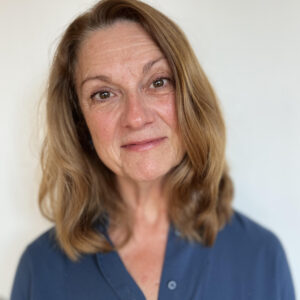
Christine joined our organization in January of this year to strengthen the development team, conduct outreach to major donors and lead special projects. Based in London, she also provides an international presence for ICN, with contacts in global media and business. She has had a long and distinguished career as a writer, editor and producer at leading major news outlets in the United States and the United Kingdom. She was global investigative editor for the Financial Times, executive editor at KFF Health News, international business editor at The New York Times and a producer at CBS’s 60 Minutes II. She was also a staff writer at The Washington Post for 14 years and headed up coverage for the Chicago Tribune in Baghdad, Rome, Jerusalem, Cairo and London. She has covered wars and investigations and managed projects that were honored by Investigative Reporters and Editors, the Emmys, SABEW and the British Press Awards. She was a Fulbright professor at University of Ljubljana, Slovenia, and has taught at American, Ohio State and Georgetown universities.