

Close Menu

    Subscribe to Updates

    Get the latest news information from worldwide businesses.

    What's Hot

    Subaru’s new Trailseeker EV is outselling its other electric vehicles

    August 4, 2026

    What It Can—and Can’t—Do for Your Heart

    August 4, 2026

    This hydrogen turbine turns controlled explosions into electricity

    August 4, 2026
    Facebook Instagram YouTube LinkedIn X (Twitter)
    Trending
    • Subaru’s new Trailseeker EV is outselling its other electric vehicles
    • What It Can—and Can’t—Do for Your Heart
    • This hydrogen turbine turns controlled explosions into electricity
    • TB cases, mortality rate dipped significantly between 2015 and 2024: Nadda
    • Protein Restriction May Support Healthy Aging, Review Suggests
    • Samsung’s HDR10 Plus Advanced is launching this month on Prime Video
    • Texas halts new data centers as governor calls for audits
    • India’s private consumption projected to reach $1.9 trillion by 2030: FICCI-Deloitte report
    Newspublicly
    • About Us
    • Advertise & Partner with us
    • Pitch Your Story
    • Contact Us
    Facebook Instagram LinkedIn X (Twitter)
    Subscribe
    • Home
    • World News
      • Asia
      • India
      • USA
      • UK & Europe
      • Middle East
    • Economy & Business
      • Global Economy
      • Corporate & Industry
      • Finance & Markets
      • Policy & Trade
    • Technology
      • Gadgets & Devices
      • Software & Apps
      • AI & Machine Learning
      • Robotics & Automation
    • Health & Medicine
      • Fitness & Nutrition
      • Research & Innovation
      • Disease & Treatment
      • Doctors, Clinics & Patient Care
    • Travel & Tourism
    • Automobile
      • Electric & Hybrid Vehicles
      • Auto Industry Insights
    • Sports
    • More
      • Education
      • Real Estate
      • Environment & Climate
      • Space & Astronomy
      • War & Conflicts
    Newspublicly
    Home»Health & Medicine»Research & Innovation»518-million-year-old creature reveals the origins of spider fangs
    Research & Innovation

    518-million-year-old creature reveals the origins of spider fangs

    AdminBy AdminAugust 4, 2026No Comments4 Mins Read0 Views
    Share
    Facebook Twitter LinkedIn Copy Link WhatsApp


    Scientists have discovered the earliest known evidence of the structures that eventually became spider fangs in a fossil dating back 518 million years. The finding was made by researchers from Yunnan University and the University of Leicester.

    Whether associated with the deadly reputation of the Black Widow or the fictional bite that transformed Spider-Man, fangs have become one of the most recognizable features of spiders. Their evolutionary story, however, began long before modern spiders appeared.

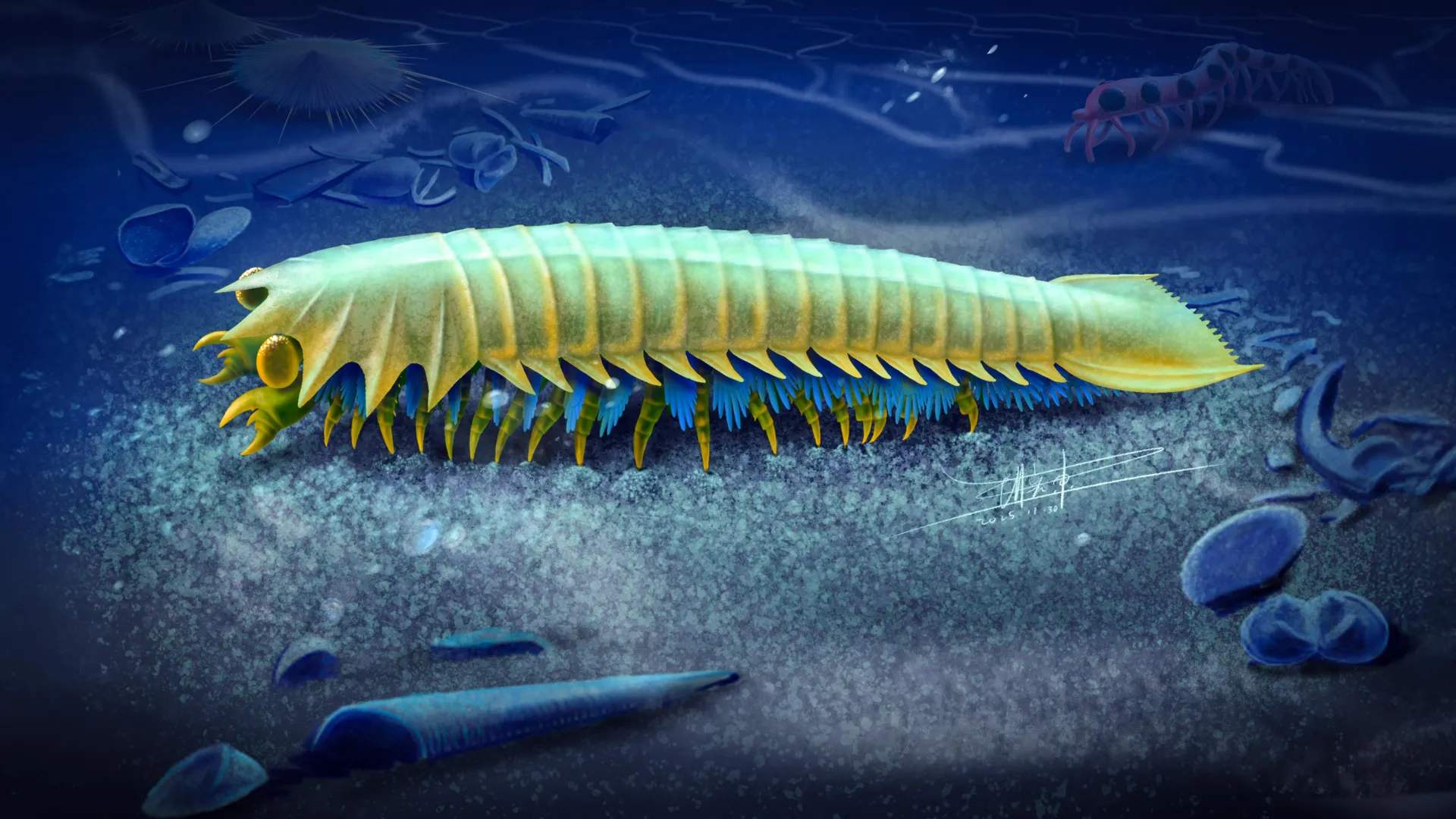
    A new study published in Nature traces the origins of this powerful hunting tool to Urokodia, a small marine creature that lived during the early Cambrian Period.

    The Ancient Origins of Spider Fangs

    Spiders belong to a large group of invertebrates called chelicerates, which also includes scorpions and ticks. More than 100,000 chelicerate species have been described.

    These animals have jointed limbs and hard external skeletons. Their defining feature is a pair of specialized appendages called chelicerae, located near the front of the body. Depending on the species, chelicerae can function as pincers or fangs that grip, pierce, or stab prey.

    Urokodia fossils were discovered at the renowned Chengjiang fossil site in Yunnan Province in southern China. The study was published on the 42nd anniversary of the site’s discovery.

    The creature measured only around 2-3 cm in length. It had large eyes extending from stalks at the front of its body, along with a segmented skeleton and jointed limbs attached beneath its narrow frame. Its appearance bears little obvious resemblance to the spiders and scorpions that descended from its broader evolutionary lineage.

    X-Rays Reveal Preserved Soft Anatomy

    Researchers from Yunnan University, China, and the University of Leicester used X-ray technology to examine the rock surrounding the fossil. The scans revealed that much of the animal’s soft anatomy had remained preserved in a mummified state for hundreds of millions of years.

    Most importantly, the researchers identified two pincer-like appendages positioned just behind the creature’s eyes. These structures represent an early form of chelicerae and provide evidence of the evolutionary beginnings of the pincers and fangs seen in chelicerates today.

    The fossil also preserves features on Urokodia‘s legs that may have served as book gills, allowing the animal to breathe underwater. Similar respiratory structures are still found in aquatic chelicerates such as horseshoe crabs.

    A Successful Lineage of Hunters

    Chelicerates have become one of the most successful animal groups in both marine and terrestrial environments. Those that moved onto land developed into highly effective predators, and fossils show that their ancestors had already been hunting for hundreds of millions of years.

    Despite the frightening image of spiders presented in movies such as Arachnophobia, most species pose no danger to people. Their venom and bites evolved to subdue prey that is far smaller than a human.

    The research was led by Professor Yu Liu of Yunnan University, who is also a Visiting Professor at the University of Leicester.

    Professor Liu said: “We were using X-ray tomography analysis of these fossils to reveal their soft anatomy buried in the rocks for hundreds of millions of years, when suddenly we noticed the pincer-like limbs at the front of the animal. We knew immediately that this was a very exciting fossil and indeed a distant ancestor of living chelicerates like scorpions and spiders.”

    A Window Into the Dawn of Animal Life

    Urokodia lived within a rich marine ecosystem during a crucial period in the history of animal evolution. The Chengjiang fossils preserve evidence of more than 200 types of animals that inhabited the oceans over 500 million years ago.

    Co-author Professor Mark Williams from the University of Leicester School of Geography, Geology and the Environment said: “Urokodia was part of an ancient ecosystem of over 200 different types of animals living in the seas over 500 million years ago. These spectacularly preserved fossils provide real insights into how life was evolving on our planet at the very dawn of animals.”

    This study was supported by a grant from the Department of Science and Technology of Yunnan Province (202401BC070012) to Professor Yu Liu, who is further funded by the Yunnan Revitalization Talent Support Program.


    Source link

    Author

    • Admin

      NewsPublicly.com is News & Articles Platform that creating SEO-focused articles on travel, lifestyle, and digital trends.

    Admin
    • Website

    NewsPublicly.com is News & Articles Platform that creating SEO-focused articles on travel, lifestyle, and digital trends.

    Related Posts

    This hydrogen turbine turns controlled explosions into electricity

    August 4, 2026

    Cancer-fighting chewing gum cuts HPV levels by up to 93%

    August 4, 2026

    Scientists went looking for giant trees in Taiwan and found a lost world

    August 4, 2026
    Leave A Reply Cancel Reply

    Demo
    Top Posts

    The Blue Moon rises on May 30— Where and when to see the second full moon of the month

    May 30, 202640 Views

    New SOCOM rifle allows barrel swapping and cartridge changes

    June 1, 202633 Views

    “Inside Gemini Robotics 1.5: How Robots Learn to Reason & Act

    November 22, 202527 Views

    525 pounds of cocaine seized after Nebraska K9 alerts troopers on I-80

    May 28, 202624 Views
    Don't Miss

    Subaru’s new Trailseeker EV is outselling its other electric vehicles

    August 4, 20263 Mins Read0 Views

    The Trailseeker is already outselling the Solterra and Subaru’s other electric vehicles just months after…

    What It Can—and Can’t—Do for Your Heart

    August 4, 2026

    This hydrogen turbine turns controlled explosions into electricity

    August 4, 2026

    TB cases, mortality rate dipped significantly between 2015 and 2024: Nadda

    August 4, 2026
    Stay In Touch
    • Facebook
    • Twitter
    • Instagram
    • YouTube
    • LinkedIn
    • WhatsApp

    Subscribe to Updates

    Get the latest creative news from SmartMag about art & design.

    Demo
    NEWSPUBLICLY
    Facebook X (Twitter) Instagram LinkedIn

    Home

    • About Us
    • Leadership
    • Advertise & Partner With Us
    • Pitch Your Story
    • Media Kit & Pricing
    • Career
    • FAQs

    Guidelines

    • Editorial & Submission
    • Partnership
    • Advertising & Sponsor
    • Intellectual Property Policy
    • Community & Comment
    • Security & Data Protection
    • Send Your Opinion

    Quick Links

    • Cookie Policy
    • Payment & Billing Terms
    • Refund & Cancellation
    • Copyright Policy
    • Complaint & Support
    • Sitemap
    • Contact Us

    Subscribe Us

    Get the latest news and updates!

    Copyright © 2026 Newspublicly (DIGITALIX COMMUNICATION). All Rights Reserved.
    • Privacy Policy
    • Terms of Use
    • Disclaimer