

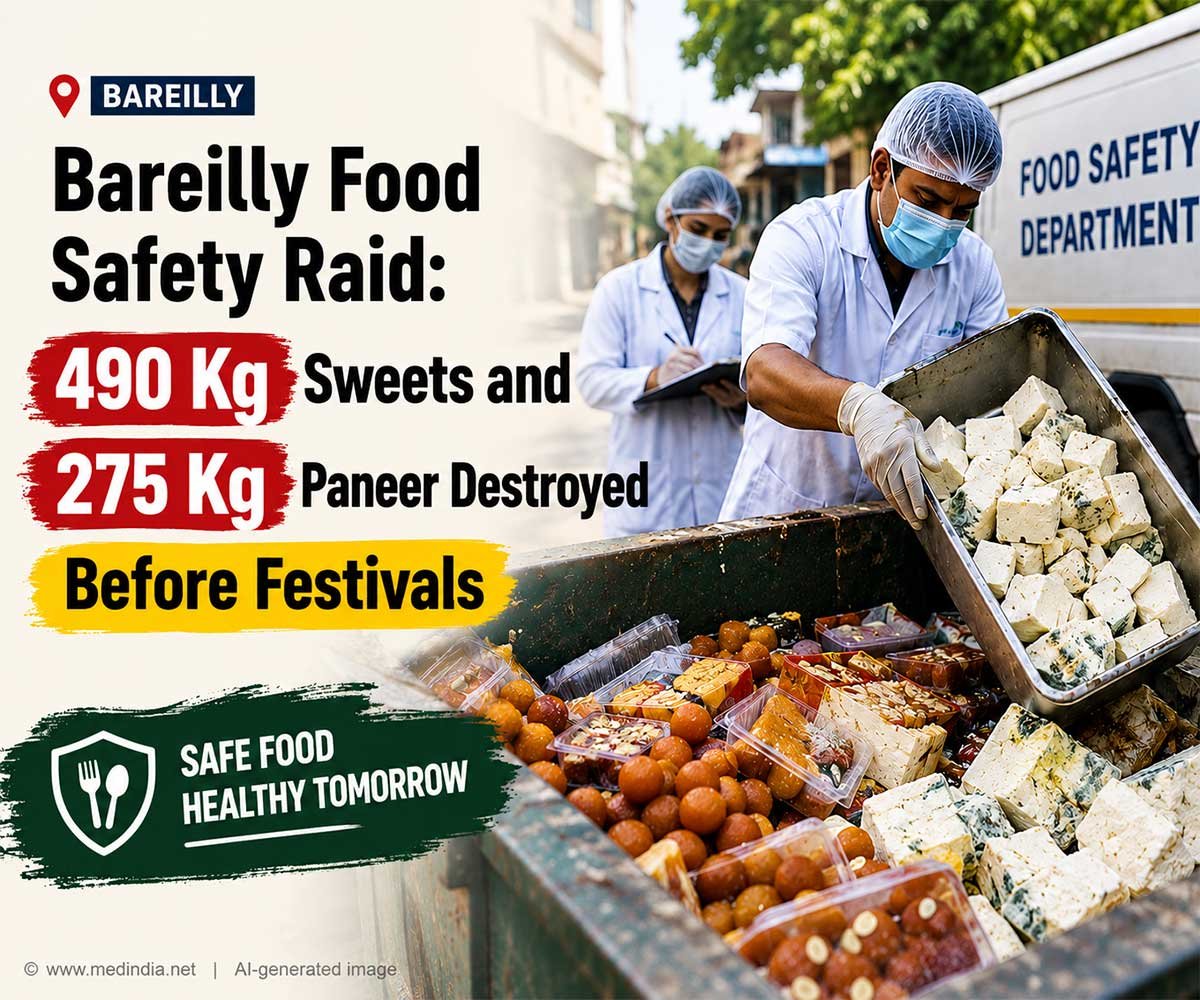
Uttar Pradesh’s food safety department has destroyed nearly 500 kg of sweets and 275 kg of spoiled paneer in Bareilly ahead of festivals like Raksha Bandhan and Janmashtami.Buying sweets this festive season? Here’s what to check before you buy.

Festivities means sweets, and buying sweets is a core tradition during Indian festivals. Ahead of a festive stretch, Uttar Pradesh’s food safety department intensified the inspections of sweets, dairy products like milk, khoya and paneer, and other festive staples.
Advertisement
What Did FSSAI Find in Uttar Pradesh?
490 Kg of Sweets Destroyed in Bareilly
In Bareilly, four food safety teams raided sweet shops across Bareilly on 24 August. At Tirpal Ankur Sweets in Nadausi village, officials found kalakand mithai, barfi, sohan papdi, and rasgullas being prepared and stored in unhygienic conditions.
According to Assistant Commissioner (Food) Rahul Singh. Around 140 kg of kalakand and 350 kg of barfi, roughly 490 kg in total, valued near ₹1.70 lakh — were destroyed on the spot, while samples from these and other items, including peda and laddus, went for lab testing. The food being prepared was not handled or stored in hygienic conditions.
275 Kg of Spoiled Paneer Seized and Destroyed
Officials and police also intercepted a food transport vehicle travelling from Budaun to Bareilly near midnight, recovering about 275 kg of visibly deteriorated, foul-smelling paneer. The entire batch was worth an estimated of ₹65,760. It was seized and destroyed after sampling.
Similar drives across the state are taking place and are raiding mithai shops and other food entities foe inspection. Recently, 300 kg paneer was seized in Noida due to quality incompliance
Advertisement
Why Are Sweets and Paneer a Food-Safety Concern During Festivals?
FSSAI has previously directed states and union territories to run special surveillance and enforcement drives. As the demand of sweets, savouries, milk, khoya, paneer, ghee and other milk-based products increase during festive season, the chances of food adulteration and food safety violations too increase.
Advertisement
How Poor Hygiene Can Contaminate Festival Foods
Milk-based sweets are particularly perishable — FSSAI notes a shelf life of only around 1 to 4 days and products prepared and stored without adequate hygiene, in a food category can calls for heavy fines and even licence cancellation with almost no margin for mistakes.(1✔ ✔Trusted Source
Guidance Note on Safety and Quality of Traditional Milk Products
)
How to Choose Safe Sweets and Paneer?
Check Freshness and Shelf Life
Ask the shopkeeper or check the date of preparation and shelf life before buying — particularly for milk-based sweets.
Be Cautious with Loose Sweets
For sweets sold loose rather than pre-packaged, FSSAI guidance recommends that sellers display preparation date and shelf-life information clearly. It is worth checking for especially during festivals, when large batches are made and sold quickly.
Look at Colour, Texture, and Appearance
FSSAI’s guidance on traditional milk products recommends observing colour, texture, and flavour to check for freshness. Appearance alone isn’t proof — a sweet can look normal and still be unsafe.
Buy from Licensed, Hygienic Shops
Look for a visibly displayed FSSAI licence or registration number, and where available, an FSSAI Hygiene Rating — a programme that specifically covers mithai and namkeen shops, reflecting whether a business follows required hygiene and manufacturing practices.
Can You Check Food Adulteration at Home?
FSSAI’s DART (Detect Adulteration with Rapid Test) booklet lists over 50 simple household tests covering milk products, sugar and confectionery, oils and fats, spices, and other foods. (2✔ ✔Trusted Source
Detect Adulteration With Rapid Test
)
These can serve as a useful test to check at home but are not recommended as a substitute for lab confirmation — a clean home test doesn’t guarantee a product is genuinely safe.
What Symptoms Can Contaminated Food Cause?
Eating spoiled or adulterated food can bring on nausea, vomiting, abdominal cramps, diarrhoea, and fever. Most cases resolve on their own, but severe dehydration or symptoms that persist warrant medical attention — particularly in children, older adults, and anyone with weakened immunity.
How Should Festival Sweets Be Stored?
There’s no single safe number for every sweet — FSSAI’s guidance notes shelf life for traditional milk-based sweets generally runs 1 to 4 days, varying by product and storage conditions. As a rule, milk-heavy sweets are the most perishable, so following the seller or manufacturer’s stated shelf life and storage instructions matters more than assuming a generic “few days” rule applies across the board.
The Takeaway: Enjoy the Festivities Without Compromising Food Safety
Bareilly’s raids are a reminder that festive demand and food safety don’t always move in the same direction — but a few practical habits go a long way: checking freshness and licensing, being extra cautious with loose sweets and perishable paneer, and not treating home adulteration tests as a final word. None of this means skipping the sweets this season — just buying them a little more carefully.
References:
- Guidance Note on Safety and Quality of Traditional Milk Products – (https://www.fssai.gov.in/upload/uploadfiles/files/Guidance_Note_Milk_Products_24_02_2020.pdf?utm_source=chatgpt.com)
- Detect Adulteration With Rapid Test – (https://eatrightindia.gov.in/dart/)
Source-Medindia