

Close Menu

    Subscribe to Updates

    Get the latest news information from worldwide businesses.

    What's Hot

    It’s show time”, “Masterclass incoming

    June 21, 2026

    As lakes turn brown, trout and bass decline while pike and walleye thrive

    June 21, 2026

    NSAID Use in Early Axial Spondyloarthritis Not Linked to Hypertension: Study

    June 21, 2026
    Facebook Instagram YouTube LinkedIn X (Twitter)
    Trending
    • It’s show time”, “Masterclass incoming
    • As lakes turn brown, trout and bass decline while pike and walleye thrive
    • NSAID Use in Early Axial Spondyloarthritis Not Linked to Hypertension: Study
    • Cold Court’s debut EP is an infectious, glitchy genre mashup
    • Polymarket reportedly paid creators to post deceptive videos about fake bets
    • RBI overhauls Lead Bank Scheme after review, issues new guidelines
    • A Ukrainian family built a community in Cleveland. Now, they face deportation | US immigration
    • NEET-UG 2026 Re-examination Conducted Smoothly as NTA Reports No Paper Leak Complaints | India News
    Newspublicly
    • About Us
    • Advertise & Partner with us
    • Pitch Your Story
    • Contact Us
    Facebook Instagram LinkedIn X (Twitter)
    Subscribe
    • Home
    • World News
      • Asia
      • India
      • USA
      • UK & Europe
      • Middle East
    • Economy & Business
      • Global Economy
      • Corporate & Industry
      • Finance & Markets
      • Policy & Trade
    • Technology
      • Gadgets & Devices
      • Software & Apps
      • AI & Machine Learning
      • Robotics & Automation
    • Health & Medicine
      • Fitness & Nutrition
      • Research & Innovation
      • Disease & Treatment
      • Doctors, Clinics & Patient Care
    • Travel & Tourism
    • Automobile
      • Electric & Hybrid Vehicles
      • Auto Industry Insights
    • Sports
    • More
      • Education
      • Real Estate
      • Environment & Climate
      • Space & Astronomy
      • War & Conflicts
    Newspublicly
    Home»Health & Medicine»Fitness & Nutrition»Why planting trees alone won’t save Indian cities from heatwaves | Health News
    Fitness & Nutrition

    Why planting trees alone won’t save Indian cities from heatwaves | Health News

    AdminBy AdminJune 21, 2026No Comments4 Mins Read0 Views
    Share
    Facebook Twitter LinkedIn Copy Link WhatsApp


    4 min readNew DelhiJun 21, 2026 09:00 PM IST

    As Indian cities grapple with rising temperatures and increasingly frequent heatwaves, planting trees is often seen as the go-to solution. But what if simply increasing tree numbers isn’t enough?

    According to environmentalist Jasmit Singh Arora, popularly known as the ‘Gutliman of India’, cities may achieve far better cooling by combining trees with shrubs and ground cover rather than relying on trees alone.

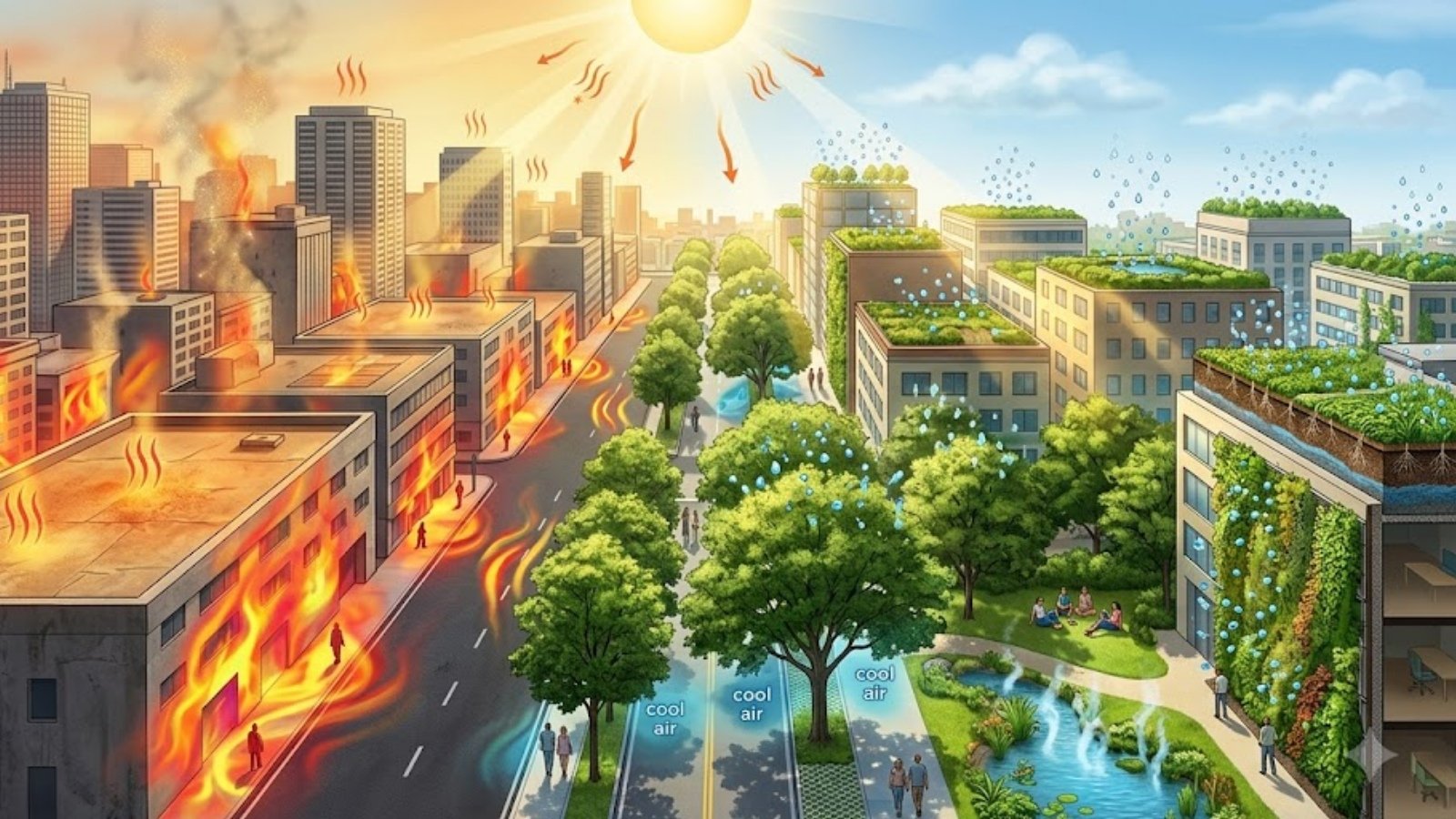
    “Urban vegetation is essentially a city’s green infrastructure,” says Arora. “It includes trees, shrubs, grass, and even plants on roofs and walls. As cities get hotter, this greenery acts like a natural air conditioner, helping reduce dangerous heat stress.”

    DISCLAIMER: This article is based on information from the public domain and/or the experts we spoke to. 

    How urban vegetation cools cities

    The cooling effect of urban greenery comes from two natural processes: shading and evapotranspiration. “Shading is the primary cooling mechanism,” explains Arora. “Trees can stop up to 97 per cent of incoming solar radiation, lowering surface temperatures by anywhere from 2 to 12 degrees Celsius.”

    The second mechanism is evapotranspiration, a process through which plants release water vapour from their leaves. “It’s similar to how sweating cools the human body,” says Arora. “This can reduce surrounding air temperatures by 0.5 to 5.8 degrees Celsius.”

    Combined, these effects can significantly improve comfort levels in urban environments. Arora notes that trees have been observed to reduce the air temperature experienced by pedestrians by as much as 12°C in certain conditions.

    Story continues below this ad

    Why shrubs and ground cover matter

    While trees play the biggest role in cooling, Arora says research increasingly shows that a layered approach delivers superior results.

    “Trees alone are not always enough,” he says. “When trees are combined with shrubs and ground cover, the cooling benefits can more than double compared to single-layer planting.”

    This happens because different vegetation layers cool cities in different ways. Trees block overhead sunlight, while shrubs and ground cover prevent heat from radiating upward from roads, pavements, and walls. “Think of it as a cascade of shade,” says Arora. “The upper layer protects against direct sunlight, while the lower layers stop heat from building up at ground level.”

    Another benefit is reduced heat absorption. “Ground cover and understory plants prevent soil and pavement from absorbing heat during the day and releasing it later at night,” Arora explains. “This helps lower nighttime temperatures as well.”

    Story continues below this ad
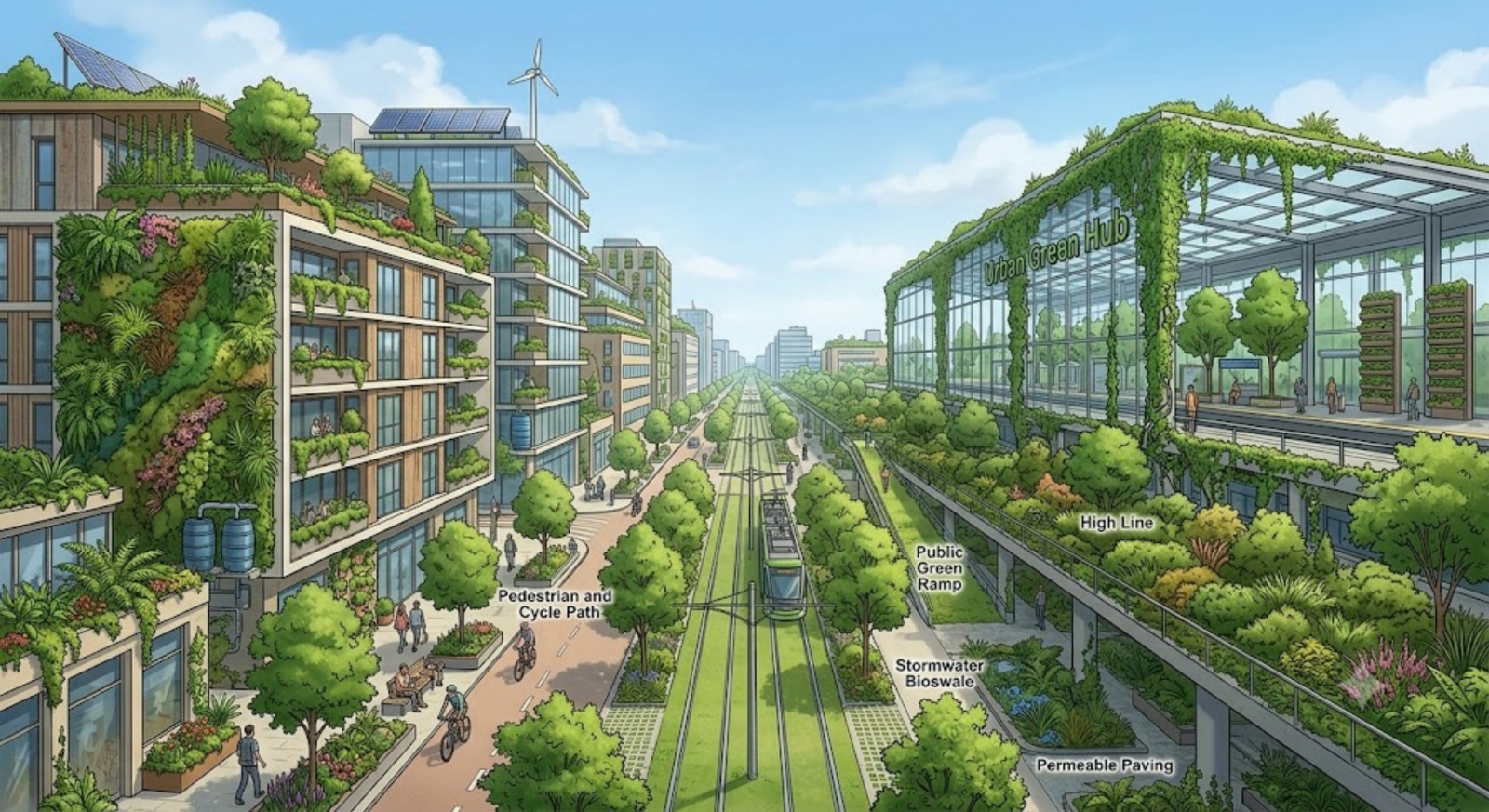
    urban vegetation What is urban vegetation (Photo: AI)

    Benefits of urban vegetation

    “In Delhi, shaded parks can be five to seven degrees cooler than nearby concrete-dominated areas,” says Arora. “Tree cover alone has been shown to reduce surface temperatures by between 3.8°C and 8.4°C.”

    Ahmedabad, one of India’s hottest major cities, has also begun incorporating vegetation into urban planning. “The city is replacing heat-trapping pavement with plants at more than 100 junctions to combat rising temperatures,” Arora notes.

    Elsewhere, urban parks in Kolkata remain around one to two degrees cooler than surrounding neighbourhoods, while vegetated areas in Guwahati can be up to five degrees cooler than nearby built-up zones, says Arora.

    While large-scale tree plantation drives often grab headlines, Arora cautions against focusing solely on tree counts.

    Story continues below this ad

    “Cities should move beyond measuring success through tree numbers alone,” he says. “The arrangement, density, and type of vegetation matter just as much as canopy cover.” “Layered vegetation can reduce afternoon heat stress by up to eight degrees Celsius compared to open spaces,” says Arora.

    DISCLAIMER: This article is based on information from the public domain and/or the experts we spoke to. 


    Source link

    Author

    • Admin

      NewsPublicly.com is News & Articles Platform that creating SEO-focused articles on travel, lifestyle, and digital trends.

    Admin
    • Website

    NewsPublicly.com is News & Articles Platform that creating SEO-focused articles on travel, lifestyle, and digital trends.

    Related Posts

    Internet claims pillows cause cancer; oncologist begs to differ | Health News

    June 21, 2026

    The outbreak is outpacing us: Inside Congo’s fight against rare Ebola strain | Health News

    June 20, 2026

    Ghee and betel leaf: Nutritionist explains why this is a good combination for your gut | Health News

    June 20, 2026
    Leave A Reply Cancel Reply

    Demo
    Top Posts

    The Blue Moon rises on May 30— Where and when to see the second full moon of the month

    May 30, 202640 Views

    New SOCOM rifle allows barrel swapping and cartridge changes

    June 1, 202633 Views

    “Inside Gemini Robotics 1.5: How Robots Learn to Reason & Act

    November 22, 202525 Views

    525 pounds of cocaine seized after Nebraska K9 alerts troopers on I-80

    May 28, 202624 Views
    Don't Miss

    It’s show time”, “Masterclass incoming

    June 21, 20263 Mins Read0 Views

    Spain fans are expressing their excitement on X after Luis de la Fuente included Lamine…

    As lakes turn brown, trout and bass decline while pike and walleye thrive

    June 21, 2026

    NSAID Use in Early Axial Spondyloarthritis Not Linked to Hypertension: Study

    June 21, 2026

    Cold Court’s debut EP is an infectious, glitchy genre mashup

    June 21, 2026
    Stay In Touch
    • Facebook
    • Twitter
    • Instagram
    • YouTube
    • LinkedIn
    • WhatsApp

    Subscribe to Updates

    Get the latest creative news from SmartMag about art & design.

    Demo
    NEWSPUBLICLY
    Facebook X (Twitter) Instagram LinkedIn

    Home

    • About Us
    • Leadership
    • Advertise & Partner With Us
    • Pitch Your Story
    • Media Kit & Pricing
    • Career
    • FAQs

    Guidelines

    • Editorial & Submission
    • Partnership
    • Advertising & Sponsor
    • Intellectual Property Policy
    • Community & Comment
    • Security & Data Protection
    • Send Your Opinion

    Quick Links

    • Cookie Policy
    • Payment & Billing Terms
    • Refund & Cancellation
    • Copyright Policy
    • Complaint & Support
    • Sitemap
    • Contact Us

    Subscribe Us

    Get the latest news and updates!

    Copyright © 2026 Newspublicly (DIGITALIX COMMUNICATION). All Rights Reserved.
    • Privacy Policy
    • Terms of Use
    • Disclaimer