

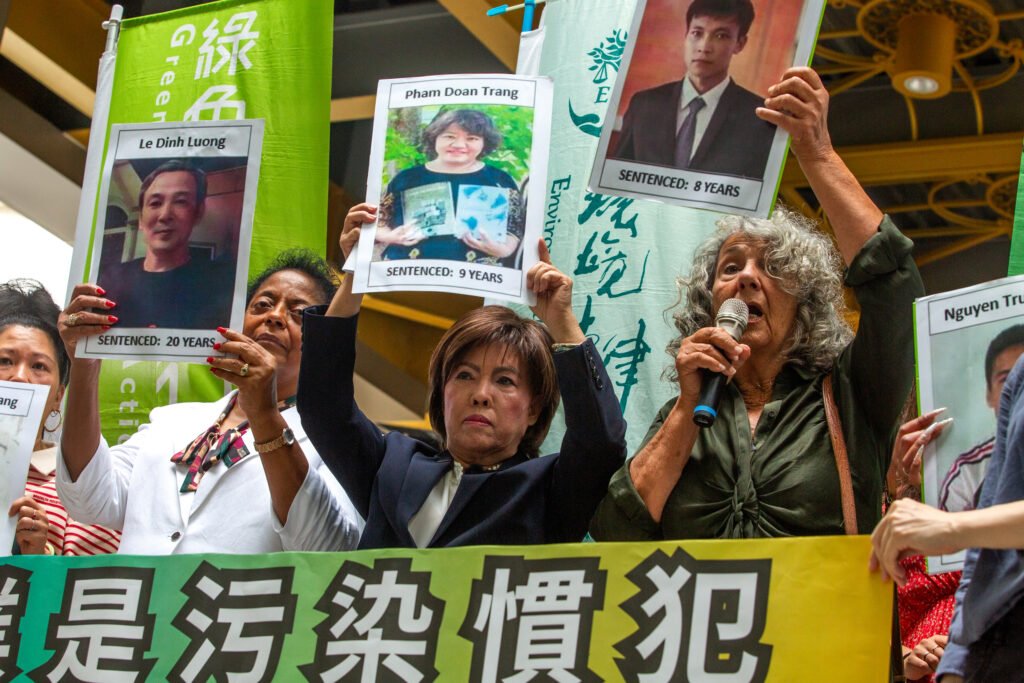
The Resistance, Part 2: Three Gulf Coast environmentalists confront Formosa Plastics Corp. at its shareholders meeting.
YUNLIN COUNTY, Taiwan—In many ways, at nearly 80 years old, Diane Wilson would have rather stayed home. A retired shrimper with a high school education, she agreed to come here without thinking too much, as usual. That’s how she does things.
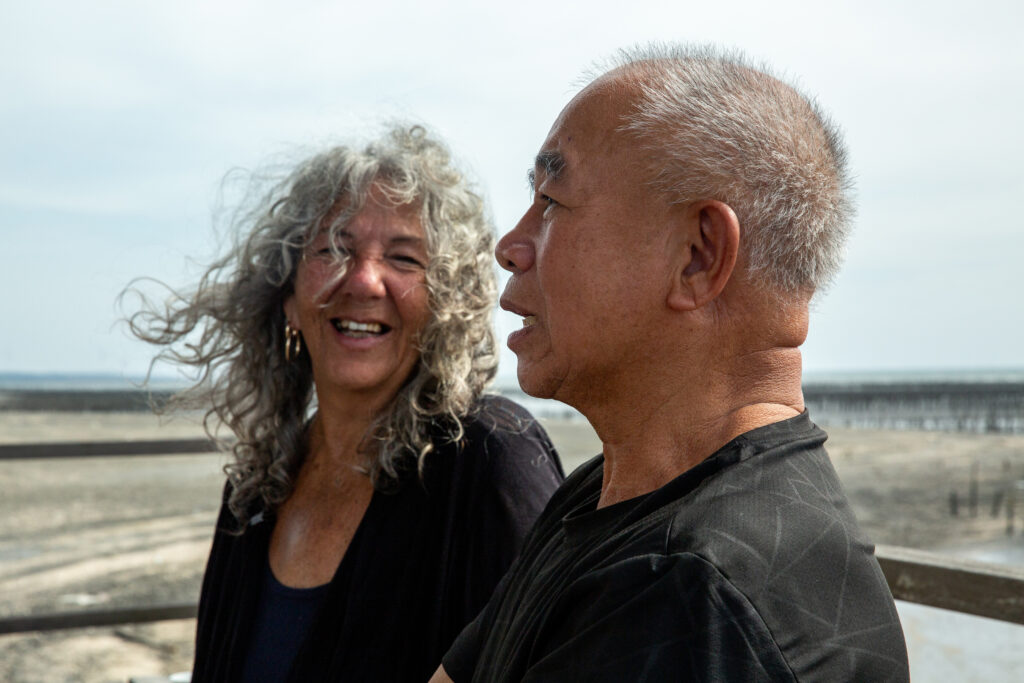
That’s why she’d spent all of March camped outside a chemical plant on a hunger strike near her tiny Gulf Coast town in Texas, and why now she was on a dock in Taiwan listening to a gray-haired oysterman speak in Mandarin.
Wilson liked the man, named Lin Chun Lan. She smiled as she discovered how much they had in common. As fisherfolk they shared a reverence for the bounty of the ocean and a stubborn refusal to abandon its pursuit. That’s what drove them both to fight the same multi-billion-dollar company, Formosa Plastics Corp. Both persisted for decades. Both earned the ire of local power structures.
“They know that no one can buy him,” a translator for the oysterman told Wilson and the half-dozen others gathered on the dock in what happened to be one of the hottest weeks in Taiwanese history. “The local politicians hate him.”
Lin added a few more words in Chinese.
“He also hates the politicians,” his translator said.
Wilson laughed. She could relate.
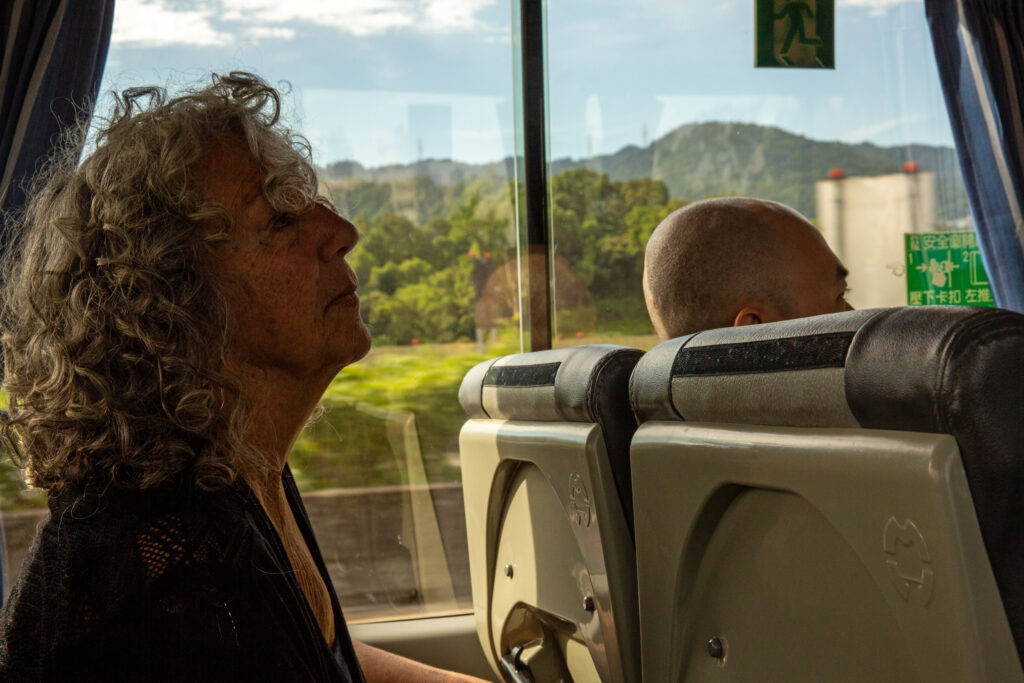
At home, almost 40 years of radical activism left her branded as an extremist, an environmentalist with few friends in a political system devoted to economic growth. But outside the system she counts plenty of allies, especially since she received the Goldman Environmental Prize in 2023 for her landmark lawsuit and $50 million settlement agreement with Formosa Plastics on the Gulf Coast of Texas.
Now she had crossed 13 time zones to confront Formosa’s leadership on its home turf, at its annual shareholder meeting in Taipei, and two of her strongest allies joined her: Sharon Lavigne, 76, a retired special education teacher from Louisiana’s St. James Parish, who also won the Goldman Prize for her fight against Formosa’s plans to build in her community; and Nancy Bui, 72, a former Vietnamese refugee in Texas whose organization is suing Formosa in Taiwanese court over a 2016 disaster in Vietnam.
Wilson didn’t expect to change the minds of Formosa’s board and chairman or to otherwise win concessions on this trip to Taiwan. That wasn’t the point.
Wilson believes it’s important to stay in their face. She traveled all this way to show Formosa that, even at 78, she isn’t going away and, with Bui and Lavigne beside her, isn’t alone.
The Environmental Rights Foundation, a Taiwanese organization, brought the three women here to put pressure on authorities, speak before Formosa shareholders and inspire local leaders in their own exhausting struggles against Asia’s largest petrochemical company.
A Shrimper and an Oysterman
Looking over the remnants of his oyster farm, Lin recounted the difficulties of organizing for 30 years against industrial giants, including Formosa Plastics, which once planned to fill this patch of sea with earth and create new land to build a steel mill.
Very few civic leaders, academics and environmental groups ever supported him, he said. If townspeople spoke out, Formosa heaped gifts on their friends and family. If that didn’t work, criminal organizations stepped in to intimidate him.
“He was threatened with guns,” Lin’s translator said. “He said, ‘If you want to shoot me, just shoot.’”
Lin was never shot. But later construction of industrial shipping infrastructure offshore affected water currents here, Lin said, so the ocean began lapping mud into the clear lagoon where he used to farm. After so many generations, most of the fishermen along this coastline are gone.
Wilson could relate to that, too. Born in 1948, she remembers watching the timeless way of life in her Texas fishing village dwindle to practically nothing as marine life faded from the water while petrochemical industries moved in with higher-paying jobs. For refusing to bow to the new order, Wilson felt shunned at home.
She asked Lin if he ever went to gather wild oysters from natural reefs like they did in Texas. In his grandmother’s time they did that, he said.
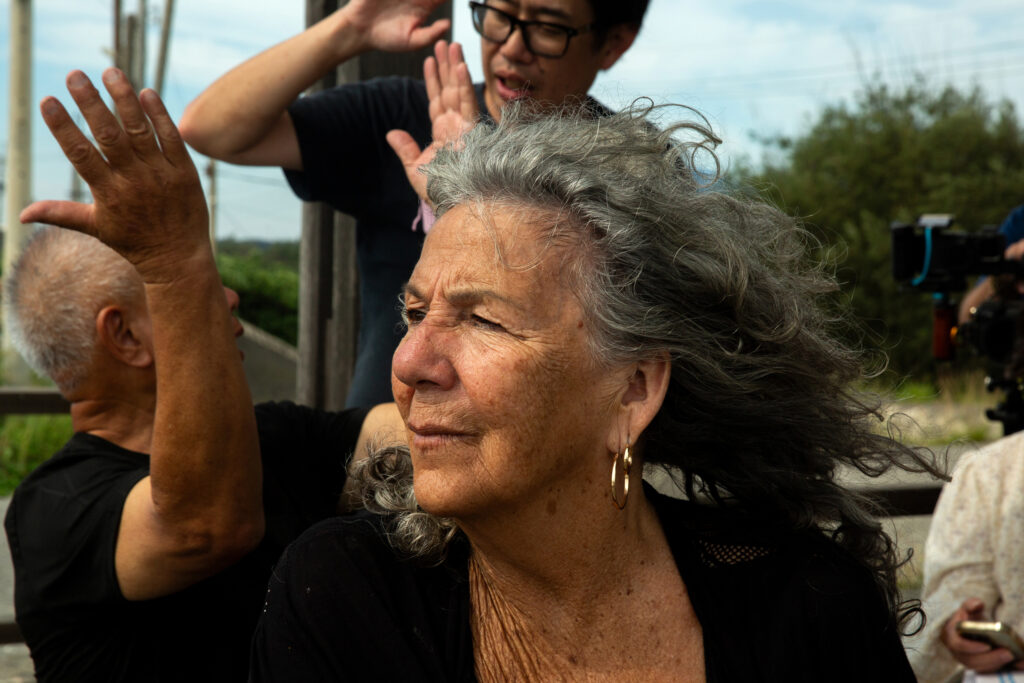
He looked at Wilson, whose frizzy grey hair blew over her face in the wind, and asked if she remembered him. Wilson, 78, suspected that she did. But her memories were jumbled. This was her fourth time in Taiwan, she told him proudly.
This country played a big role in her life.
Four Trips to Taiwan
Her first visit was in 1992, she told Lin. She came by invitation of local environmental groups who read about her fight against Formosa Plastics in Texas and supposed that she had something to teach them. But the Taiwanese became Wilson’s teacher instead, she said. If she hadn’t left five kids with her aunt back in Texas, she would have stayed.
She attended a secret rally in the mountains at midnight with a local environmental organizer, recently returned from exile and surrounded by volunteer bodyguards to protect him against assassination. She heard stories about the village leaders who disappeared after speaking out against Formosa and she met a man who spent six years in jail for climbing a chemical plant tower in protest.
“That inspired me,” Wilson told Lin. “Ten years later I did it in Texas.”
(In 2003 a SWAT team on a construction crane arrested Wilson after she chained herself to the top of a tower at Dow’s Seadrift plant.)
The second time Wilson flew to Taiwan, in 2010, she violated parole shortly after her arrest at the U.S. Capitol for pouring crude oil over herself in protest of BP’s Deepwater Horizon oil spill. In Taipei she infiltrated Formosa’s annual shareholder meeting and shouted about the company’s pollution near her hometown in Texas. Footage broadcast on Taiwanese TV showed guards dragging her out by the arms and legs.
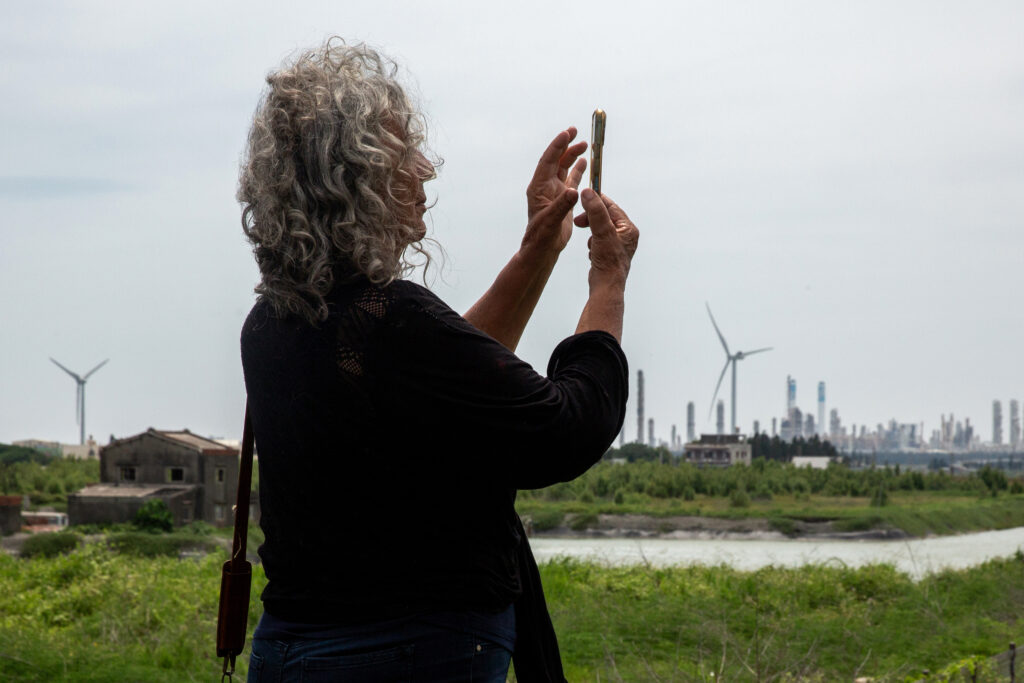
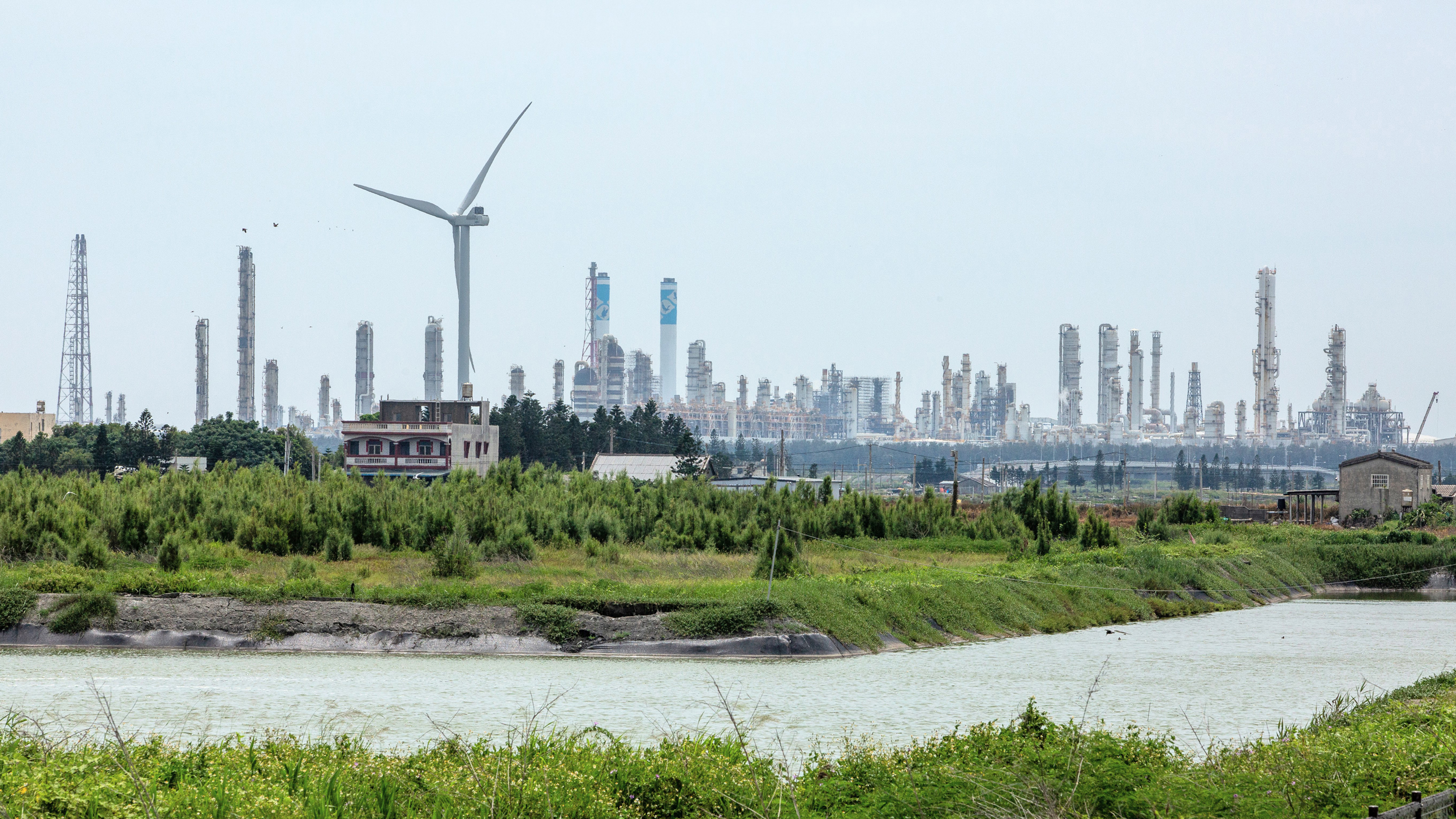
On Wilson’s third visit, in 2018, she infiltrated the meeting again. That time she was allowed to speak, then was politely escorted out. Lin nodded in approval as the translator related Wilson’s story.
“The company became smarter,” explained the translator, Mark Hsu, deputy CEO of the Environmental Rights Foundation, which organized and sponsored that trip in addition to the current one. “They learned if they kick us out it makes big news, so they now just let us talk and ignore us.”
Solidarity Between Villages Around the World
And now, on her fourth visit: Over 12 hours after they arrived in late May, Wilson, Lavigne and Bui visited poor, aging communities across more than 400 miles, exchanging familiar stories about high cancer rates, chemical pollution and campaigns of intimidation.
“I’m almost 80 years old,” Wilson panted with a grin as she paused in the shade of a mango tree in one community they visited. “I’m gonna get heat stroke.”
“There is a solidarity, not just within this village but in many villages all around the world.”
— Annie Huang, Environmental Rights Foundation
Fighting a “huge dragon” like Formosa can be extremely discouraging for these people, explained Annie Huang, an organizer with ERF. The foundation sponsors tours like these to provide a small counterbalance, introducing locals to their international allies to show that they, too, are part of something very large. The Taiwanese have great admiration for the world beyond their borders, Huang said, and foreigners’ words carry weight here.
“There is a solidarity, not just within this village but in many villages all around the world,” Huang said. “It inspires us—the village leaders and people like Diane.”
Walking together, Huang listened as Wilson recounted the chemicals that Formosa has put into coastal waters of Texas and the weak response from state regulators.
“Is there protest?” Huang asked.
“Pretty much me,” Wilson replied. “There’s a lot of intimidation. Formosa is very powerful in our community.”
“But people know?” Huang asked, referring to the pollution.
“Yeah, most people know. They choose to ignore it,” Wilson said.
“For a peaceful life,” Huang said.
A Meeting at the Presidential Office
The next afternoon, later reported as the hottest May day on record in Taipei, the three women marched into the Presidential Office Building for a closed-door meeting with representatives of Taiwanese lawmakers and banks, organized by ERF.
Wilson had attended plenty of meetings like this over 40 years, when politicians agreed to hear her out. She felt little resulted from these meetings, but for Wilson, it was about being relentless.
She carried a red folder stuffed with papers—the latest updates in her landmark lawsuit and subsequent settlement agreement with Formosa. Wilson had filed the suit in 2017 after she and her small nonprofit collected tons of plastic nurdles illegally discharged by Formosa. Two years later, she won a historic settlement in which Formosa also committed to zero discharge of plastic into the coastal waters of Texas.
Yet Formosa has continued to discharge plastic, Wilson’s document showed. Since the requirements took effect in 2020, Formosa had reported 962 wastewater tests and all of them detected plastics, incurring $41 million in penalty fees on top of the initial $50 million settlement. The company has stated that it is working hard to reduce plastic discharge but has encountered many technical challenges.
In April, Texas regulators did not include the ban on plastics discharge in a proposed renewal of Formosa’s wastewater permits. Wilson’s organization, San Antonio Bay Estuarine Waterkeeper, filed official comments May 18, challenging the decision by the Texas Commission on Environmental Quality.
“This directly contradicts prior TCEQ interpretation, is arbitrary and capricious, and no justification is given for the change,” the comments said. “The draft permit should be revised to include a zero-discharge limit for plastics.”
A spokesperson for TCEQ, Laura Lopez, said in a statement to Inside Climate News, “These requested provisions were not included in the draft permit because a zero-discharge plastic limit is not required by applicable effluent guidelines or water quality standards. … Permits must be based on regulatory requirements, not on separate consent decrees to which TCEQ is not a party.”
Wilson also carried a 22-page lawsuit filed against Formosa by the state of Texas in March, alleging chronic air pollution violations at the company’s Point Comfort Complex. It tallied more than 372,000 pounds of unauthorized air pollutants since 2023. Wilson wasn’t sure why Ken Paxton, the Republican attorney general of Texas, was going after Formosa for air pollution.
Almost no one in Texas seemed to care about these papers, but Wilson thought someone in Taiwan might.
Sharon Lavigne
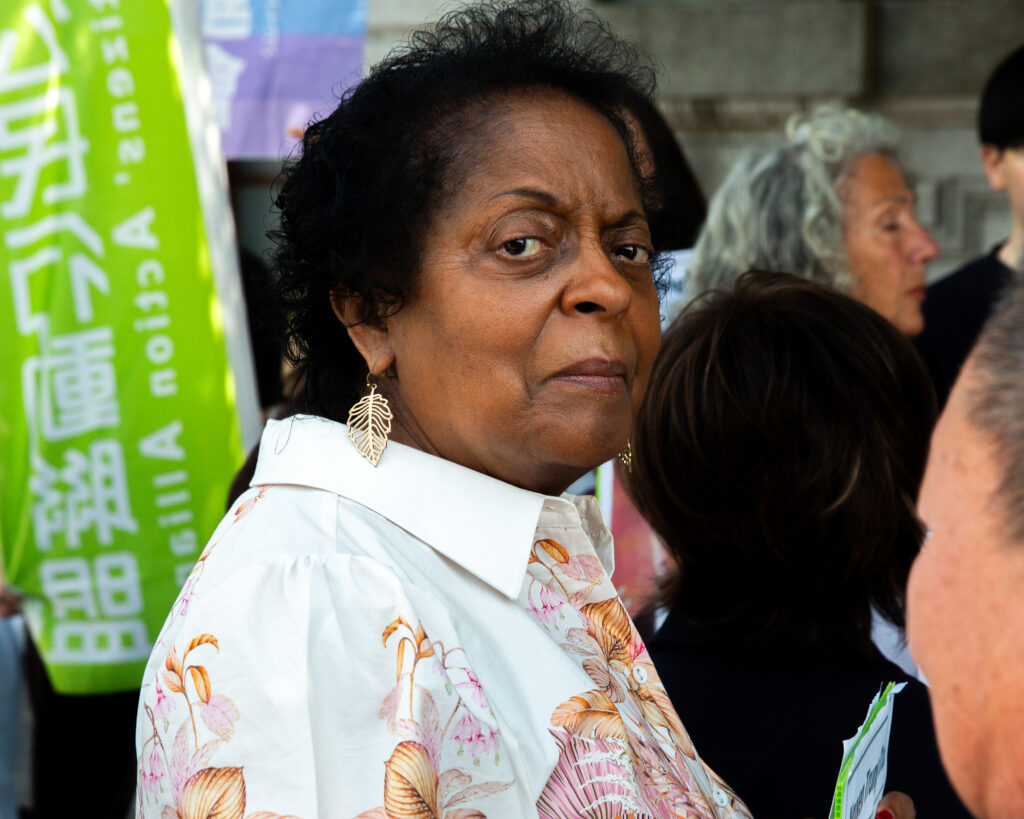
The other women brought their own stories to Taiwan. Lavigne comes from a part of Louisiana dense with petrochemical industries and toxic emissions, nicknamed Cancer Alley for high rates of cancer that plague the predominantly Black residents there.
Lavigne didn’t think too much about it for the first 60 years of her life as she raised six kids and worked in a local school. Then in 2018, Formosa announced plans to build a 14-plant megacomplex about 2 miles from her home.
More than 20 industrial complexes already operated in little St. James Parish, with only 20,000 residents. State politicians gleefully said Formosa’s $9.4 billion, 2,400-acre “Sunshine Project” would be the largest in the parish yet.
The facility proposed to emit tons per year of the carcinogens ethylene oxide, benzene and formaldehyde, as well as 340 tons per year of soot within a mile of a school and church in an area already ravaged by cancer.
To Lavigne, it seemed unjust. Something moved her, in her 60s, to start organizing resistance at church. Lavigne led marches against Formosa, claiming it would poison the community.
She decided to educate herself with books and newspapers. As she learned, she realized that her neighbors didn’t know about carcinogenic emissions, or that petrochemical projects across the entire country tended to cluster around Black communities, exploiting poverty and lack of political influence to build facilities that no other neighborhood would accept.
The people had to know. Lavigne held town halls to educate them. She connected with community leaders across Louisiana, then environmental lawyers in Washington, D.C., and eventually filed a landmark lawsuit that led a judge to revoke the project’s air permits. Lavigne won the Goldman Prize in 2021 for her efforts.
Formosa appealed the decision in 2022, and in 2024 a higher court ruled in Formosa’s favor, reinstating the air permits.
Nancy Bui
Bui revered Taiwan, she often repeated on the trip, for what it symbolized in Asia. She was attending law school and writing for a radical newspaper, Song Than, in Saigon, Vietnam, when it fell in 1975.
Four years later she’d sold most of her possessions and still struggled to feed her two children, so the three of them crammed one night onto a small, crowded boat, bound, she thought, for either freedom or death.
They motored straight for six hours to escape the Vietnamese coast guard that chased them. Then their propeller caught a fishing net, so they bobbed in the ocean for 21 days, running out of food, then water.
A small fishing boat eventually rescued Bui and her companions, then brought them to Songkhla Refugee Camp in Southern Thailand.
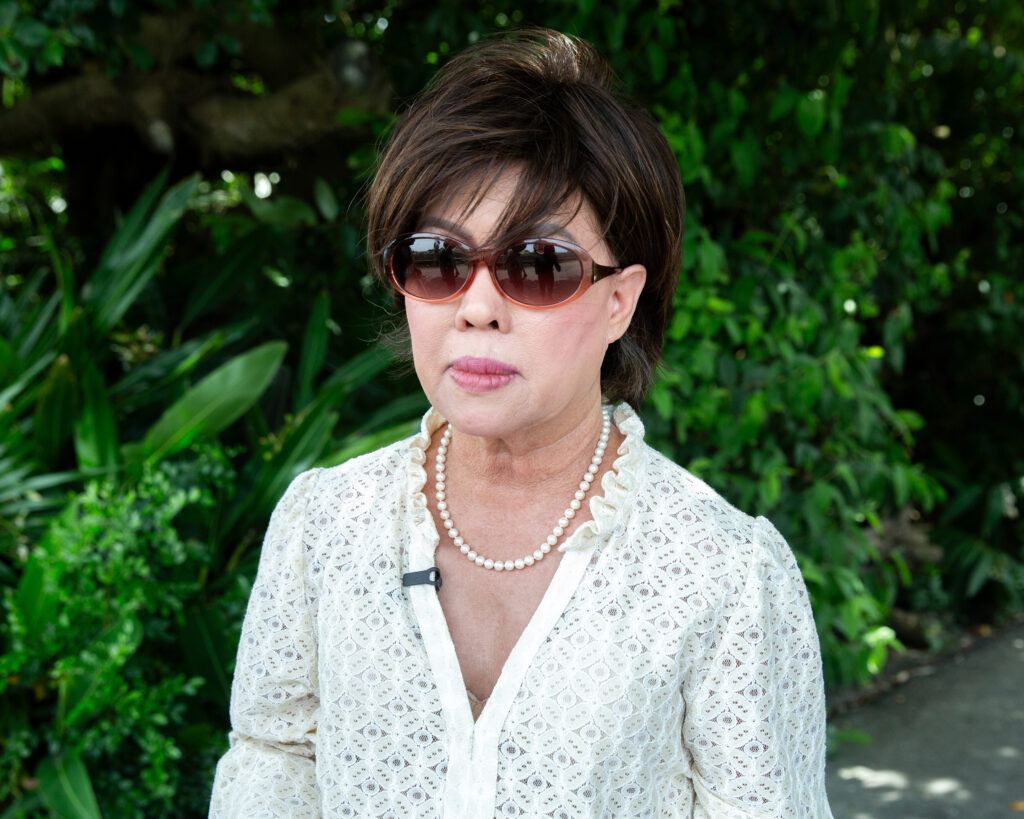
Bui spent eight months there before America took her in. She got a mechanical drafting degree from Mercer County Community College in New Jersey, went to work in Houston drawing oil drill fittings while serving as editor for the local Vietnamese newspaper in the 1980s, then took a job with AMD in the brand new tech sector of Austin.
Now she owns commercial real estate and lives on Lake Austin, in the city’s affluent western hills. The babies she brought on the boat became a software engineer and an apparel executive.
In 2016, she met Paul Nguyen Thai Hop, a Catholic bishop from Vietnam, who was traveling in Europe and the U.S. to advocate for the communities within his diocese that had been destroyed by discharges of cyanide and other poisons from a Formosa Ha Tinh Steel plant on the middle Vietnamese coast into the shallow sea where they’d fished for countless generations.
It obliterated the marine ecosystem along more than 100 miles of coastline, wrecking the livelihoods of millions of people. Two months later, Formosa accepted blame.
“Incidents at Formosa caused fish deaths in the four provinces,” said Formosa Ha Tinh Steel’s then-chairman, Chen Yuan-Cheng, in a June 2016 video statement, according to Bloomberg. “We accept full responsibility for the incident. We apologize for causing the incident, severely impacting people’s lives and the sea environment.”
This story is funded by readers like you.
Our nonprofit newsroom provides award-winning climate coverage free of charge and advertising. We rely on donations from readers like you to keep going. Please donate now to support our work.
Despite the company’s conciliatory language, the bishop told Bui, when local leaders voiced their outrage they were beaten by police and jailed. He said communities still lacked a path to recovery.
Bui founded Justice for Formosa Victims in 2017. With no luck in the Vietnamese legal system, the group filed a complaint with the United Nations, sued Formosa at its U.S. headquarters in New Jersey and at its global headquarters in Taipei. In 2020 Taiwan’s supreme court affirmed the victims’ right to sue, and trials in the case continue.
The Shareholder Meeting
On a muggy Thursday morning, the women gathered along with hundreds of others in business attire at a fancy hotel in downtown Taipei for Formosa Plastics’ annual shareholder meeting. A few shareholders were ERF allies and they transferred their right to attend, and to make comments, to Wilson, Lavigne and Bui.
A few hundred investors filled the audience in the hotel ballroom as Formosa’s board, in suits and ties, presided from a platform beneath a grand red banner with golden Chinese text.
An awkward silence lingered before Lavigne, dressed for church, spoke into the microphone. She talked about her background, her lawsuit against Formosa’s Louisiana complex and the company’s appeal.
“We are having funerals every month. Our people are dying of cancer—prostate cancer, pancreatic cancer, breast cancer,” she said. “People are dying and our property value has decreased.”
All this, she said, “to make throwaway plastics like shopping bags and plastic cups.”
If Formosa builds its Sunshine Project, Lavigne said, “it would be a death sentence for us.”
“Can you stop this?” she asked the shareholders and board.
Formosa Plastics Chairman Kuo Wen-Bee told her in response that the company no longer planned to pursue that project due to lack of financing. Lavigne had heard this before, but she remained unconvinced.
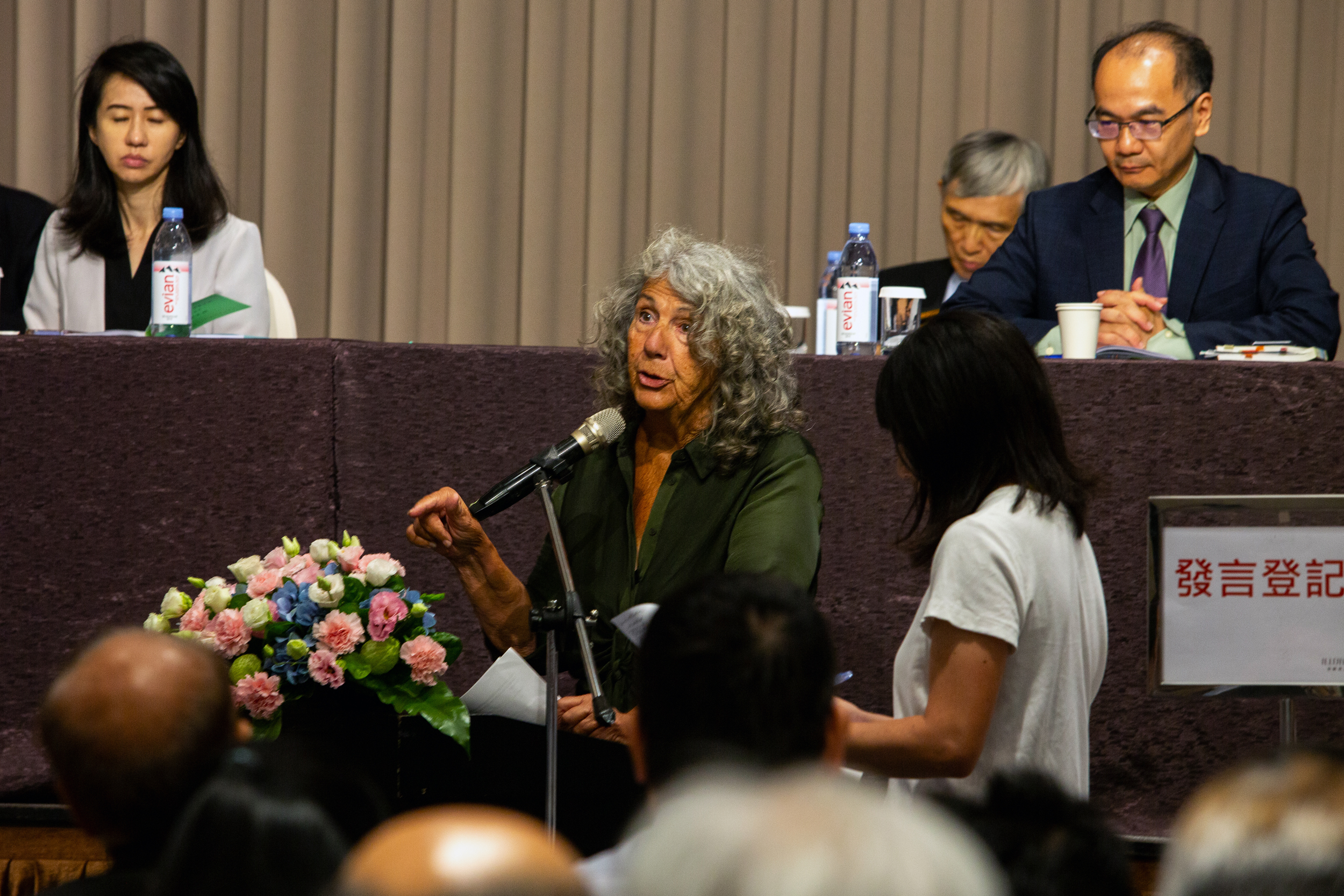
Silence returned as Bui walked to the front of the room, lowered the microphone and looked up at the chairman, who loomed from his platform above her. Wearing pearls and a dark business suit, Bui said she was honored to be in Taiwan and to speak at this meeting.
“Formosa continues to dump poison into the water of Vietnam, causing ongoing environmental issues and years of suffering,” she said.
Ten years after the company’s 2016 disaster, Bui said, entire communities on the Vietnamese coast still await fair compensation.
“The victims are not asking for charity,” Bui said. “They are asking for justice.”
Bui asked the shareholders what they thought Formosa should do: Continue spending enormous resources on lawyers and court battles? Or get it over with and pay up?
“Corporate leadership is not measured only by profit,” she said. “It’s measured by courage to admit mistakes.”
Kuo, in response, told her that he didn’t direct Formosa Steel, nor did his board.
“They are your subsidiary,” Bui clapped back.
Kuo paused briefly as he looked at Bui, then said he’d see if there was anything he could do.
“The victims are not asking for charity. They are asking for justice.”
— Nancy Bui
As Wilson took the microphone, several board members gazed down at their phones. She didn’t even look at the chairman, but spoke loudly toward the shareholder audience, recounting her 2019 settlement agreement with Formosa, when the company committed to zero discharge of plastic into the waters her family has fished for four generations.
“You know how many times Formosa has violated that zero-discharge?” Wilson asked, raising her voice further. “Nine hundred and sixty-two times.”
Legal discovery showed 170,000 pounds of plastic washed in a single day from one of Formosa’s stormwater outfalls into a local creek, she said. Her settlement agreement required Formosa to clean up that creek, Wilson said.
“You know how many truckloads they’ve taken down to the landfill of plastic debris?” she asked. “Over 3,000!”
All of Formosa’s plants should commit to zero discharge of plastics, Wilson told the board. Then she returned to her seat as a translator related her comments.
“We are working hard. We have spent hundreds of millions of dollars on this,” the chairman told the shareholders in response. “I don’t think there is any other place in the world with such strict restrictions. We are working hard, and we have worked very hard for a long time to improve the situation.”
At the meeting, Formosa’s board voted to begin construction in September on a new hexene plant at its Point Comfort complex in Texas. Wilson rolled her eyes. She already knew about that.
After the meeting, outside the hotel, surrounded by activists and news cameras, the three women agreed: not a success. But they weren’t surprised.
Taking Stock
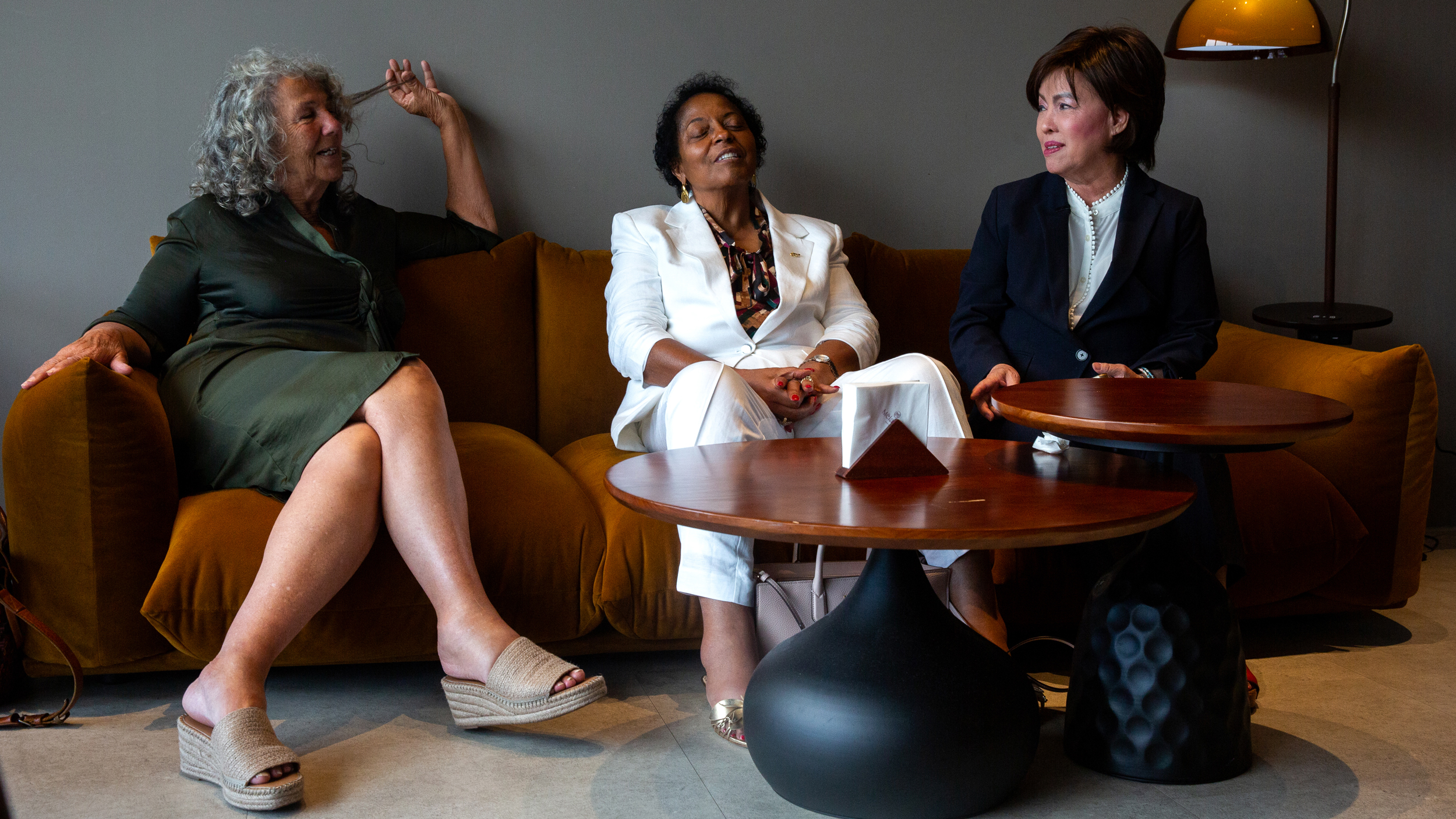
That afternoon the three women leaned back on a sofa at a hotel cafe and commiserated while a small group of followers listened. Big victories are rare in this line of work, they said. You might only get a few in a lifetime.
The important thing was to just keep fighting, no matter the odds, they agreed. That inclination brought all three women to Taiwan. That inclination, Lavigne said, has guided her through all of this.
“I thought I was just going to stop Formosa and go back to teaching,” she said, recalling her first days as an activist 10 years ago. “When you start doing this work you can’t turn around.”
“That’s right,” said Wilson, who has fought Formosa since 1988.
“It’s in your soul,” Lavigne said. “You can’t stop.”
People ask her how she became a leader, she said, but this was never in her plans.
“When Formosa said they were coming to my house, I said, ‘They’re not coming here.’ I didn’t try to be an environmentalist or anything,” Lavigne said.
“When you start doing this work you can’t turn around.”
— Sharon Lavigne
Bui agreed. Her instincts as a journalist led her to learn the stories of dozens of Vietnamese community leaders who had lost their entire livelihoods to Formosa’s 2016 disaster, then faced abuse and imprisonment when they demanded compensation. Bui was incensed.
“That drove me. From that point I cannot stop,” she said.
She didn’t sleep for many nights as she translated and processed documents for the victims, she said.
“I do whatever I can,” she said.
Her favorite part of the week in Taiwan was meeting all the hopeful young people with the ERF who seemed so eager to help. It’s easy for young people to believe they can’t make a difference in the world today, she acknowledged, or to feel overwhelmed about where to begin.
“Go out and just do it,” Lavigne weighed in. “If you know something’s not right, say something.”
Everyone thinks too much, said Wilson, and thinking only gives them time to doubt themselves.
“That’s what stops them because they think they can’t do anything. There’s fear and fear stops them,” Wilson said.
When she gets a bold idea, she rushes it into action before she has time to think too much. People need to be bold, she said. When young people ask her what it takes to become an accomplished activist, she tells them that they’ll have to misbehave.
“People!” she said as she stomped her foot. “Step out, be unreasonable. I always tell them, go ahead and make a fool of yourself, get it over with.”
Postscript
The next day the three women flew home. Wilson craved solitude by the time she arrived at her small wooden house, down a sandy road in Seadrift, on land that she shared with her daughters. Most of all Wilson craved sleep, which she regards as sacred. All the sages, she knows, say sleep is fundamental.
At the same time, she considers stamina among her core disciplines. For Wilson, the challenge with turning ambitions into a lifetime of work is knowing how to carry on when she’s tired. That’s why she’s always told herself: You go up to tired and you go past tired.
But it really wasn’t relevant until she reached this age, Wilson realized. At 78, she felt more tired than ever before. When she got to her bed, she collapsed like she’d been hit by a train and slept for practically two whole days.
But there was little time to rest. The U.S. Army Corps of Engineers still wants to dredge a nearby bay so a terminal can export more oil. The TCEQ is still considering a proposal by a nearby Dow plant to legalize discharge of plastic to the bay, and the TCEQ still plans not to include the prohibition on plastics discharge when it renews Formosa’s permit.
Wilson is working on all of those cases. Plus, on Friday, June 12, she’ll host scientists and experts from across the country for a public conference in her tiny town about the complex of next-generation nuclear reactors that Dow plans to build just up the street.
Coming next in The Resistance: Wilson goes anti-nuclear.
About This Story
Perhaps you noticed: This story, like all the news we publish, is free to read. That’s because Inside Climate News is a 501c3 nonprofit organization. We do not charge a subscription fee, lock our news behind a paywall, or clutter our website with ads. We make our news on climate and the environment freely available to you and anyone who wants it.
That’s not all. We also share our news for free with scores of other media organizations around the country. Many of them can’t afford to do environmental journalism of their own. We’ve built bureaus from coast to coast to report local stories, collaborate with local newsrooms and co-publish articles so that this vital work is shared as widely as possible.
Two of us launched ICN in 2007. Six years later we earned a Pulitzer Prize for National Reporting, and now we run the oldest and largest dedicated climate newsroom in the nation. We tell the story in all its complexity. We hold polluters accountable. We expose environmental injustice. We debunk misinformation. We scrutinize solutions and inspire action.
Donations from readers like you fund every aspect of what we do. If you don’t already, will you support our ongoing work, our reporting on the biggest crisis facing our planet, and help us reach even more readers in more places?
Please take a moment to make a tax-deductible donation. Every one of them makes a difference.
Thank you,

Reporter, Austin
Dylan Baddour covers the energy sector and environmental justice in Texas. Born in Houston, he’s worked the business desk at the Houston Chronicle, covered the U.S.-Mexico border for international outlets and reported for several years from Colombia for media like The Washington Post, BBC News and The Atlantic. He also spent two years investigating armed groups in Latin America for the global security department at Facebook before returning to Texas journalism. Baddour holds bachelor’s degrees in journalism and Latin American studies from the University of Texas at Austin. He has lived in Argentina, Kazakhstan and Colombia and speaks fluent Spanish.