

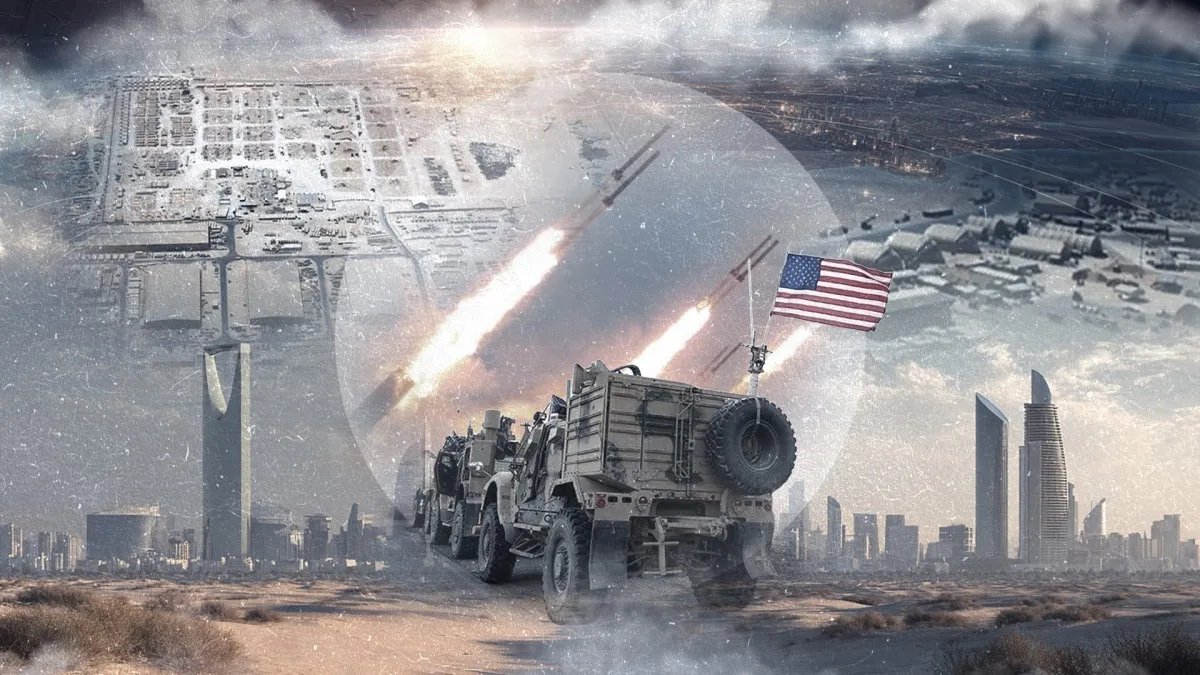
For three decades after the Cold War, Washington operated under a dangerous assumption: that military supremacy could indefinitely compensate for diplomatic exhaustion.
The United States possessed the world’s most advanced armed forces, unmatched naval reach, and a financial system capable of weaponizing sanctions against adversaries thousands of miles away. From the Balkans to Baghdad, this power often created the appearance of control. But appearances in geopolitics have a short shelf life.
The latest confrontation with Iran has exposed something American policymakers have resisted admitting for years. The age of uncontested US primacy is ending — not because America has suddenly become weak, but because the structure of global power has changed faster than Washington’s strategic imagination.
What makes this realization especially painful is that the erosion of American leverage has not primarily been imposed by enemies. Rather, much of it has been self-inflicted. Great powers, history shows, rarely collapse from a single defeat.
They decline by confusing military capacity with strategic wisdom. Imperial Britain learned this after Suez in 1956. The Soviet Union learned it in Afghanistan. The US now risks learning the same lesson in the Persian Gulf.
The Iran confrontation is demonstrating a striking paradox. America can still inflict enormous damage, yet it struggles to achieve decisive political outcomes. That distinction matters because military victories are tactical events while political victories define history.
Why endless pressure produced diminishing returns
Washington’s Iran policy has oscillated between coercion and fantasy. One administration tears up agreements in pursuit of “maximum pressure.”
Another attempts partial diplomacy while maintaining the architecture of sanctions. Then comes another round of threats, military deployments, cyber operations and economic restrictions. But Washington’s underlying assumption never changes: eventually, Tehran will break under pressure.
Yet states under sustained pressure often adapt instead of surrender. Iran’s survival strategy resembles what smaller powers throughout history have done when confronting stronger adversaries. Vietnam did it against the US.
Hezbollah did it against Israel in 2006. Ukraine, despite vastly different circumstances, is using similar principles against Russia. The objective is not necessarily outright victory. It is denial, making the cost of domination too high for the stronger actor to sustain politically.
That is precisely where Washington appears trapped. Despite overwhelming military advantages, the US is discovering that geography, asymmetric tactics, regional alliances and domestic political outrage and fatigue can neutralize conventional superiority.
The Strait of Hormuz alone remains one of the world’s most critical economic chokepoints. Roughly one-fifth of global oil consumption passes through it. Even limited instability there can send shockwaves through global markets. This creates leverage for Tehran that no sanctions package can entirely erase.
American strategists often speak as though power flows only from aircraft carriers and GDP figures. But geopolitical leverage can emerge from disruption. A weaker actor capable of creating uncertainty inside the global economy possesses a form of deterrence of its own.
The uncomfortable reality is that Washington’s approach has often strengthened the very behavior it hoped to eliminate. Decades of sanctions did not produce regime collapse.
They incentivized Iran to deepen ties with China, expand regional proxy networks, and accelerate domestic military adaptation. Pressure became the engine of resistance.
Multipolarity is no longer theory
For years, discussions about a “multipolar world” sounded abstractly academic. Policymakers in Washington still behaved as though America could unilaterally organize global outcomes while competitors remained secondary players. That world, by all measures, no longer exists.
China’s rise is not merely the result of Beijing’s economic planning or industrial capacity. It has also been accelerated by persistent American strategic overreach. The Iraq war alone cost trillions of dollars while diverting attention from Asia during the very decades China was consolidating manufacturing dominance, technological growth and global infrastructure influence.
History offers a cruel irony here. The US won the Cold War partly because the Soviet Union exhausted itself in unsustainable geopolitical competition. Yet Washington increasingly risks reproducing the same mistake through perpetual military commitments and open-ended confrontations.
Meanwhile, other countries are adapting accordingly. Saudi Arabia now balances relations between Washington and Beijing. India buys Russian oil while deepening ties with the US.
Turkey pursues an aggressively independent regional policy despite NATO membership. Even longtime American allies increasingly hedge rather than align automatically. This is what declining primacy looks like in practice — not dramatic collapse, but gradual diversification.
The phrase “indispensable nation,” once popular in American foreign policy circles, now sounds less like confidence and more like nostalgia. Nations no longer assume Washington’s approval is necessary before pursuing their interests.
Iran understood this earlier than many in Washington did. Years of sanctions pushed Tehran eastward economically and strategically. China became a lifeline. Russia became a partner of convenience.
The BRICS bloc expanded. Dollar alternatives, while still limited, gained momentum. None of this means the US is about to be displaced as the world’s dominant power. But it does mean the costs of coercive unilateralism are rising rapidly.
The nuclear temptation and failure of deterrence theology
One of the most dangerous consequences of prolonged instability is the growing belief that nuclear weapons are the only reliable guarantee of sovereignty.
This argument has gained traction not just in Iran but globally. Nuclear North Korea’s regime has survived. Libya, on the other hand, disarmed and spectacularly collapsed. Ukraine surrendered Soviet-era nuclear capabilities decades ago and later faced invasion.
The lesson many states draw is brutally simple: weakness invites external intervention. But nuclear deterrence is not the universal insurance policy its growing number of advocates imagine.
Pakistan and India both possess nuclear arsenals, yet continue operating under chronic instability. Israel’s undeclared nuclear capability has not prevented repeated regional conflicts. Nuclear weapons may deter total invasion, but they do not eliminate insecurity, proxy warfare, economic stagnation or internal political dysfunction.
The deeper problem is psychological. Once enough states conclude that international law cannot guarantee sovereignty, nuclear proliferation becomes an increasingly rational response. That is not merely a Middle Eastern problem – it is a global one.
And coercive diplomacy accelerates this logic. When powerful states appear unwilling to negotiate in good faith, weaker states search for irreversible deterrents. The tragedy is that every new proliferation crisis then becomes justification for further militarization, creating a cycle with no stable endpoint.
Diplomacy requires humility, not slogans
The most striking weakness in modern American foreign policy is not military overstretch but diplomatic arrogance.
Too often, Washington approaches negotiations with adversaries as exercises in dictation rather than compromise. Yet durable agreements require mutual concessions, even between unequal powers.
The JCPOA nuclear agreement with Iran succeeded precisely because it acknowledged this reality. It was imperfect, but it created verification mechanisms, reduced tensions and prevented immediate escalation.
Its collapse demonstrated something larger than partisan dysfunction. It revealed how fragile diplomacy becomes when domestic political theatrics override strategic continuity.
Sanctions relief, regional security guarantees and international enforcement mechanisms involving other major powers such as China and Russia are almost certainly required for any sustainable settlement with Iran.
That prospect will make many uncomfortable in Washington because it implies sharing responsibility in a world no longer organized around unilateral American command. But diplomacy in a multipolar era cannot function otherwise.
The US still possesses enormous advantages: military reach, technological innovation, cultural influence and financial power still unmatched by any rival coalition. Yet strength without restraint becomes self-defeating.
Empires often assume credibility depends on demonstrating force. In reality, credibility depends on demonstrating judgment. The lesson emerging from the Iran confrontation is therefore larger than the Middle East itself.
America’s greatest strategic challenge is no longer defeating enemies abroad. It is adjusting psychologically to a world where dominance has limits. History suggests that great powers that recognize those limits early adapt successfully. Those who deny them usually learn the hard way.
M A Hossain is a senior journalist and international affairs analyst, based in Bangladesh.