

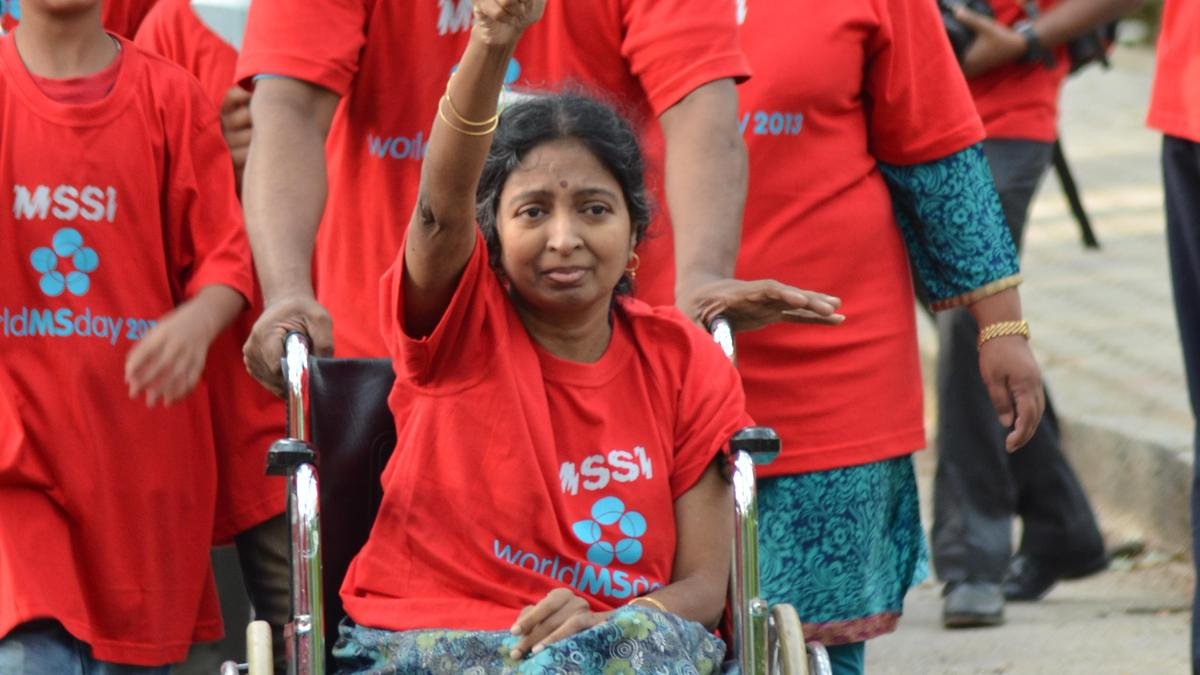
Imagine being in your late 20s or mid 30s, and suddenly your own body is an unpredictable battlefield. This is not a hypothetical situation for an estimated 2.9 million people around the world living with Multiple Sclerosis (MS) – a diagnosis is made every five minutes. This is a life-changing reality. India is a big part of this sobering story, with approximately 2 lakh people living with MS.
Women make up almost three-quarters of all cases of MS. Most often, the disease strikes between the ages of 20 and 40, while life is a whirlwind of career-building, financial independence, family planning and caregiving. MS has rapidly become the leading cause of non-traumatic neurological disability in young adults. Yet, it remains shrouded in low public awareness, leading to a silent, profound societal burden.

What is MS?
MS is a long-term autoimmune disease where the immune system attacks the myelin sheath of the central nervous system, cutting off the communication lines between the brain and the body. The consequences of breaking this vital link are devastating. Sudden blindness, terrifying numbness, excruciating pain, complete immobility. Things like walking, holding a cup of tea, speaking become monumental struggles.
The insidious thing about MS is that the progression starts at the earliest stages, when the patient appears perfectly healthy on the outside. Symptoms such as crippling fatigue, brain fog, anxiety and chronic pain are completely invisible to others. A young woman may sit at her office desk appearing entirely well, while silently managing a condition that is eroding her daily life, confidence, energy and emotional well-being.
The numbers paint a stark reality of this unmet need: approximately 57% of people with MS live with significant disability, and 52% remain unemployed. Despite the availability of high efficacy treatments, over 30% of patients experience disease progression each year because both relapsing and progressive biology contribute to disability accumulation across the full trajectory of MS.

Diagnosis and therapeutic gaps
The road to MS management in India is riddled with roadblocks. The first is the challenge of diagnosis. A pervasive lack of awareness among the public and primary care physicians, coupled with limited access to specialists and advanced diagnostics outside major tier-1 cities, heavily delays early treatment.
The second is the therapeutic challenge. While we have made immense strides in modern advanced therapies, there remains a critical need for patients to be put onto better treatments that aggressively halt the progressive biology of the disease rather than just managing acute relapses.
It is heartening that the outlook today is so different from a decade ago. Increasing clinical evidence suggests that early initiation of high-efficacy therapies (HETs) can dramatically slow disease progression, reduce relapse activity, and preserve long-term neurological function. In short, early diagnosis is the key to helping a young woman maintain her independence and rewrite her future.

Burdens beyond the medical
But living well with MS requires support that extends far beyond a prescription pad. For women, the impacts of MS shatter the whole family ecosystem. The disease strikes in prime productive years and often triggers a ‘sandwich generation’ crisis. A young woman diagnosed with MS often finds herself trapped between the intense demands of raising young children and caring for ageing parents, all while battling a degenerative disease. The caregiving burden compounds, stretching family budgets, breaking emotional wells and putting tremendous pressure on the larger healthcare system. Since symptoms fluctuate unpredictably from day to day, these women continue to perform their duties at work and home, managing a condition that others cannot see and therefore do not understand.

Building empathetic ecosystems
To really change MS care in India we need to think beyond just the medicines. Practical barriers still isolate patients. Workplace accommodations for variable chronic illness remain hit-or-miss, and insurance systems don’t always account well for the long-term, irregular expenses of auto-immune and neurodegenerative diseases like MS.
We need to build a more enabling ecosystem. This means ensuring that women have holistic access to physiotherapy, cognitive rehabilitation, mental health support, family counseling, and flexible workplace policies. The future of MS care must be anchored to two equally vital pillars: starting strong through timely diagnosis and high-efficacy treatment, and staying strong through sustained emotional, corporate, family and community support.
We must reject the status quo where young women are forced to wait to get worse. It is time to elevate Multiple Sclerosis to a national health priority, dismantle the stigma of invisible disabilities, and build a healthcare framework where no patient is left behind.
(Dr. Rajiv Anand is principal director of neurology at BLK-Max Super Speciality Hospital, Delhi. rajiv.anand@blkhospital.com)
Published – June 06, 2026 03:45 pm IST