


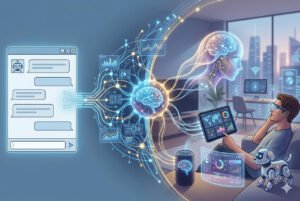





App development has always been seen as a technical skill requiring coding knowledge, programming logic, and hours of understanding frameworks. But in 2025, a major shift has emerged: the rise of vibe coding tools—AI-driven platforms where anyone can build apps simply by describing what they want. Powered by agentic AI systems, these tools allow users to transform ideas into apps using conversation, natural language prompts, and guided workflows.
This boom is redefining the future of development. Whether you’re an entrepreneur, student, freelancer, or small business owner, vibe coding tools empower you to build full applications without writing a single line of code. In this blog, we explore how this trend started, how it works, and why AI agents are making app development accessible to everyone.
1. What Exactly Is Vibe Coding?
Vibe coding refers to a new style of app creation where users convey the vibe—the idea, function, or experience they want—and AI agents build it for them. Instead of learning programming languages or navigating complex tools, creators simply describe:
- What the app should do
- How it should look
- What features they want
- Who the users will be
- What tasks the app needs to perform
The AI then generates interfaces, workflows, backend logic, databases, and API connections.
Why call it “vibe coding”?
Because users no longer code—they guide the intention, and the AI handles the execution.
This drastically lowers the barrier to app development.
2. How Vibe Coding Tools Work?
Modern vibe coding tools use a blend of large language models, multimodal reasoning, and agentic automation to understand user instructions and build applications end-to-end. These tools break down requests into structured development tasks.
Step-by-Step Process:
1. Understanding Your Prompt
You describe the app in natural language, like:
“Create a fitness tracker app with daily steps, calorie logs, and reminders.”
2. App Planning
AI agents turn your prompt into:
- User flow
- Data structure
- Feature list
- UI layout
- Logic architecture
3. Designing the Interface
The AI generates automatically:
- Screens
- Navigation
- Buttons
- Icons
- Themes
Some tools even allow style directions such as:
“Make the app minimalist with pastel colors.”
4. Adding Backend Logic
AI builds:
- Databases
- User authentication
- Automation flows
- API integrations
5. Testing and Debugging
Vibe coding tools run automated tests and fix issues in real time.
6. Deploying the App
Finally, AI deploys the app to the web, mobile platforms, or internal dashboards.
The user simply approves the steps—AI agents handle everything else.
3. Why Vibe Coding Tools Are Exploding in 2025
Several key factors are driving this boom:
✔ Rise of Agentic AI
AI agents can now plan, code, modify, test, and deploy apps with minimal instruction. This is a new era where the AI doesn’t just assist—it takes action.
✔ Democratization of Tech
Entrepreneurs and creators want faster ways to build apps without hiring expensive developers.
✔ Speed & Efficiency
Apps that once took weeks can now be built in hours or even minutes.
✔ Lower Costs
Entrepreneurs can build MVPs (Minimum Viable Products) at almost zero development cost.
✔ No Skill Barrier
Anyone with an idea can build an app, regardless of coding knowledge.
This mix of automation, accessibility, and speed makes vibe coding tools extremely valuable for startups and businesses.
4. What Can You Build With Vibe Coding Tools?
You might be surprised—but almost anything.
1. Mobile Apps
- Fitness trackers
- E-commerce stores
- Learning apps
- Productivity tools
- Booking systems
2. Web Applications
- Portfolio websites
- Dashboards
- Booking platforms
- CRM systems
3. Business Automations
- Email workflows
- Lead generation bots
- Sales dashboards
- Inventory analytics
4. AI-Powered Tools
- Chatbots
- Image editing apps
- Content generators
- Recommendation engines
The flexibility of vibe coding tools makes them ideal for personal, business, and enterprise use cases.
5. Benefits of Vibe Coding Tools
1. No Technical Skills Required
Beginner-friendly for creators, founders, and marketers.
2. Speed & Scalability
AI builds prototypes and full products in a fraction of the usual time.
3. Automated Debugging
Tools automatically fix issues and ensure the app works smoothly.
4. Cost-Effective
No need to hire developers for initial stages.
5. Creativity Unlocked
Users focus on vision instead of worrying about coding syntax.
6. Continuous Updates
AI agents can update apps automatically as requirements evolve.
6. Popular Vibe Coding Tools in 2025
The market is growing fast, but some tools stand out for their innovation:
1. Bubble + AI Agents
Full-stack app development with natural language prompting.
2. Replit Agent
Generates complete codebases using multi-agent reasoning.
3. Glide AI
Turns spreadsheets into mobile and web apps.
4. Google Vibe Builder (rumored)
A Gemini-powered platform aimed at mainstream app creation.
5. AI-enhanced Figma
Generates UI layouts, dashboards, and screens instantly.
These tools demonstrate the power of vibe coding tools in simplifying development.
7. Are Developers Being Replaced?
Not at all—developers are being elevated, not replaced.
AI handles:
- Repetitive tasks
- Boilerplate coding
- Testing
- Debugging
- UI layout generation
Developers handle:
- Complex planning
- Fine-tuning logic
- Large-scale architecture
- Security layers
- Custom features
This makes development faster and more efficient.
8. The Future of Vibe Coding
The next stage of vibe coding tools will likely include:
- Full voice-based app creation
- Real-time collaboration with AI agents
- Automatic business logic generation
- Auto-launch to app stores
- Multimodal app building from sketches or voice notes
Eventually, building an app may become as simple as saying:
“Build me an app for home workouts with calorie tracking.”
Conclusion
Vibe coding tools are redefining the future of app development by empowering non-coders to build digital products with ease. Powered by agentic AI, they remove barriers, speed up development, reduce costs, and unlock creativity for millions of people.
In 2025 and beyond, vibe coding won’t just be a trend—it will be the default way apps are built.


