






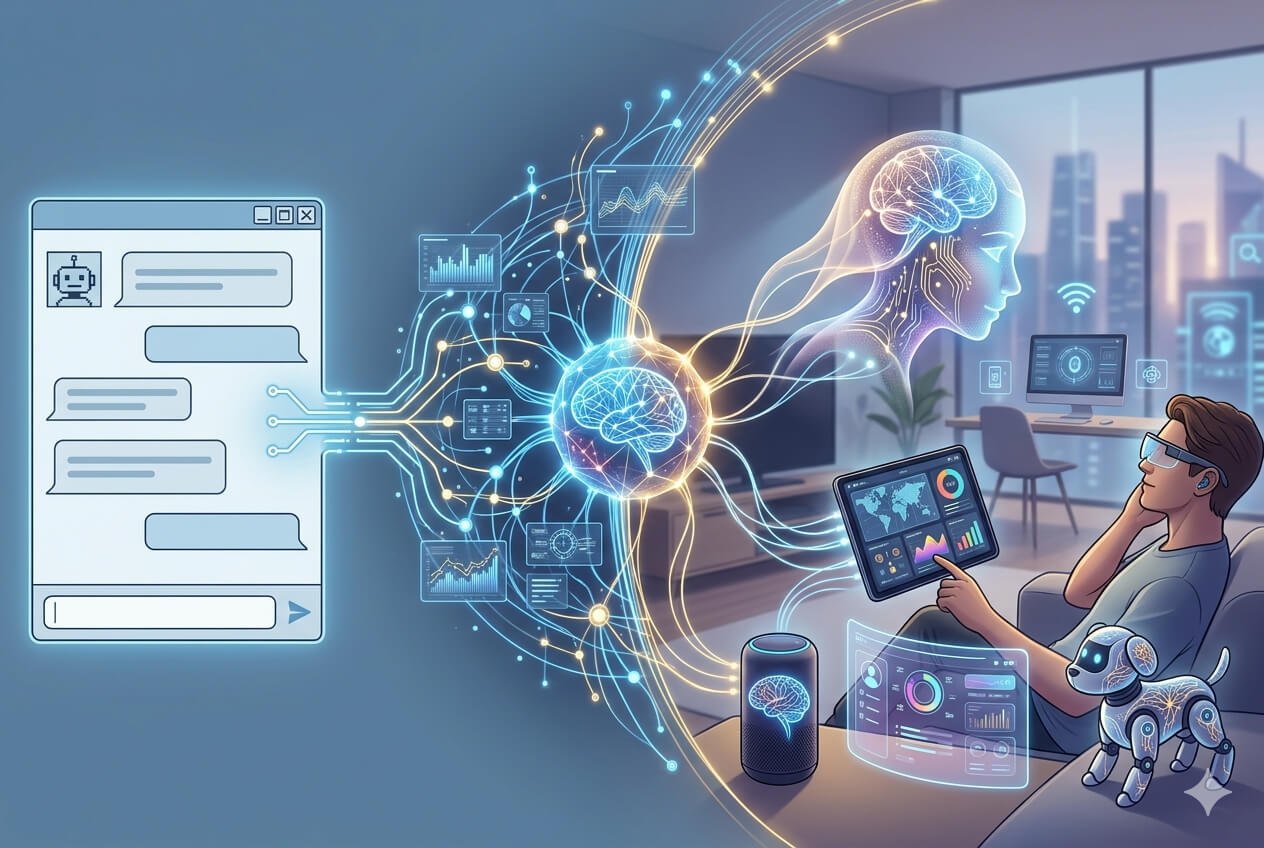
In just a few years, the way humans interact with technology has undergone a dramatic transformation. What began as simple, rule-based chatbots has now evolved into highly intelligent AI companions capable of understanding emotions, managing complex tasks, and engaging in meaningful conversations. This shift is not just technological—it represents a new era in human-computer interaction.
As artificial intelligence continues to advance, smart assistants are no longer limited to answering questions. They are becoming partners in productivity, creativity, and daily life.
The Early Days: Rule-Based Chatbots
The journey began with basic chatbots—programs designed to simulate conversation using predefined scripts. These early systems operated on simple “if-then” logic:
- If a user asked a specific question, the bot provided a fixed response
- Limited understanding of language
- No learning capability
While useful for handling FAQs and customer support, these bots often felt rigid and frustrating. They lacked context, personality, and adaptability.
Despite their limitations, they laid the foundation for what would become a revolution in AI-powered communication.
The Rise of Intelligent Assistants
The next phase introduced smart assistants powered by machine learning and natural language processing. These systems could:
- Understand conversational language
- Provide personalized responses
- Learn from user interactions
Voice assistants like Siri and Google Assistant marked a major milestone. They brought AI into everyday life, enabling users to:
- Set reminders
- Check the weather
- Control smart home devices
However, these assistants were still largely reactive—they responded to commands but didn’t take initiative or handle complex, multi-step tasks.
The Breakthrough: Generative AI
The real turning point came with the emergence of generative AI, which allowed systems to create human-like text, images, and even code.
Platforms like ChatGPT, Google Gemini, and Claude transformed the landscape. These tools could:
- Hold natural, flowing conversations
- Generate detailed content
- Assist with problem-solving and decision-making
For the first time, users felt like they were interacting with something more than a tool—something closer to a thinking entity.
From Assistants to AI Companions
Today, we are entering a new phase: AI companions.
Unlike traditional assistants, AI companions are designed to build ongoing relationships with users. They go beyond functionality to offer:
1. Contextual Memory
AI companions remember past interactions, preferences, and habits, allowing for more personalized and relevant responses.
2. Emotional Intelligence
Modern AI systems can detect tone, sentiment, and intent, making conversations feel more natural and empathetic.
3. Proactive Behavior
Instead of waiting for commands, AI companions can:
- Suggest actions
- Provide reminders
- Anticipate user needs
4. Multi-Functional Capabilities
They can handle a wide range of tasks, including:
- Writing and research
- Scheduling and planning
- Coding and data analysis
- Entertainment and casual conversation
This evolution transforms AI from a utility into a digital companion.
Real-World Applications
Personal Productivity
AI companions help users manage their time, tasks, and goals. They can:
- Organize schedules
- Draft emails
- Summarize documents
This reduces cognitive load and boosts efficiency.
Mental Health and Well-Being
Some AI companions are designed to provide emotional support. While not a replacement for professional care, they can:
- Offer a listening ear
- Provide coping strategies
- Encourage positive habits
Education and Learning
Students use AI companions as:
- Tutors
- Research assistants
- Writing helpers
These tools make learning more interactive and accessible.
Business and Customer Engagement
Companies are deploying AI companions to:
- Engage customers
- Provide personalized recommendations
- Automate support services
This enhances user experience while reducing operational costs.
Why This Shift Matters
The transition from chatbots to AI companions reflects a deeper change in technology:
Human-Like Interaction
AI is becoming more conversational, intuitive, and relatable.
Increased Efficiency
Tasks that once required multiple apps can now be handled in one place.
Personalization at Scale
AI companions adapt to individual users, creating unique experiences.
Always Available Support
24/7 assistance without fatigue or downtime.
Challenges and Ethical Concerns
While the benefits are significant, this evolution also raises important questions:
Privacy Risks
AI companions rely on large amounts of personal data. Protecting this data is critical.
Emotional Dependency
As AI becomes more human-like, users may develop emotional attachments.
Accuracy and Misinformation
AI-generated responses are not always perfect and can sometimes be misleading.
Ethical Boundaries
How far should AI go in mimicking human relationships?
Addressing these challenges will be essential for responsible AI development.
The Role of Big Tech
Major technology companies are driving this transformation.
- OpenAI continues to enhance conversational AI capabilities
- Google is integrating AI across its ecosystem
- Microsoft is embedding AI into productivity tools
These companies are investing heavily in making AI companions more powerful, accessible, and integrated into daily life.
The Future of Smart Assistants
Looking ahead, AI companions are expected to become even more advanced:
Hyper-Personalization
AI will understand users on a deeper level, including preferences, habits, and goals.
Multimodal Interaction
Communication will expand beyond text to include voice, images, and video.
Autonomous Task Execution
AI companions will handle complex workflows independently.
Integration into Everyday Life
From smartphones to wearable devices, AI companions will be everywhere.
Conclusion
The evolution from chatbots to AI companions marks one of the most significant shifts in modern technology. What started as simple scripted interactions has grown into sophisticated systems capable of understanding, assisting, and even empathizing with users.
As AI continues to evolve, the line between tool and companion will become increasingly blurred. The challenge moving forward is to harness this technology responsibly—ensuring that it enhances human life without compromising privacy, ethics, or independence.
One thing is certain: smart assistants are no longer just assistants. They are becoming integral partners in how we live, work, and connect.
FAQs
1. What is the difference between a chatbot and an AI companion?
A chatbot provides predefined responses, while an AI companion offers personalized, context-aware, and proactive interactions.
2. Are AI companions safe to use?
They are generally safe but require strong data privacy and ethical safeguards.
3. Can AI companions replace human interaction?
No, they are designed to assist and support, not replace human relationships.
4. Where are AI companions used?
They are used in productivity, education, healthcare, customer service, and personal assistance.
5. Do AI companions learn over time?
Yes, many AI systems improve by learning from user interactions and feedback.
6. What is the future of AI companions?
They will become more intelligent, autonomous, and integrated into daily life.


