

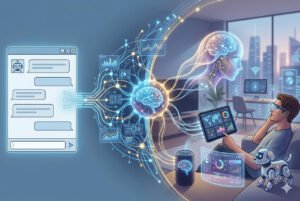






For decades, building software was considered a highly specialized skill reserved for trained developers. Coding languages, complex frameworks, and long development cycles made app creation inaccessible to most people. But in 2026, that reality is rapidly changing. Thanks to no-code platforms and AI-powered development tools, creating apps is no longer limited to programmers.
From entrepreneurs and small business owners to students and content creators, a growing number of people are building functional applications—without writing a single line of code. This shift is redefining the future of software development and raising an important question: Can anyone really build apps now?
The Rise of No-Code Development
No-code development platforms allow users to create applications using visual interfaces instead of traditional programming. Through drag-and-drop tools, pre-built templates, and simple logic workflows, users can design apps quickly and efficiently.
Popular platforms like Bubble, Webflow, and Glide have played a major role in democratizing app creation.
Key Features of No-Code Platforms:
- Drag-and-drop UI builders
- Pre-designed components and templates
- Built-in databases and integrations
- Minimal technical knowledge required
These tools significantly reduce development time, allowing users to launch apps in days instead of months.
The AI Revolution in Software Development
While no-code platforms simplified app creation, artificial intelligence has taken it a step further. AI-powered tools can now generate code, design interfaces, and even suggest features based on user input.
Platforms like GitHub Copilot and ChatGPT enable users to describe what they want in plain language—and receive working code or complete solutions.
What AI Brings to Development:
- Automatic code generation
- Intelligent debugging and error fixing
- UI/UX design suggestions
- Workflow automation
This combination of no-code and AI is creating a new category known as “AI-native development”.
Can Anyone Really Build an App?
The short answer is: Yes—but with some limitations.
What Anyone Can Do:
- Build simple websites and mobile apps
- Create internal tools for businesses
- Launch MVPs (Minimum Viable Products)
- Automate workflows and tasks
For example, a small business owner can create an inventory app or booking system without hiring a developer.
Where Challenges Still Exist:
- Building highly complex or large-scale applications
- Ensuring advanced security and scalability
- Custom backend development
- Performance optimization
While no-code and AI tools are powerful, they are not a complete replacement for experienced developers—at least not yet.
Real-World Use Cases
Startups and Entrepreneurs
No-code tools allow startups to test ideas quickly without heavy investment. Founders can build prototypes, gather feedback, and iterate faster.
Small Businesses
Business owners use no-code apps to:
- Manage operations
- Track inventory
- Handle customer relationships
This reduces dependency on expensive software solutions.
Freelancers and Creators
Individuals can build:
- Personal websites
- Portfolio apps
- Digital products
This opens new income opportunities without technical barriers.
Enterprises
Even large companies are adopting no-code tools for internal workflows, reducing development backlog and improving efficiency.
Benefits of No-Code & AI Development
Faster Development
Apps can be built and launched in a fraction of the traditional time.
Cost-Effective
Reduces the need for large development teams and expensive resources.
Accessibility
People from non-technical backgrounds can participate in software creation.
Rapid Iteration
Changes and updates can be made instantly based on feedback.
The Risks and Limitations
Despite its advantages, this trend comes with certain risks:
Limited Customization
No-code platforms may not offer full flexibility for complex requirements.
Platform Dependency
Users rely on third-party platforms, which can lead to vendor lock-in.
Security Concerns
Improper configurations can expose apps to vulnerabilities.
Performance Constraints
Large-scale apps may face performance issues on no-code platforms.
The Changing Role of Developers
Rather than replacing developers, no-code and AI tools are reshaping their roles.
Developers are now focusing more on:
- Complex system architecture
- Advanced integrations
- Security and scalability
- Custom feature development
Meanwhile, non-developers—often called “citizen developers”—are handling simpler tasks and prototypes.
This collaboration is accelerating innovation across industries.
The Future of App Development
The future points toward a hybrid model, where no-code platforms and AI tools work alongside traditional coding.
What to Expect:
- More powerful AI-driven app builders
- Voice-based and prompt-based development
- Increased automation in testing and deployment
- Greater integration across platforms
Companies like Microsoft and Google are already investing heavily in AI-powered development ecosystems.
Will Coding Become Obsolete?
This is one of the most debated questions in the tech world.
The reality is that coding is not disappearing—it is evolving.
- Basic coding tasks may be automated
- Complex problem-solving will still require human expertise
- Developers will act more like architects and strategists
In other words, coding will become more about thinking and designing than writing syntax.
Why This Trend Matters
The rise of no-code and AI development is not just a technological shift—it’s a societal change.
Key Impacts:
- Lower barriers to entry in tech
- Increased innovation from diverse creators
- Faster digital transformation for businesses
- Empowerment of individuals to build their own solutions
This democratization of software development could lead to a surge in creativity and entrepreneurship worldwide.
Conclusion
No-code and AI-powered development are reshaping the way software is built. What was once a complex and exclusive skill is now becoming accessible to millions of people around the globe.
While not everyone can build highly complex systems yet, the ability to create functional apps without coding is already a reality. As tools continue to evolve, the gap between technical and non-technical users will continue to shrink.
The question is no longer “Can anyone build apps?”—but rather, “What will people create when they can?”
FAQs
1. What is no-code development?
No-code development allows users to build apps using visual tools without writing code.
2. How does AI help in app development?
AI can generate code, suggest designs, automate tasks, and improve development efficiency.
3. Can beginners build apps using no-code tools?
Yes, beginners can create simple apps and websites with minimal training.
4. Are no-code apps scalable?
They can handle small to medium-scale projects, but large-scale apps may require custom development.
5. Is coding still important?
Yes, coding is still essential for complex applications and advanced features.
6. What is the future of no-code and AI development?
The future involves more automation, smarter tools, and wider accessibility for users worldwide.


