

Close Menu

    Subscribe to Updates

    Get the latest news information from worldwide businesses.

    What's Hot

    Constant mechanical force may be why heart cancer is so rare

    May 15, 2026

    Goa forms panel after 11-year-old loses leg due to alleged medical negligence

    May 15, 2026

    How to turn off Instagram’s new Instants feature and retract photos you accidentally shared

    May 15, 2026
    Facebook Instagram YouTube LinkedIn X (Twitter)
    Trending
    • Constant mechanical force may be why heart cancer is so rare
    • Goa forms panel after 11-year-old loses leg due to alleged medical negligence
    • How to turn off Instagram’s new Instants feature and retract photos you accidentally shared
    • EU carmakers pave way for Chinese rivals as balance in market shifts | Automotive industry
    • NEET UG exam 2026 rescheduled for June 21 after paper leak row
    • FBI reports violent crime, murder fell at highest rate since 1937 in US
    • How a single WhatsApp tag unraveled the NEET-UG 2026 leak
    • Linux devs are fighting the new age-gated internet
    Newspublicly
    • About Us
    • Advertise & Partner with us
    • Pitch Your Story
    • Contact Us
    Facebook Instagram LinkedIn X (Twitter)
    Subscribe
    • Home
    • World News
      • Asia
      • India
      • USA
      • UK & Europe
      • Middle East
    • Economy & Business
      • Global Economy
      • Corporate & Industry
      • Finance & Markets
      • Policy & Trade
    • Technology
      • Gadgets & Devices
      • Software & Apps
      • AI & Machine Learning
      • Robotics & Automation
    • Health & Medicine
      • Fitness & Nutrition
      • Research & Innovation
      • Disease & Treatment
      • Doctors, Clinics & Patient Care
    • Travel & Tourism
    • Automobile
      • Electric & Hybrid Vehicles
      • Auto Industry Insights
    • Sports
    • More
      • Education
      • Real Estate
      • Environment & Climate
      • Space & Astronomy
      • War & Conflicts
    Newspublicly
    Home»Health & Medicine»Disease & Treatment»Using ultrasound to restore vision
    Disease & Treatment

    Using ultrasound to restore vision

    digitalixcomm@gmail.comBy digitalixcomm@gmail.comMay 15, 2026No Comments3 Mins Read0 Views
    Share
    Facebook Twitter LinkedIn Copy Link WhatsApp


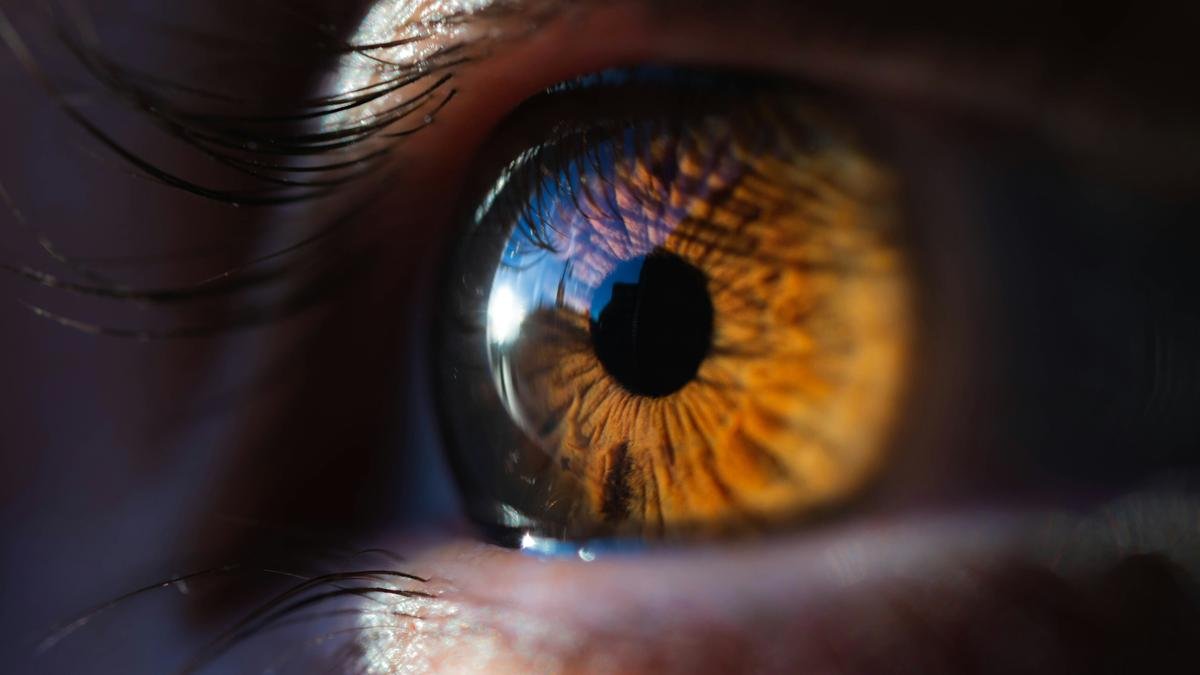
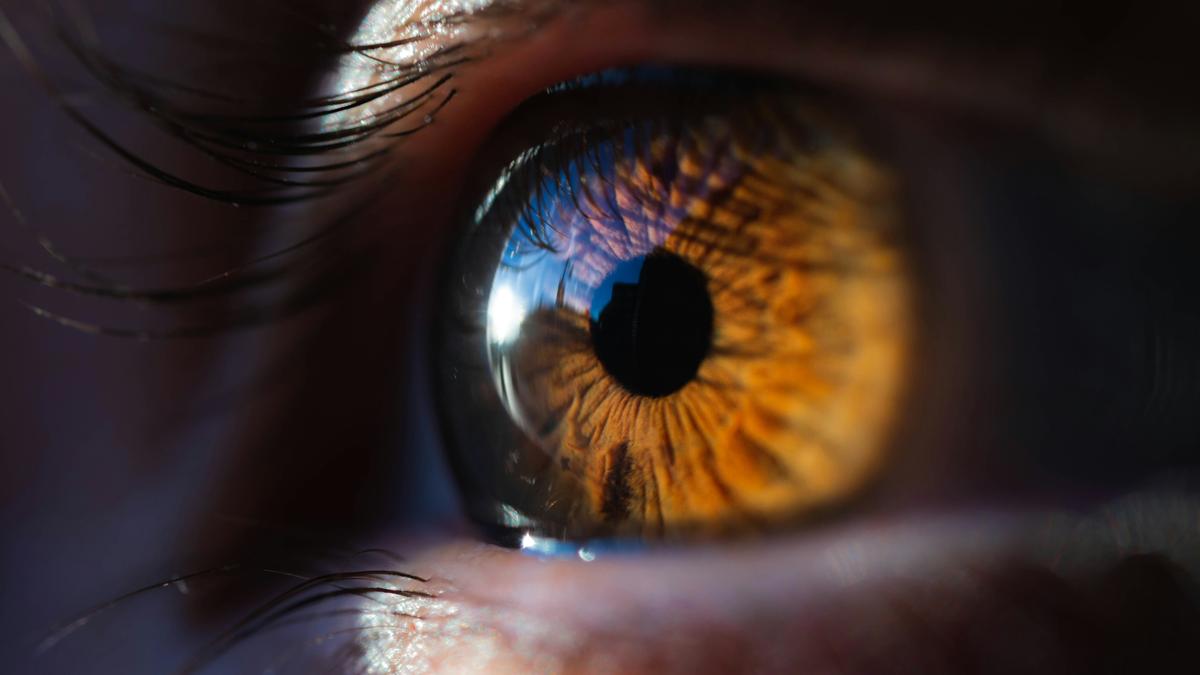
    Scientists are attempting to restore vision using ultrasound when the optic nerve is impaired. Representative image.

    Scientists are attempting to restore vision using ultrasound when the optic nerve is impaired. Representative image.
    | Photo Credit: Youngeon Lee/Unsplash

    A normal human hears sound in the frequency range 20 hertz (Hz) to 20 kilohertz, and the normal loudness, measured in decibels (dB), is between 30 and 70 db. Higher volumes, e.g. 85 dB and above, can lead to hearing damage. Ultrasound is defined as sound frequencies far beyond the audible range, and are expressed in kilohertz (kHz) or megahertz (MHz).

    Regardless of its intensity, ultrasound is inaudible to the human ear. Ultrasound’s very short wavelength allows it to travel through biological tissues. It is also propagated as a mechanical wave, where one molecule pushes against the next, and therefore it travels at a faster speed in stiff and incompressible tissues such as bone but is slower in tissues such as fat. This property is used to generate ultrasound ‘images’ of human foetuses. (Ultrasound is much safer than X-rays, whose ionising effects can damage DNA.)

    At a low intensity, low frequency ultrasound (200-700 kHz) allows the modulation of neural activities in mouse brains. W.J. Tyler et al. of Arizona State University showed this in 2008. Similarly, M. Menz et al. pointed out in 2013 that neural stimulation in the retina of a test amphibian (salamander) occurred when ultrasound of 43 MHz was applied (Journal of Neuroscience, 33, 4550). At such a high frequency, constant pressure is applied on the surface of the retinal tissue, which results in the activation of the retinal ganglion cells that send signals to the brain.

    This phenomenon recently sparked interest in the potential of ultrasound stimulation and sonogenetics to restore vision (Jie Ji et al.; Neural Regen. Res. 20: 3501). Sonogenetics makes use of the non-invasive nature of ultrasound to modulate the activity of small groups of neurons in living organisms. Genetic engineering is first used to deliver a gene that makes a mechanosensitive protein in a neuron’s cell membrane. The neurons can then be activated on demand by ultrasound waves.

    The eye, in particular, is easily accessible to ultrasound and the lens, cornea, retina, and the vitreous humor are easily studied using ultrasound. Of particular interest are attempts to restore vision when the optic nerve is impaired. This happens in degenerative conditions such as glaucoma, and the ensuing optic neuropathy, and infectious diseases that affect the brain (e.g. meningitis). In these conditions, ultrasound stimulation of the visual cortex in the brain can lead to some restoration of vision (Chen Gong et al., Bioengineering 10:577, 2023).

    High-intensity focused ultrasound waves have other therapeutic uses, too. For example, in cancer treatment, precision focusing on a tumour can cause the temperature in these cells to rise rapidly to 65-85 ºC, effectively killing these cells while leaving the surrounding tissue unharmed.

    All these studies have used animals as models. Has anyone actually used sound waves to treat retinal disorder in human patients? The answer is yes. In 2025, Wang et al. from Chongqing Medical University in China did so with 16 glaucoma patients, using ultrasound, and with success. Further, an agency called Focused Ultrasound Foundation from Charlottesville, Virginia, in the U.S., has also developed a device called ‘Eye Tech Care’ that the Foundation has claimed can focus ultrasound on the ciliary body, decreasing the intraocular pressure and thus treating glaucoma. This technology, however, needs to be cleared by the U.S. National Health Agency.

    The author thanks Dr. Srinivasu Karri of the Hormel Institute, Minnesota, USA, for access to several references.

    dbala@lvpei.org

    Published – May 15, 2026 07:45 am IST


    Source link

    Author

    • digitalixcomm@gmail.com

      NewsPublicly.com is News & Articles Platform that creating SEO-focused articles on travel, lifestyle, and digital trends.

    digitalixcomm@gmail.com
    • Website

    NewsPublicly.com is News & Articles Platform that creating SEO-focused articles on travel, lifestyle, and digital trends.

    Related Posts

    Constant mechanical force may be why heart cancer is so rare

    May 15, 2026

    From PCOS to PMOS: understanding the reasons for name change

    May 15, 2026

    Passengers start disembarking from hantavirus-stricken cruise ship in Spain’s Canary Islands

    May 15, 2026
    Leave A Reply Cancel Reply

    Demo
    Top Posts

    “Inside Gemini Robotics 1.5: How Robots Learn to Reason & Act

    November 22, 202524 Views

    How US Tariffs Are Reshaping the Global Growth Landscape?

    November 21, 202518 Views

    Pakistani Journalist Laughing at Tejas Fighter Jet Crash at Dubai Airshow Sparks Massive Outrage Worldwide

    November 23, 202517 Views

    Vibe-Coding Boom: How Non-Coders Build Apps With AI Agents

    November 22, 202515 Views
    Don't Miss

    Constant mechanical force may be why heart cancer is so rare

    May 15, 20261 Min Read0 Views

    Illustration of a human heart on a blue background | Photo Credit: Krithika R 2517@Coimbatore…

    Goa forms panel after 11-year-old loses leg due to alleged medical negligence

    May 15, 2026

    How to turn off Instagram’s new Instants feature and retract photos you accidentally shared

    May 15, 2026

    EU carmakers pave way for Chinese rivals as balance in market shifts | Automotive industry

    May 15, 2026
    Stay In Touch
    • Facebook
    • Twitter
    • Instagram
    • YouTube
    • LinkedIn
    • WhatsApp

    Subscribe to Updates

    Get the latest creative news from SmartMag about art & design.

    Demo
    NEWSPUBLICLY
    Facebook X (Twitter) Instagram LinkedIn

    Home

    • About Us
    • Leadership
    • Advertise & Partner With Us
    • Pitch Your Story
    • Media Kit & Pricing
    • Career
    • FAQs

    Guidelines

    • Editorial & Submission
    • Partnership
    • Advertising & Sponsor
    • Intellectual Property Policy
    • Community & Comment
    • Security & Data Protection
    • Send Your Opinion

    Quick Links

    • Cookie Policy
    • Payment & Billing Terms
    • Refund & Cancellation
    • Copyright Policy
    • Complaint & Support
    • Sitemap
    • Contact Us

    Subscribe Us

    Get the latest news and updates!

    Copyright © 2026 Newspublicly (DIGITALIX COMMUNICATION). All Rights Reserved.
    • Privacy Policy
    • Terms of Use
    • Disclaimer