







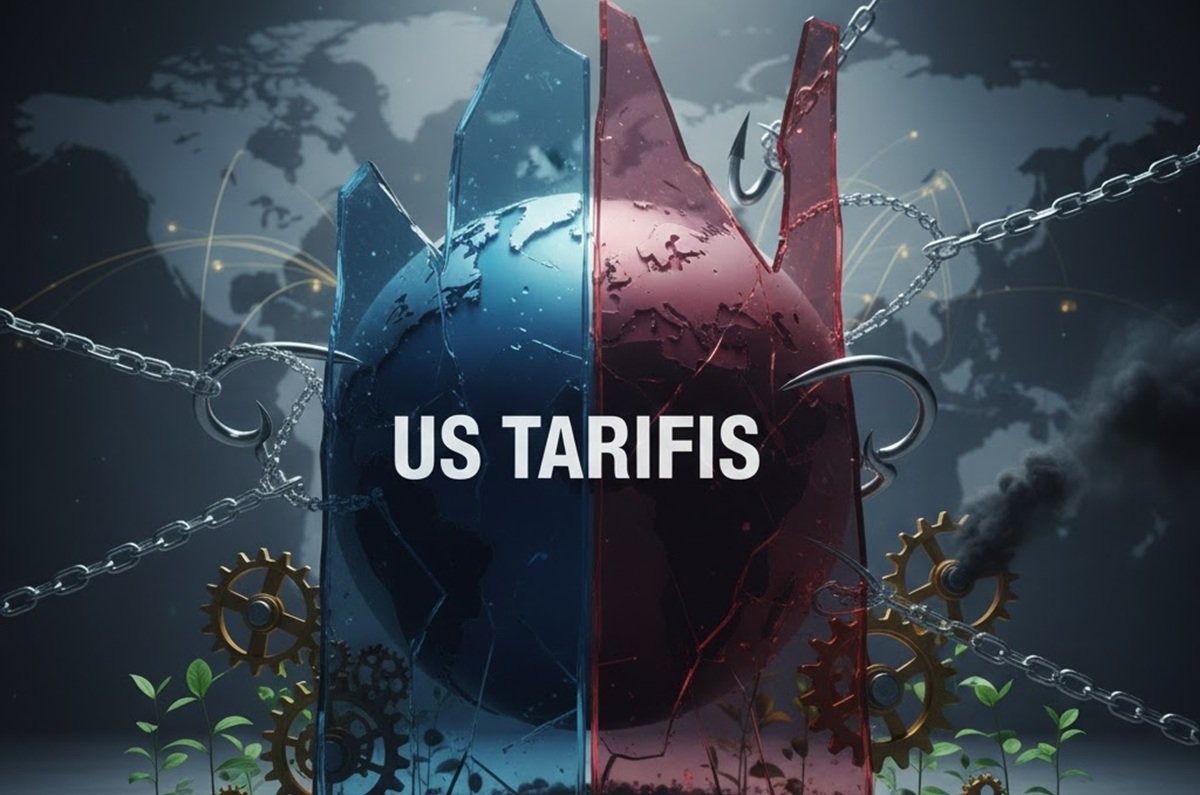
Rising US protectionism has become one of the biggest economic stories of recent years. With new tariffs imposed on China, Europe, and selected industries like EVs, steel, and semiconductors, economists warn that US tariffs global growth risks are intensifying. Trade tensions are once again influencing investment decisions, supply-chain planning, and overall global GDP growth.
This blog explores how renewed US tariff policies are reshaping the global growth landscape, their impact on emerging markets, and what to expect in the years ahead.
Why the US Is Turning Toward Protectionism?
Several factors have contributed to the latest wave of tariffs:
1. National security strategies
Washington is increasingly concerned about over-reliance on China for chips, EVs, and critical minerals.
2. Domestic political pressures
Tariffs attract bipartisan support because they appear to protect American jobs and industries.
3. Trade deficit reduction efforts
The US is attempting to rebalance trade with China and other major exporters.
4. Supply chain reshoring
The US wants strategic industries to remain within domestic or allied borders.
While these policies may benefit the US in certain sectors, they create disruptions across global supply networks.
How US Tariffs Slow Global Growth?
Economists warn that sustained tariffs reduce global output through:
1. Higher trade costs
When tariffs rise, consumers and companies face higher prices, reducing demand.
2. Broken supply chains
Tariffs force multinational companies to relocate or diversify supply chains, increasing long-term costs.
3. Declining global trade volume
According to various economic reports, global trade slows significantly whenever the US imposes broad tariffs.
4. Retaliatory tariffs
Other countries respond with counter-tariffs, creating trade wars like the US-China conflict seen previously.
These factors collectively weaken US tariffs global growth prospects across multiple regions.
Impact on Emerging Markets
Emerging markets are especially vulnerable to changing tariff policies.
1. Reduced export demand
Countries like Vietnam, Mexico, and Malaysia rely heavily on US imports.
2. Disrupted manufacturing hubs
Tariffs on Chinese goods encourage companies to shift production, but the transition is costly and slow.
3. Currency fluctuations
Trade uncertainty causes foreign investors to pull out of emerging markets, weakening currencies.
4. Declining FDI flows
Developing countries lose foreign investment when global companies face unpredictable trade costs.
Which Countries Are Most Affected?
China
The primary target of US tariffs, facing heavy restrictions on EVs, chips, and more.
Mexico & Vietnam
Beneficiaries of supply chain diversification but vulnerable to sudden tariff changes.
European Union nations
Auto and industrial sectors face rising US import duties.
India
India experiences mixed outcomes—more investment opportunities but weaker global trade.
Can the Global Economy Adapt?
Despite challenges, the world is adjusting:
1. Friendshoring
Countries are forming trade alliances with politically aligned partners.
2. Regional trade agreements
RCEP, ASEAN, and other blocs are gaining importance.
3. Supply chain diversification
Companies are reducing their dependence on China by expanding into India, Mexico, and Southeast Asia.
4. Digital trade growth
Services trade is becoming more resilient versus goods trade.
Conclusion
US protectionism is likely to remain a defining global economic force in the coming years. While tariffs may help domestic industries, they create ripple effects that slow global trade, disrupt supply chains, and reduce growth across both advanced and emerging markets. Understanding the US tariffs global growth relationship is essential for businesses, policymakers, and investors preparing for economic shifts in 2025–2026.


