

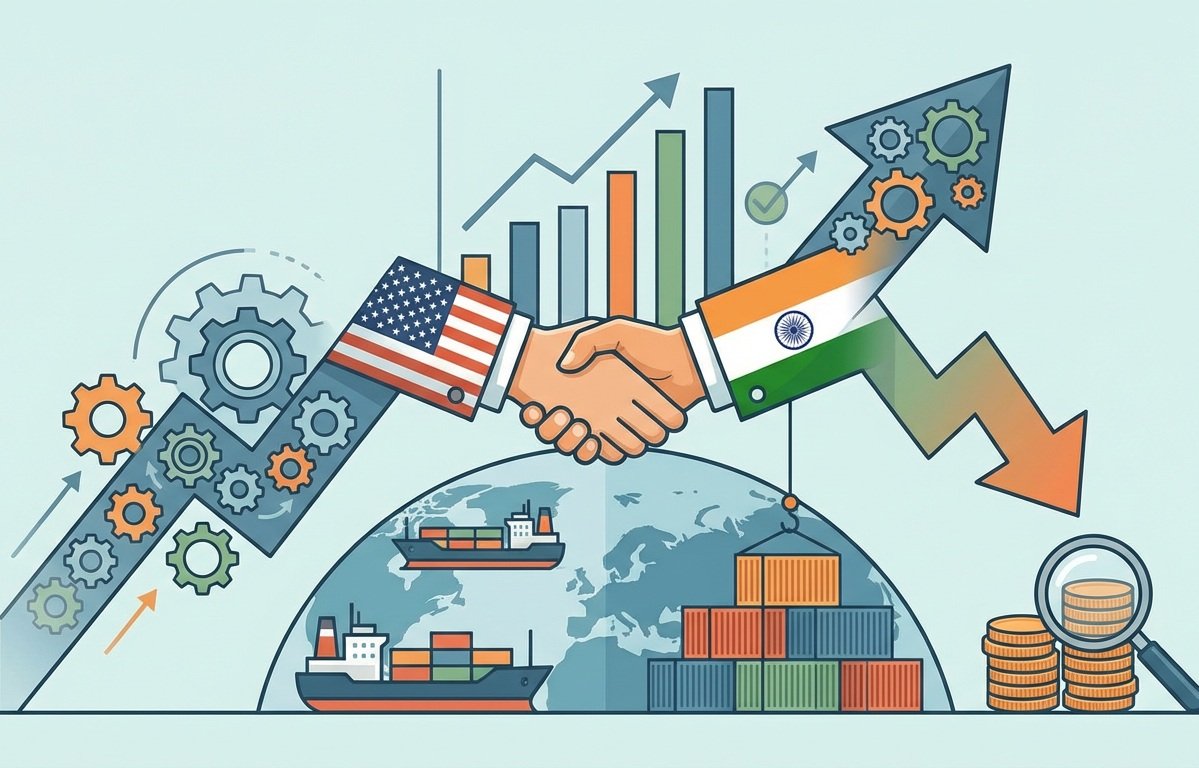
The economic partnership between the United States and India has become one of the most closely watched global trade relationships. As the world’s largest economy and one of the fastest-growing emerging markets continue to deepen economic ties, discussions around a comprehensive US India trade deal have gained renewed interest. With businesses pushing for reduced tariffs, streamlined regulations, and expanded market access, the big question is: Can both nations agree on a trade framework that accelerates growth for both sides?
Why a US-India Trade Deal Matters Now
Trade relations between the two countries have grown significantly over the last decade. The United States is India’s largest trading partner, while India is among the top destinations for U.S. exports. In fiscal year 2024–2025, bilateral trade crossed the $200 billion mark, driven by sectors such as technology, pharmaceuticals, agriculture, defense, and services.
A formal US India trade deal can unlock massive economic potential:
- Lower tariffs that reduce costs for manufacturers and consumers
- Improved market access for U.S. companies in India’s expanding economy
- Stronger supply chains that reduce dependency on China
- Increased foreign investment and technology exchange
However, the path to such a deal is complex and influenced by political, economic, and strategic interests.
The Challenge of High Tariffs
One of the biggest obstacles has been India’s high tariff structure. The U.S. has repeatedly raised concerns about elevated duties on its goods, including agricultural products, electronics, medical devices, and motorcycles. India, however, argues that high tariffs protect domestic industries and support local manufacturing under the “Make in India” initiative.
For example:
- India imposes tariffs of 50–100% on certain agricultural goods.
- Import duties on U.S. tech and electronics remain among the highest in Asia.
- Medical devices shipped from the U.S. face tariff-led price inflation.
A successful US India trade deal would likely require India to gradually lower these tariffs while ensuring local industries are not adversely affected.
U.S. Concerns: Market Access and Services Trade
The United States has long advocated for:
- Greater market access for agricultural products
- Reduced price caps on medical devices
- Stronger intellectual property protection
- Looser restrictions on e-commerce and digital services
Additionally, the U.S. wants stronger commitments from India regarding predictable regulatory environments for businesses. Achieving these concessions is crucial for American investors looking to expand in India’s booming consumer market.
India’s Priorities: Immigration, Tech Access, and Lower U.S. Duties
India, on the other hand, has its own set of priorities:
- Relaxed U.S. visa rules for skilled workers and IT professionals
- Recognition of India as a trusted trade partner
- Reduced tariffs on Indian textiles, steel, and aluminum
- Stronger collaboration in defense and semiconductor manufacturing
India seeks fair treatment under global trade frameworks and reduced dependence on China-dominated supply chains.
Can Tariffs Actually Be Lowered?
The short answer is yes, but it will likely happen in phases.
A potential US India trade deal may include:
- Sector-specific tariff reductions
- Electronics, medical equipment, and defense technology
- Limited agricultural tariff cuts
- Gradual opening of markets to avoid harming Indian farmers
- Mutual tariff rollbacks
- Potential elimination of tariffs imposed during past trade disputes
- Special provisions for digital trade and services
- India’s biggest strength lies in IT and outsourcing
Experts believe that incremental tariff cuts will build confidence and pave the way for a broader trade agreement.
Geopolitics Could Accelerate the Deal
The global political landscape has shifted significantly, and both nations are reassessing their trade priorities. With the U.S. focusing on diversifying supply chains away from China, India has emerged as a natural partner. Strategic cooperation in defense, technology manufacturing, and clean energy has strengthened trust.
This strategic alignment increases the likelihood of a future US India trade deal, particularly in areas that boost economic and security interests for both sides.
What Businesses Can Expect
If tariffs are lowered, several sectors stand to gain:
- Technology and electronics: Cheaper imports and greater innovation
- Pharmaceuticals: Easier export processes for Indian drugs
- Agriculture: Expanded U.S. exports to India’s growing middle class
- Manufacturing: Strengthened supply chains through joint investment
Small and medium enterprises (SMEs) in both countries will also benefit from simplified procedures and reduced costs.
Conclusion
The prospects for a US India trade deal are stronger today than ever before. While political disagreements and tariff barriers remain, mutual economic interests and global strategic shifts make a deal not only possible but beneficial. Lowering tariffs could unlock billions in trade, boost manufacturing, and provide consumers with better-quality products at competitive prices. If both nations take a balanced approach, this partnership could become one of the most powerful engines of global economic growth in the coming decade.