

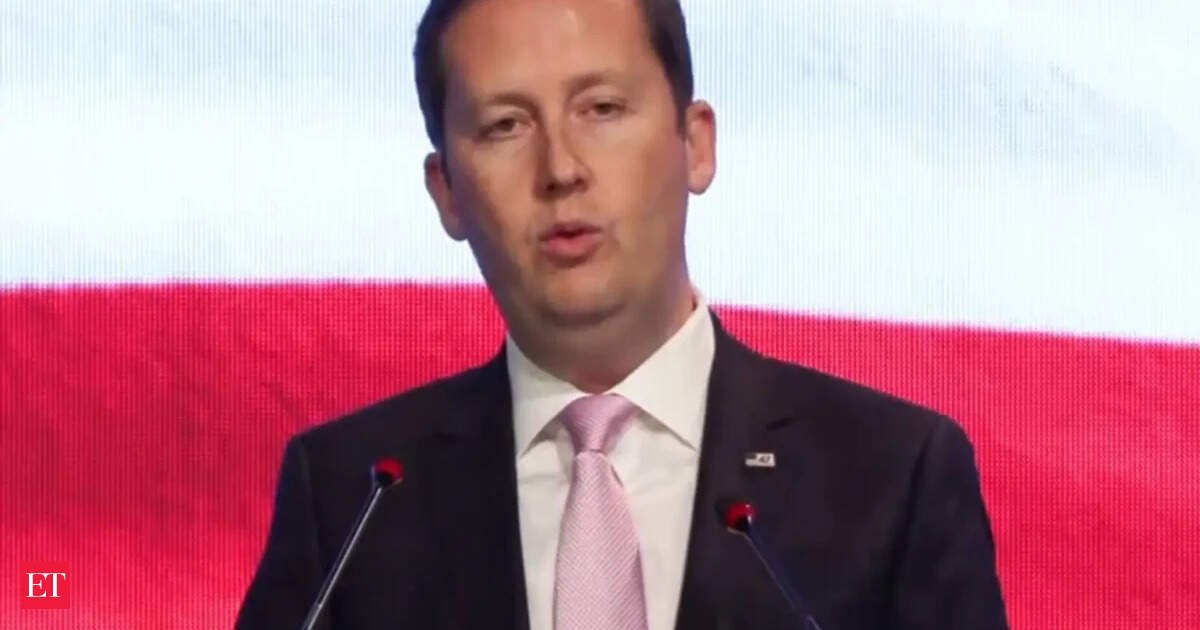
“We are on the last 1%. Ninety-nine percent of this deal is in place. The last 1% we will figure out sooner than later,” Gor said on Wednesday.
Gor said the focus was on identifying outcomes that benefit both countries.
Also Read: India-US trade pact may be weeks away: US Ambassador to India Sergio Gor
“We need to identify win-win situations for both nations,” he said, adding that trade negotiations of this scale are inherently complex.

“These are massive, complex deals that involve thousands of points sometimes,” Gor said.
The ambassador said US President Donald Trump deeply values Washington’s relationship with New Delhi and is keen to strengthen bilateral ties. Recalling a recent conversation between Trump and Prime Minister Narendra Modi, Gor said the US president had praised the Indian leader’s experience and leadership.”Trump called PM Modi three weeks back. Trump ended the call with, ‘I hope Indians know how lucky they are to have you and the amount of experience and stability you bring to India’,” Gor said.
India-US trade pact may be weeks away: US Ambassador to India Sergio Gor
Gor also said that as the two countries deepen economic engagement, businesses would benefit from greater policy certainty.
Also Read: India remains engaged with US on Section 301 proceedings on forced labour issues: Commerce Ministry
“As we continue deepening economic engagement, we need predictable taxation and regulatory framework,” he said.
The ambassador added that India and the United States were also exploring deeper collaboration in strategic sectors such as artificial intelligence and semiconductors.
The remarks come as New Delhi and Washington continue negotiations on a bilateral trade agreement aimed at expanding market access and strengthening economic ties.
Earlier on Wednesday, the commerce ministry said India remained engaged with the United States on ongoing Section 301 proceedings related to forced labour issues, even as trade talks between the two sides continued.
The statement came after the Office of the US Trade Representative proposed additional tariffs on imports from 54 economies, including India, under investigations examining whether countries have adequately prohibited and enforced restrictions on goods produced with forced labour.
Indian officials have previously indicated that securing relief from potential Section 301 actions and obtaining tariff concessions comparable to or better than competing economies remain among the priorities in the ongoing trade negotiations.