

SEATTLE—The Trump administration’s “final decision” banning bison grazing on public land is legally convoluted—and curiously narrow.
Released earlier this month, it targets a single nonprofit, conservation-focused bison operation in a one state, while offering conciliatory assurances to scores of Native American tribes with much larger herds of bison across the West.
The Interior Department described its ban as “responsible stewardship.” A coalition of bison-raising tribes said it was “heartened” by Interior’s concern for their sovereignty in Indian Country. But the bison outfit that is the decision’s only target threatened legal action while complaining of a “politically motivated reversal that threatens decades of established public land management.”
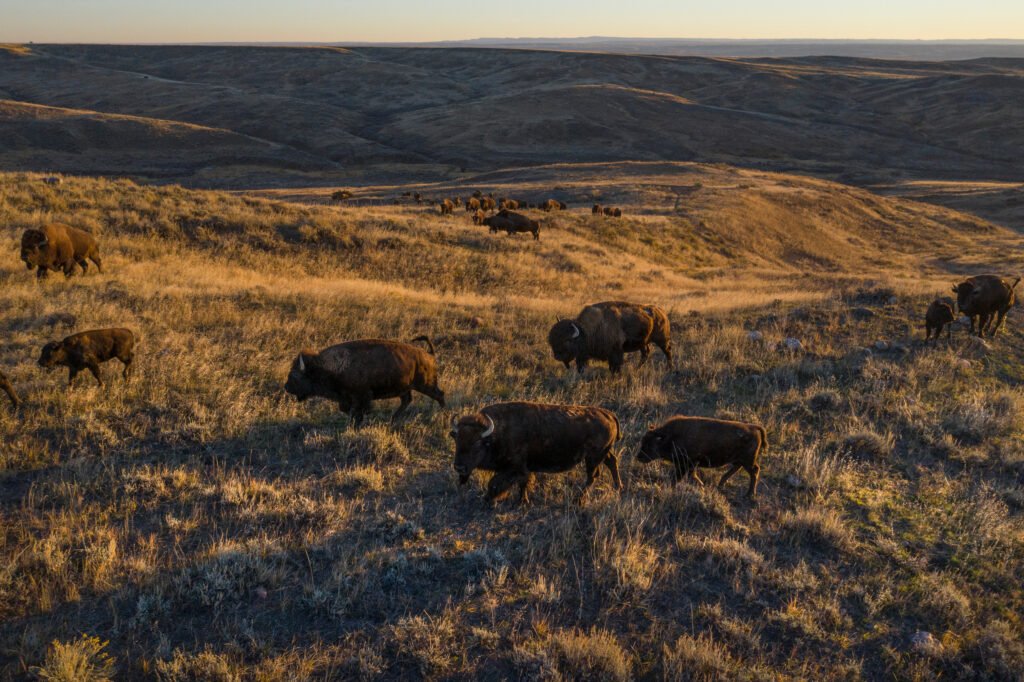
The decision is a bureaucratic rifle shot from Interior Secretary Doug Burgum aimed only at rescinding a four-year-old Biden administration decision to award seven grazing leases on 63,000 acres of federal land in northeastern Montana to American Prairie, a foundation largely funded by wealthy coastal environmentalists. The organization wants to revive the Great Plains with bison, which scientists say are better for a prairie ecosystem than cattle.
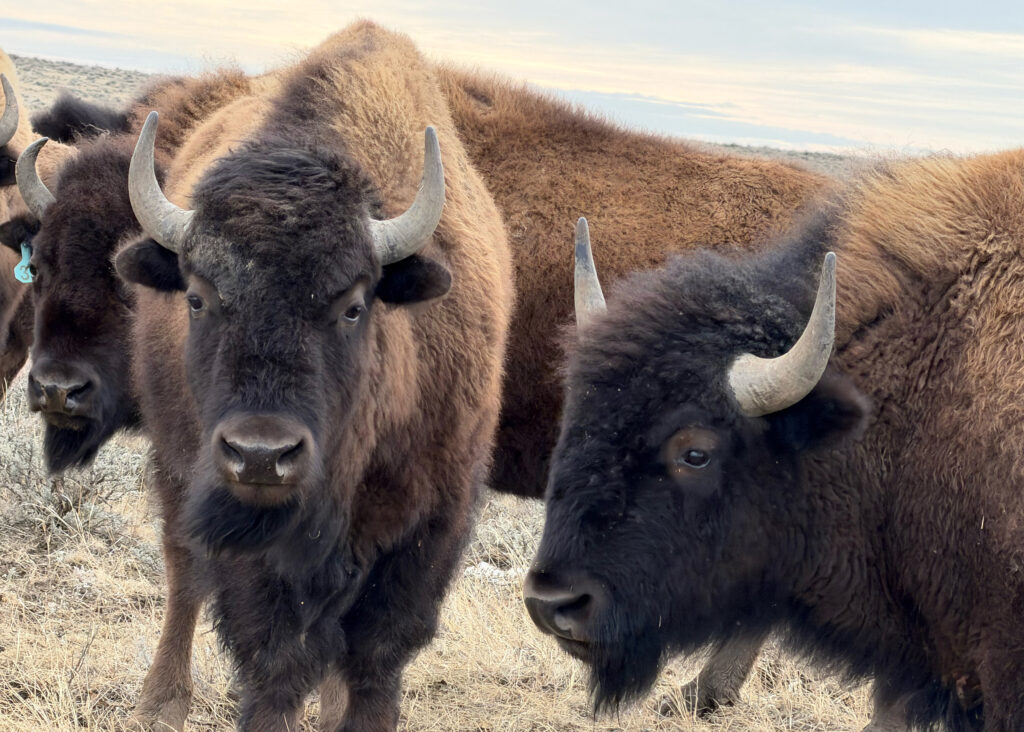
To that end, while greatly irritating Montana cattle ranchers in the past two decades, American Prairie has acquired about 600,000 acres in the northeast part of the state. It buys private farms and ranches and leases adjacent federal land where it now grazes about 950 bison, which are separated by strong fences from thousands of head of cattle that also graze on American Prairie land. In 2022, with approval from the Biden administration and howls of protest from Montana cattlemen and Republican leaders in the state, American Prairie secured seven additional parcels of leased land for its bison to graze from the Bureau of Land Management (BLM), an agency of the Interior Department.
In junking those seven leases this month, Burgum’s decision argues that American Prairie’s bison are not legally eligible to eat grass on BLM land because they are being raised with the wrong intent. To be considered proper livestock under federal grazing law, the decision says, “animals must be intended for use primarily for their meat, milk, or other animal products.” There is “considerable evidence,” the decision adds, that American Prairie “intends their animals for some other purpose, such as conservation.”
American Prairie, however, describes Burgum’s ruling as a politically contorted misinterpretation of the Taylor Grazing Act, a 1934 law that was passed to protect public lands from catastrophic livestock damage like what occurred during the Dust Bowl era.
“It is a textbook example of the government moving the goalposts and changing the rules in the middle of the game to reach a predetermined outcome,” said a statement from Mary Cochenour, a lawyer for American Prairie.
The bison ban dovetails with the Trump administration’s push to zero out Biden-era conservation decisions. A few days after the bison decision, Interior repealed the Public Lands Rule, which put conservation of federal land on an equal footing with mining, oil drilling and logging.
While ordering American Prairie to clear its bison off BLM land, Burgum’s decision goes out of its way to assure more than 50 Native American tribes—now raising tens of thousands of bison on and around reservations—that the Trump administration is not necessarily looking to restrict their herds from federal land.
This story is funded by readers like you.
Our nonprofit newsroom provides award-winning climate coverage free of charge and advertising. We rely on donations from readers like you to keep going. Please donate now to support our work.
The tribes had expressed concern in January, when Burgum first proposed a bison ban, that it could prevent them from obtaining grazing leases for their fast-growing herds on federal land that surrounds and threads through many reservations.
But in its announcement last week, Interior said that “the BLM is not adjudicating the grazing rights of any tribal governments,” adding that the agency will be pleased “to engage with tribes…and encourage and welcome feedback.”
The Coalition of Large Tribes (COLT), a bison-raising group representing more than half the Native American population and about 95 percent of the land in Indian Country, said it found the ruling somewhat encouraging. COLT had harshly criticized the proposed bison ban back in January, calling it an infringement of tribal sovereignty and “DEI for cows,” while filing an official objection with BLM.
“COLT understands that Secretary Burgum and BLM do not intend any harm to tribal herds or management practices,” said a statement last week from J. Garret Renville, chairman of COLT and a leader of the Sisseton Wahpeton Oyate tribe in the Dakotas. “While we are heartened by BLM’s protective language on tribal interests, COLT remains concerned about the potential negative precedential consequences of BLM’s final decision, which we believe is simply wrong on the law.”
The split reaction reflects a national division among tribes in their trust of the Interior Department under Burgum, a multimillionaire former governor of North Dakota. Some North Dakota and Arizona tribes have welcomed his appointment at Interior, which includes the Bureau of Indian Affairs. He’d won trust as governor for supporting tribal sovereignty and for his record of pushing for tax sharing with tribes, as well as for improved law enforcement and emergency response times on reservations.
But the Trump administration’s wholesale reversals of conservation efforts—combined with cuts to the Indian affairs budget and aggressive approval of extractive industry on federal land near reservations—have worried many other tribal leaders.
That skepticism came through in comments on the bison ban from OJ Semans, the executive director of COLT and a member of the Rosebud Sioux in South Dakota.
“This results-oriented decision is really about preserving cheap grazing opportunities for cattle ranchers, who are currently enjoying record prices for beef,” Semans said in a statement. He characterized Burgum’s decision as “dictionary gymnastics to invent definitions for a century-old statute in a one-off decision” that punishes one bison outfit in Montana.
About This Story
Perhaps you noticed: This story, like all the news we publish, is free to read. That’s because Inside Climate News is a 501c3 nonprofit organization. We do not charge a subscription fee, lock our news behind a paywall, or clutter our website with ads. We make our news on climate and the environment freely available to you and anyone who wants it.
That’s not all. We also share our news for free with scores of other media organizations around the country. Many of them can’t afford to do environmental journalism of their own. We’ve built bureaus from coast to coast to report local stories, collaborate with local newsrooms and co-publish articles so that this vital work is shared as widely as possible.
Two of us launched ICN in 2007. Six years later we earned a Pulitzer Prize for National Reporting, and now we run the oldest and largest dedicated climate newsroom in the nation. We tell the story in all its complexity. We hold polluters accountable. We expose environmental injustice. We debunk misinformation. We scrutinize solutions and inspire action.
Donations from readers like you fund every aspect of what we do. If you don’t already, will you support our ongoing work, our reporting on the biggest crisis facing our planet, and help us reach even more readers in more places?
Please take a moment to make a tax-deductible donation. Every one of them makes a difference.
Thank you,
Contributor
Blaine Harden, who writes about the Pacific Northwest for ICN, is the author of six books and was a longtime foreign correspondent for the Washington Post in Africa, Eastern Europe and Northeast Asia, as well as a national correspondent for the New York Times. Born in Moses Lake, Washington, he’s the son of a welder who worked on Grand Coulee Dam and the Hanford nuclear site. Two of Blaine’s books focus on the history of the Pacific Northwest, three are about North Korea, and one is about Africa. He lives in Seattle. His website is Blaineharden.com