

Close Menu

    Subscribe to Updates

    Get the latest news information from worldwide businesses.

    What's Hot

    For People Living With Chronic Conditions, These Retreats Create Instant Community

    July 15, 2026

    Why your cholesterol stays high even on a vegetarian diet

    July 15, 2026

    NASA captured the Black Sea turning brilliant turquoise from space

    July 15, 2026
    Facebook Instagram YouTube LinkedIn X (Twitter)
    Trending
    • For People Living With Chronic Conditions, These Retreats Create Instant Community
    • Why your cholesterol stays high even on a vegetarian diet
    • NASA captured the Black Sea turning brilliant turquoise from space
    • UK MPs debate assisted dying law ahead of key vote
    • USFDA Issues Warning Letter to Clinical Investigator Linked to Alembic Bioequivalence Study
    • Netflix tries to recapture Stranger Things magic with nostalgic re-release
    • Hack suggests AI music generator Suno scraped YouTube for training data
    • India-UK FTA takes off with tariff cuts, London targets $100 bn trade from ‘gold standard’ deal
    Newspublicly
    • About Us
    • Advertise & Partner with us
    • Pitch Your Story
    • Contact Us
    Facebook Instagram LinkedIn X (Twitter)
    Subscribe
    • Home
    • World News
      • Asia
      • India
      • USA
      • UK & Europe
      • Middle East
    • Economy & Business
      • Global Economy
      • Corporate & Industry
      • Finance & Markets
      • Policy & Trade
    • Technology
      • Gadgets & Devices
      • Software & Apps
      • AI & Machine Learning
      • Robotics & Automation
    • Health & Medicine
      • Fitness & Nutrition
      • Research & Innovation
      • Disease & Treatment
      • Doctors, Clinics & Patient Care
    • Travel & Tourism
    • Automobile
      • Electric & Hybrid Vehicles
      • Auto Industry Insights
    • Sports
    • More
      • Education
      • Real Estate
      • Environment & Climate
      • Space & Astronomy
      • War & Conflicts
    Newspublicly
    Home»Health & Medicine»Research & Innovation»This pet gecko could help scientists unlock the secrets of cancer
    Research & Innovation

    This pet gecko could help scientists unlock the secrets of cancer

    AdminBy AdminJuly 15, 2026No Comments4 Mins Read0 Views
    Share
    Facebook Twitter LinkedIn Copy Link WhatsApp


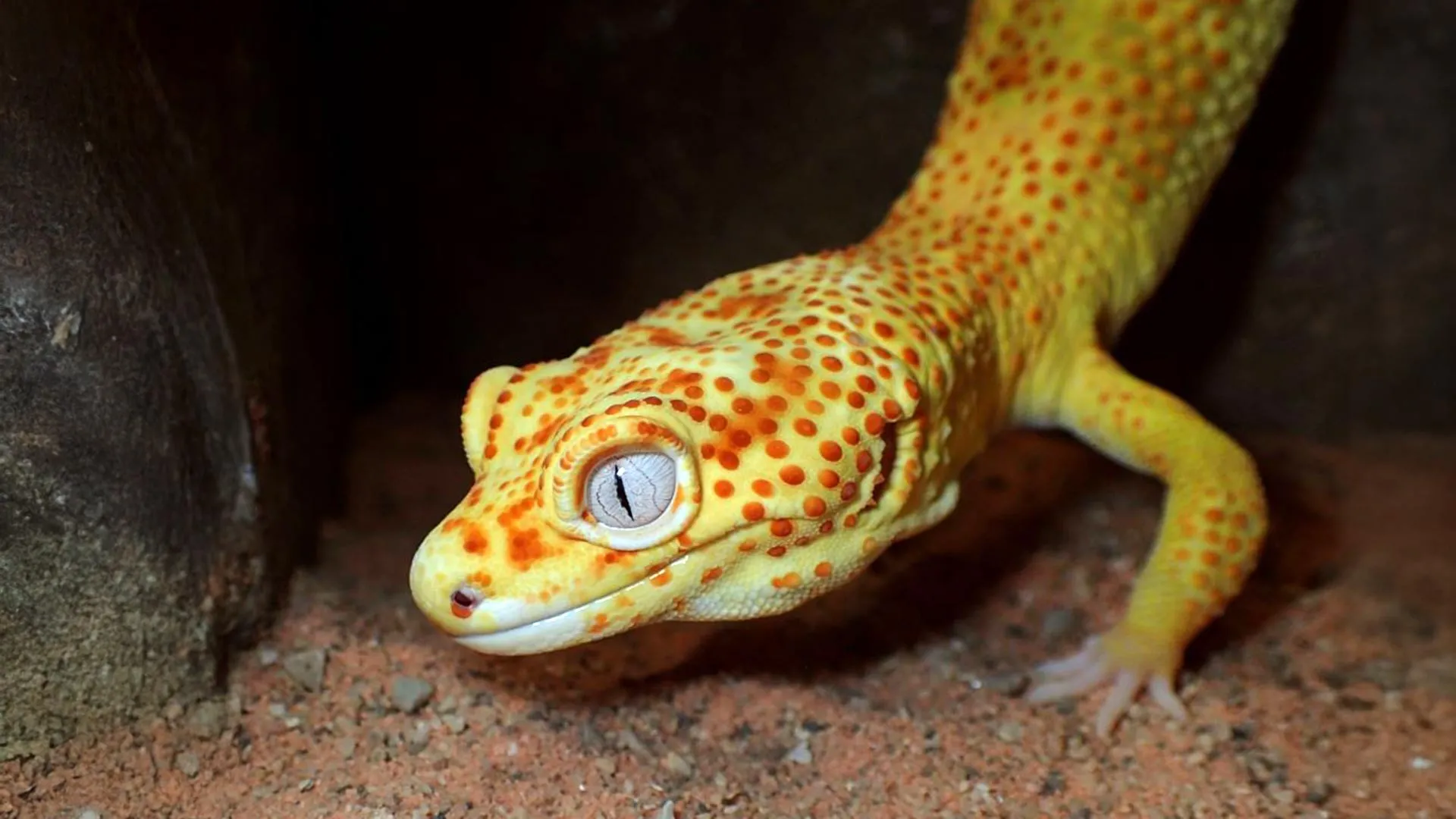
    A colorful pet gecko that is unusually prone to developing cancer could become an important new tool for researchers studying how tumors form and spread. Scientists say the animal’s naturally occurring cancers may offer valuable insights into why some species are highly vulnerable to the disease while others are remarkably resistant.

    The research, led by the University of Nottingham and published in BMC Biology, identified genetic changes linked to tumors in a special variety of leopard gecko. Many of those changes involve the same genes and biological pathways associated with human cancers, raising the possibility that this reptile could help advance cancer research.

    Among reptiles, cancer risk varies widely. Turtles and tortoises rarely develop the disease, but a white and yellow leopard gecko known in the pet trade as the “lemon frost” morph develops aggressive tumors in about 80% of individuals.

    The study was led by Dr. Ylenia Chiari from the School of Life Sciences at the University of Nottingham.

    The international research team also included PhD researcher Brandon Hastings (University of Nottingham), Dr. Scott Glaberman (University of Birmingham), Dr. Tony Gamble (Marquette University), Dr. Robert Ossiboff (University of Florida), and Virginia Gazziero and Dr. Giulio Caravagna (University of Trieste).

    Why Lemon Frost Geckos Develop Cancer

    Dr. Chiari said: “By studying why some animals are so susceptible to cancer while others are remarkably resistant, we hope to uncover the different ways species have evolved to deal with cancer. Specifically, this gecko could become an incredible model in cancer research because tumors appear naturally at a relatively early age. Together, these natural strategies could inspire new ways of preventing, detecting, and treating cancer in humans.”

    The lemon frost morph originated from a spontaneous genetic mutation that appeared during selective breeding in a large colony of leopard geckos. Its striking white and yellow coloration quickly attracted attention in the pet trade, but breeders soon noticed an unfortunate pattern. Many of these geckos developed aggressive tumors that frequently spread to other parts of the body.

    Unlike laboratory mice, which often require researchers to artificially trigger tumor growth, lemon frost geckos develop cancer naturally and at a relatively young age. Because these tumors often metastasize, the reptiles provide scientists with a rare chance to observe how cancer begins, evolves, and spreads under natural conditions.

    DNA Sequencing Reveals Shared Cancer Genes

    To better understand the disease, the researchers used whole genome sequencing to compare tumor samples with healthy tissue from the same geckos. They identified a recurring set of genetic changes across the tumors.

    Many of the altered genes and biological processes have already been linked to cancer in humans and other animals. According to the researchers, these similarities suggest that studying lemon frost geckos could provide insights that extend well beyond reptile biology.

    The findings also underscore the value of broadening the range of animal models used in medical research. Species that naturally develop cancer at high rates, such as the lemon frost gecko, may complement traditional laboratory models and offer new ways to investigate the disease.

    Brandon Hastings, one of the study’s authors, said: “Overall, our paper demonstrates the importance of looking across the tree of life in search of answers that are needed to better understand diseases that can have a profound impact on human life, such as cancer. Methodologically, it also highlights that the variety of genomic software programs developed to analyze human cancers can be adapted to provide meaningful insights in diverse organisms.”

    Biodiversity Could Hold Future Medical Clues

    Dr. Scott Glaberman of the University of Birmingham said the findings highlight the value of studying a wide range of species.

    “We often look inward to solve human problems, but every species has something to teach us. By studying both animals that are vulnerable to cancer and those that resist it, we have far greater power to understand the disease itself. This is one of the many reasons why protecting biodiversity is so important.”


    Source link

    Author

    • Admin

      NewsPublicly.com is News & Articles Platform that creating SEO-focused articles on travel, lifestyle, and digital trends.

    Admin
    • Website

    NewsPublicly.com is News & Articles Platform that creating SEO-focused articles on travel, lifestyle, and digital trends.

    Related Posts

    NASA captured the Black Sea turning brilliant turquoise from space

    July 15, 2026

    The hidden skeleton “gatekeeper” inside brain cells could help fight Alzheimer’s

    July 15, 2026

    Physicists recreate black hole energy extraction in the lab

    July 15, 2026
    Leave A Reply Cancel Reply

    Demo
    Top Posts

    The Blue Moon rises on May 30— Where and when to see the second full moon of the month

    May 30, 202640 Views

    New SOCOM rifle allows barrel swapping and cartridge changes

    June 1, 202633 Views

    “Inside Gemini Robotics 1.5: How Robots Learn to Reason & Act

    November 22, 202526 Views

    525 pounds of cocaine seized after Nebraska K9 alerts troopers on I-80

    May 28, 202624 Views
    Don't Miss

    For People Living With Chronic Conditions, These Retreats Create Instant Community

    July 15, 20263 Mins Read0 Views

    Girls with Guts also offers free “newbie” retreats that focus on relationship-building among women who…

    Why your cholesterol stays high even on a vegetarian diet

    July 15, 2026

    NASA captured the Black Sea turning brilliant turquoise from space

    July 15, 2026

    UK MPs debate assisted dying law ahead of key vote

    July 15, 2026
    Stay In Touch
    • Facebook
    • Twitter
    • Instagram
    • YouTube
    • LinkedIn
    • WhatsApp

    Subscribe to Updates

    Get the latest creative news from SmartMag about art & design.

    Demo
    NEWSPUBLICLY
    Facebook X (Twitter) Instagram LinkedIn

    Home

    • About Us
    • Leadership
    • Advertise & Partner With Us
    • Pitch Your Story
    • Media Kit & Pricing
    • Career
    • FAQs

    Guidelines

    • Editorial & Submission
    • Partnership
    • Advertising & Sponsor
    • Intellectual Property Policy
    • Community & Comment
    • Security & Data Protection
    • Send Your Opinion

    Quick Links

    • Cookie Policy
    • Payment & Billing Terms
    • Refund & Cancellation
    • Copyright Policy
    • Complaint & Support
    • Sitemap
    • Contact Us

    Subscribe Us

    Get the latest news and updates!

    Copyright © 2026 Newspublicly (DIGITALIX COMMUNICATION). All Rights Reserved.
    • Privacy Policy
    • Terms of Use
    • Disclaimer