

Close Menu

    Subscribe to Updates

    Get the latest news information from worldwide businesses.

    What's Hot

    BSNL’s corner office goes open market as Centre seeks new CMD

    June 24, 2026

    Cerebras’s stock sinks below IPO price in a major blow to early investors

    June 24, 2026

    NEET leak shouldn’t have happened, but Rahul exploited anxiety: Dharmendra Pradhan | India News

    June 24, 2026
    Facebook Instagram YouTube LinkedIn X (Twitter)
    Trending
    • BSNL’s corner office goes open market as Centre seeks new CMD
    • Cerebras’s stock sinks below IPO price in a major blow to early investors
    • NEET leak shouldn’t have happened, but Rahul exploited anxiety: Dharmendra Pradhan | India News
    • Hospital leaders say surgeon slept mid-operation before whistleblower fallout
    • NASA’s aging infrastructure can’t handle Artemis launches without $1 billion in upgrades, watchdog warns
    • Karolina Muchova vs Clara Tauson preview, head-to-head, odds, prediction and betting tips
    • America’s most affordable new car is THIS electric pickup, but Ford is catching up
    • The 26 Best Hotels in Charleston, According to a Local Who's Stayed in Them All
    Newspublicly
    • About Us
    • Advertise & Partner with us
    • Pitch Your Story
    • Contact Us
    Facebook Instagram LinkedIn X (Twitter)
    Subscribe
    • Home
    • World News
      • Asia
      • India
      • USA
      • UK & Europe
      • Middle East
    • Economy & Business
      • Global Economy
      • Corporate & Industry
      • Finance & Markets
      • Policy & Trade
    • Technology
      • Gadgets & Devices
      • Software & Apps
      • AI & Machine Learning
      • Robotics & Automation
    • Health & Medicine
      • Fitness & Nutrition
      • Research & Innovation
      • Disease & Treatment
      • Doctors, Clinics & Patient Care
    • Travel & Tourism
    • Automobile
      • Electric & Hybrid Vehicles
      • Auto Industry Insights
    • Sports
    • More
      • Education
      • Real Estate
      • Environment & Climate
      • Space & Astronomy
      • War & Conflicts
    Newspublicly
    Home»More»Space & Astronomy»This is the largest and most detailed image of our Milky Way — with over 60 million stars and 50 exoplanet systems
    Space & Astronomy

    This is the largest and most detailed image of our Milky Way — with over 60 million stars and 50 exoplanet systems

    AdminBy AdminJune 24, 2026No Comments5 Mins Read0 Views
    Share
    Facebook Twitter LinkedIn Copy Link WhatsApp


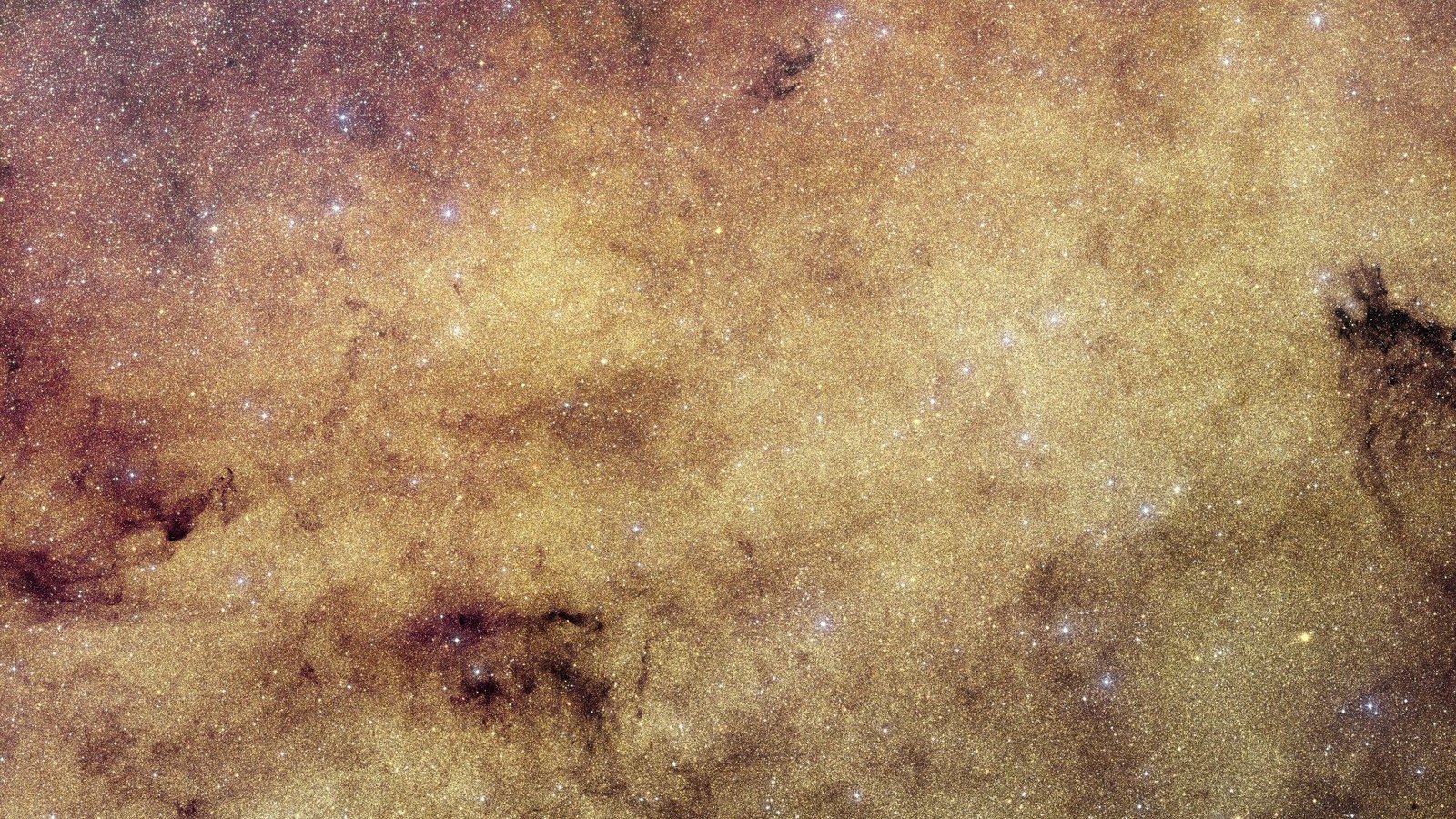
    In 2025, the European Space Agency dark universe detective spacecraft Euclid turned its attention to the heart of the Milky Way for just 26 hours. In just over one day, Euclid was able to create the largest and most detailed photo of this region of our galaxy ever made.

    The image, packed with 60 million stars, could help scientists hunt for extrasolar planets, exoplanets, in this region known as the galactic bulge.

    Euclid is designed to study dark energy, the mysterious force that drives the accelerating expansion of the universe, by studying distant galaxies. That means the space telescope is powerful enough to distinguish individual stars in the central bulge of the Milky Way. Other telescopes fail to do this because they are too blinded by the densely packed stars in this region.

    a dense field of stars

    The largest high-resolution photo ever made of our Milky Way galaxy’s center in visible light. It was taken on March 23, 2025 by the European Space Agency’s Euclid space telescope. (Image credit: ESA/Euclid/Euclid Consortium/NASA, CFHT, image processing by J.-C. Cuillandre and E. Bertin (CEA Paris-Saclay))

    Euclid was requested to monitor the central bulge of the Milky Way to assist astronomers in the hunt for exoplanets because this is the perfect region for so-called “microlensing” events to occur.

    “To catch microlensing, you need to observe parts of the sky that are crowded with stars, such as close to the center of our galaxy,” team leader Jean-Philippe Beaulieu of the Institut d’Astrophysique de Paris in France said in a statement.

    Microlensing is a weak form of gravitational lensing that occurs when objects with mass cause the very fabric of space to warp. When light from a background source passes through this warping of space, its path is curved. This can be used to study the background source; for example, scientists have used it to great effect with the James Webb Space Telescope (JWST) to study some of the most distant and early galaxies. However, the curvature of light from background sources can also be used to detect faint objects like planets.


    You may like

    The location of Euclid’s new image of the galactic bulge is visible on Gaia’s map of the entire sky.

    The location of Euclid’s new image of the galactic bulge is visible on Gaia’s map of the entire sky. (Image credit: ESA/Euclid/Euclid Consortium/NASA, CFHT, ESA/Gaia/DPAC,image processing by J.-C. Cuillandre and E. Bertin (CEA Paris-Saclay))

    Spotting planets using microlensing requires one star to pass in front of another and act as a gravitational lens. The presence of a planet causes a tiny perturbation in the lensing of light from the background star. It’s a small effect, but one that has been used very effectively in the detection of exoplanets.

    “During the last twenty years, almost 300 exoplanets have been discovered using this technique, all with ground-based telescopes and all towards the center of our galaxy,” Beaulieu said. “This image from Euclid includes 51 known planetary systems – and it will assist in studying many more that will be found.”

    This infographic places Euclid’s galactic bulge survey in the broader context of the Milky Way’s structure, using data from ESA’s Gaia mission.

    This infographic places Euclid’s galactic bulge survey in the broader context of the Milky Way’s structure, using data from ESA’s Gaia mission. (Image credit: Euclid images: ESA/Euclid/Euclid Consortium/NASA, CFHT, image processing by J.-C. Cuillandre and E. Bertin (CEA Paris-Saclay); Milky Way artist impressions: ESA/Gaia/DPAC, Stefan Payne-Wardenaar))

    Despite Euclid’s study of the central bulge pointing the way forward in observing new microlensing events, there are no such events in the data from the ESA spacecraft. That is because detecting such events takes around 20 days.

    Instead, it will be up to telescopes like the forthcoming Nancy Grace Roman Space Telescope to observe this region for longer periods and compare with this day’s worth of Euclid data to find microlensing events.

    “In 24 hours, Euclid has already captured the stars involved in all the future microlensing events that the Roman space telescope will detect, but before the stars and planets involved have aligned,” team member Natalia Rektsini of the Institut d’Astrophysique de Paris said.

    Space

    “This means that anyone who detects a microlensing event in the same region, for example, with Roman, will be able from now on to use Euclid data as a time reference in the past and see how the stars looked before they overlapped. Since Euclid can clearly separate individual stars, one can then measure how fast they move over time and use that information to confirm the existence of a planet and determine its mass. This would not be possible with data from one point in time.”

    A diagram shows how microlensing can be used to detect planets

    A diagram shows how microlensing can be used to detect planets (Image credit: ESA)

    One reason this is so exciting to exoplanet hunters is that other techniques used to spot these distant worlds tend to excel at detecting hot and massive planets close to their host stars.

    Microlensing, however, can be used to detect more diminutive planets much farther from their host stars and with chillier temperatures. That means it could be used to detect ice giants like Uranus and Neptune in wide orbits around central bulge stars.

    “This result shows what a relatively small, dedicated team can achieve within a large international mission,” says Valeria Pettorino, Euclid Project Scientist at ESA.

    “That’s why this Euclid data will be a time reference for past and future missions and enable studies of exoplanets and their masses. This data can also be used for other scientific applications, from brown dwarfs and binary stars to stellar motions and dust across our galaxy.”


    Source link

    Author

    • Admin

      NewsPublicly.com is News & Articles Platform that creating SEO-focused articles on travel, lifestyle, and digital trends.

    Admin
    • Website

    NewsPublicly.com is News & Articles Platform that creating SEO-focused articles on travel, lifestyle, and digital trends.

    Related Posts

    NASA’s aging infrastructure can’t handle Artemis launches without $1 billion in upgrades, watchdog warns

    June 24, 2026

    ‘Spider-Noir’ composers Kris Bowers and Michael Dean Parsons inject noir style into the superhero multiverse (interview)

    June 24, 2026

    Blast off with these hot sci-fi & space documentary streaming deals

    June 24, 2026
    Leave A Reply Cancel Reply

    Demo
    Top Posts

    The Blue Moon rises on May 30— Where and when to see the second full moon of the month

    May 30, 202640 Views

    New SOCOM rifle allows barrel swapping and cartridge changes

    June 1, 202633 Views

    “Inside Gemini Robotics 1.5: How Robots Learn to Reason & Act

    November 22, 202525 Views

    525 pounds of cocaine seized after Nebraska K9 alerts troopers on I-80

    May 28, 202624 Views
    Don't Miss

    BSNL’s corner office goes open market as Centre seeks new CMD

    June 24, 20262 Mins Read0 Views

    New Delhi: The government has set up a search and selection committee for the appointment…

    Cerebras’s stock sinks below IPO price in a major blow to early investors

    June 24, 2026

    NEET leak shouldn’t have happened, but Rahul exploited anxiety: Dharmendra Pradhan | India News

    June 24, 2026

    Hospital leaders say surgeon slept mid-operation before whistleblower fallout

    June 24, 2026
    Stay In Touch
    • Facebook
    • Twitter
    • Instagram
    • YouTube
    • LinkedIn
    • WhatsApp

    Subscribe to Updates

    Get the latest creative news from SmartMag about art & design.

    Demo
    NEWSPUBLICLY
    Facebook X (Twitter) Instagram LinkedIn

    Home

    • About Us
    • Leadership
    • Advertise & Partner With Us
    • Pitch Your Story
    • Media Kit & Pricing
    • Career
    • FAQs

    Guidelines

    • Editorial & Submission
    • Partnership
    • Advertising & Sponsor
    • Intellectual Property Policy
    • Community & Comment
    • Security & Data Protection
    • Send Your Opinion

    Quick Links

    • Cookie Policy
    • Payment & Billing Terms
    • Refund & Cancellation
    • Copyright Policy
    • Complaint & Support
    • Sitemap
    • Contact Us

    Subscribe Us

    Get the latest news and updates!

    Copyright © 2026 Newspublicly (DIGITALIX COMMUNICATION). All Rights Reserved.
    • Privacy Policy
    • Terms of Use
    • Disclaimer