

4 min readNew DelhiUpdated: Jul 23, 2026 09:36 PM IST
A day after a policeman on Amarnath Yatra duty was shot dead in Anantnag – the first terror attack in Kashmir since the killing of 26 people, including 25 tourists, in Pahalgam last year — External Affairs minister S Jaishankar said on Thursday that there must be “zero tolerance for terrorism”, adding such acts will have consequences.
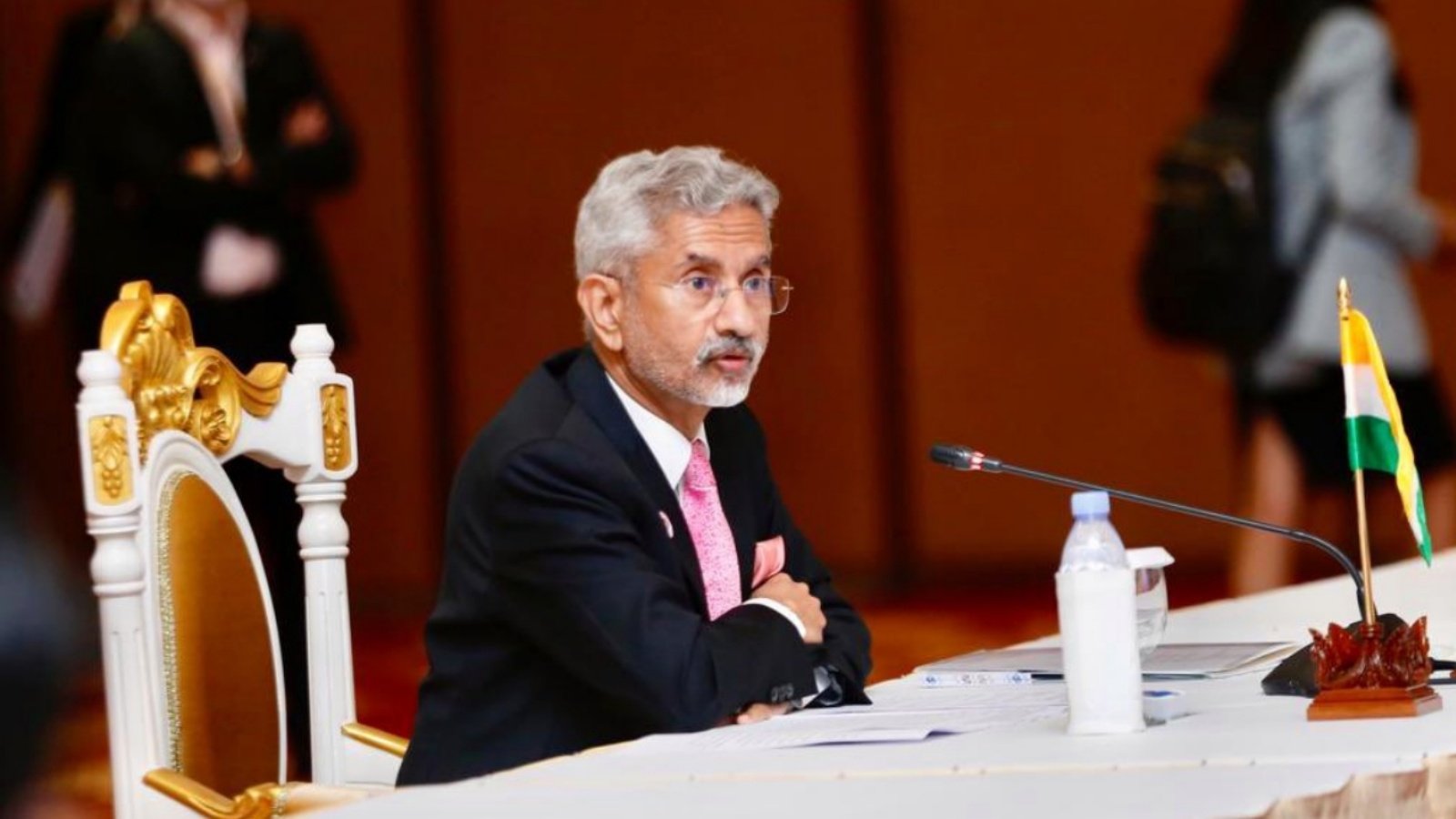
“There must be zero tolerance for terrorism. Nor should there be any doubt that acts of terrorism will have consequences,” Jaishankar said, while speaking at the 33rd ASEAN Regional Forum (ARF) Ministerial Meeting in Manila.

On Wednesday, Head Constable Ashiq Hussain Qureshi, posted with the Indian Reserve Police and attached with the Special Operations Group, was shot dead near Lalchowk in the South Kashmir district, prompting a massive crackdown by security forces.
Jaishankar also said that “attacks on maritime shipping and civilian infrastructure are unacceptable, and commerce through international waterways should remain safe and unimpeded”. These comments came in the backdrop of the attacks on ships amid the war between US-Israel and Iran in which Indian seafarers also lost their lives. Most recently, Russian strikes on a ship in Ukraine’s vicinity killed Indian sailors.
The External Affairs Minister also flagged China’s “assertive” behaviour in the Indo-Pacific and its territorial claims in the South China Sea.
“On South China Sea, (we) underlined that we look forward to a substantive, effective and legally binding CoC (Code of Conduct) fully compliant with UNCLOS 1982 that does not prejudice the legitimate rights of all users,” he said.
The United Nations Convention on Laws of the Sea (UNCLOS) of 1982 governs the rights of countries regarding marine resources.
Story continues below this ad
He said that he also “recognised the importance of ARF (ASEAN Regional Forum) for discussing political and security issues in the Indo-Pacific, especially in these complex times”.
On maritime security, he “shared that the information Fusion Centre in India, the Indo-Pacific Maritime Domain Awareness initiative, deployment of Indian forces from the North Arabian Sea to the Western Pacific, are making a valuable contribution to counter piracy, trafficking and narcotics trade as well as secure maritime commerce”.
India promotes a collaborative approach to disaster relief, sharing best practices, developing common SOPs and undertaking real-time and table top exercises, he said.
Stating that India “advocates for the Coalition for Disaster Resilient Infrastructure, regularly deploys field hospitals, provides search and rescue, sends relief materials and medical supplies”, Jaishankar said that the country has undertaken rehabilitation recently – ranging from the cyclone in Sri Lanka, the Philippines and Jamaica to earthquakes in Myanmar, Venezuela and Afghanistan.
Story continues below this ad
He “stressed the need for the international community to be on guard against those who undermine non-proliferation and disarmament”.
On AI and its use, he said that India “advocated a responsible and human-centric approach on AI and deeper cooperation on cybercrimes and other issues”.
On the margins of the ASEAN and East Asia meetings, he met his Omani counterpart Sayyid Badr bin Hamad Al Busaidi and discussed the West Asia crisis as well as the evolving regional landscape.
In Manila, Jaishankar met with the foreign ministers of The Netherlands, Papua New Guinea and Brunei, as well as other leaders on the sidelines of meetings related to the Association of Southeast Asian Nations (ASEAN).
Story continues below this ad
The minister called on The Philippines President Ferdinand R Marcos Jr. besides meeting UK Foreign Secretary Edward Miliband.
“First meeting with Foreign Secretary @Ed_Miliband of the UK #Manila #Philippines. Congratulated him on his appointment. Agreed to build on the positive momentum generated through the recent FTA implementation, and work towards strengthening our Comprehensive Strategic Partnership,” he said on X.
In addition, Jaishankar met United Nations Relief and Works Agency for Palestine Refugees in the Near East (UNRWA) interim Commissioner-General Christian Saunders, with whom he discussed India’s contributions and commitments at the recent Donors Conference in health and capacity building.
Jaishankar also met European Commission Vice President Kaja Kallas, Sri Lanka Foreign Minister Vijitha Herath and Bangladesh Foreign Minister Khalilur Rahman on the sidelines of meetings related to the ASEAN.
ASEAN is considered one of the most influential groupings in the region, and India and several other countries, including the US, China, Japan and Australia, are its dialogue partners.