

I’m going to say something that may make me sound old, but I just don’t care. E-bike throttles used to be better in the old days.
Not every e-bike throttle, of course. There have always been good ones and bad ones. But if you’ve been riding e-bikes for a decade or more, you’ve probably noticed the same trend I have.
Over the last five to ten years or so, the industry has largely abandoned right-side half-twist throttles in favor of left-side thumb throttles. And that’s a meaningful downgrade, especially in North America, where the throttle reigns supreme in the e-bike world.
I’m not talking about opinions. There are lots of opinions on many things regarding e-bikes, and they’re pretty much all valid. I respect everyone’s opinion. And if your opinion is that you prefer a left-side thumb throttle, then that’s fine – more power to you!
But objectively speaking, biomechanically speaking, as a human being speaking, right-side half-twist throttles are simply, objectively, and undeniably the functionally better choice for an e-bike throttle.
And the kicker here is that the shift away from them didn’t happen for reasons of malice or cost savings or really anything I can fault the e-bike companies for. Ultimately, the worst part of all of this is that the trend happened for mostly understandable reasons. I can’t fault them, but I can resent them nonetheless.
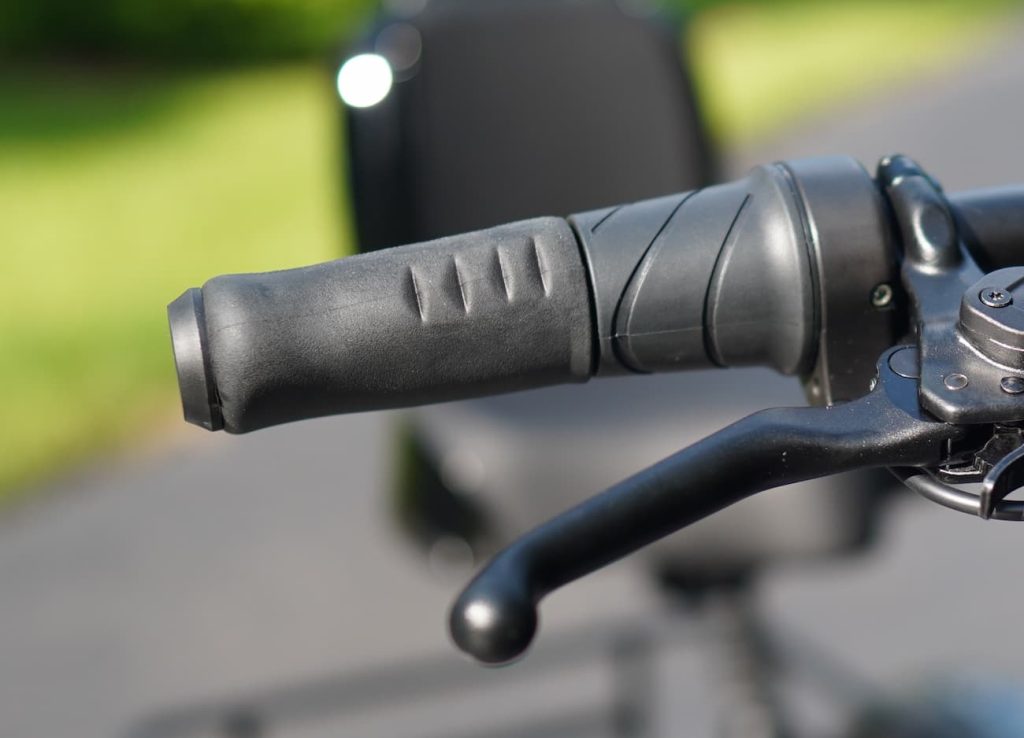
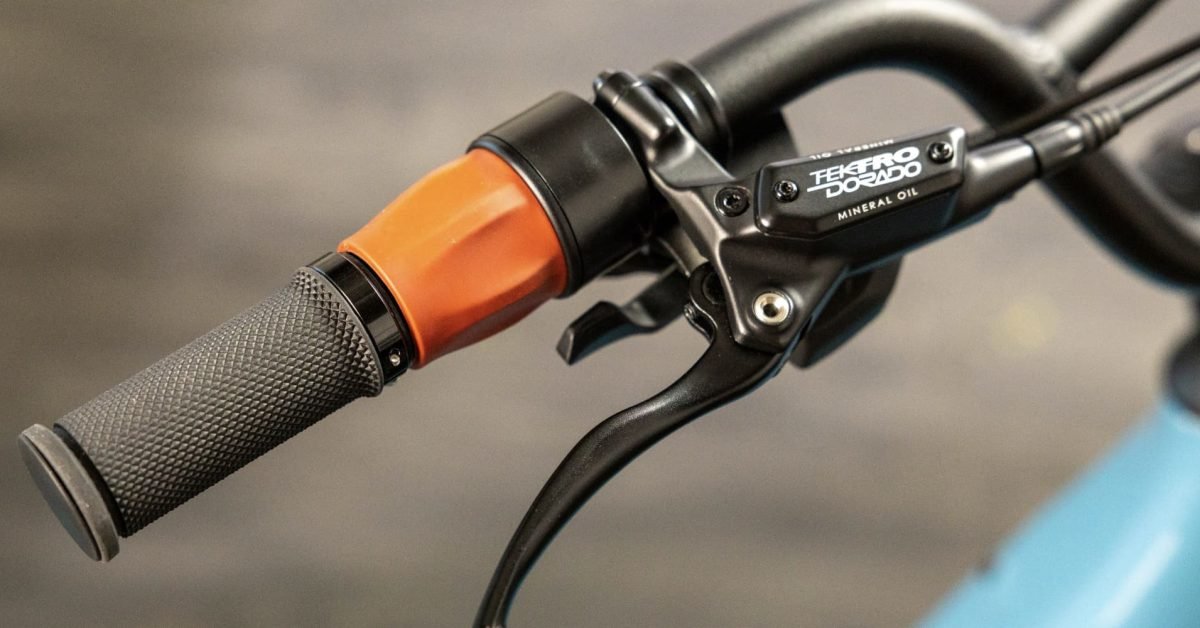
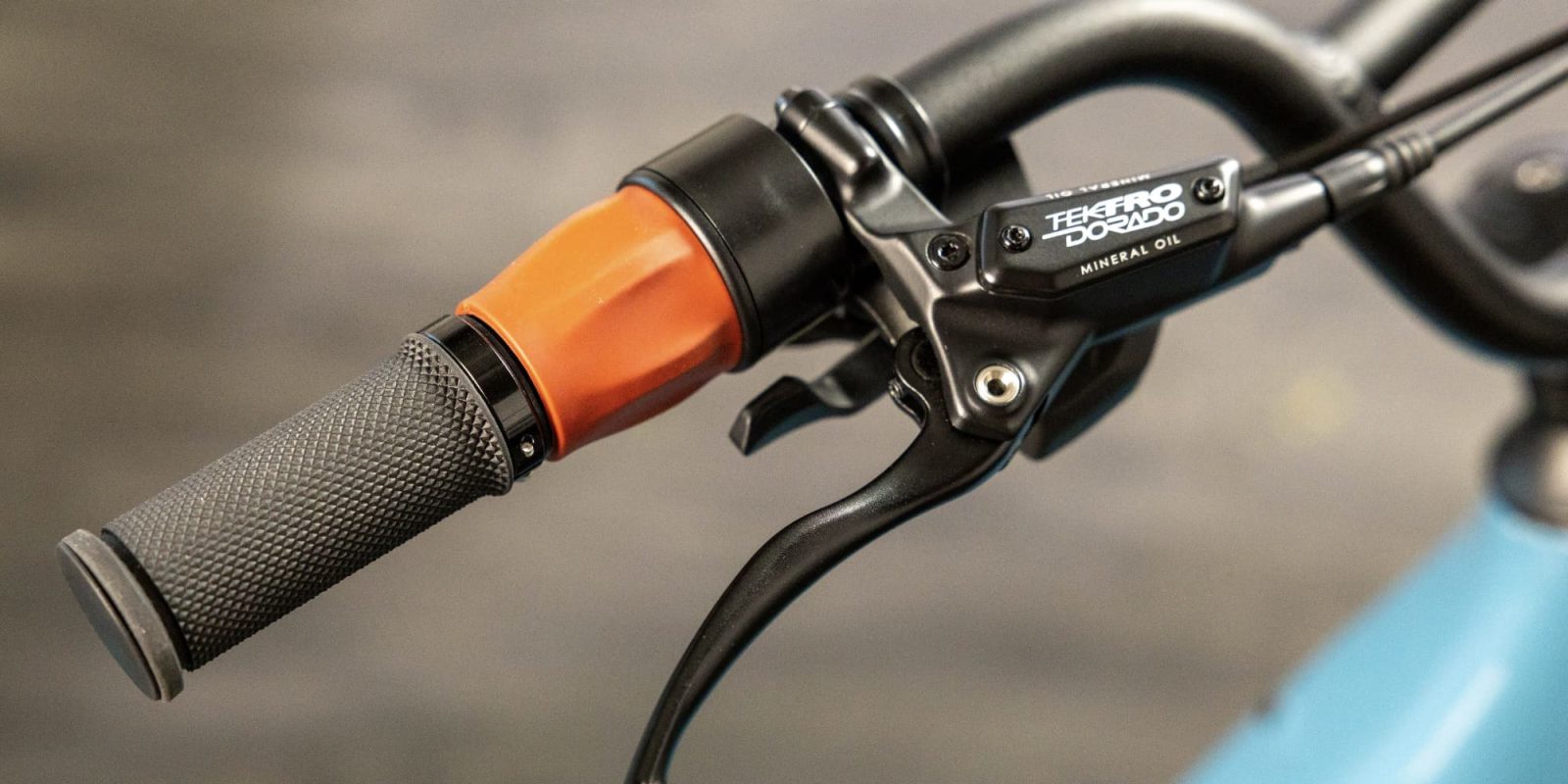
Years ago, half-twist throttles were common on e-bikes, installed on everything from the low power to high power ends of the spectrum. They worked much like a motorcycle throttle, but covered only half of the grip, unlike a motorcycle throttle, which uses the entire grip length. You simply rotated the inner portion of the grip towards you to apply power. It felt natural, gave excellent control, and was comfortable to use for extended periods.
When used properly, it caused no hand or wrist fatigue because the twisting motion was only applied for a second or two while actively accelerating. Then the rider simply gripped the twisting half and the stationary half of the handlebar end together in their palm, using the same muscles they were already using to hold on to the bike to maintain throttle. In essence, it was a throttle and a cruise control device at the same time – a thing of beauty. It also kept all five fingers securely on the handlebar end, giving the rider maximum control and security on bumpy terrain.
If you wanted to cruise along on throttle power for a mile or two, a half-twist throttle was hard to beat. If you wanted slight modifications for flowing with traffic, a half-twist throttle was easy to modulate precisely. If you didn’t want to use it all, it didn’t get in the way because it was simply integrated into the grip.
It was truly an engineering marvel.
But then something changed.
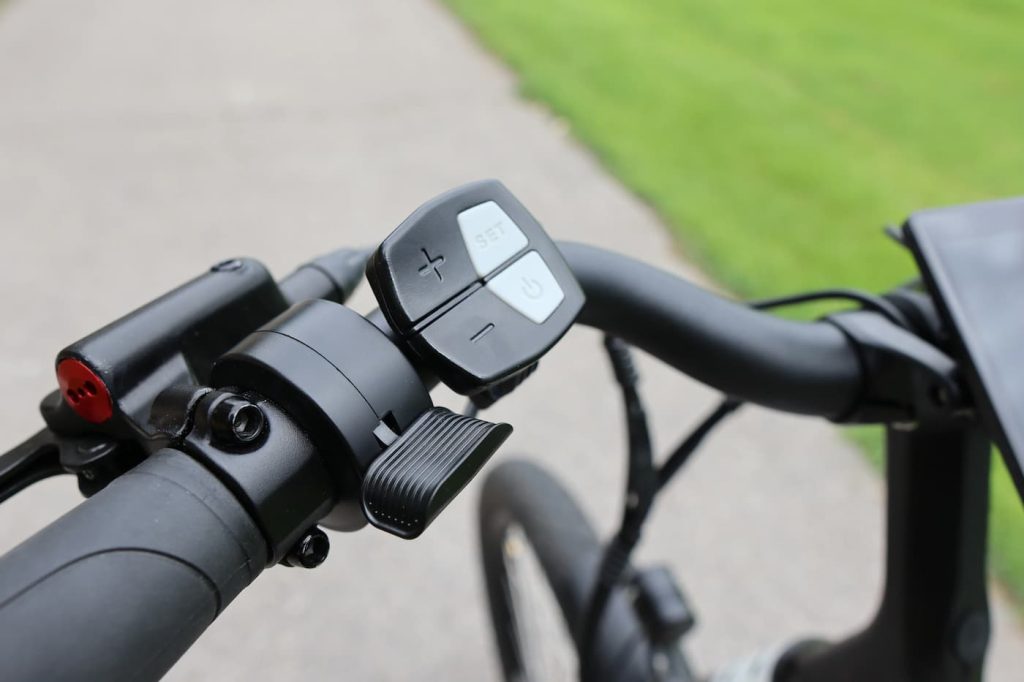
Today’s e-bikes almost universally use thumb throttles, and they’re usually mounted on the left side of the handlebars. Thumb throttles have a protuberance, usually a small paddle, that must be activated by pressing down with the thumb and holding it in place.
So what happened?
Part of it comes down to safety, and the fact that e-bike designers had to design for the least competent of riders to help them avoid hurting themselves.
To be fair, the old-school half-twist throttle was already designed with safety in mind, leaving the outer half of the grip stationary so that accidentally bumping the handlebar against a wall or gate wouldn’t inadvertently activate the throttle. But it didn’t stop new riders from unintentionally going whiskey throttle, demonstrated by the guy attempting to ride a Sur Ron e-moto in the video below.
Whiskey throttle is a phenomenon where a novice rider gets surprised by the power of a bike or motorcycle’s acceleration and counterintuitively applies more throttle instead of less. It happens because a rider feels a sudden surge of power, freaks out, and clamps down hard on the bars. But if the handlebar is a twist or half-twist throttle, then that clamping down effect means that they’re applying the same or more power. The more they freak out and hold on to the bars for dear life, the more throttle they add. In that situation, the rider is busy soiling their underwear and not thinking, “perhaps I should loosen my grip, which is the only thing holding me onto this rocket ship right now.”
Few people will actually experience this edge case, and most would know that the answer to unwanted acceleration is to stop using the accelerator, but e-bike designers have to design for the lowest common denominator. It’s a bit like that Yellowstone park ranger who once summed up the difficulty of creating effective bear-proof garbage cans, noting the significant overlap between the reasoning ability of the most intelligent bears and the least intelligent humans.
Even ignoring that specific scenario, manufacturers discovered that riders have an uncanny ability to accidentally twist a throttle at exactly the wrong moment. Loading a bike into a vehicle, walking it through a garage, mounting it awkwardly, or moving it around a crowded bike rack all create opportunities for unintended acceleration when someone is gripping the handlebars and the grip itself is the throttle.
A thumb throttle largely solves that problem. You have to deliberately reach for it to press it. It’s harder to activate by accident and easier for companies to defend from a liability standpoint. It’s not impossible to brush against it, but you’re not actively holding it while pushing a bike around in the same way you are for a handlebar end.
Fair enough.
But another factor is simply handlebar real estate.
Modern e-bike handlebars have become crowded places. Between displays, control pads, brake levers, bells, lights, turn signal switches, dropper post buttons, and gear shifters, there’s a lot happening up there.
The right side of the bar is especially crowded because that’s where the shifter lives. Few e-bikes have multiple chainrings, meaning all the shifting happens on the rear wheel, which is traditionally controlled by a right-side handlebar shifter.
As e-bikes became more sophisticated and more heavily integrated with mainstream bicycle components from companies like Shimano and SRAM, it became increasingly difficult to fit the thumb throttles that the industry was adopting into the right side of the handlebars. The thumb lever would usually conflict with the shifter levers. That’s a lot of levers in one place.
The easiest solution was to move the throttle to the left side.

Problem solved.
Or perhaps more accurately, problem exchanged. Because, while thumb throttles may be safer and easier to package, they are often noticeably worse to ride with.
Long rides using a thumb throttle can leave your thumb fatigued. And since most people are right-handed, their left hand has spent a lifetime getting less of a workout, so the left thumb fatigues even more quickly.
Maintaining a steady throttle position is also more difficult. Unlike a half-twist throttle, which by its very nature maintains perfect position because it is gripped in a stationary position alongside the non-spinning half of the grip, a thumb throttle is free to bounce and jostle around. This is especially true when riders aren’t on perfectly smooth paths. Any rock, pot hole, speed bump, or sidewalk crack will send the bars bouncing up and down, which sends the rider’s hands and thumbs bouncing up and down, which sends that thumb throttle bouncing up and down. Imagine trying to precisely adjust the volume knob in your car while riding over a bunch of speed bumps… that’s what a thumb throttle is asking us to do.
It’s one of those situations where the engineering solution makes perfect sense while simultaneously making the user experience a little worse.
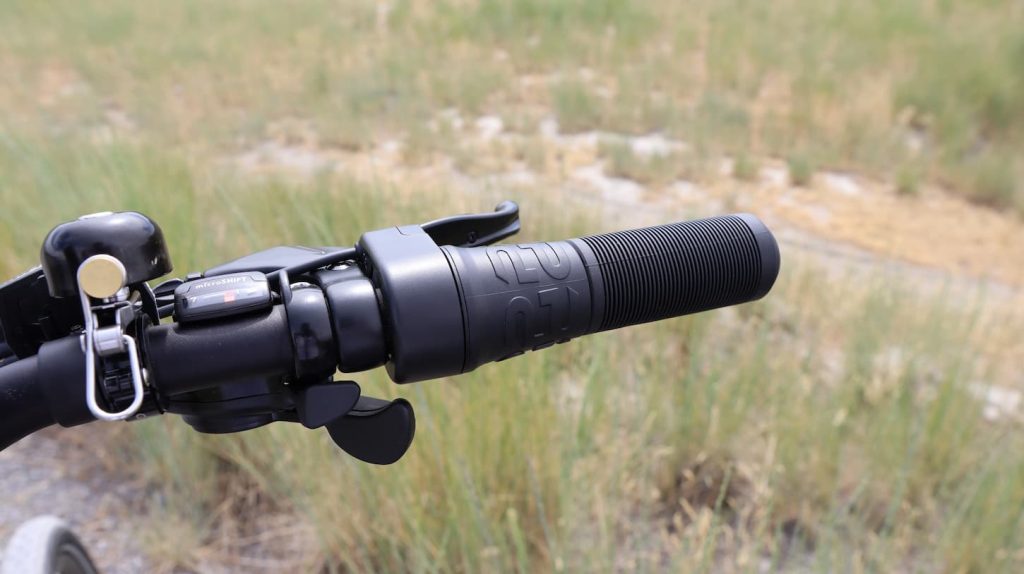
What’s especially interesting is that some of the most beloved enthusiast-oriented e-bikes have resisted the trend.
If you look at e-bikes that are designed more for performance riding, such as models from companies like Juiced (the original) and Ariel Rider, you’ll find half-twist throttles on many of their higher-performance models. That’s not an accident. Those bikes are often ridden more like lightweight mopeds than traditional bicycles, and their riders tend to spend more time on the throttle.
When Juiced was relaunched, the Scrambler unfortunately came back with a thumb throttle, but it was at least a paddle-style that uses forward/backward movement of the thumb instead of up/down movement, and was at least kept on the right side of the bike as the good lord always intended.
The reason that more performance-oriented bikes still use right-side throttles and predominantly half-twist throttles is that they follow the long-tried-and-true design philosophy that a throttle-dominant experience should be comfortable and efficient. Using the same logic on the other end, as more e-bikes lean further into pedal-assist territory and throttles are merely add-ons rather than standard equipment, those original considerations simply aren’t as important to the overall design and ride feel. If you’re only using a throttle sporadically, then perhaps its comfort and intuition aren’t the most important factors anymore.
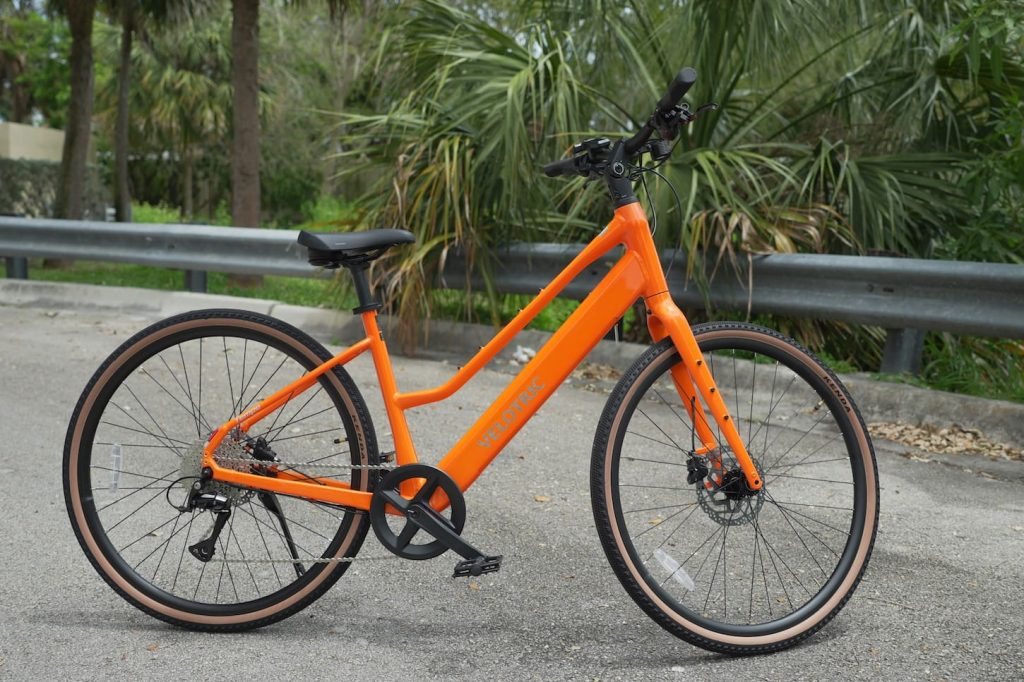
The irony is that modern e-bikes have become technological marvels. We now have torque sensors, radar systems, smartphone apps, GPS navigation, Bluetooth connectivity, over-the-air firmware updates, and batteries that can power bikes for a week of riding.
Yet somehow we’ve collectively decided that riders can’t be trusted with a throttle that twists.
Now, before the angry emails and comments start arriving, let me remind you that I acknowledge that thumb throttles absolutely have their place. They can be less intimidating for new riders, harder to activate accidentally, and perfectly adequate for people who only use the throttle occasionally. And since many of you will have started e-biking after thumb throttles became standard, and they’re what you already know, you may even prefer them. That’s fine.
If your throttle is simply a tool for getting started at traffic lights or helping you up a short hill, a thumb throttle works just fine.
But for riders who frequently use the throttle, especially on cargo bikes, utility bikes, and moped-style e-bikes, I still believe that the half-twist throttle remains the gold standard.
So with all of those considerations, maybe the industry hasn’t made throttles worse. Maybe it has simply optimized them for a different type of rider.
But every time I hop on an older e-bike with a good half-twist throttle, I’m reminded that sometimes progress isn’t quite as straightforward as we’d like to think. Sometimes we just have to give up something that worked well, not because we wanted it to change, but because it was forced to change in the pursuit of other goals.


FTC: We use income earning auto affiliate links. More.