


Sávio Bortolini Pimentel just missed getting on the roster to represent his national team, Brazil, at the 1994 FIFA World Cup in the United States.
At the time, he was a 20-year-old professional player with the Rio de Janeiro team Flamengo. He recalls other players telling him after the fact that the weather during some matches was just too hot. And the heat was “intense,” they said, during the final match at the Rose Bowl in Pasadena, California, under a 32 degree Celsius (90 degrees Fahrenheit) sun, when Brazil prevailed over Italy.
Players in the upcoming 2026 FIFA World Cup in June and July face an even greater risk of unsafe temperatures than they did in 1994, the last time the World Cup was held in the United States, according to estimates from researchers at Imperial College London. Human-induced climate change has made these conditions significantly more likely in the 16 host cities in the U.S., Mexico and Canada, according to the report.
The report predicted that five games could take place in unsafe heat, up from three games in 1994. The report used a threshold for unsafe temperatures that may require postponements based on wet bulb globe temperatures of 28 degrees C (83 degrees F), which is recommended by FIFPRO, the international player’s union. Wet bulb globe temperatures are calculated based on a variety of factors including the sun, humidity and temperature, to show the stress on the human body. FIFA also uses wet bulb globe temperatures, but currently considers postponing matches only at levels exceeding 32 degrees C (90 degrees F).
Chris Mullington, a consultant anesthetist at the Imperial College London who presented the report at a webinar, explained why soccer uses wet bulb temperatures to calculate if weather conditions are safe for players.
“A 30 [degrees] C (86 degrees F) day in dry, breezy conditions is very different from a 30 [degrees] C (86 degrees F) day with high humidity, strong sun and little wind,” he said. “High humidity reduces the evaporation of sweat, limiting the body’s primary cooling mechanism.”
Sixty current and former professional soccer players from around the world recently issued an open letter urging FIFA to update its heat guidelines for events happening under dangerous heat before the World Cup.
“It can make you feel light-headed, dizzy, experience fatigue, muscle cramps and worse. You can run less and it becomes impossible to play with the same intensity as with more average temperatures,” the players wrote.
The players also asked the league to do what it can to ease the climate change crisis by dropping fossil fuel sponsors and changing game schedules to reduce travel and the league’s fossil fuel footprint.
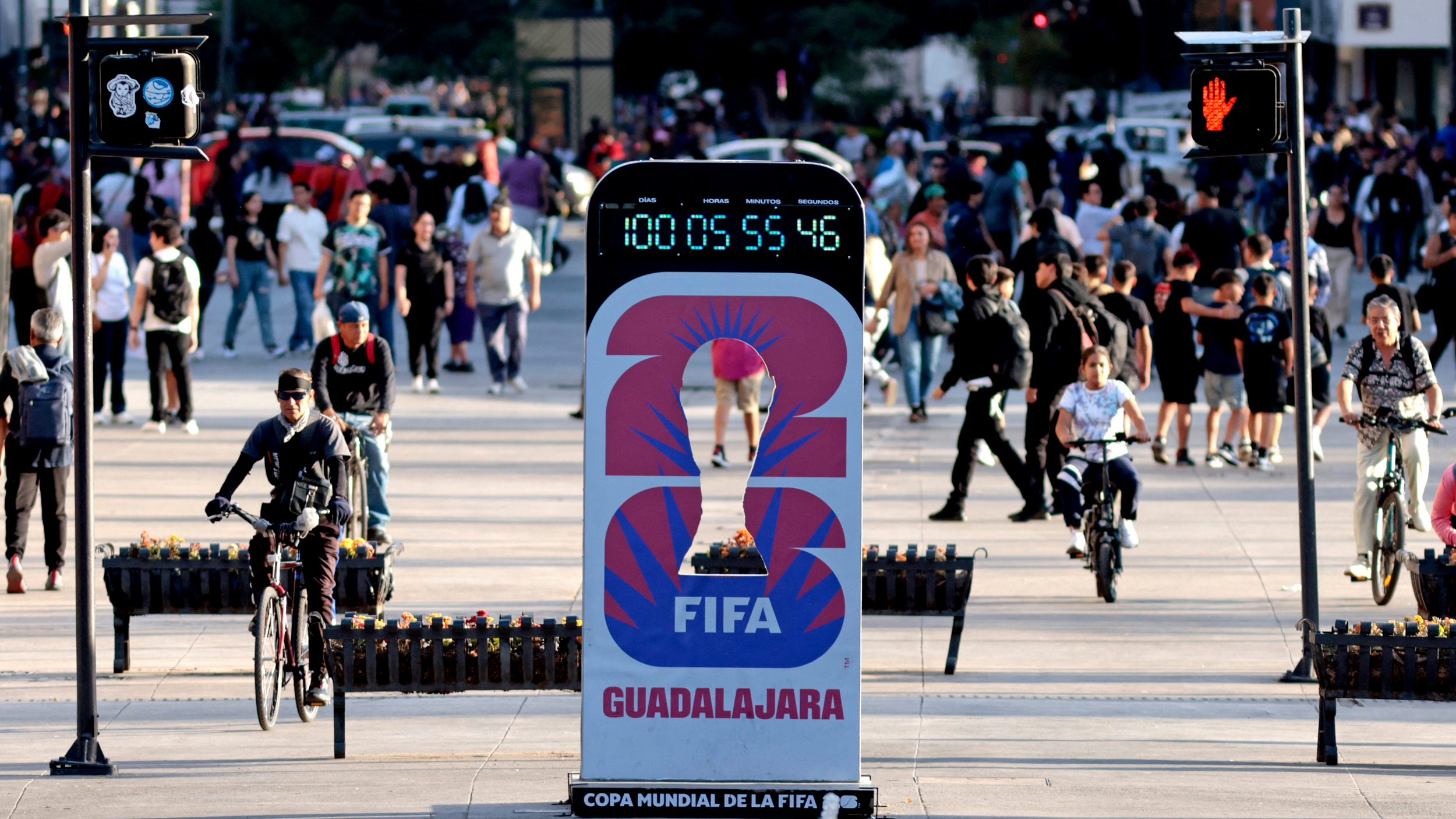
Friederike Otto, professor of climate science at the Imperial College London and one of the authors of the report, said the increased risk for hotter temperatures shows climate change is having a real and measurable impact on the viability of holding World Cups during the northern hemisphere summer. The final match of the tournament, scheduled to be played on July 19 at the MetLife Stadium in New Jersey, has a 12.5 percent chance of exceeding the 26 degrees C (79 degrees F) mark, and 3 percent chance of reaching 28 degrees C (83 degrees F).
“That the World Cup Final itself—one of the biggest sporting occasions on the planet—faces a non-insignificant risk of being played in ‘cancellation-level’ heat (28 degrees C or 83 degrees F) should be a wake-up call for FIFA and fans, highlighting the urgent need to realise that there is no aspect of society not affected by climate change,” Otto said.
The 2022 World Cup, held in Qatar, was moved from summer to winter because of the threat of extreme heat. Last summer’s Club World Cup, held in 12 locations around the United States, served in many ways as a prelude for this year’s World Cup. In that tournament, no games were postponed due to heat even though temperatures soared above 32 degrees C (90 degrees F).
The Imperial College report shows nearly a quarter of all World Cup games are likely to be played in temperatures higher than 26 degrees C (79 degrees F) and about 5 matches are expected to occur above 28 degrees C (83 degrees F)—almost double the number from the 1994 World Cup.
The Risk for Athletes
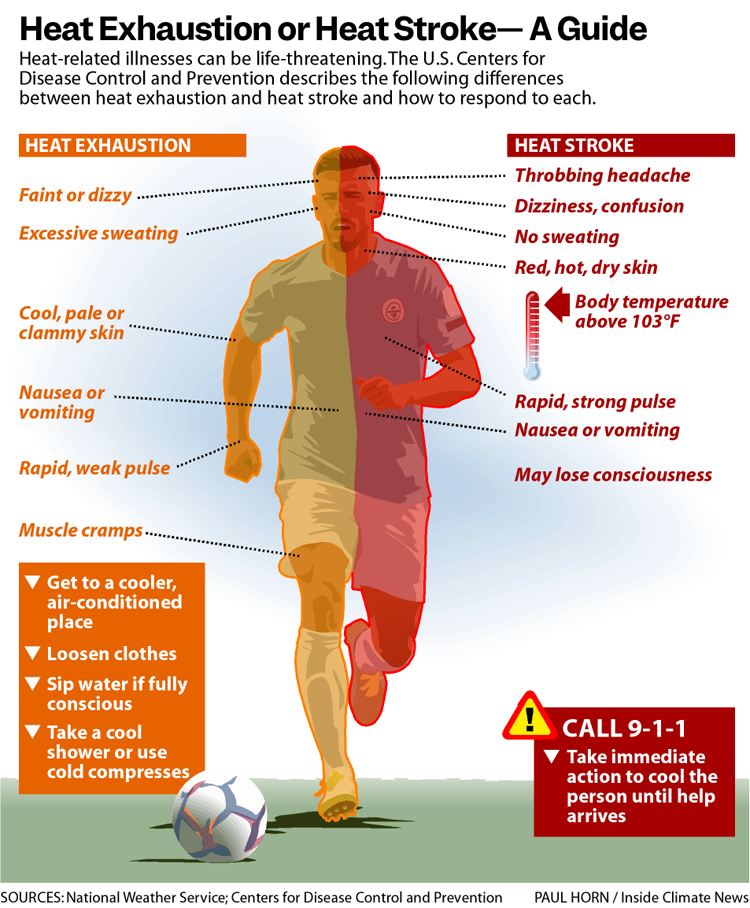
Under severe heat and dehydration, athletes’ heart rates rise, their muscles fatigue faster and they sweat more. “Your body is trying to prevent the rapid rate of rise of your body temperature; it’s just a protective mechanism,” said Douglas Casa, chief executive officer of the Korey Stringer Institute, a nonprofit based at the University of Connecticut that works to educate and prevent heat illness and sudden death in athletes and laborers.
Under extreme conditions, around 40 degrees C (104 degrees F), Casa said the body enters into the volitional exhaustion phase, the point during exercise where you voluntarily stop because you feel unable to continue doing the same movements.
Sávio said players now are likely more resilient to the heat.
“There are athletes that are more used to the cold than to the heat—that’s normal,” he said. “But today’s athletes are much more prepared, and even more so than in 1994, due to the evolution of preparation techniques, equipment and products.”
But training only goes so far. Sávio, who won bronze with the Brazilian team during the 1996 Summer Olympics in Atlanta and is now retired from soccer, said athletes feel the heat on the pitch much more dramatically.
“If we’re looking at 35 degrees C (95 degrees F), like what happened in 1994 when we even heard of matches played at 40 degrees C (104 degrees F), then yes, it’s increasingly demanding,” he said. “The pace is automatically reduced.”
This story is funded by readers like you.
Our nonprofit newsroom provides award-winning climate coverage free of charge and advertising. We rely on donations from readers like you to keep going. Please donate now to support our work.
But there are alternatives, even if FIFA does not choose to postpone eligible matches. Casa urged FIFA to make aggressive cooling strategies available at all stadium locker rooms. He also recommended extending hydration breaks from the mandated three minutes to six, as the heat could influence the athletes’ recovery from one game to the next.
“Do you realize people could easily be 103 or 104 degrees F (40 degrees C) when they come in at halftime?” Casa said. “My point is, if you have 15 minutes and you get in quickly at the stoppage, you could have 10 or 11 minutes of aggressive cooling: rotating freezing cold wet towels over your whole body, going into a cold plunge, anything like that.”
The Risk for Fans
Casa said he is not against playing games in the heat, but high temperatures and dehydration at the World Cup can lead to lower-quality soccer games.
“Why not give the fans who just spent a fortune on these tickets the best quality game that they could possibly watch with these elite soccer players?” he asked.
Kevin Muneton Ramirez, a 27-year-old American-Colombian dual citizen, is excited to watch the Portuguese star Cristiano Ronaldo play in what is expected to be his last World Cup. He bought tickets for the June 27 match in Miami between Portugal and Colombia, and he expects his home country’s team to win the game.
Muneton Ramirez said, as a fan, he does not really mind games when the players get exhausted at the end.
“The game turns into a different game, it’s more ‘mentality,’” he said. “The one that commits less mistakes is the one that ends up winning.”
For fans, Casa said FIFA should at least include free water-filling stations inside stadiums. Fans could fall ill as a result of overwhelming heat and dehydration, even if they’re not moving too much.
According to FIFA’s recently finalized stadium code of conduct, fans are allowed to bring an empty bottle that can be refilled at a water fountain or dispenser. But bottles must be empty, unless they contain “baby milk and sterilized water in containers” or liquids that a fan requires for medical reasons.
Muneton Ramirez does not usually go to stadiums to watch soccer.
“But if I have the opportunity to go to a World Cup … at least once in my lifetime, I’d go to any game,” he said.
About This Story
Perhaps you noticed: This story, like all the news we publish, is free to read. That’s because Inside Climate News is a 501c3 nonprofit organization. We do not charge a subscription fee, lock our news behind a paywall, or clutter our website with ads. We make our news on climate and the environment freely available to you and anyone who wants it.
That’s not all. We also share our news for free with scores of other media organizations around the country. Many of them can’t afford to do environmental journalism of their own. We’ve built bureaus from coast to coast to report local stories, collaborate with local newsrooms and co-publish articles so that this vital work is shared as widely as possible.
Two of us launched ICN in 2007. Six years later we earned a Pulitzer Prize for National Reporting, and now we run the oldest and largest dedicated climate newsroom in the nation. We tell the story in all its complexity. We hold polluters accountable. We expose environmental injustice. We debunk misinformation. We scrutinize solutions and inspire action.
Donations from readers like you fund every aspect of what we do. If you don’t already, will you support our ongoing work, our reporting on the biggest crisis facing our planet, and help us reach even more readers in more places?
Please take a moment to make a tax-deductible donation. Every one of them makes a difference.
Thank you,

Fellow
Gabriel Matias Castilho reports on the Washington, D.C. area. Previously, he worked for Capitol News Illinois, covering environmental policy, energy and utilities across the state. He is currently a Northwestern University’s Master’s pursuant.