

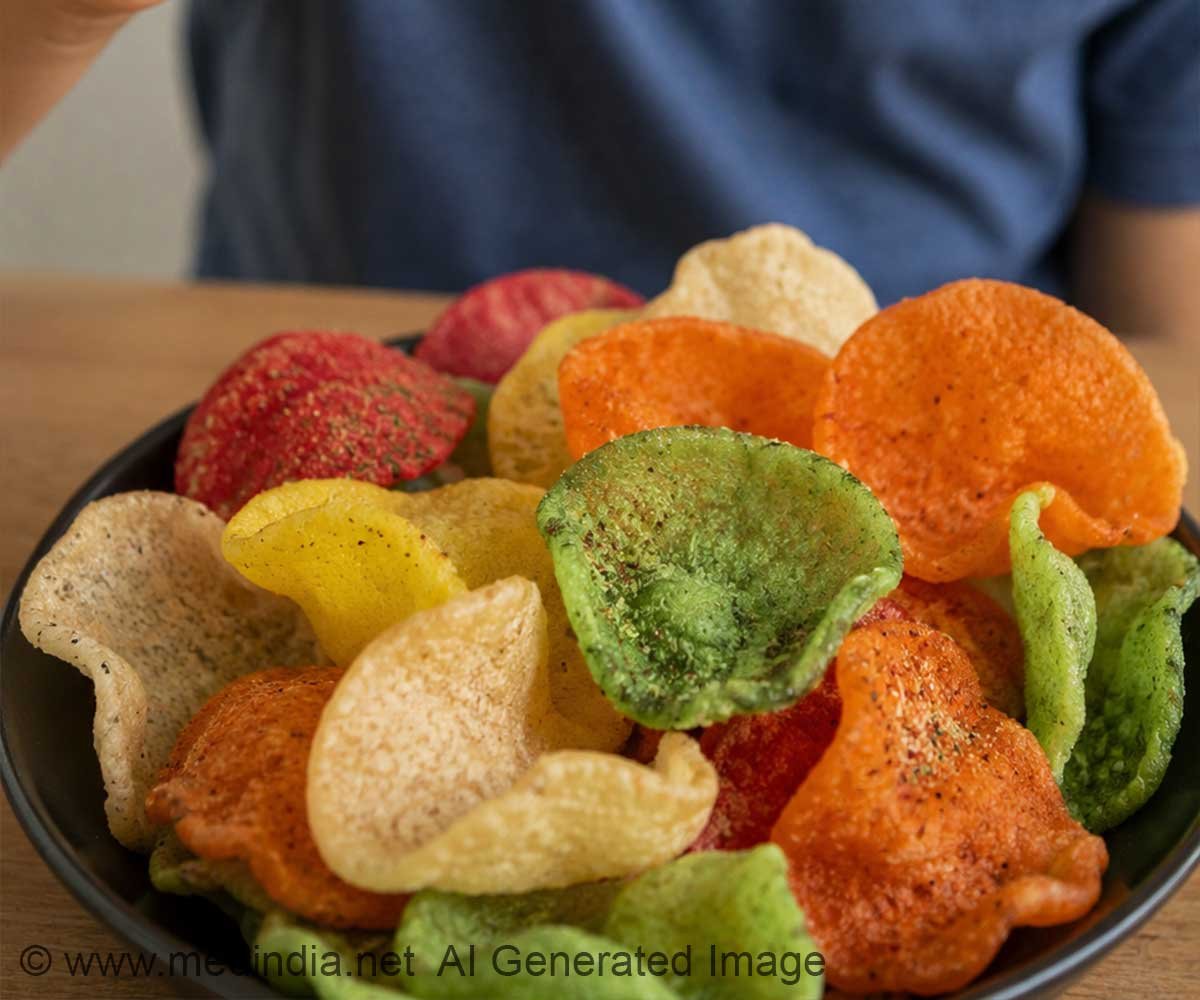
Under CM Joseph Vijay, Tamil Nadu bans coloured papad in markets and fairs, urging parents to opt for traditional urad dal and rice appalams.

Remember the seven-colored rainbow in your favorite snacks? While it might look appealing, that colorful treat might actually give you seven types of cancers, making food coloring a hidden public health crisis. Food dye overuse is linked to severe risks like colorectal cancer, breast cancer, and kidney related complications (1✔ ✔Trusted Source
Toxicological and Teratogenic Effect of Various Food Additives: An Updated Review
)(2✔ ✔Trusted Source
Artificial sweeteners and cancer risk: Results from the NutriNet-Santé population-based cohort study
).
Advertisement
Under CM Vijay Tamil Nadu Government Bans Artificial Papad Color
Taking decisive action to protect public health, the government led by Chief Minister C. Joseph Vijay has banned artificially coloured papads. The Tamil Nadu Food Safety Department implemented this directive across the entire state of Tamil Nadu, not just the capital Chennai. Officials found that popular, vividly coloured papads sold in local fairs contain unsafe chemical additives (2✔ ✔Trusted Source
Artificial sweeteners and cancer risk: Results from the NutriNet-Santé population-based cohort study
)(3✔ ✔Trusted Source
Rhodamine and related substances in food: Recent updates on pretreatment and analysis methods
).
Advertisement
The Danger of Synthetic Dyes: From Cotton Candy to Appalams
This is not the first crackdown by the state, which banned colored cotton candy in 2024 due to toxic Rhodamine B. Many of these synthetic dyes are industrial chemicals that are not permitted for human consumption under national law. These dyes are typically added to attract children at tourist spots, fairs, exhibitions, and crowded markets (3✔ ✔Trusted Source
Rhodamine and related substances in food: Recent updates on pretreatment and analysis methods
).
Advertisement
Enforcement Under the Food Safety and Standards Act
Dealers and sellers have been instructed to immediately stop distributing coloured papads under the Food Safety and Standards Act. The Food Safety and Standards Authority of India (FSSAI) allows approved food colours only within strict, non-toxic legal limits. Violators will face heavy fines and prosecution, ensuring that snacks popular with children remain free of harmful chemical agents (1✔ ✔Trusted Source
Toxicological and Teratogenic Effect of Various Food Additives: An Updated Review
)(2✔ ✔Trusted Source
Artificial sweeteners and cancer risk: Results from the NutriNet-Santé population-based cohort study
).
Regulatory Gaps: Why is FSSAI Enforcement Often Reactive?
Many consumers ask why the Food Safety and Standards Authority of India (FSSAI) did not act sooner to prevent chemical contamination. The agency faces massive hurdles monitoring millions of micro-vendors in the unorganized sector, where cheap textile dyes are illegally substituted for food-grade color. Due to understaffed laboratories and long testing backlogs, food safety enforcement remains highly reactive, relying on post-facto drives (1✔ ✔Trusted Source
Toxicological and Teratogenic Effect of Various Food Additives: An Updated Review
)(2✔ ✔Trusted Source
Artificial sweeteners and cancer risk: Results from the NutriNet-Santé population-based cohort study
).
Healthy Alternatives: Embracing Traditional Papads
Rather than purchasing dangerous coloured snacks, officials recommend buying traditional papad made with natural ingredients. Traditionally processed appalams use organic black gram (urad dal) and rice flour, providing a safe, nutrient-rich option for families. Parents are strongly urged to verify food labels and avoid purchasing artificially dyed items for their children (1✔ ✔Trusted Source
Toxicological and Teratogenic Effect of Various Food Additives: An Updated Review
).
“Protecting the health of our children begins with the choices we make at the local market, choosing natural purity over artificial color.”
References:
- Toxicological impact of synthetic food dyes – (https://pubmed.ncbi.nlm.nih.gov/30252388/)
- Food additives and cancer risk: NutriNet-Santé cohort study – (https://www.ncbi.nlm.nih.gov/pmc/articles/PMC10842322/)
- Toxic textile dyes used as food colorants: Rhodamine B – (https://pubmed.ncbi.nlm.nih.gov/36244620/)
Source-Medindia