

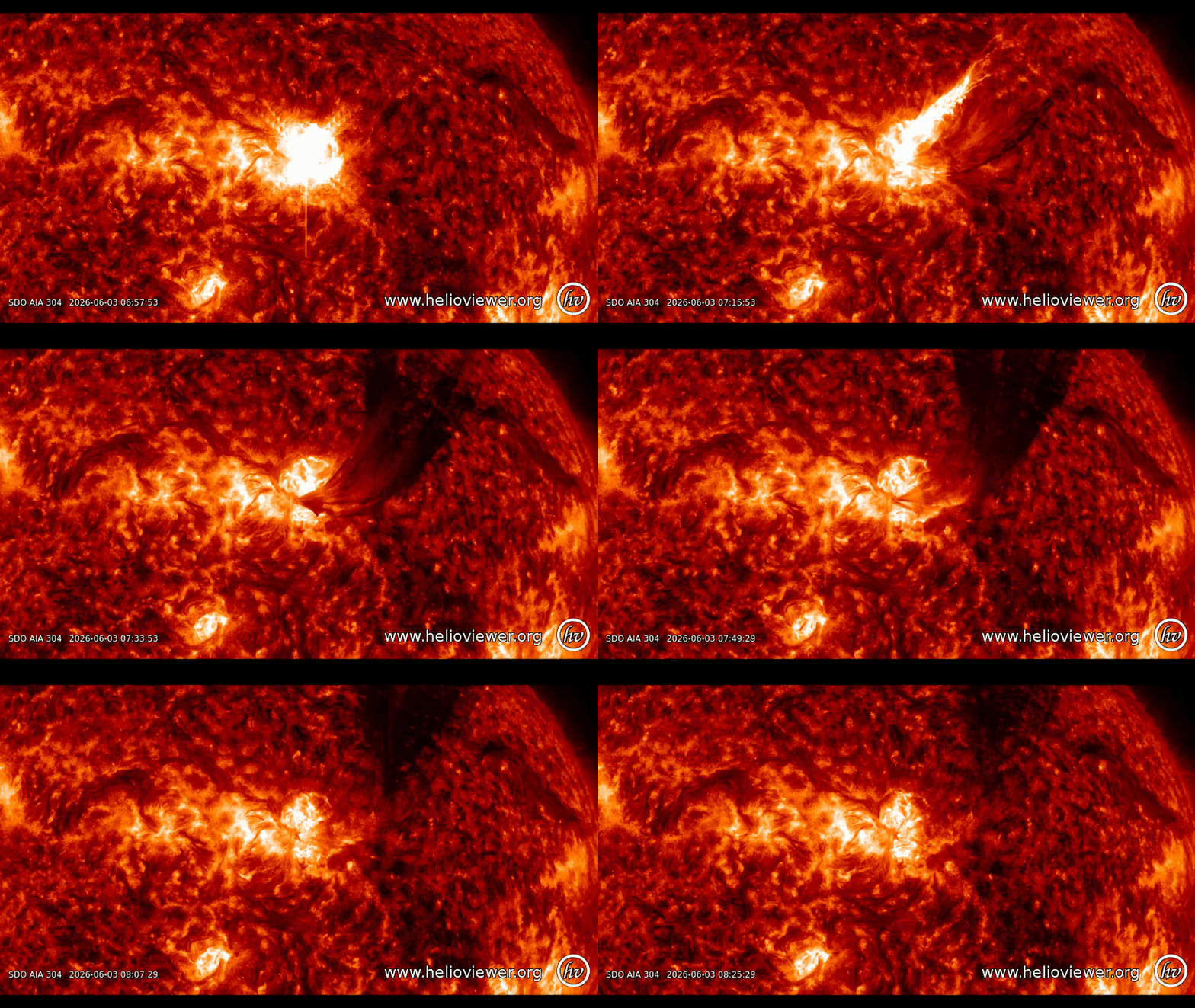
Wow, the sun is certainly putting on quite a show this week.
Our star just unleashed three powerful solar flares in less than 24 hours and potentially sending multiple coronal mass ejections (CMEs) hurtling toward Earth, raising the chances of northern lights displays this week.
The culprit behind all three eruptions from the sun is Earth-facing sunspot region 4455. The unstable region produced an M9.3 solar flare that peaked at 9:36 p.m. EDT June 2 (0136 a.m. GMT on June 3), followed by an M7.9 flare at 3:00 a.m. EDT (0700 GMT) and an X1 at 7:28 a.m. EDT (1128 GMT) — the most powerful category of solar flare.
Image 1 of 3


The trio of eruptions triggered radio blackouts across Earth. The M9.3 flare triggered a moderate R2 radio blackout across parts of East Asia and Australia, while the M7.9 eruption caused another R2 blackout affecting portions of Europe and Africa. The strongest blackout came with the X1 flare, which generated an R3 radio blackout across parts of Europe and Asia.
“Region 4455 strikes again!” space weather physicist Tamitha Skov wrote in a post on X following the M9.3 eruption. “Region 4455 continues to grow in complexity, so X-flare risk will remain elevated over the next 72 hours at least.”
Skov’s warning didn’t take long to materialize. Less than 10 hours later, the restless sunspot crossed the threshold into X-class territory.
With multiple eruptions now under analysis, the chances of geomagnetic storm activity later this week are on the rise.
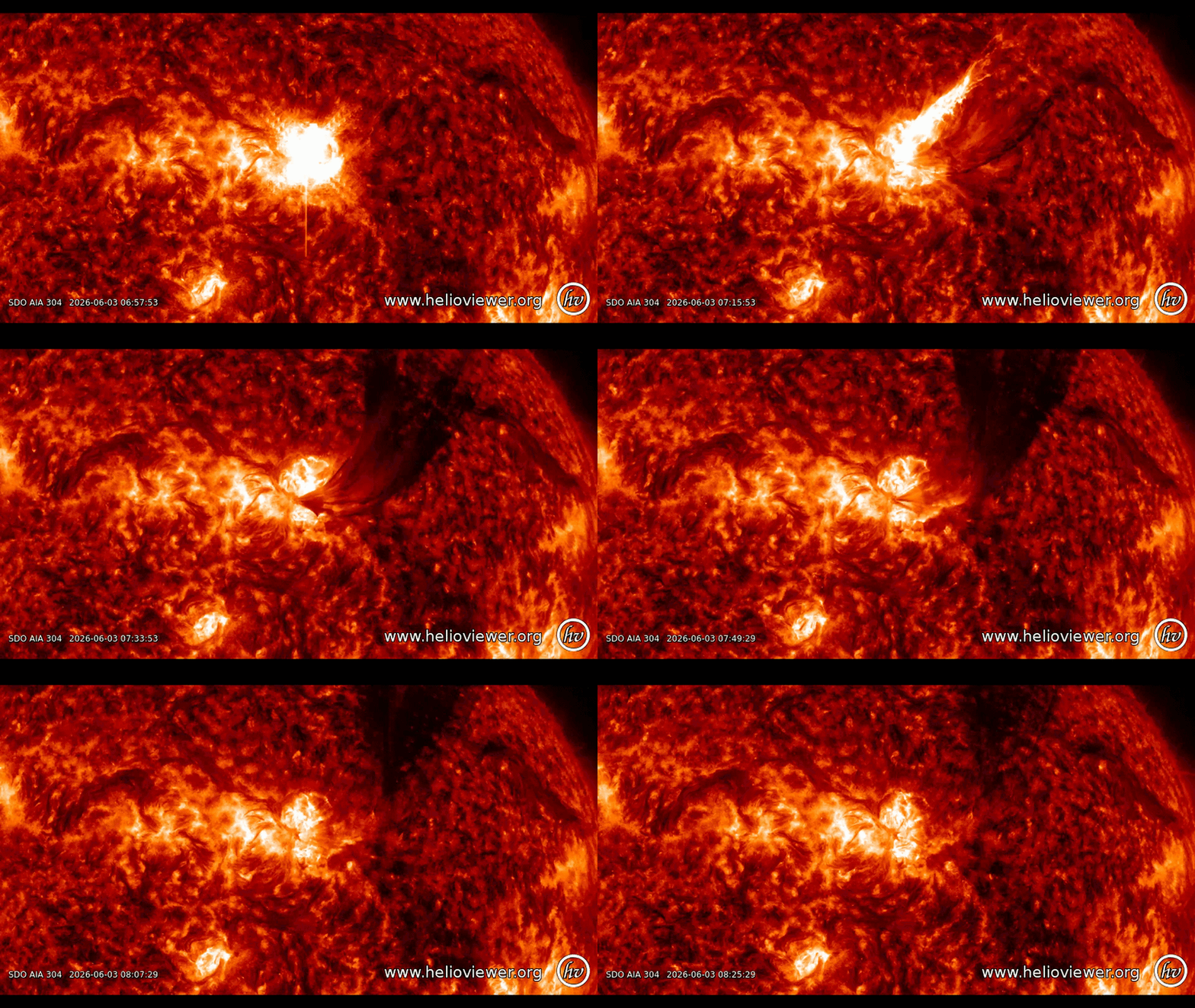
Aurora chaser Vincent Ledvina reported that “three potentially Earth-directed CMEs are currently on the way,” though space weather forecasters are still working to determine the exact trajectories and speeds of the solar storms.
The U.K. Met Office has confirmed the M9.3 flare was accompanied by a faint but fast Earth-directed CME, which is expected to arrive at Earth on June 4. The agency is also analyzing a second potential Earth-directed CME associated with the M7.9 flare, while the trajectory of any eruption linked ot the X1 flare remains under investigation.
With at least one solar storm heading our way, the Met Office has issued a strong (G3) geomagnetic storm watch for June 4-6. Forecasters say geomagnetic activity could reach G1-G3 storm levels, with a slight chance of isolated severe (G4) conditions if the incoming CMEs deliver a stronger-than-expected impact.
This is potentially good news for skywatchers. Geomagnetic storms can supercharge Earth’s auroras, pushing them farther into mid-latitudes than usual. If the forecast holds, northern lights could become visible at lower latitudes beginning on Thursday evening.
As scientists continue analyzing the evolving CME situation, all eyes remain on region 4455, which still has the potential to unleash further strong solar flares in the coming days. Watch this space!