

Close Menu

    Subscribe to Updates

    Get the latest news information from worldwide businesses.

    What's Hot

    Chhattisgarh wants to bring youth closer to nature – one bird, snake, butterfly at a time | India News

    August 10, 2026

    Sanders calls on Democratic leaders to ban super PACs from party primaries

    August 10, 2026

    That really hurt the Leafs

    August 10, 2026
    Facebook Instagram YouTube LinkedIn X (Twitter)
    Trending
    • Chhattisgarh wants to bring youth closer to nature – one bird, snake, butterfly at a time | India News
    • Sanders calls on Democratic leaders to ban super PACs from party primaries
    • That really hurt the Leafs
    • The dodo bird had a secret sensory world scientists are only now discovering
    • Indian exporters suffer twists and turns of freight amid Lanka, Singapore transhipment jam
    • Rahul Navin’s tenure as ED Director extended by 1 year | India News
    • AOC reveals egg freezing decision, blasts Trump on women’s health
    • Triple H was behind emotional SummerSlam reunion
    Newspublicly
    • About Us
    • Advertise & Partner with us
    • Pitch Your Story
    • Contact Us
    Facebook Instagram LinkedIn X (Twitter)
    Subscribe
    • Home
    • World News
      • Asia
      • India
      • USA
      • UK & Europe
      • Middle East
    • Economy & Business
      • Global Economy
      • Corporate & Industry
      • Finance & Markets
      • Policy & Trade
    • Technology
      • Gadgets & Devices
      • Software & Apps
      • AI & Machine Learning
      • Robotics & Automation
    • Health & Medicine
      • Fitness & Nutrition
      • Research & Innovation
      • Disease & Treatment
      • Doctors, Clinics & Patient Care
    • Travel & Tourism
    • Automobile
      • Electric & Hybrid Vehicles
      • Auto Industry Insights
    • Sports
    • More
      • Education
      • Real Estate
      • Environment & Climate
      • Space & Astronomy
      • War & Conflicts
    Newspublicly
    Home»Health & Medicine»Research & Innovation»Stress can scramble your brain’s internal GPS, MRI study finds
    Research & Innovation

    Stress can scramble your brain’s internal GPS, MRI study finds

    AdminBy AdminAugust 9, 2026No Comments3 Mins Read0 Views
    Share
    Facebook Twitter LinkedIn Copy Link WhatsApp


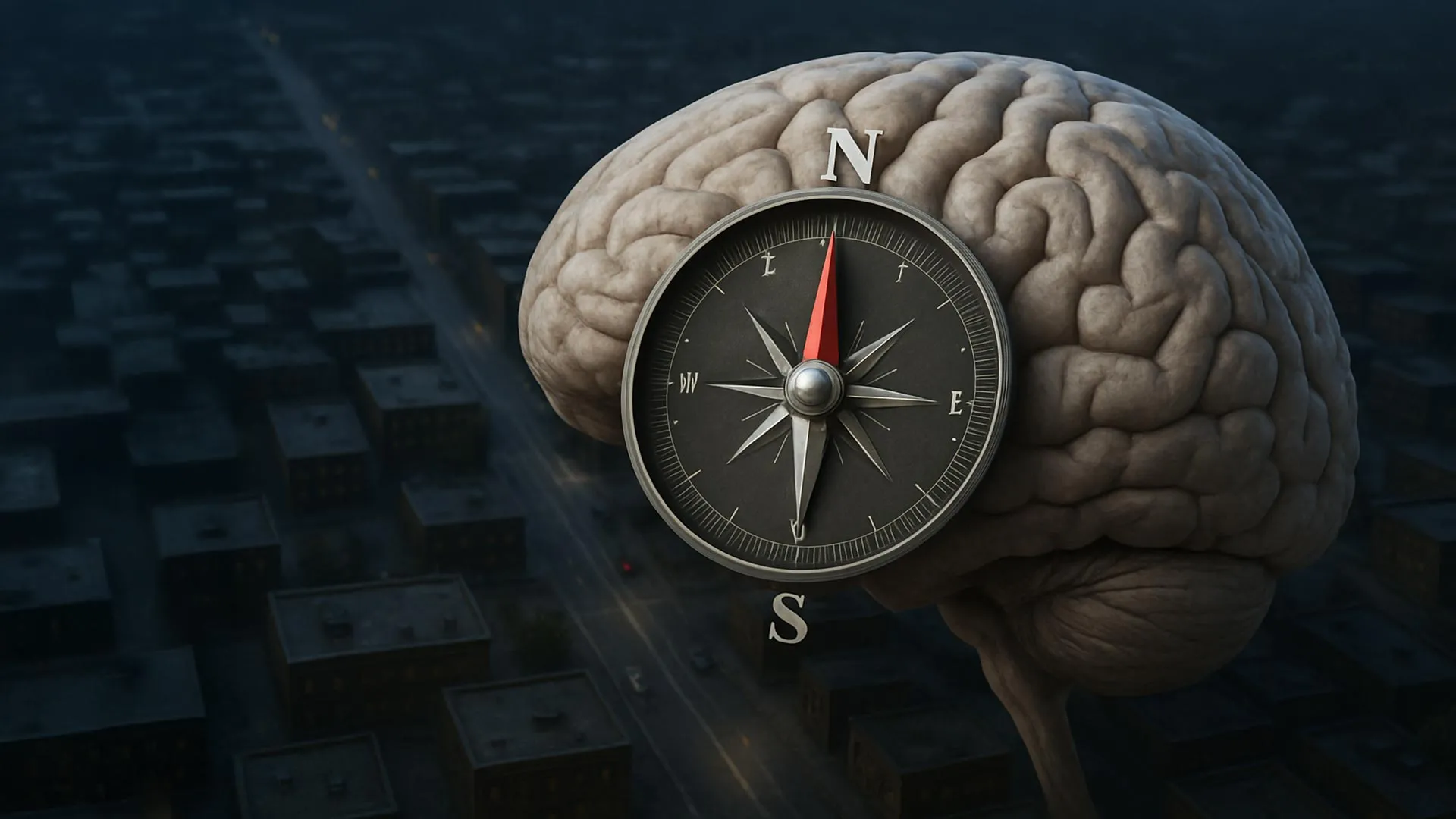
    The stress hormone cortisol can interfere with the brain system that helps people navigate and stay oriented. Researchers from Ruhr University Bochum in Germany found that cortisol weakens the activity of grid cells, specialized nerve cells that are essential for spatial navigation.

    The finding comes from an imaging study involving 40 participants who completed a virtual navigation task while researchers monitored their brain activity with MRI. When participants were given cortisol before the experiment, they had more difficulty finding their way, and the normally precise activity patterns produced by grid cells became much less distinct. The findings were published in PLOS Biology.

    Stress is already known to influence thinking and behavior, but researchers have had a limited understanding of how cortisol affects the specific brain circuits involved in navigation. Dr. Osman Akan from the Ruhr University Bochum, Department of Cognitive Psychology, worked with colleagues from the Department of Neuropsychology and researchers from University Hospital Hamburg-Eppendorf to examine this process more closely.

    Testing Navigation Inside an MRI Scanner

    The experiment included 40 healthy men who participated on two separate days. On one day, each participant received 20 milligrams of cortisol. On the other day, they received a placebo. During both sessions, they performed a spatial orientation task while their brain activity was recorded in an MRI scanner.

    Participants navigated through a large virtual meadow and traveled toward a series of trees. Each tree disappeared once they reached it. Afterward, they had to determine the most direct route back to their original starting position without being shown the correct path.

    Researchers tested navigation under two different conditions. In one version of the virtual environment, there were no permanent landmarks, and the trees served only as temporary destinations. In the other version, participants could use a lighthouse as a fixed reference point.

    Cortisol Makes Navigation Less Accurate

    The results showed that cortisol significantly reduced the participants’ ability to orient themselves. Compared with their performance after receiving the placebo, they made substantially larger errors when attempting to reach their destinations.

    This decline occurred regardless of whether spatial landmarks were available and regardless of how complicated the route was.

    Stress Disrupts the Brain’s Internal GPS

    The effects of cortisol were also visible in the functional MRI data. Under normal conditions, certain nerve cells in the entorhinal cortex become active in a repeating grid pattern during spatial navigation. These cells are known as “grid cells” and effectively function as part of the brain’s internal GPS system.

    After participants received cortisol, this grid-like activity became much less clearly defined. The disruption was especially pronounced when participants navigated without permanent landmarks. Under those conditions, grid cell activity was almost entirely absent.

    “Under stress, the brain loses the ability to effectively utilize its internal navigation maps,” explains Akan.

    Researchers also observed increased activity in another part of the brain called the caudate nucleus after cortisol was administered. This suggests that the brain may attempt to rely on a different navigation strategy when its primary spatial mapping system is impaired.

    “This indicates that the brain is trying to compensate for the loss of the main navigation system in the entorhinal cortex through alternative strategies,” says Akan.

    Possible Relevance to Alzheimer’s Disease

    The findings may also be important for understanding Alzheimer’s disease because the entorhinal cortex is among the first brain regions affected by the condition.

    “Because chronic stress is a risk factor for dementia, our study reveals a critical mechanism for how stress hormones destabilize this sensitive region,” explains Akan.


    Source link

    Author

    • Admin

      NewsPublicly.com is News & Articles Platform that creating SEO-focused articles on travel, lifestyle, and digital trends.

    Admin
    • Website

    NewsPublicly.com is News & Articles Platform that creating SEO-focused articles on travel, lifestyle, and digital trends.

    Related Posts

    The dodo bird had a secret sensory world scientists are only now discovering

    August 10, 2026

    Scientists say just 7 days of meditation can rewire your brain

    August 9, 2026

    A 0.42-nanometer breakthrough could push transistors beyond silicon

    August 9, 2026
    Leave A Reply Cancel Reply

    Demo
    Top Posts

    The Blue Moon rises on May 30— Where and when to see the second full moon of the month

    May 30, 202640 Views

    New SOCOM rifle allows barrel swapping and cartridge changes

    June 1, 202633 Views

    “Inside Gemini Robotics 1.5: How Robots Learn to Reason & Act

    November 22, 202527 Views

    525 pounds of cocaine seized after Nebraska K9 alerts troopers on I-80

    May 28, 202624 Views
    Don't Miss

    Chhattisgarh wants to bring youth closer to nature – one bird, snake, butterfly at a time | India News

    August 10, 20265 Mins Read0 Views

    Until a year ago, Tikeshwar Nishad had not even heard of the term “bird watching”.…

    Sanders calls on Democratic leaders to ban super PACs from party primaries

    August 10, 2026

    That really hurt the Leafs

    August 10, 2026

    The dodo bird had a secret sensory world scientists are only now discovering

    August 10, 2026
    Stay In Touch
    • Facebook
    • Twitter
    • Instagram
    • YouTube
    • LinkedIn
    • WhatsApp

    Subscribe to Updates

    Get the latest creative news from SmartMag about art & design.

    Demo
    NEWSPUBLICLY
    Facebook X (Twitter) Instagram LinkedIn

    Home

    • About Us
    • Leadership
    • Advertise & Partner With Us
    • Pitch Your Story
    • Media Kit & Pricing
    • Career
    • FAQs

    Guidelines

    • Editorial & Submission
    • Partnership
    • Advertising & Sponsor
    • Intellectual Property Policy
    • Community & Comment
    • Security & Data Protection
    • Send Your Opinion

    Quick Links

    • Cookie Policy
    • Payment & Billing Terms
    • Refund & Cancellation
    • Copyright Policy
    • Complaint & Support
    • Sitemap
    • Contact Us

    Subscribe Us

    Get the latest news and updates!

    Copyright © 2026 Newspublicly (DIGITALIX COMMUNICATION). All Rights Reserved.
    • Privacy Policy
    • Terms of Use
    • Disclaimer