

The warning signs were years in the making. And yet, regulators failed to heed the writing on the wall, according to Dean Naujoks.
An investigator with the Potomac Riverkeeper Network, Naujoks spent three years documenting what he calls a systemic failure that culminated in dual environmental catastrophes now threatening the health of the entire Potomac River system, which is already stressed.
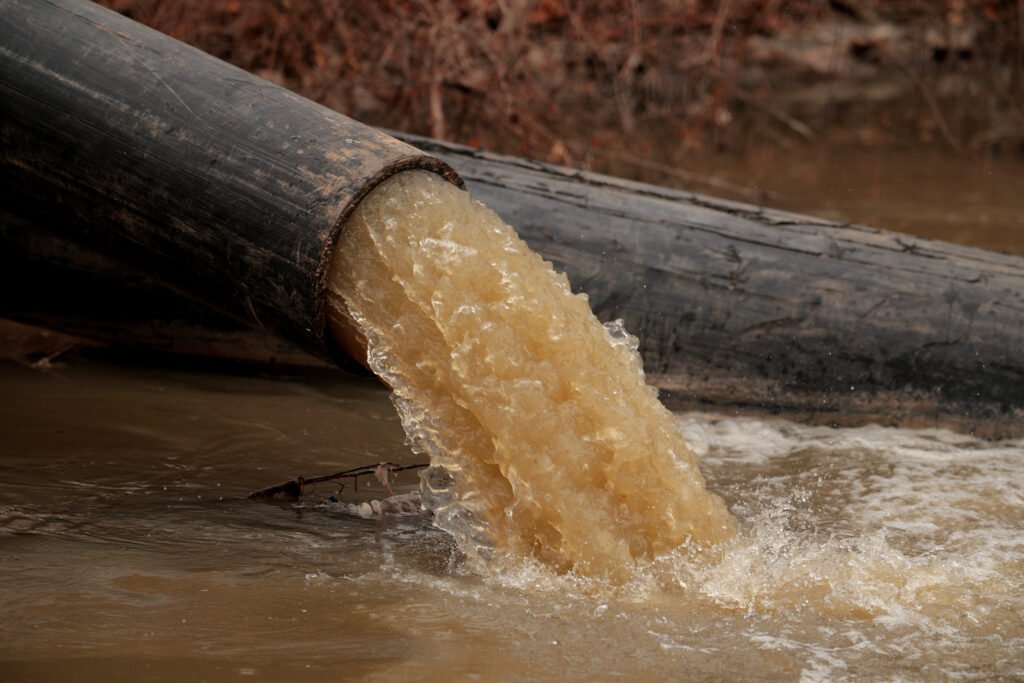
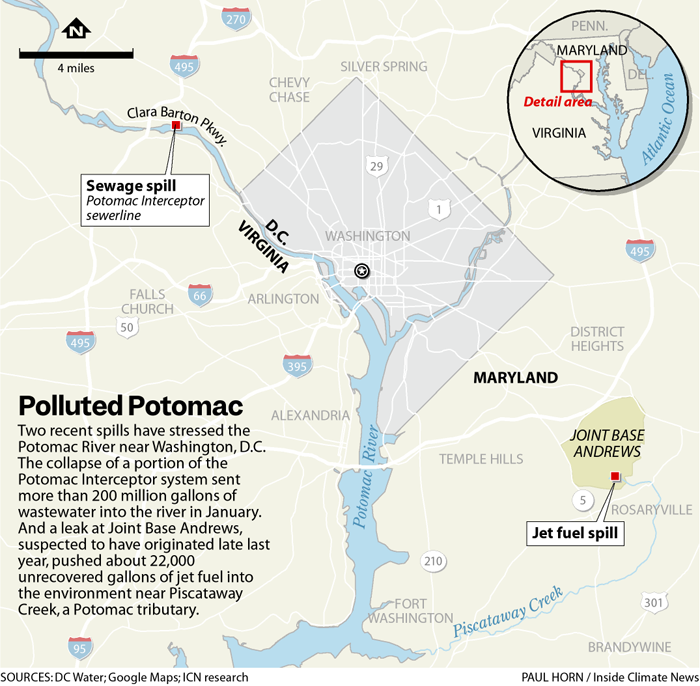
In January, a 60-year-old sewer pipe known as the Potomac Interceptor, running along the Maryland shoreline of the Potomac, collapsed near the Clara Barton Parkway corridor in Montgomery County, releasing an estimated 243 million gallons of raw sewage into the river over approximately three weeks.
But even before that spill, another crisis had already begun to unfold elsewhere in the watershed. At Joint Base Andrews in Prince George’s County, a fuel system failure on Dec. 11 led to thousands of gallons of jet fuel entering the headwaters of Piscataway Creek, a tributary that feeds directly into the Potomac. The leak continued for months before state regulators were notified.
Stretching more than 400 miles, the Potomac River is a source of drinking water for more than 5 million people in the Washington, D.C. metropolitan area. In April, American Rivers, a conservation nonprofit, named it the most endangered river in the country, citing both the sewage spill and the rapid expansion of data centers.
Piscataway Creek, an 18.6-mile tributary of the Potomac, begins at the edge of Joint Base Andrews and slips back into the Potomac at Fort Washington Park. Its name derives from the indigenous Piscataway people, who’ve stewarded these waters for thousands of years and maintain a living relationship with the creek and the river to this day.
Naujoks believes neither crisis happened in a vacuum.
He first began tracking contamination in Piscataway Creek around 2022, after reports emerged of tainted fish. A researcher named Pat Elder, Naujoks said, who worked for an organization called Military Poisons, which investigates PFAS contamination at military bases across the country, initially raised the alarm.
PFAS (per- and polyfluoroalkyl substances) are chemicals used in products ranging from kitchen items to military firefighting foam and are linked to cancers, immune disruption and reproductive harm.
When representatives from the Maryland Department of the Environment (MDE) tested the creek, they found the highest PFAS levels in any fish in any stream in the state. Among species tested was a sunfish from the creek that registered PFAS levels 1.4 million times higher than the EPA’s own standard for safe drinking water. The source of the contamination was the military’s practice of dousing jet fuel fires with firefighting foam laced with so-called “forever chemicals.”
Established in August 1941 and spanning roughly 6.8 square miles, Joint Base Andrews is a federal Superfund site that has been subject to cleanup efforts for decades. The U.S. Air Force first released a report on PFAS at the site in 2018.
It took until 2023 to obtain the first fish consumption advisory from the state, Naujoks said. Even then the warning, posted online and in press releases, had limited reach among the shoreline communities that depend on the creek for subsistence fishing, he said.
“There’s a fish consumption advisory, but none of them know about it … it’s not like there are signs up,” he said. “A lot of these people are subsistence fishing … poor Black, Latino, Korean, Asian families … and they’re just filling the buckets up every spring.”
Once word of the contamination got out, public pressure increased. In April 2025, after years of advocacy, state officials finally organized a public forum to address concerns about Piscataway Creek and Joint Base Andrews. But Naujoks described the event as structured to avoid accountability rather than encourage it.
Instead of a traditional question-and-answer session, the forum included multiple information stations in a crowded room, making it difficult for residents to ask direct questions.
Federal funding for cleanup efforts has been inconsistent. A $2.7 million allocation for remediation at the base was eliminated at the beginning of the second Trump administration, according to Naujoks.
He has since contacted a criminal investigator about the military’s handling of the site’s contamination, arguing that the case may warrant a broader environmental investigation. Naujoks said the state and federal regulators should take action against the base for its failure to report the leak in a timely manner. “That’s what should be happening under the law,” he said.
A fuel system at the base failed a precision tightness test on Dec. 11, 2025, according to MDE, more than three months before state regulators were notified of a potential spill.
“On March 23, 2026, the state received its first notification of the incident,” MDE said in an emailed response to Inside Climate News. “[Joint Base Andrews] reported to the National Response Center that an oil sheen and petroleum odors were observed in Piscataway Creek.”
Chaired by the EPA and staffed by the U.S. Coast Guard, the National Response Center operates around the clock and is the designated point of contact for reporting oil, chemical, radiological and biological discharges into the environment across the United States.
Of the estimated 32,000 gallons of jet fuel that leaked, only 10,000 gallons have been recovered. The remaining 22,000 gallons entered the environment.
Although the base is a federal property, MDE has enforcement authority. “We have authority under state environmental regulations and law to take enforcement action, including potential penalties,” the department said in its comments. “The base is responsible for reporting discharges immediately and is also responsible for containment and remediation.”
In an emailed comment, a Joint Base Andrews spokesperson confirmed that approximately 22,000 gallons of jet fuel entered the environment, an estimate derived from the monthly fuel inventory report received on April 8. “At this time we do not know what amount may have entered Piscataway Creek,” it added.
The base said it is conducting joint water sampling with MDE, with results from April 13 and April 20 showing petroleum constituents trending downward. A more precise estimation of the spill’s scope is still under investigation, the base said.
Members of Maryland’s congressional delegation sent two separate letters demanding accountability: one to the Secretary of the Air Force regarding the fuel leak and another to DC Water concerning the Interceptor collapse.
“At a time when we need to be doing all we can to protect and clean up our waterways, these spills are taking us in the wrong direction,” U.S. Sen. Chris Van Hollen said in a statement to Inside Climate News. “They are putting even more strain on our already overburdened waterways — hurting our environment and the lives and livelihoods that depend on them.”
Van Hollen’s office said the Air Force had yet to respond to the delegation’s letter, and had still not identified the source of the fuel leak.
U.S. Sen. Angela Alsobrooks, in an emailed response, said the focus must remain on stopping future leaks, while acknowledging the disproportionate burden carried by communities with the least political recourse. The families suffering most—subsistence fishing households and lower-income residents in Prince George’s and Charles counties—had the least say in decisions about military base oversight or utility infrastructure, she said.
In an emailed statement, the EPA said it had accomplished its remediation goals related to the Potomac Interceptor collapse and that water quality recreational advisories had been lifted across D.C., Virginia, and three Maryland counties. Regarding the jet fuel leak, the agency said it deployed personnel to assess Piscataway Creek and found the containment measures were working as intended. MDE was overseeing the cleanup conducted by the Air Force, but had not requested additional help from EPA, according to the agency.
This story is funded by readers like you.
Our nonprofit newsroom provides award-winning climate coverage free of charge and advertising. We rely on donations from readers like you to keep going. Please donate now to support our work.
The contamination has had consequences for the communities downstream of Joint Base Andrews.
The Piscataway Indian Nation, whose ancestral connection to the creek’s waters stretches back more than 15,000 years, issued a formal statement following the Interceptor collapse, signed by 29th Hereditary Chief Mark Tayac.
The Nation described the sewage spill as a “preventable, and yet seemingly inevitable” disaster that had since curtailed its members’ ability to fish, hunt, gather traditional foods, prepare healing medicines and make cultural items. “Water is not merely a luxury or a convenience to all people but rather the most important nutrient for life itself,” the statement said.
The Nation noted that fecal bacteria levels remained 2,700 times the safe limit as of early February, and that scientists had found unsafe levels of MRSA, a powerful, antibiotic-resistant bacteria, in the river. The statement warned that the sewage spill could affect shellfish harvesting more than 50 miles downriver from the spill site.
The sewage and fuel spills are further stressing the already vulnerable river.
Asked about the absence of advisory signage at known subsistence fishing locations on Piscataway Creek despite years of documented contamination, MDE said it was in the process of updating signs and noted there were “only two locations in Piscataway Creek that can accommodate signage.”
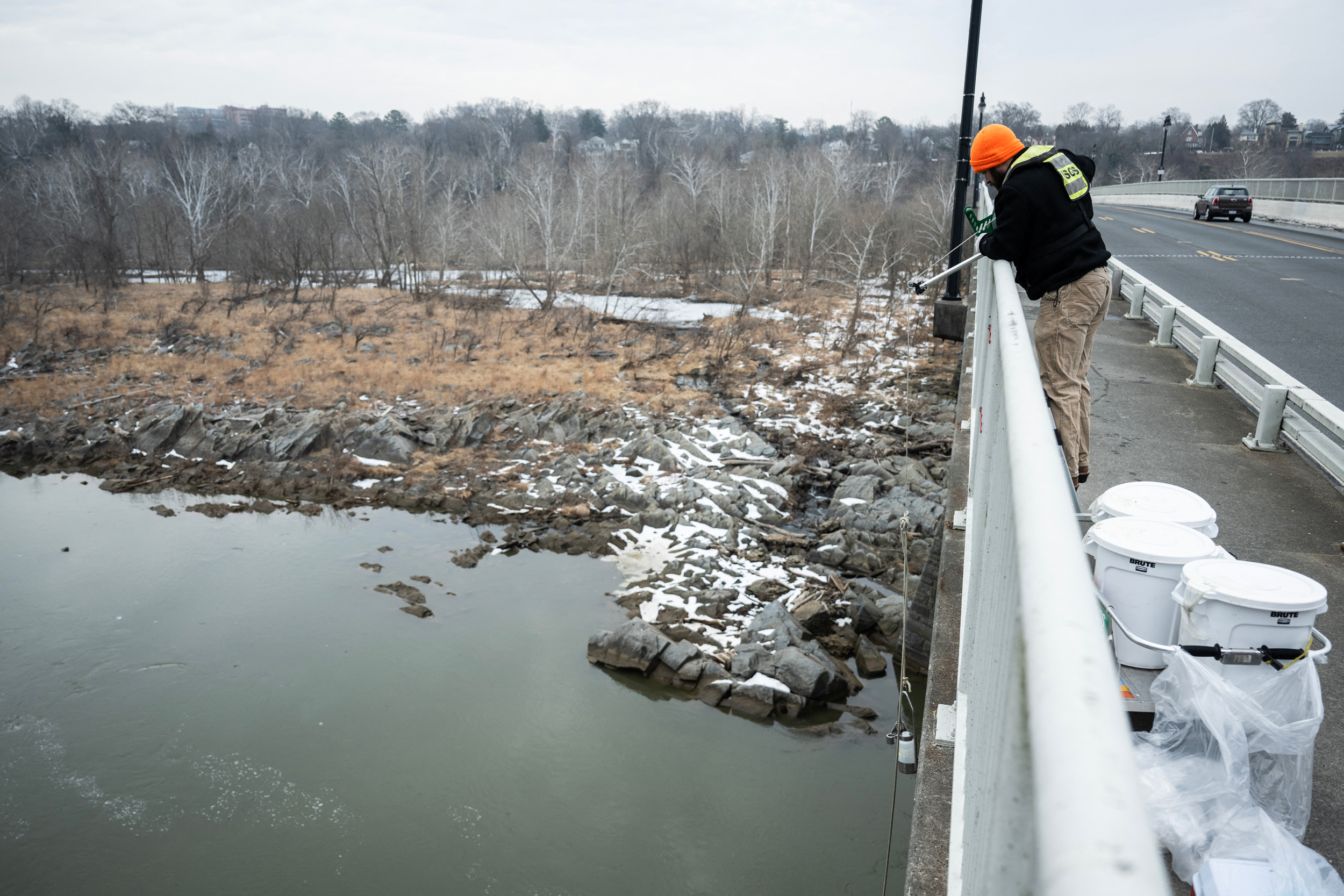
Don Boesch, a marine scientist who has monitored the Potomac estuary for decades, said the sewage spill’s long-term impact on the river’s oxygen levels and the prospect of fish kills would depend largely on summer water discharge volumes and that “it will be hard to distinguish any effect of the sewer line break this year, much less into the future.”
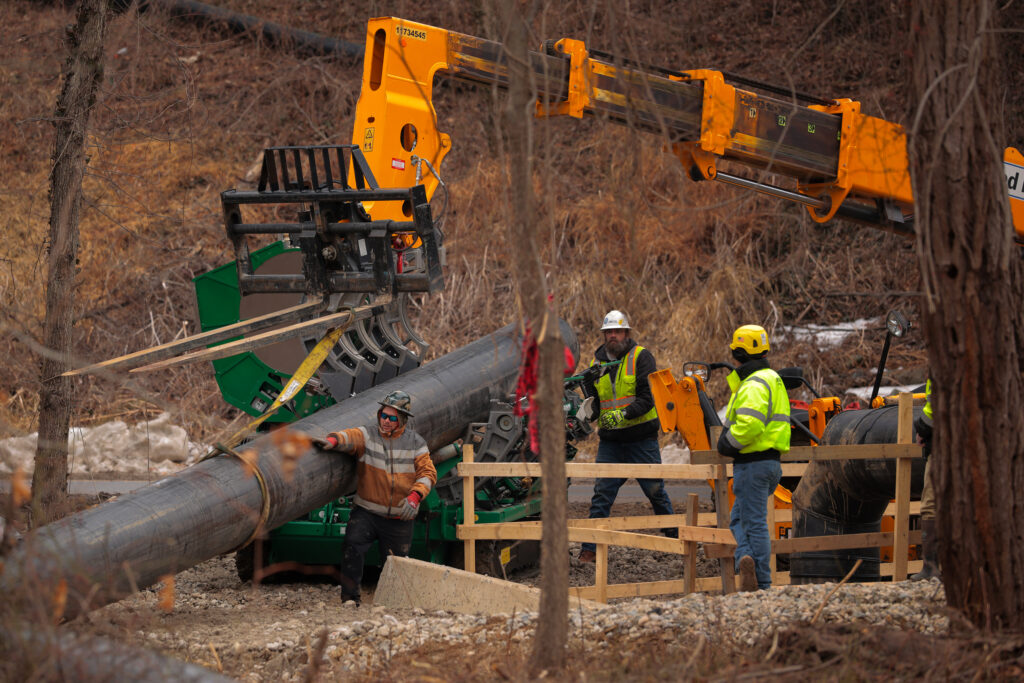
But he directly addressed the institutional failure behind the sewer pipe collapse. DC Water had known for years that the Interceptor was at risk of failure, Boesch said, and yet deferred repairs. Investments in advanced wastewater treatment had been steadily shrinking the Potomac’s seasonal dead zone, he noted, making the spill’s disruption of that progress all the more consequential. “We must maintain fail-safe infrastructure to ensure the effectiveness of these sizable investments,” he said. “That’s the lesson from this year’s entirely preventable disruption.”
Van Hollen’s office said the Trump administration had proposed a 90 percent cut to the State Revolving Fund—the primary federal mechanism for water infrastructure investment—in its FY2027 budget, a proposal Congress had rejected in the FY2026 spending bill but that remained a live threat.
Naujoks is demanding a full investigation of the PFAS contamination and sampling of every creek and tributary draining from Joint Base Andrews, not just Piscataway Creek, which is the only waterway publicly known to be affected.
He has already contacted a state criminal investigator about the failure to disclose the leaking jet fuel, arguing that months of silence between the fuel system failure and the report to regulators merit a criminal investigation. “Did somebody commit a crime for not reporting this?” he said. “That needs to be investigated.”
He said he is watching whether state lawmakers have the appetite to compel MDE to conduct that sampling before the remedial PFAS investigation, which is not expected to conclude until 2029, runs its course.
“It just doesn’t surprise me,” he said of the base’s conduct, “because it’s Prince George’s County, where they’ve gotten away with this shit for a long, long time.”
About This Story
Perhaps you noticed: This story, like all the news we publish, is free to read. That’s because Inside Climate News is a 501c3 nonprofit organization. We do not charge a subscription fee, lock our news behind a paywall, or clutter our website with ads. We make our news on climate and the environment freely available to you and anyone who wants it.
That’s not all. We also share our news for free with scores of other media organizations around the country. Many of them can’t afford to do environmental journalism of their own. We’ve built bureaus from coast to coast to report local stories, collaborate with local newsrooms and co-publish articles so that this vital work is shared as widely as possible.
Two of us launched ICN in 2007. Six years later we earned a Pulitzer Prize for National Reporting, and now we run the oldest and largest dedicated climate newsroom in the nation. We tell the story in all its complexity. We hold polluters accountable. We expose environmental injustice. We debunk misinformation. We scrutinize solutions and inspire action.
Donations from readers like you fund every aspect of what we do. If you don’t already, will you support our ongoing work, our reporting on the biggest crisis facing our planet, and help us reach even more readers in more places?
Please take a moment to make a tax-deductible donation. Every one of them makes a difference.
Thank you,

Reporter, Washington, D.C.
Aman Azhar is a Washington, D.C.-based journalist who covers environmental justice for Inside Climate News with focus on Baltimore-Maryland area. He has previously worked as a broadcast journalist and multimedia producer for the BBC World Service, VOA News and other international news organizations, reporting from London, Islamabad, the United Arab Emirates and New York. He holds a graduate degree in Anthropology of Media from University of London’s School of Oriental and African Studies (SOAS) and an MA in Political Science from the University of the Punjab, and is the recipient of the Chevening scholarship from the UK government and an academic scholarship for graduate studies from the Australian government.